Four Divine Appearances From the Exodus to the Temple
Slaves cried from the brickfields of Egypt. A shepherd appeared among the cherubim. The last fire filled a house so thick the priests could not stand.
Table of Contents
 Click for full size
The Cry from the Brickfields
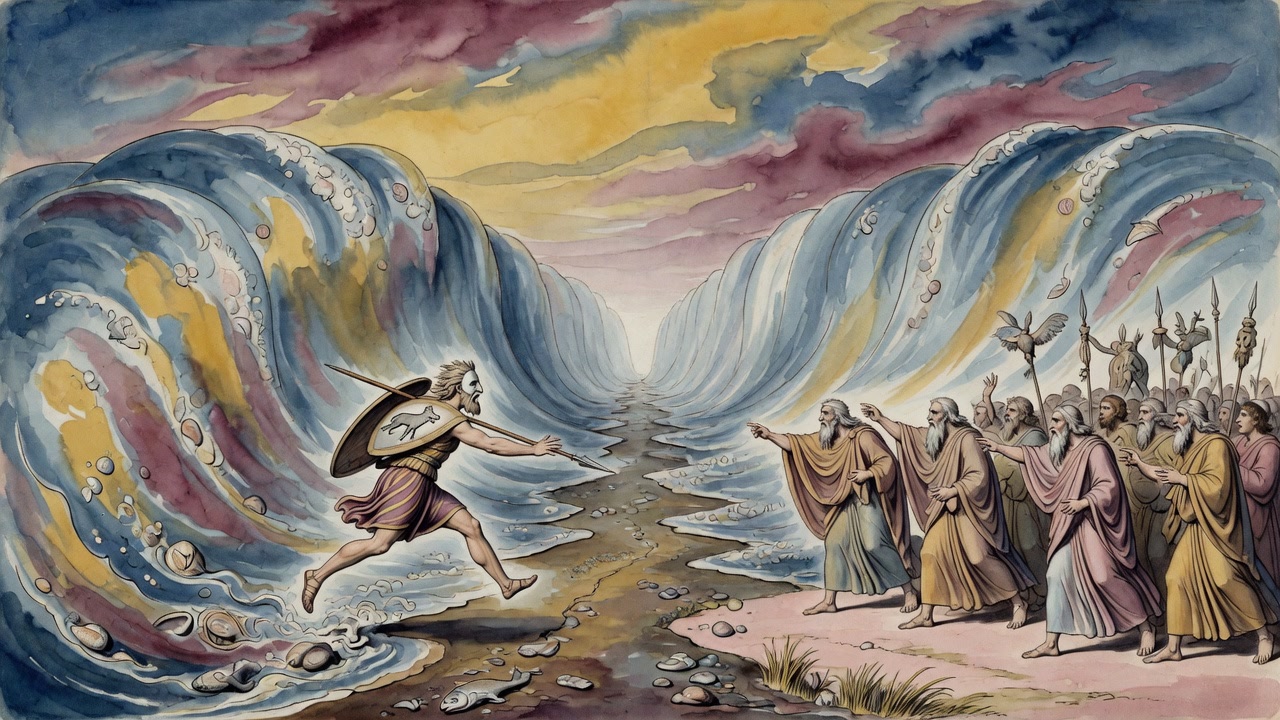
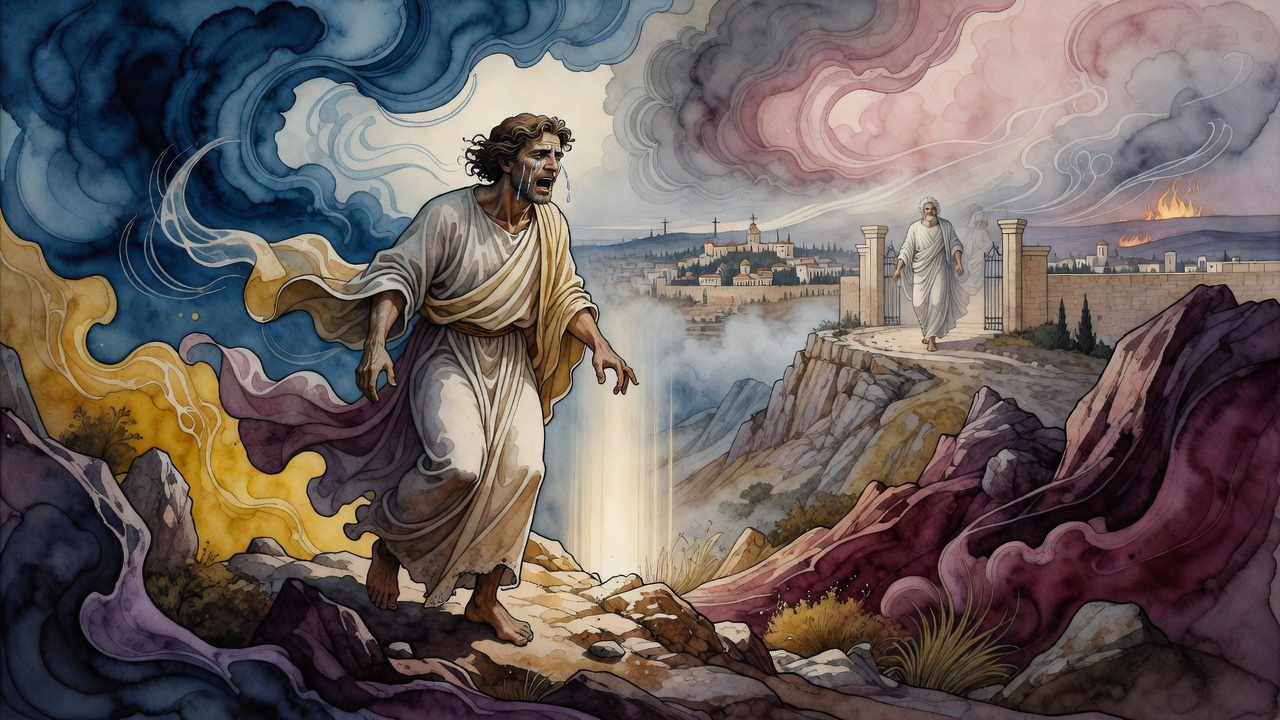
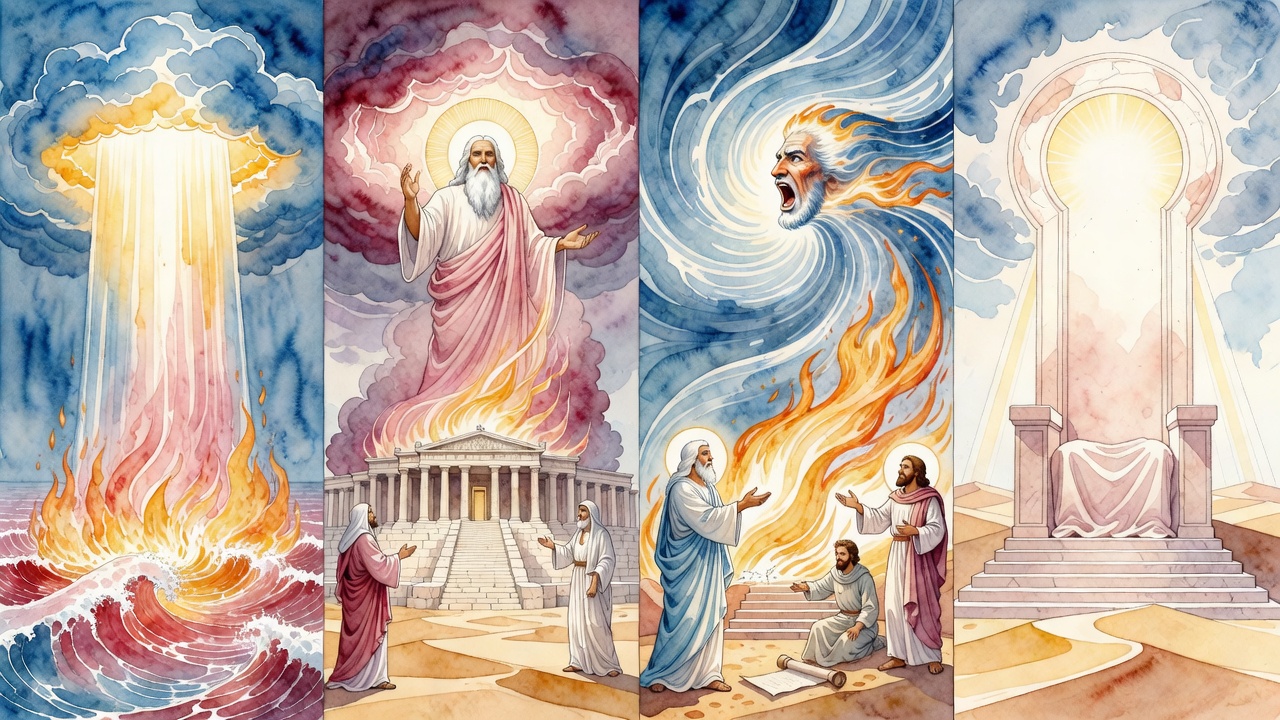
The first appearance came in Egypt, in the yards where slaves had been mixing mortar for years they could not count. They cried out. The cry went up. Someone heard it. God appeared among the cherubim, and the brickfields emptied toward a sea.
A psalm names the moment with a shepherd's title: Shepherd of Israel, who leads Joseph as a flock. Joseph had gone down first, into a pit, into slavery, into a prison. The flock that cried from the clay was his flock. To call God the one who leads Joseph is to say the descent was not abandonment. The sheep were being walked even when they could not feel the walking.
Dust on the tongue. A whip somewhere behind. Then a presence among winged things, and a road opening that no overseer had drawn.
Fire on the Mountain
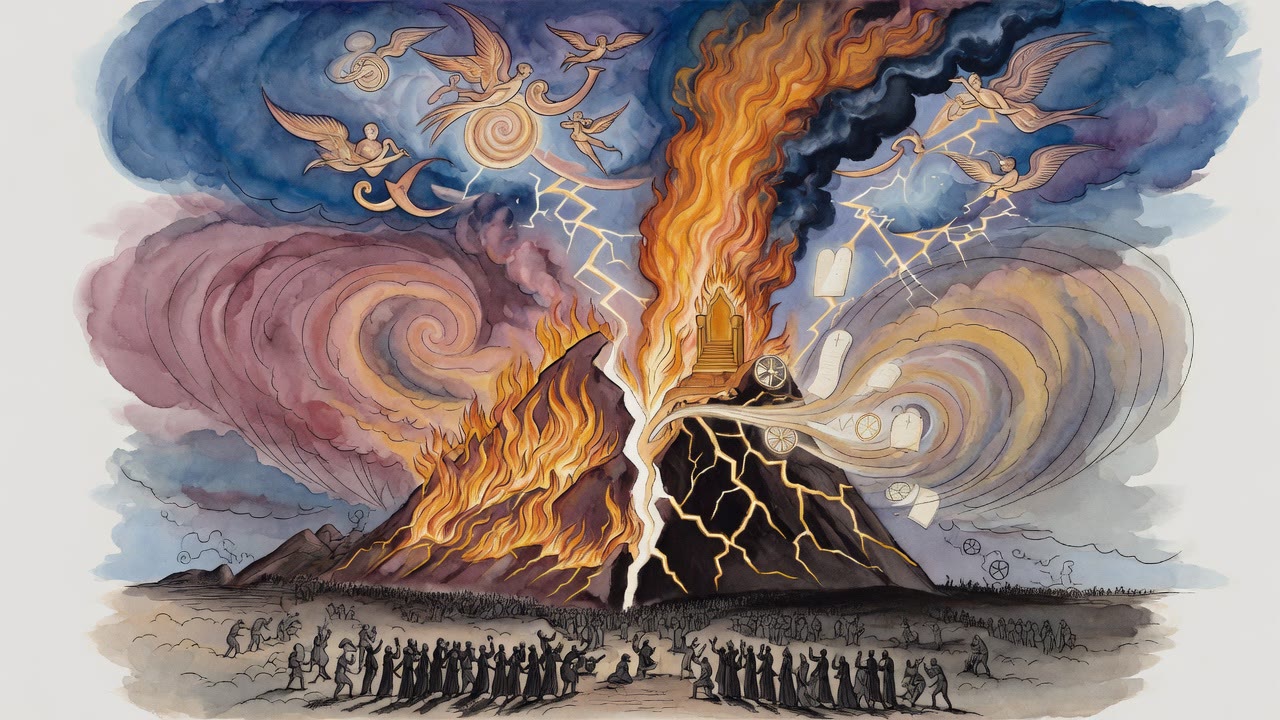
After the water, the mountain. Rescue was not the last word. At the sea God had acted. At Sinai God spoke. The presence that had stood among the cherubim to pull a helpless people out now came in fire and thunder to put words in their hands.
Moses went up. The mountain smoked like a furnace. The whole of it trembled. The people stood at the foot and heard a voice that did not come from any throat they could point to. They had left Egypt with their bodies. They left Sinai with the Teaching. The second appearance gave them what the first appearance had freed them to carry.
He appeared from Sinai. He shone forth from Mount Paran. The blessing Moses would later speak over the tribes still had that fire in its mouth.
Priests in the Riverbed
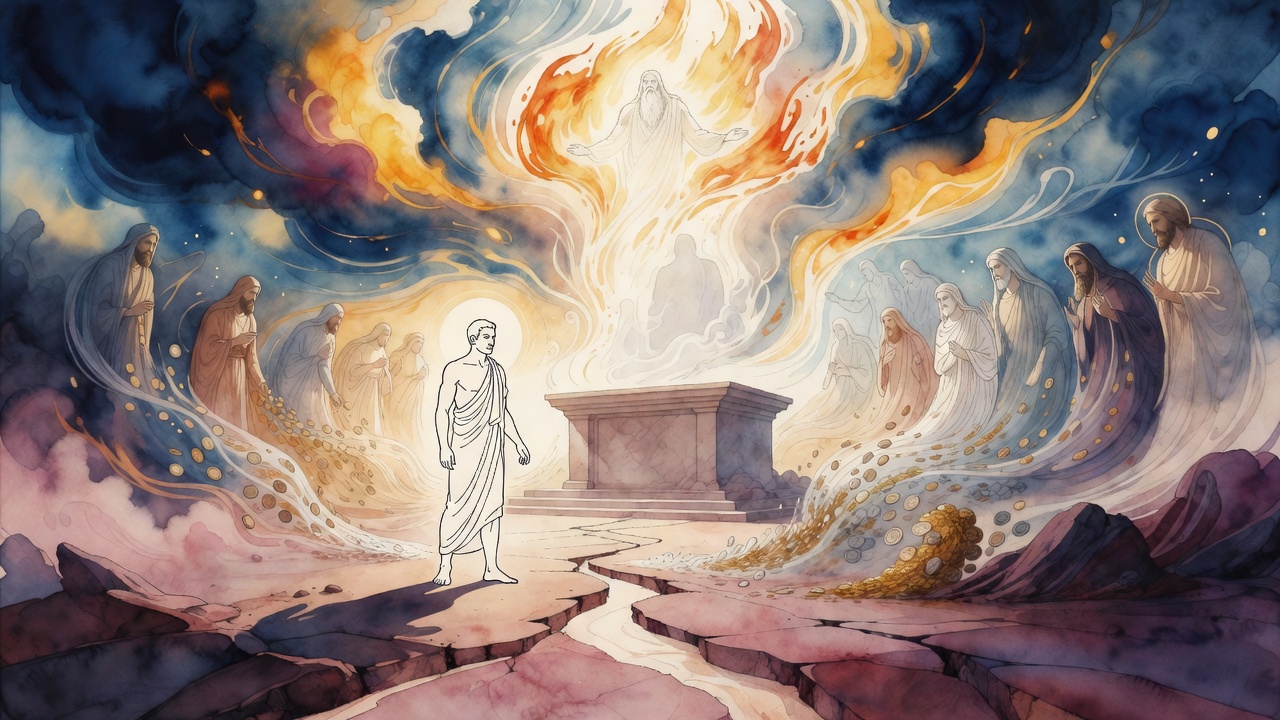
The third crossing was not a sea. It was the Jordan, and the forty years resolved into mud that had not seen daylight in living memory. The river stood. Upstream the water heaped. Downstream it drained toward the salt sea. The soles of the priests who carried the Ark pressed into a bed that should have been drowning them.
The generation that walked it was not the generation that had left Egypt. Most of them had been born in tents east of the water. They carried a Teaching their parents had received. They had not stood at Sinai. They had never seen a brickfield. The fire and the thunder were campfire stories told by elders who were nearly all dead by the time the water piled up.
The appearance at the crossing was the appearance of a covenant that did not die with the people who first heard it. Children of the Sinai generation inherited the Sinai words with wet clay on their feet.
Fire in the House
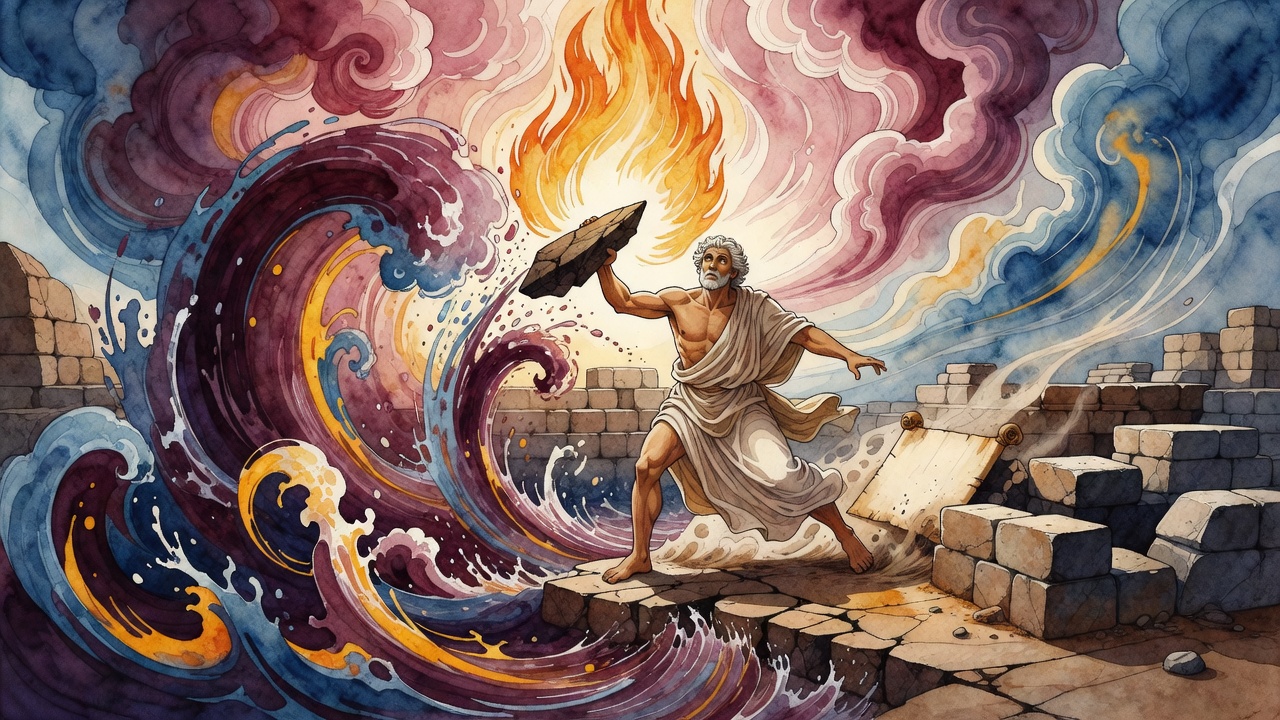
The fourth appearance had walls. When Solomon finished the House and dedicated it, fire came down from heaven and the presence settled. This was not a sudden irruption into panic. It was an arrival at a place prepared for it. The three earlier appearances had moved: God showing up where the people were, walking with them through sand and river into the land. The Temple appearance stayed. Cedar. Hewn stone. A room no one entered except the high priest on one day of the year.
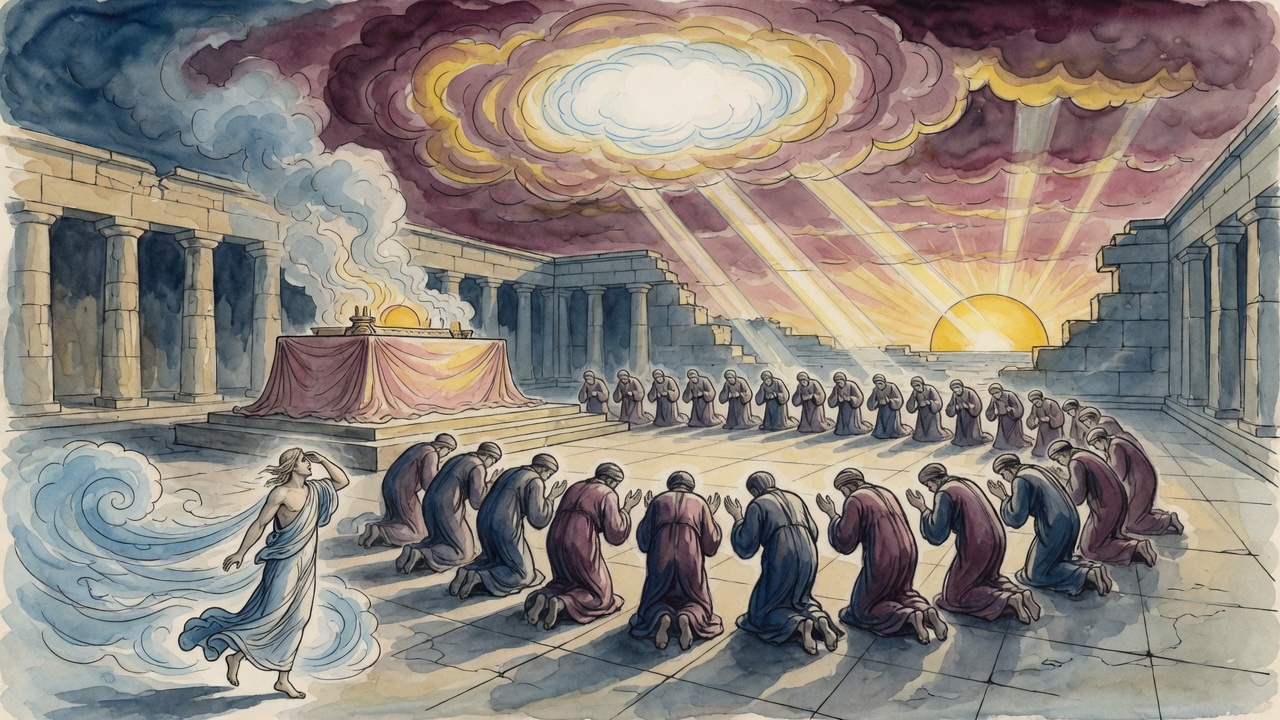
The fire fell. The assembled people went down with it, faces to the pavement. The glory filled the house so densely that the priests could not stand to do their work inside it. They backed out into the court with the service still in their hands.
From brickfields to a room that would not hold them. Four times the presence arrived, and the last time it arrived it would not be walked out of in a night. It sat. The priests learned that by failing to stand.
← All myths