216 texts · Page 1 of 5
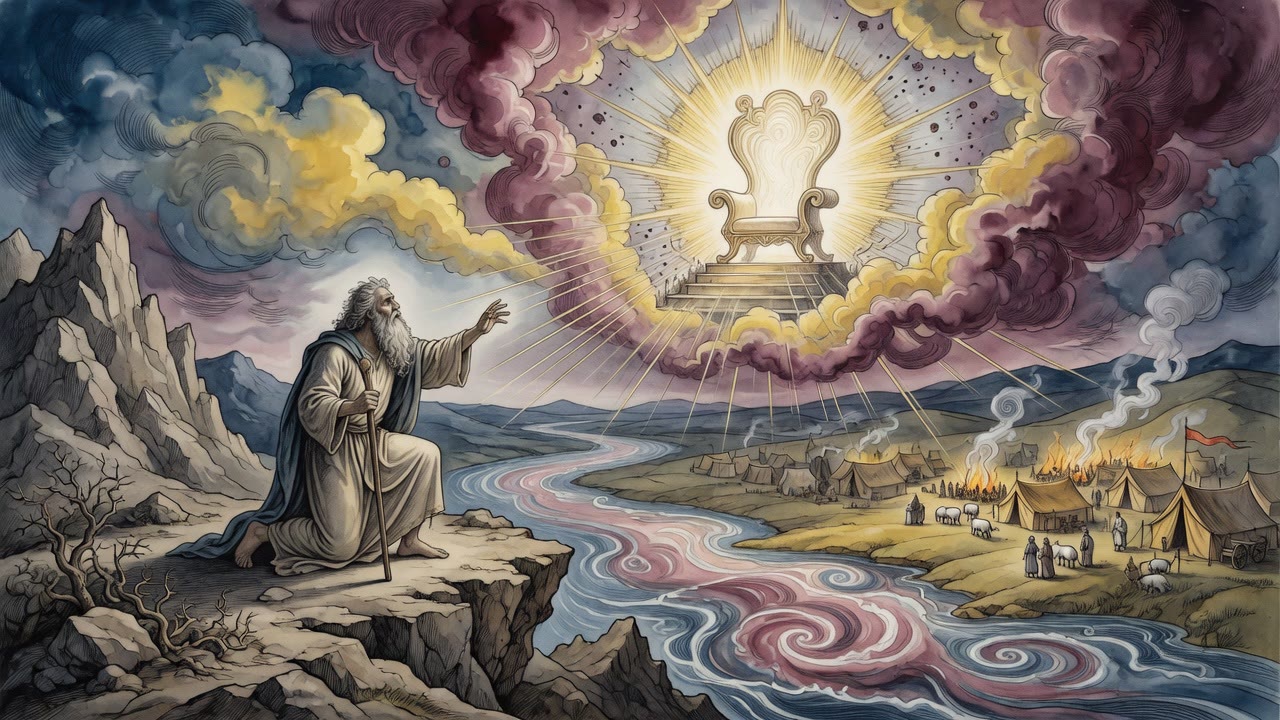
Kingdoms rise and fall, fortunes change in the blink of an eye... It's enough to make you wonder what, if anything, lasts. Ben Sira, that wise sage whose words dance between poetry...
The Book of Jubilees, a text not included in the standard Hebrew Bible but considered sacred by some, gives us a peek into how this concept was understood long ago. It states, quit...
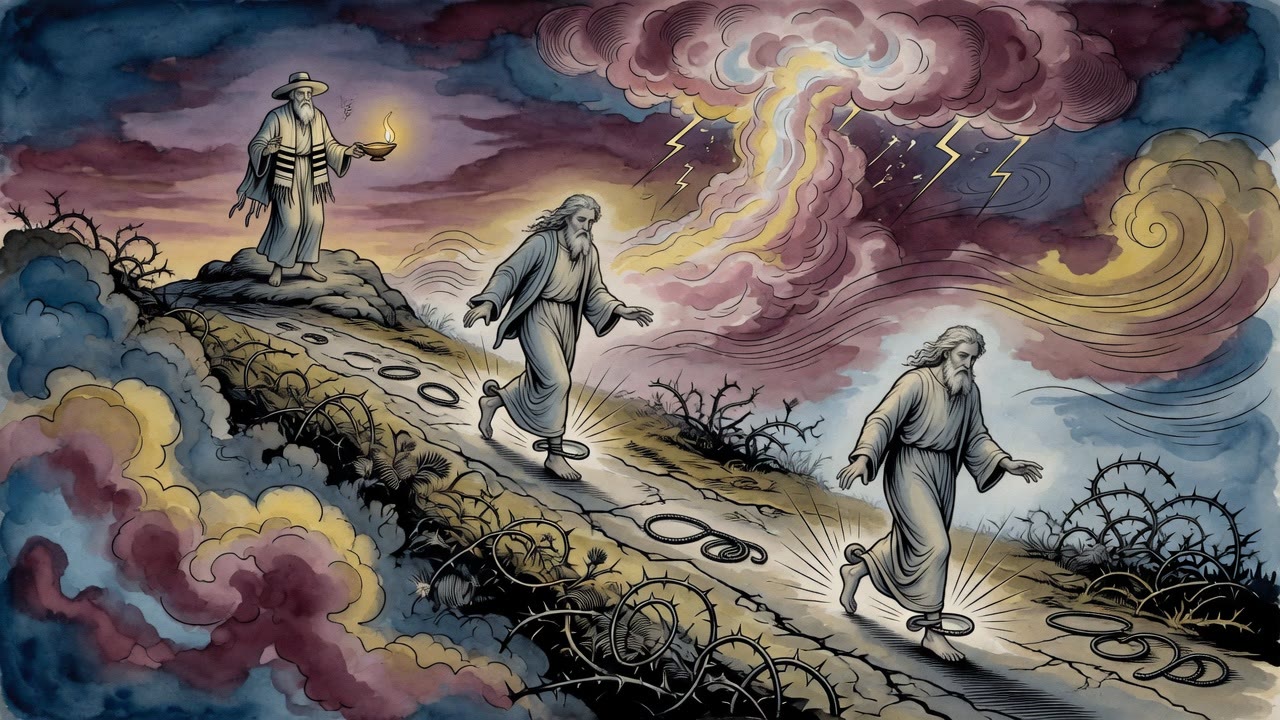
Something went terribly wrong in the early days of the world. According to the Book of Jubilees, a group of ancient texts dated to approximately 160-150 BCE, the children of men mu...
It's considered part of the apocrypha or deuterocanonical texts by some, and is especially important in Ethiopian Orthodox tradition. It's an ancient Jewish writing that retells th...
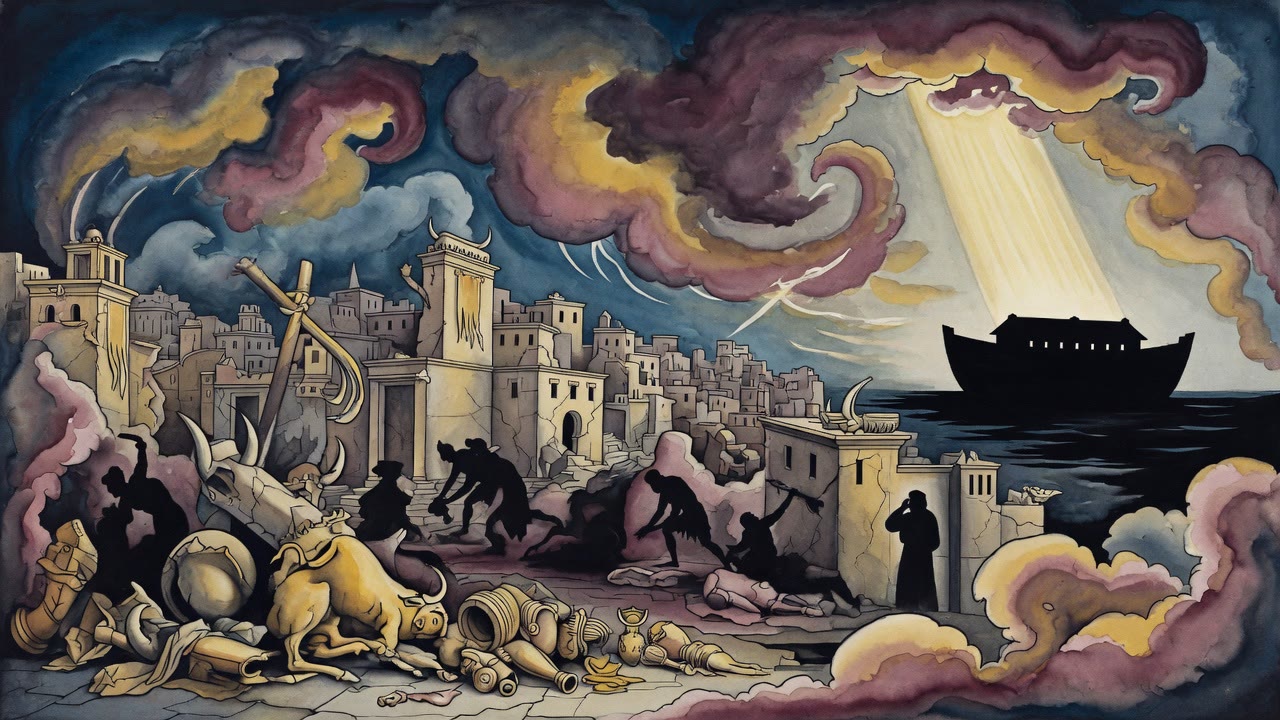
Chapter 7 of Jubilees dives right into the chaos following the emergence of the Nâphîlîm, those figures often translated as "giants" or "fallen ones." Think of them as the offsprin...
The Book of Jubilees, a text considered canonical by some but not included in the standard Hebrew Bible, gives us a peek into Noah's anxieties about the future. Specifically, Jubil...
What is the Book of Jubilees, you ask? It's an ancient Jewish text, considered apocryphal by some, pseudepigraphal by others – meaning its authorship is debated. It retells the sto...
It offers a unique perspective on the early generations after the Flood. In Jubilees 11, we learn that SÊRÔH was born to Noah's descendants in the seventh year of a particular week...
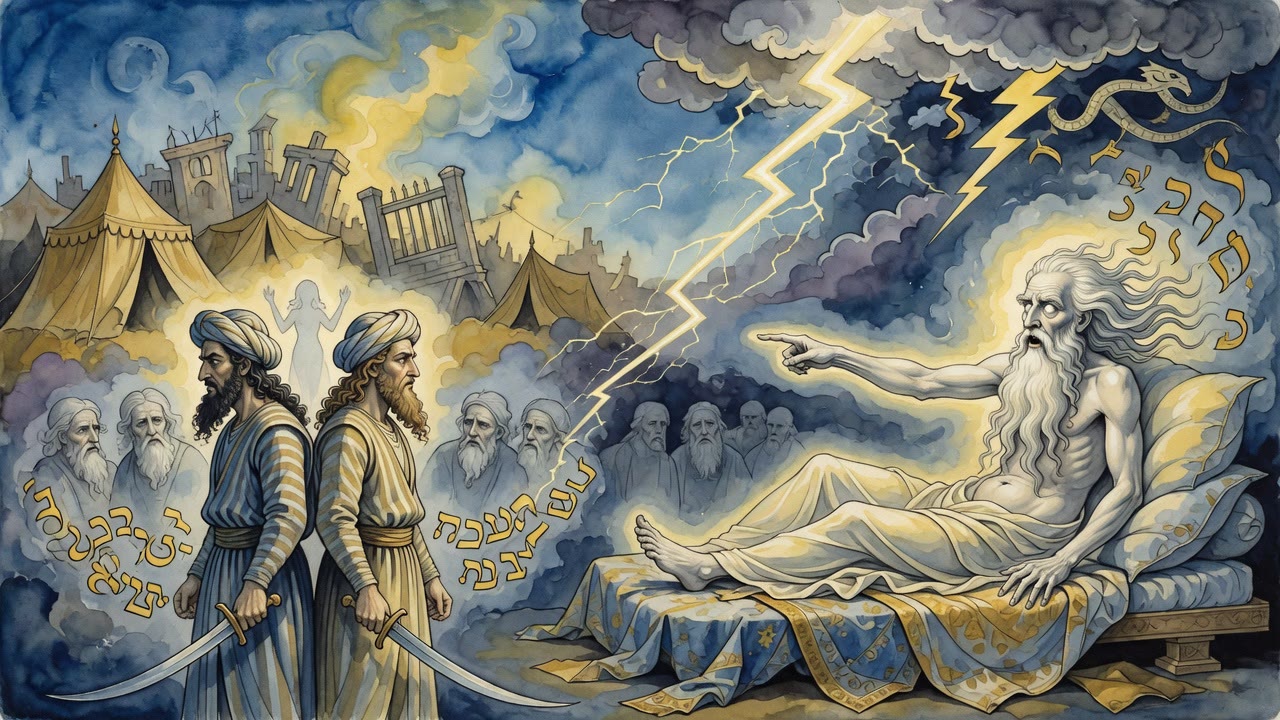
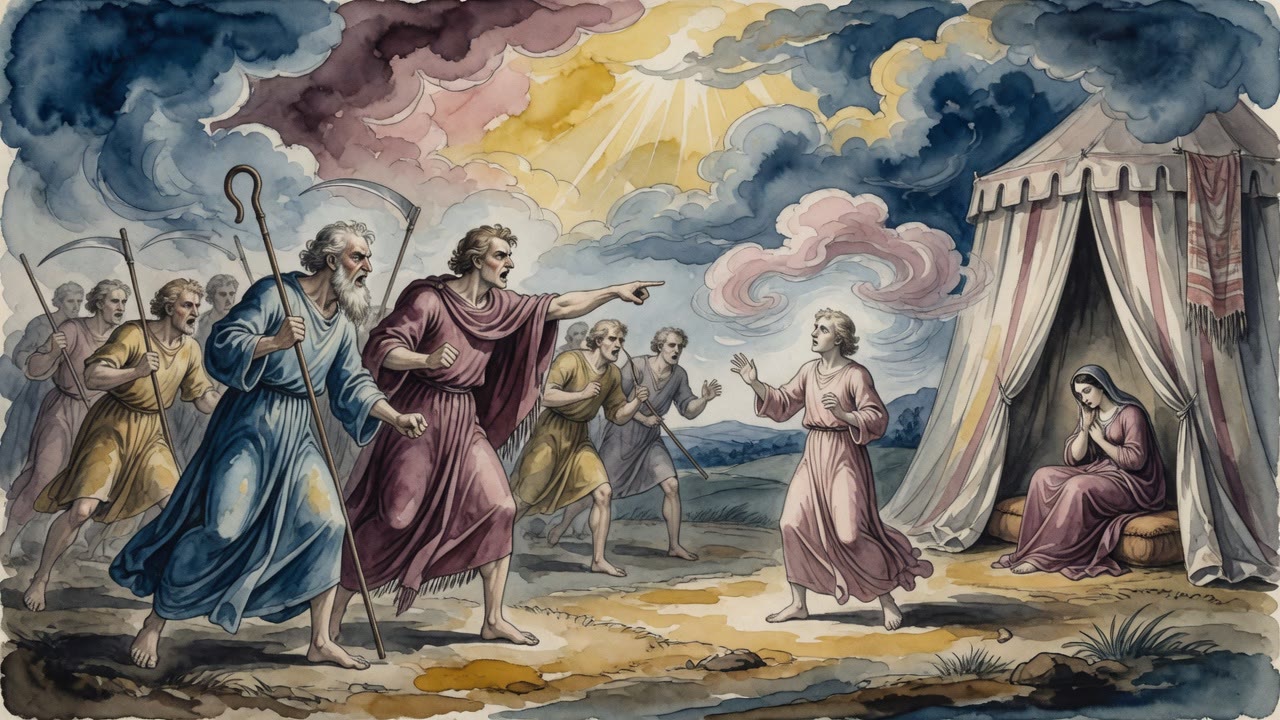
And then BAM! Disaster strikes. "They announced this to Jacob saying: 'Behold, the kings of the Amorites have surrounded thy sons, and plundered their herds.'" Can you imagine the ...
Today, let’s pull one of those stories out into the light. It’s a dramatic, violent, and frankly, surprising tale found not in the Torah itself, but in a fascinating apocryphal boo...
Picture the weight of it, the gleam of it. The Letter of Aristeas tells us it was two cubits long, one cubit broad, and one and a half cubits high. Now, a cubit is an ancient measu...
It’s a question that might make you squeamish, but it also speaks to the incredible ingenuity and meticulousness of the ancient priests. The Letter of Aristeas, a fascinating docum...
The story plunges us right into the thick of it. Judas Maccabeus, the hammer of God, and his army are on the move. They’ve just made a sharp turn "by the way of the wilderness unto...
Our story takes us to Idumea, a region south of Judea. Here, the forces of the Seleucid Empire, under the command of King Antiochus V, were making their way through the land. Their...
The story of Simon Maccabeus ends with just such a twist, a chilling reminder that even the most triumphant lives can be cut short by treachery. We find ourselves in the Book of Ma...
"Listen, master, to what I am saying. Rest yourself from starting quarrels with your neighbors, and if you see something evil about your friend, do not produce their slander on you...
Today, let's talk about Esau. We know him as Jacob's brother, the one who traded his birthright for a bowl of stew. But there's so much more bubbling beneath the surface. According...
We often think of the Biblical figures as these grand, larger-than-life heroes and villains. But sometimes, when you really dig into the stories, you find details that are just… sh...
He wasn't just miffed at his brother Jacob. He was incandescent with rage. Remember, Jacob had received the blessings meant for Esau, and Esau wasn't about to let that go. He wante...
According to Ginzberg's recounting, Judah found himself smack-dab in the middle of the allied kings' infantry. His immediate target? Jashub, the king of Tappuah. Now, Jashub wasn't...
It wasn't just about packing bags and sneaking away in the night. It was a direct confrontation with the gods of Egypt. For generations, they had lived under the yoke of the Pharao...
Balaam, you might recall, was a non-Jewish prophet hired by Balak, king of Moab, to curse the Israelites. But Balaam’s journey to curse them takes a turn for the surreal when his d...
The story goes that after a particularly nasty fall, Joab needed his sword repaired. Sounds simple enough. He heads to the armorer, but as soon as the artisan lays eyes on the weap...
We pick up the story with Joab, commander of King David’s army, after he's already spent ten days resting and recuperating with his hosts. Refreshed, he sets out again to wage war ...
We're diving back into Solomon's reign, drawing from Ginzberg's masterful "Legends of the Jews," specifically volume 5, and it involves a moral quandary with very high stakes. This...
Solomon, as we know, was never one to shy away from a bold statement. But one in particular ruffled feathers. He declared, "One man among a thousand have I found; but a virtuous wo...
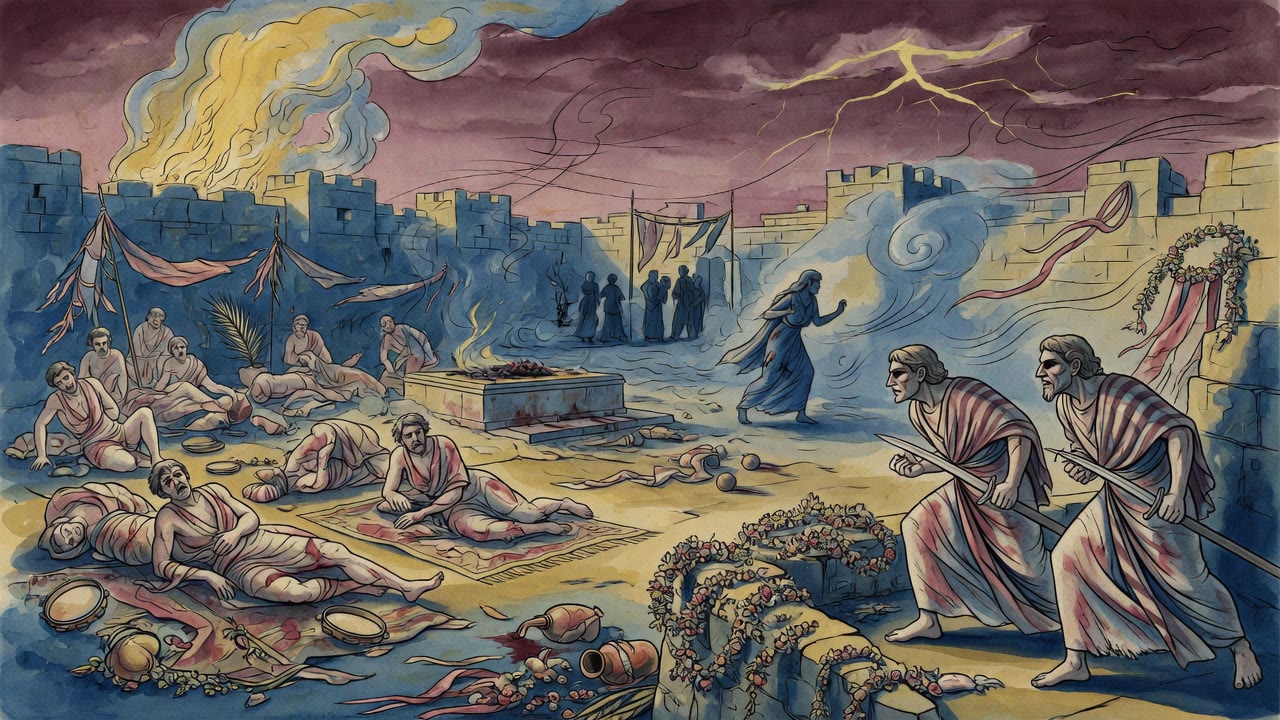
Simeon and Levi waited for the festival. That was the key to their plan. While the men of Shechem feasted and drank, the two brothers slipped past the sleeping guards, entered the ...
Hazael, king of Syria, tore through the eastern territories of Israel like a brushfire. The lands of Reuben, Gad, and the half-tribe of Manasseh fell. Gilead and Bashan burned. And...
From the tiniest microbe to the vastness of space, the sheer diversity of creation is mind-boggling. It's a question that's occupied thinkers for centuries, and one fascinating app...
The mystical tradition of Kabbalah is all about finding those secrets, and the Tikkun (spiritual repair)ei Zohar, a companion to the Zohar, is packed with them.Yes, a sword! The te...
R. Akiva says: One verse states "And you shall slaughter the Pesach (Passover) to the L–rd your G–d, sheep and cattle," and another, "From the sheep and from the goats shall you ta...
The Mekhilta takes a phrase from the Passover laws — "it shall be to you for a keeping" (Exodus 12:6) — and asks what seems like a technical question with surprising depth. Does "k...
(Exodus 12:7) "And they shall take from the blood": I might think either by hand or by vessel; it is, therefore, written (Ibid. 22) "And you shall dip it in the blood which is in t...
The debate over where the Israelites placed the Passover blood continues in the Mekhilta, and Rabbi Nathan and Rabbi Yitzchak stake out dramatically different positions — each reve...
The Mekhilta notices a detail in the Passover laws that most readers skip right past. The Torah says the blood should go on the doorframes "of the houses in which they eat it" (Exo...
The night of the tenth plague was unlike anything Egypt had ever witnessed. Every firstborn in the land — from the heir of Pharaoh sitting on his throne to the firstborn of the cap...
The Mekhilta takes three words — "I, the Lord" — and unpacks from them a theology of divine certainty that spans from punishment to reward. When God declares "I, the Lord" in the c...
The Mekhilta catches a redundancy in the Torah's Passover instructions that most readers would never notice — and from that redundancy, it extracts a legal ruling about where God's...
When God said "And I shall see the blood" regarding the Passover in Egypt, the Mekhilta offers a stunning alternative reading. The "blood" God would see was not the blood of the Pa...
"and slaughter the Pesach (Passover): It is a mitzvah to slaughter it as a Pesach offering. If he does not offer it as such, he transgresses the mitzvah. I might think that in the ...
The Torah describes the Israelites in Egypt dipping hyssop into blood "which is in the saf." The Mekhilta records Rabbi Yishmael's reading of this enigmatic word, and his interpret...
The Torah describes the blood ritual of the first Passover in Egypt: the Israelites were to apply the blood of the Paschal lamb to the lintel and the two doorposts of their homes. ...
The Mekhilta, the great halakhic midrash on the Book of Exodus compiled in the 2nd century CE, raises a deceptively simple question about the Passover blood ritual. The Torah comma...
"and the L–rd will skip over the blood": Now does this not follow a fortiori, viz.: If of the blood (on the door) of the Pesach (Passover) of Egypt, the less "formidable," which ob...
The Mekhilta, the halakhic midrash on Exodus from the 2nd century CE, examines one of the starkest either-or passages in the Prophets. Isaiah delivers God's ultimatum: "If you acqu...
The prophet Ezekiel delivered an oracle of terrifying certainty: "Behold, it has come; it has arrived, says the Lord God. This is the day of which I spoke" (Ezekiel 39:8). But when...
The Mekhilta cites Jacob's blessing to Joseph — "I have given you an additional portion over your brothers, which I took from the hand of the Emori with my sword and with my bow" (...
The Mekhilta DeRabbi Yishmael draws a pointed contrast between two moments of song in Israelite history, and the difference reveals something fundamental about the nature of the So...