Absalom's Rebellion and the Grief That Almost Ended David's Reign
David survived his son's coup and returned to Jerusalem. When Absalom died in battle, the king's grief nearly cost him the kingdom a second time.
Table of Contents
 Click for full size
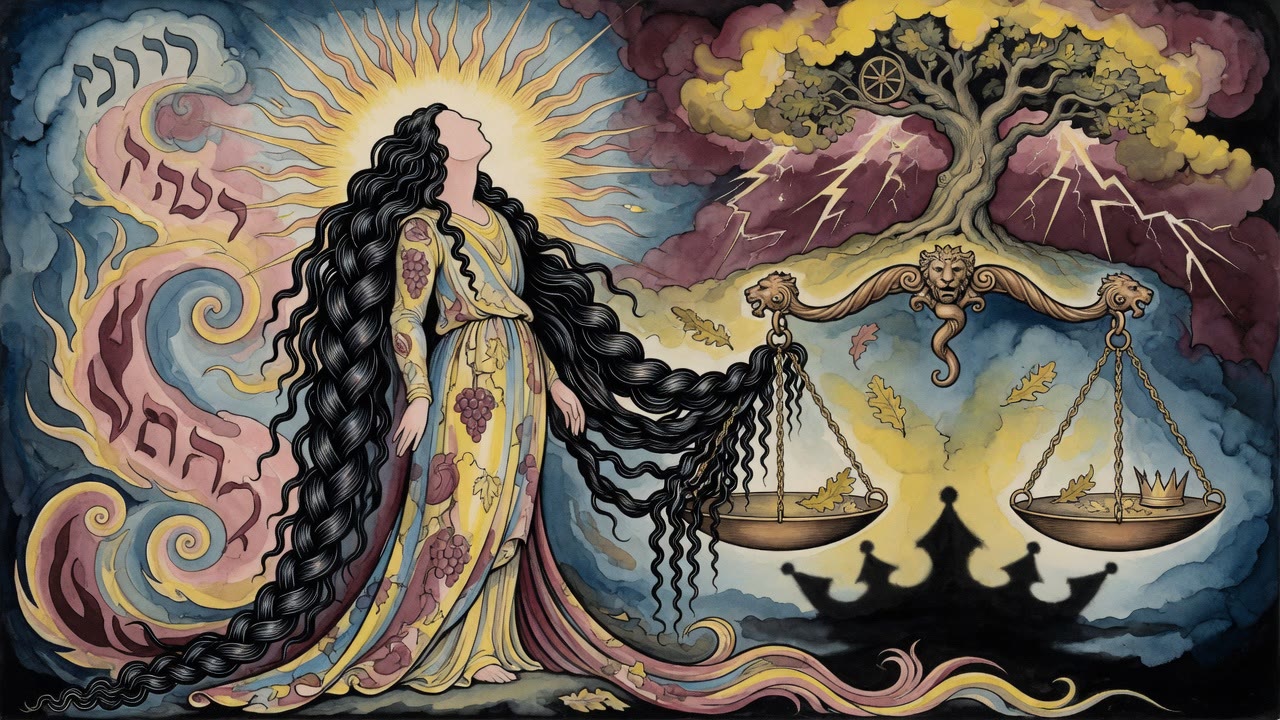
How a Son Stole a Kingdom
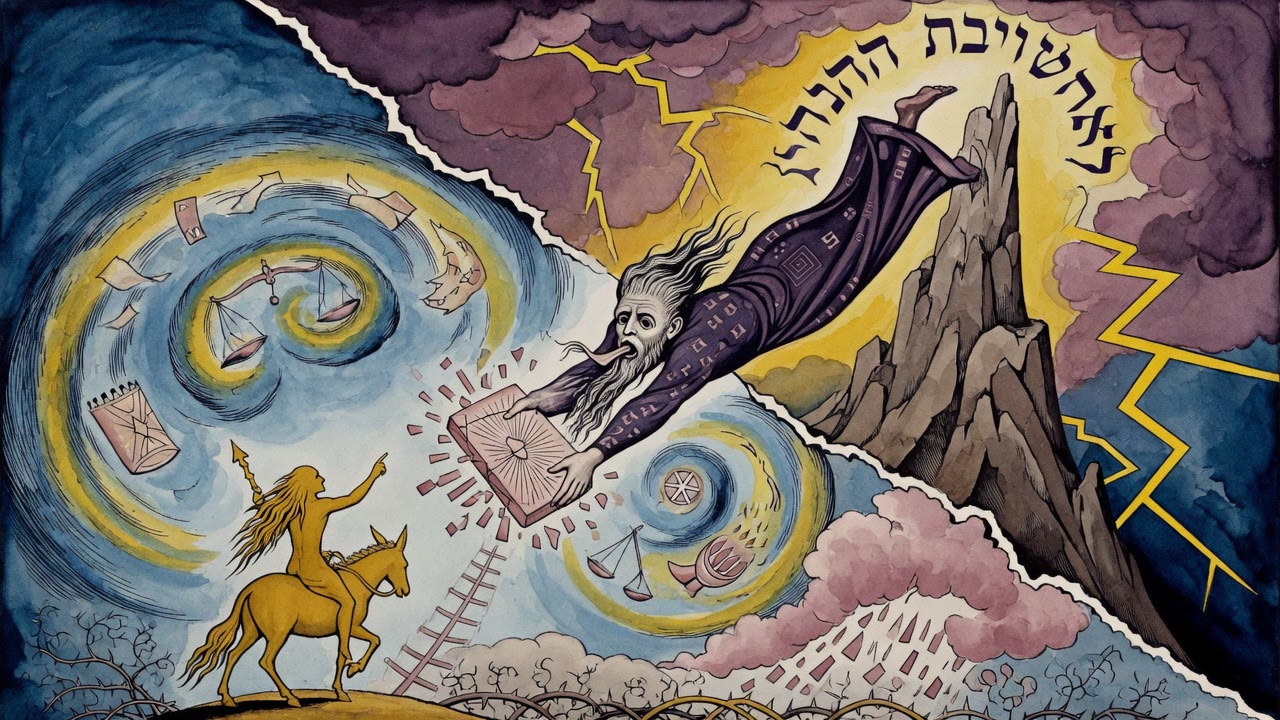
David had already forgiven him. That was the part nobody could understand. After Absalom killed his own brother Amnon and fled to Geshur and spent three years in exile and came back to Jerusalem and spent two more years avoided by his father, after all of that, David summoned him, let him fall at his feet, raised him up, and promised to forget. That was the bargain. Absalom accepted it and immediately began building a conspiracy.
Josephus, in his Antiquities of the Jews, written in Rome in the 90s CE, describes Absalom's method with the precision of someone who had studied how power is actually captured. Every morning, Absalom stationed himself at the city gate and intercepted people coming to bring cases before the king. He told them their cases were strong but that the king had no capable counselors, or that the judges had erred. He promised that if authority were given to him, he would distribute justice fairly to all. He did this for four years, building goodwill that belonged to his father and redirecting it toward himself.
The coup itself was staged elegantly. Absalom asked permission to go to Hebron to pay a vow, brought two hundred Jerusalemites who had no idea they were attending a coronation, and sent word to his network across the country that when the trumpet sounded, they were to declare Absalom king in Hebron. The two hundred who had come as guests became witnesses to a proclamation they had not agreed to make. Ahithophel, David's own counselor and one of the sharpest strategic minds in the kingdom, joined Absalom's side.
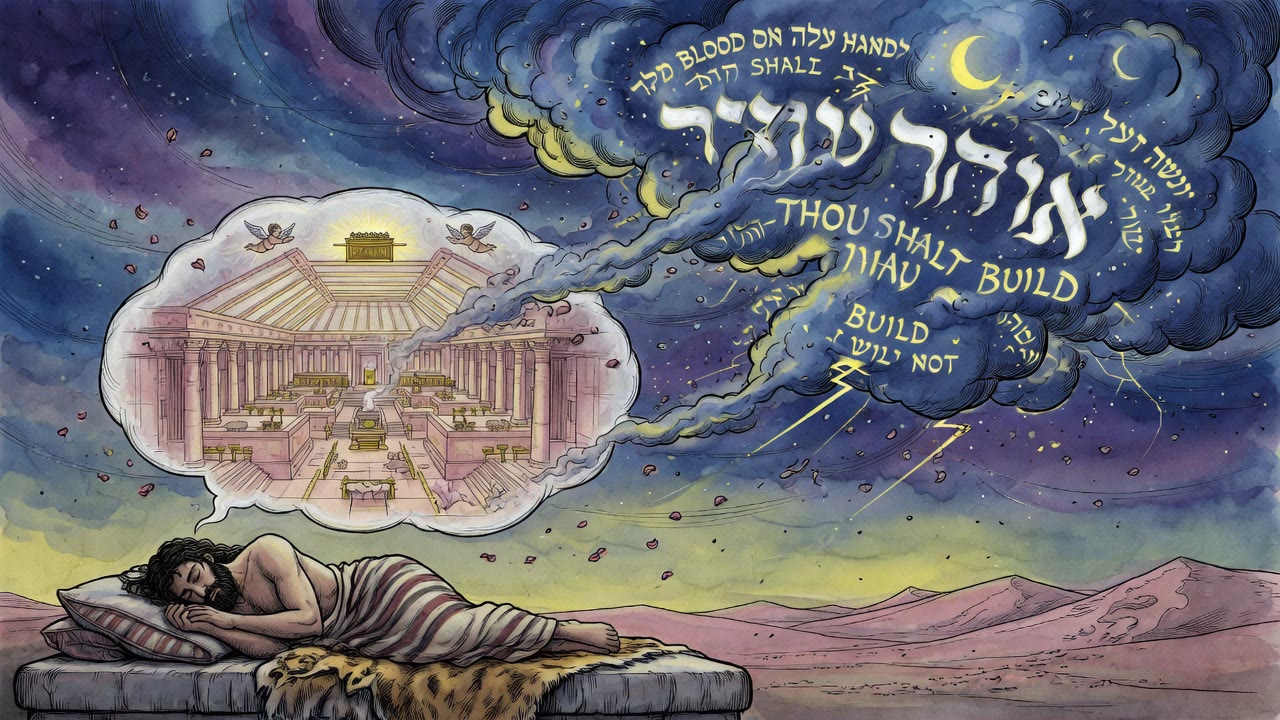
David Running From Jerusalem
David left the city barefoot, weeping, his head covered. The priests wanted to bring the ark with him. David sent it back. If God willed that he return, the ark would be waiting in Jerusalem. If not, let God do what seemed good to him. The Shimei who came out to curse him on the road, throwing stones and calling him a man of blood, was held back from execution by David's command: let him curse. God told him to. Who are we to stop him.
Joab commanded the army. David stationed three columns in the forest of Ephraim for the battle he knew was coming. He asked his generals publicly, in front of all the people, to deal gently with the young man Absalom. Josephus notes the public nature of that request. David did not want any excuse for what followed. He wanted it understood, before the battle, that Absalom's life was not forfeit as far as the king was concerned.
The Oak and the Mule
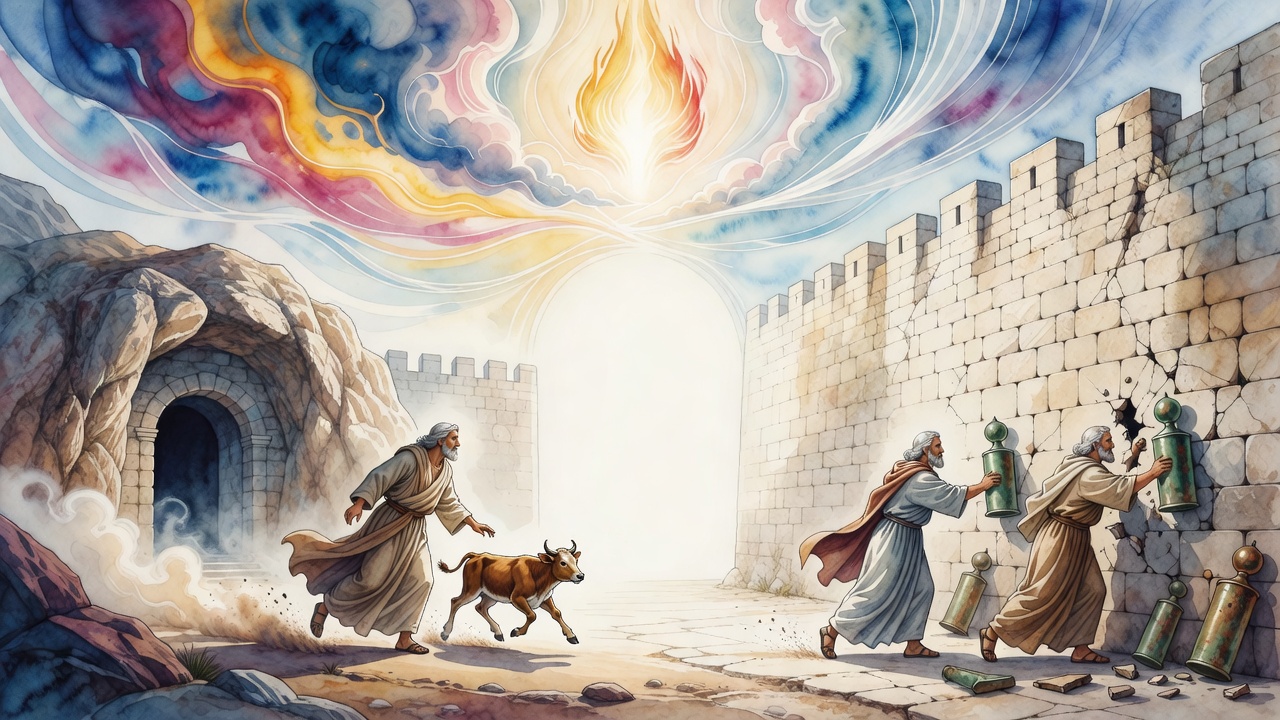
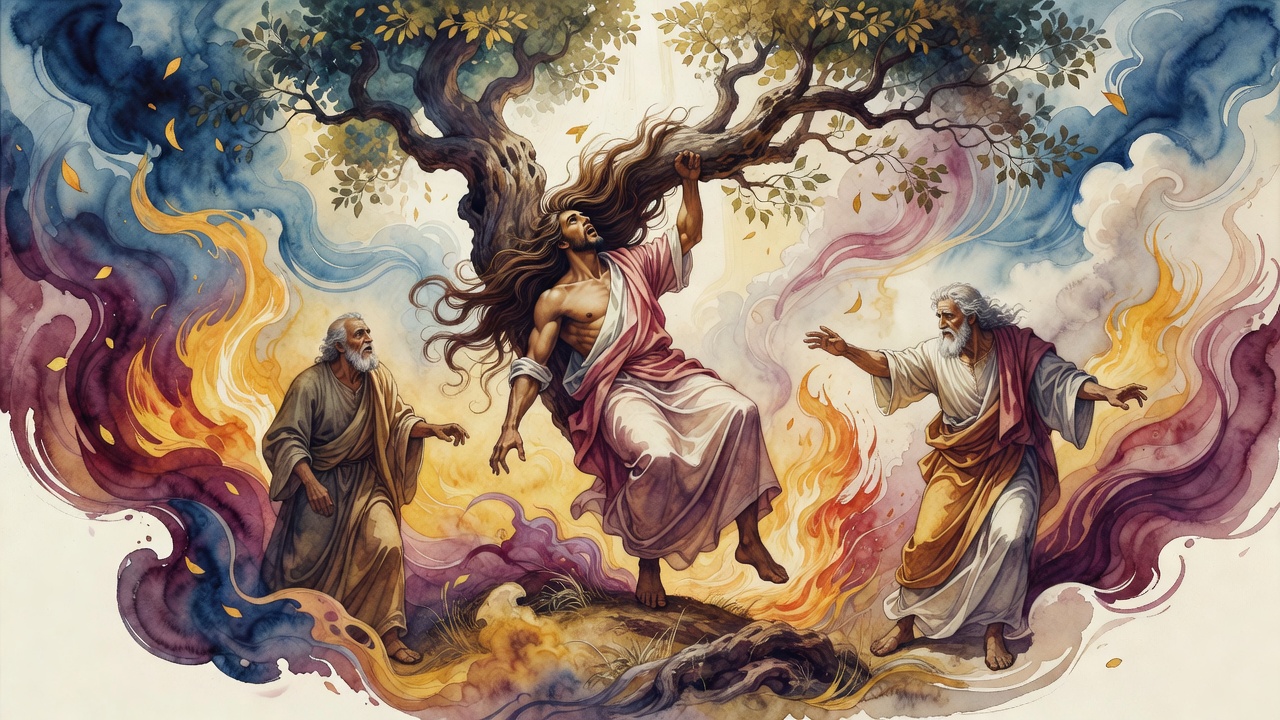
Absalom's mule went under a great oak and his head caught in the branches. The mule kept moving. Absalom hung there, suspended between earth and sky. A soldier found him and reported to Joab. Joab asked why he had not killed him on the spot. The soldier said: I heard the king tell you to protect the young man. I would not have touched him for a thousand pieces of silver.
Joab threw three darts into Absalom while he was still alive in the tree. Then ten of Joab's armor-bearers struck him. Absalom died in the oak, between the ground and the sky, exactly as far from both as he had always been from the loyalty he pretended to have. They threw him into a pit in the forest and piled stones over him. The massive pillar Absalom had erected in the king's valley, to keep his name alive since he had no son to carry it, stood beside an unmarked grave.
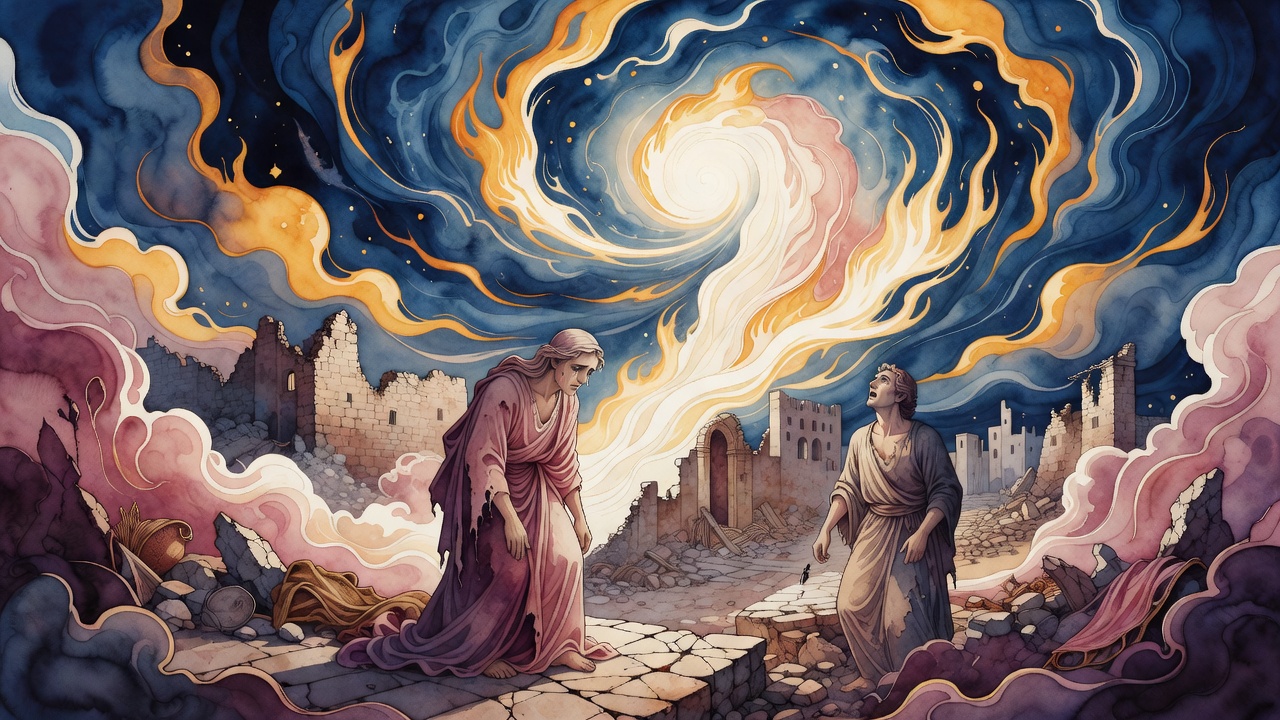
The Grief That Would Not Stop
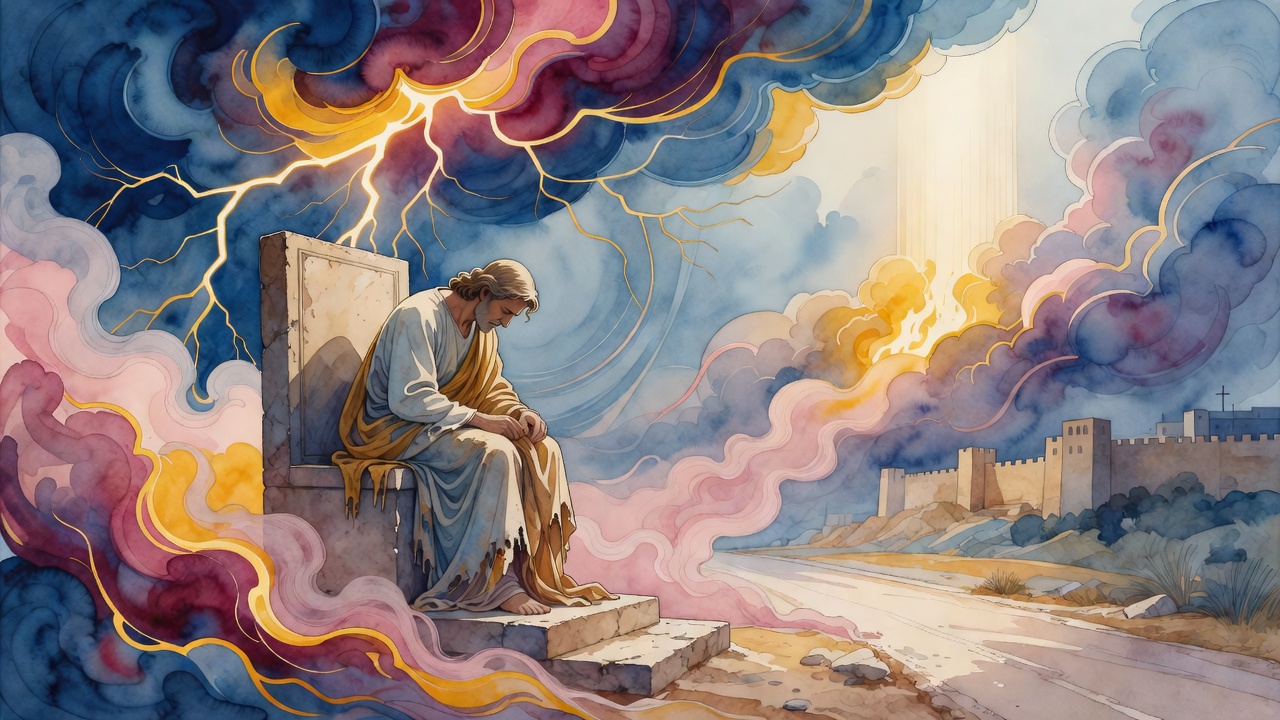
When David heard, he went to the chamber over the gate and wept. He said: my son Absalom, my son, my son Absalom. Would I had died instead of you, Absalom my son, my son. Josephus says he mourned beyond what the victory warranted, beyond what the occasion permitted, beyond what the army that had just saved his kingdom could understand. The soldiers who had fought for him came back to find their king weeping for the enemy they had killed, and the victory curdled into something like shame.
Joab came to David and said what nobody else had the standing to say: you have shamed today all your servants who have saved your life and the lives of your sons and daughters, by loving those who hate you and hating those who love you. If Absalom had lived and all of us had died today, then you would have been pleased. Now rise, go out, and speak to your servants. Because if you do not go out, not a man will stay with you tonight, and that will be worse for you than any evil you have suffered from your youth until now.
David heard it. He rose and sat at the gate. The people were told and they came before him. The grief did not end. But the king appeared, and the kingdom did not collapse the second time.
← All myths