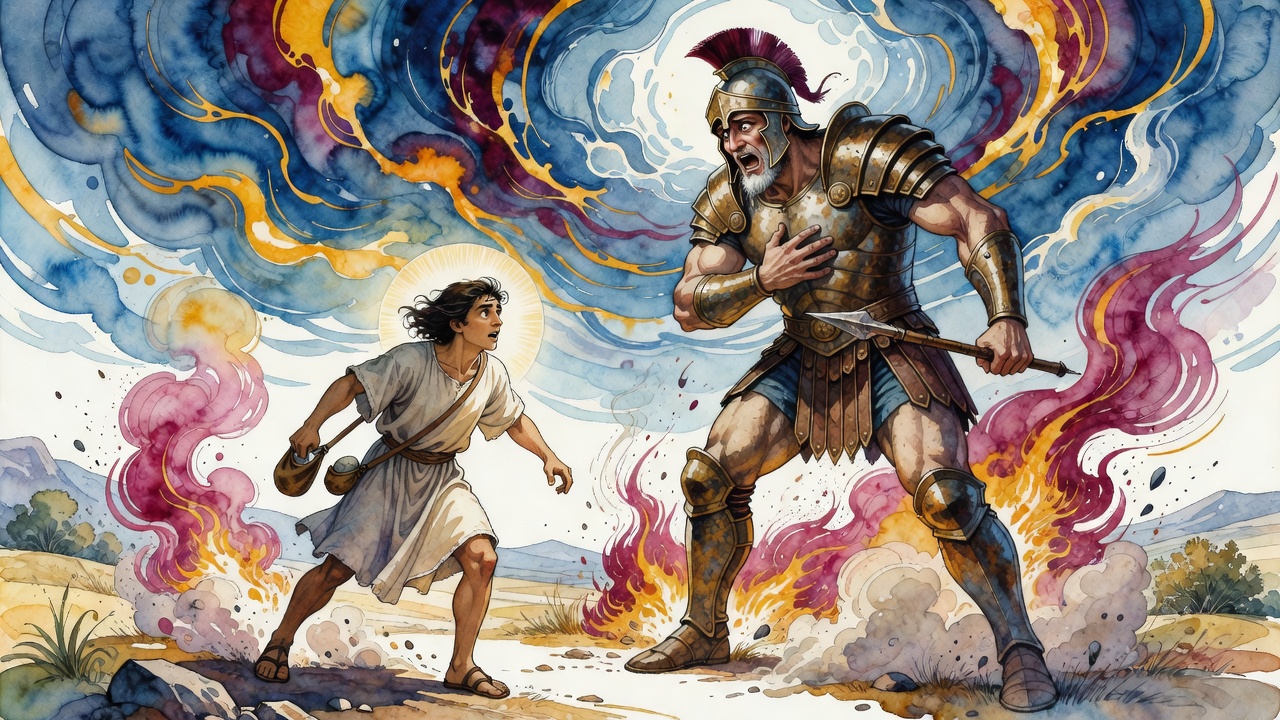
Achior Warned Holofernes and Paid for the Truth
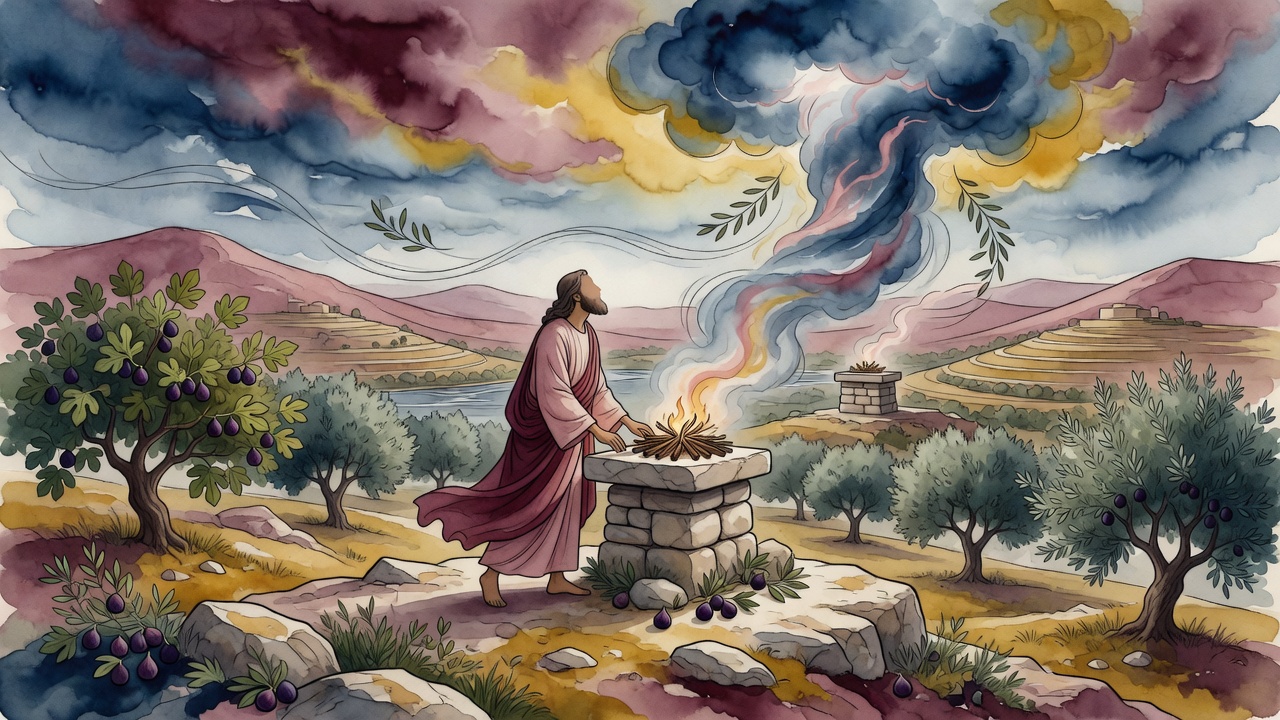
Achior told the general the truth in front of the whole staff. Holofernes had him tied to a tree below the city he had just tried to save.
Table of Contents
 Click for full size
The General Who Could Not Understand
Holofernes had swept across the known world with an army that did not lose. Every people he had reached had either submitted or been destroyed. The Jews in the hill country of Bethulia were not submitting, and he could not understand why.
He called his council and asked the question a general asks when walls should have fallen already. Who are these people, and why do they resist more than all the inhabitants of the west?
He wanted weaknesses. Supply lines. Water. A split in the ranks. He did not want a history lesson. He got one anyway.
Achior Told Him Anyway
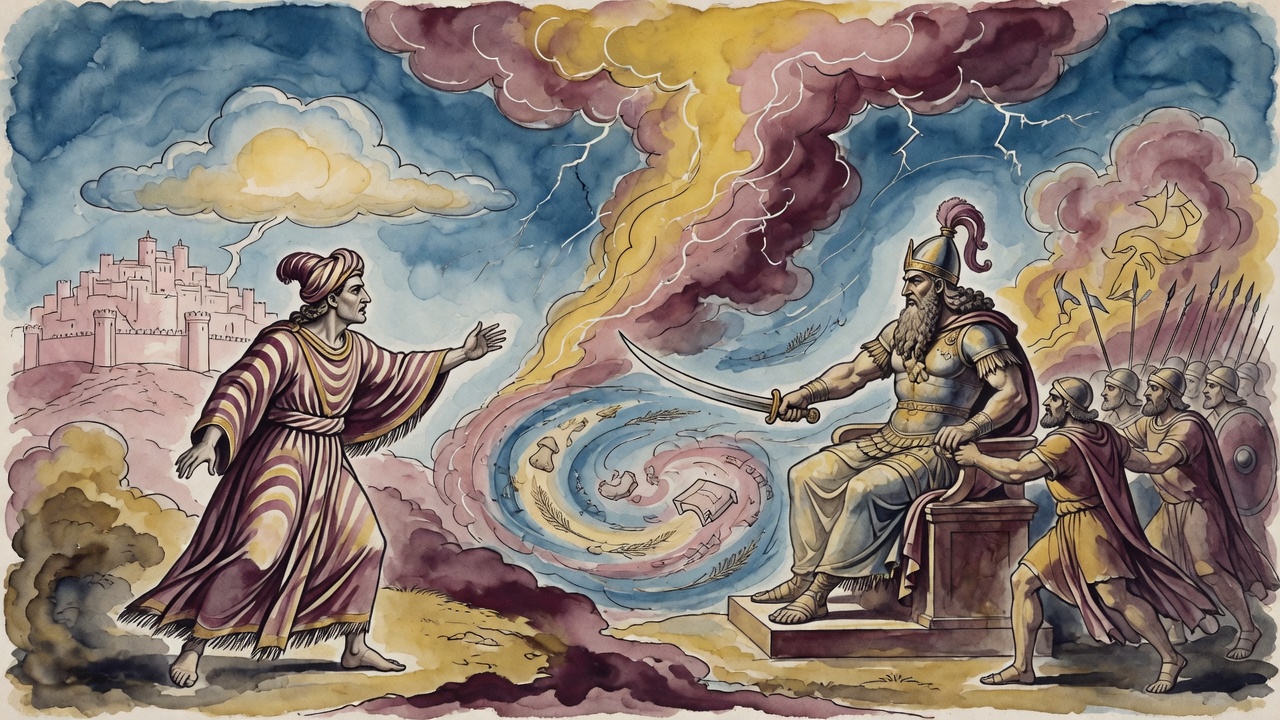
Achior stepped forward. He was the captain of the Ammonites, not a Jew, not bound by Israel's covenant, not a man the army would expect to defend a people they had been sent to crush.
"Let my lord hear a word from the mouth of your servant," he said, "and I will declare to you the truth."
He told the story from the beginning. They had left the way of their ancestors and worshipped the God of heaven. Abraham's departure. The sojourn in Egypt, where Pharaoh rose against them and made them make bricks until they cried out. The plagues. The wilderness. The covenant and the settlement. The temple cast down, the exile, the return.
Then he named the pattern. When this people kept faith with their God, no force in the world could touch them. When they abandoned that faith, they could be defeated. The difference was not military strength. It was whether they had sinned.
"If they are innocent now," Achior said, "then pass by. If there is no iniquity in their nation, their God will fight for them, and you will become a reproach before all the world."
Tied to a Tree Below the Wall
Holofernes heard the speech as treason. A commander asking why people resist does not want a condition he cannot measure. He wants a city he can take.
"Who are you, Achior," he said, "that you would prophesy against us, and say we should not make war with the people of Israel because their God will defend them? And who is God but Nebuchadnezzar?"
He announced the sentence. Achior would not be killed in the tent. He would be handed over to the people of Bethulia, tied to a tree at the foot of the hill, and he would watch from there as the Assyrian army destroyed the city he had tried to protect. Then he would perish with them.
The men of Bethulia came down from the walls when they saw the Assyrians approaching. They came armed with slings and drove the soldiers back with stones. Then they found Achior tied to the tree, dazed from exposure, and cut him free and carried him up into the city.
He told them everything he had told Holofernes. Every word of the speech that had gotten him handed over to them. The people of Bethulia listened, then bowed their heads and praised God and said, "Who are you that you have spoken this truth on our behalf?" They took him in among the people he had risked his life to warn.
The Head in the City
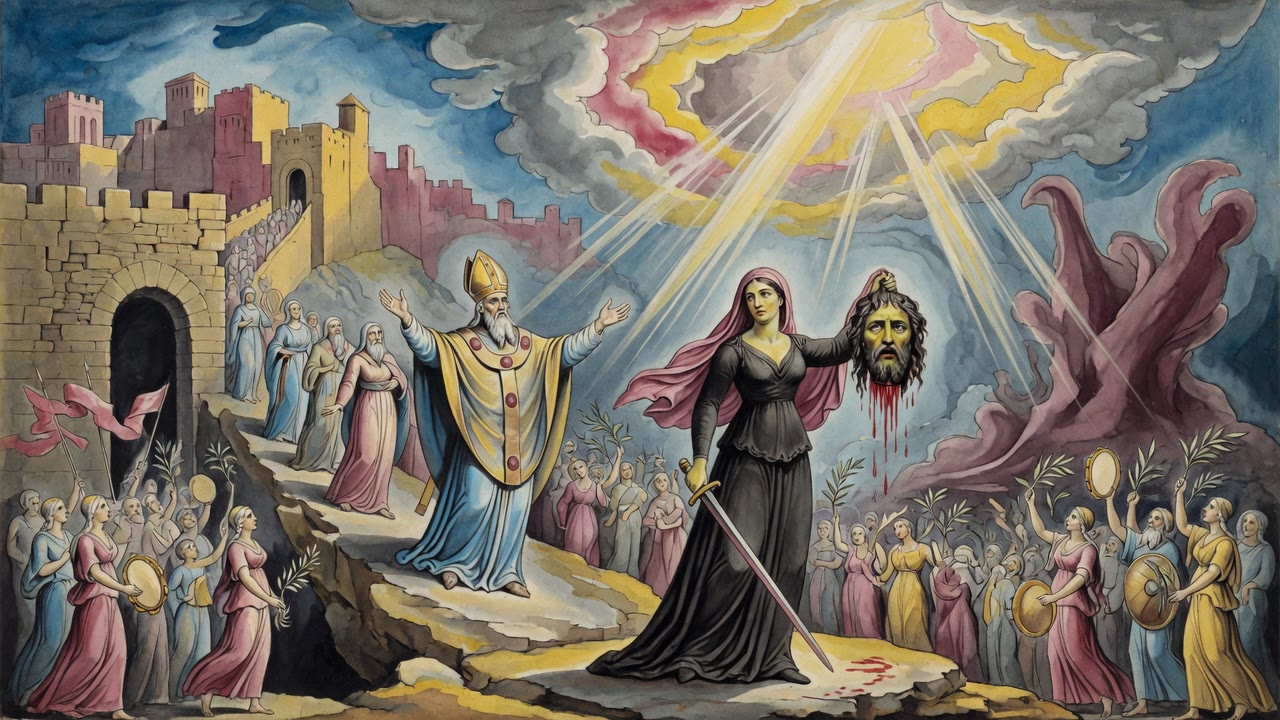
The siege went on. Water ran low. The city began to talk of opening the gates. Then Judith walked out of Bethulia and into the camp, and she came back with Holofernes's head in a bag.
When Achior heard what had happened, they brought him to see it. He fell to the ground. The general who had tied him to a tree for telling the truth was a head without an army, and the city that was supposed to die around him was still standing.
Then he asked to enter Israel's covenant. A man who had stood before the most powerful general of his age and told the truth about a God he did not yet worship found that the truth he had told was true enough to demand his loyalty. He had already been acting inside the pattern. Now he stepped into it with his body.
Below the wall, the tree still stood. The rope was gone. The army was running.
← All myths