Adam Met Cain on the Road and Asked About the Verdict
The first murderer walked out of his sentencing in a good mood. His father, who had only eaten fruit, never got out from under his own.
Table of Contents
 Click for full size
The Word Adam Would Not Say
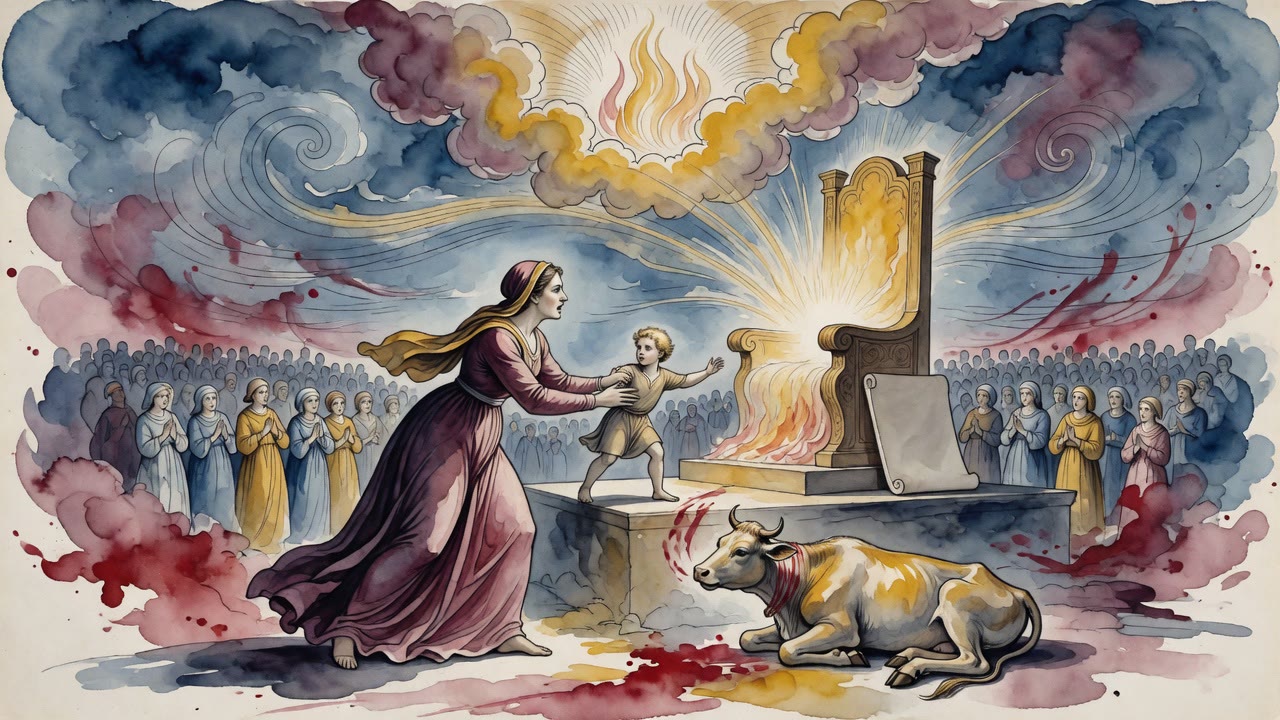
God asked Adam what he had done, and Adam had one sentence to spend. He spent it on his wife. The woman You gave to be with me, he said, she gave me from the tree, and I ate. The eating came last. Everything in front of it was somebody else. Eve first, and behind Eve the One who had made her and set her in the garden beside him.
He was told to turn back. That was the whole of what was being asked. One clean sentence with nobody else standing inside it.
Adam answered with a hedge. Lest, he said. Lest a man reach out his hand and take more than he should. It sounded careful. It was a no with better manners, and God heard it that way, and the gate shut, and the sword turned every way behind him.
Cain Answered Plainly
His son did far worse and said it far better.
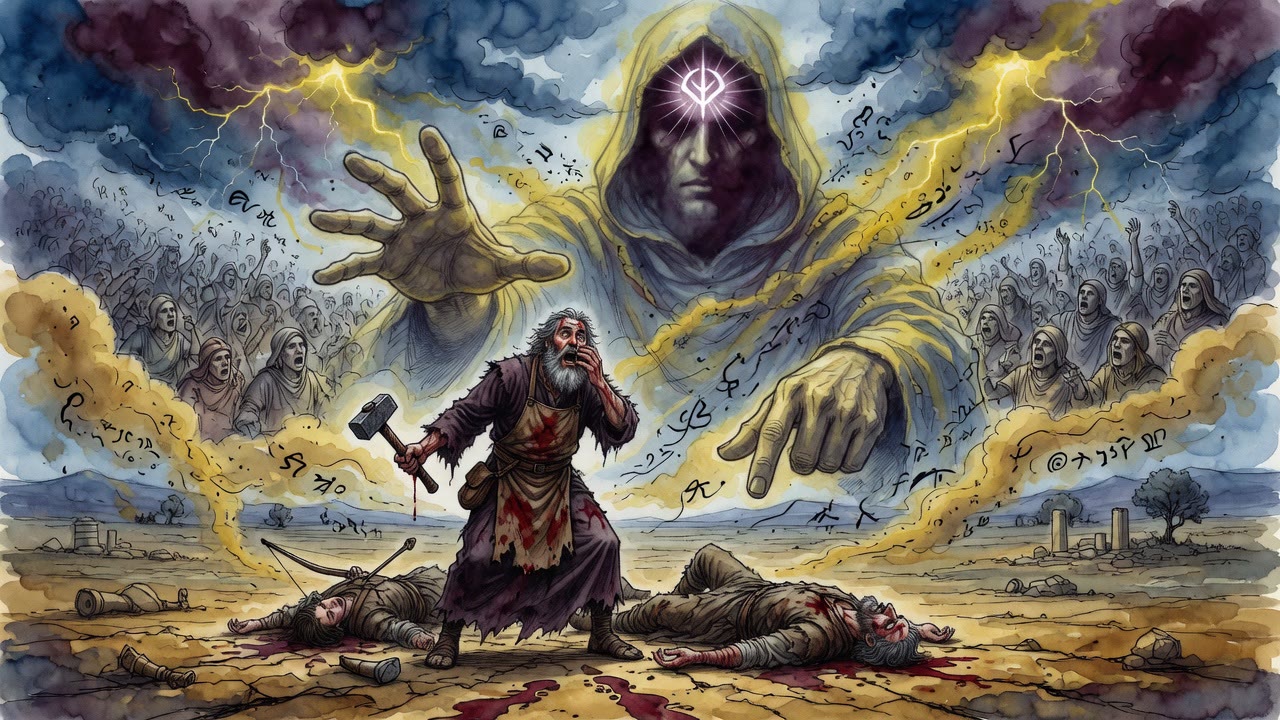
Cain walked his brother out to the field and came back alone, and when God asked where Abel was, Cain lied. I do not know, he said. Am I my brother's keeper. The lie lasted about as long as it takes to say it. Then something in him gave out. He stopped arranging the words, and what came out of his mouth was the size of the thing itself. My sin is greater than I can bear.
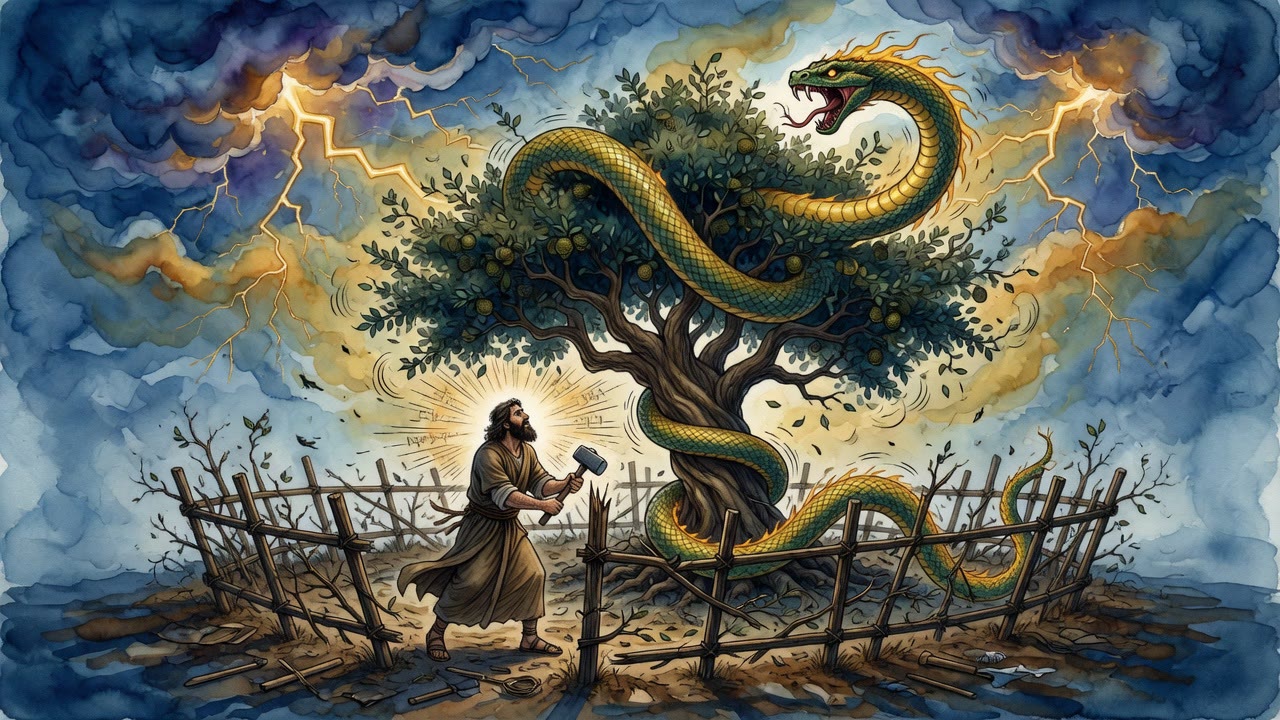
Nobody had coached him into it. There was no woman to hand it to. The serpent was already crawling and had no part in this one. Cain said the thing he had done, and it was true, and the ground that had drunk his brother's blood stayed shut.
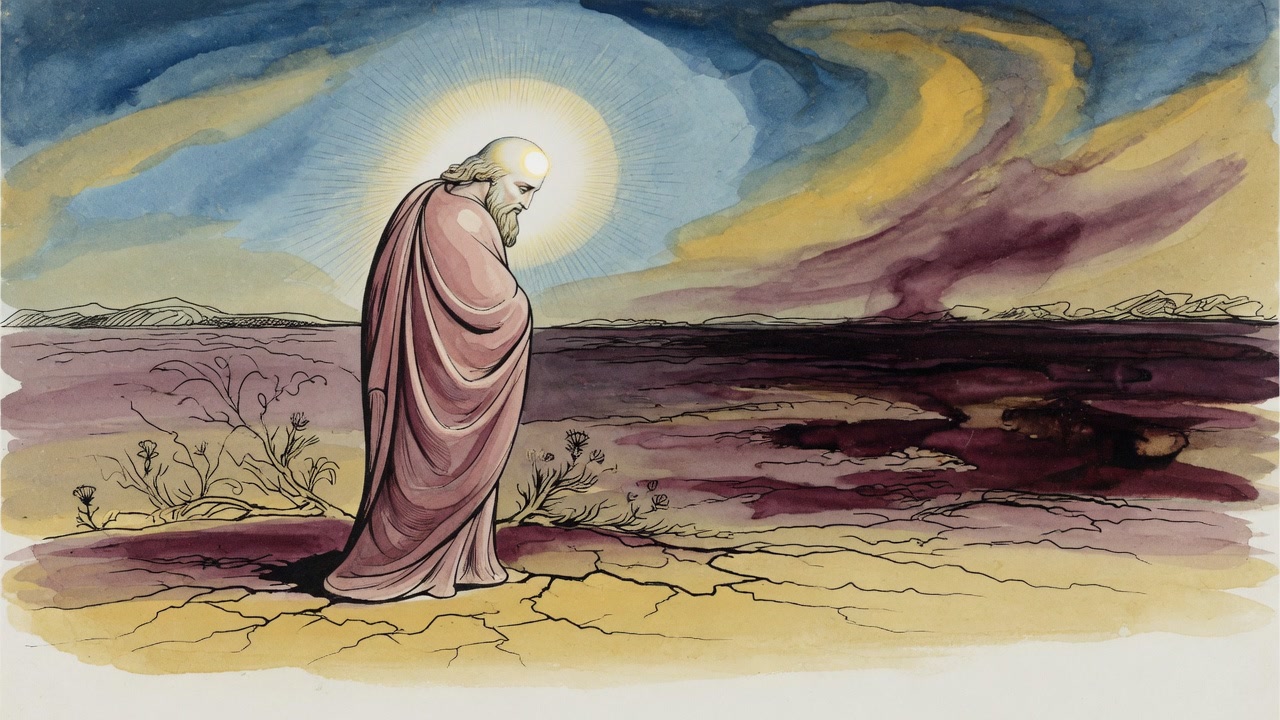
The sentence came down anyway. He would wander, and the soil would not yield to him. But the wandering had an end on it, and the mark God set on his forehead worked as a fence: whoever found him was not to touch him.
The Meeting on the Road
Cain came out from before the Lord, and he came out cheerful.
Adam met him on the road. He had buried one son and had not laid eyes on the other since. He asked the only question a father in that position can ask.
"What happened with your judgment?"
"I repented," Cain said, "and I was forgiven."
Adam stood in the road and did the arithmetic. He had eaten fruit. His son had killed a man in an open field. The same door had been held open for both of them, and Adam had stood in front of his and said lest, and it had closed, and here came the murderer up the road with the case behind him and the morning in front of him.
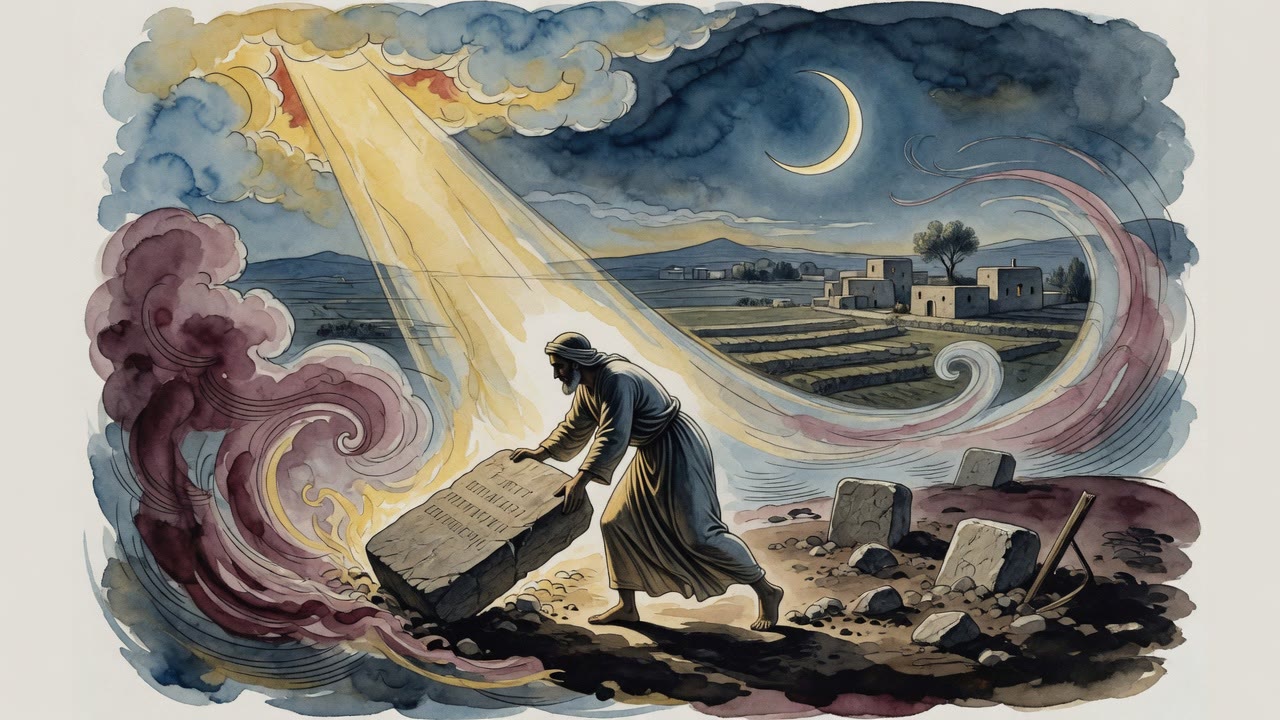
What Adam said then was not a curse. He said, "It is good to give thanks to the Lord." Those are the words that open the song for the Sabbath. He said them out loud on a road, to a man with a mark on his head, and then he went home and lived out the rest of his nine hundred and thirty years knowing exactly what carefulness had cost him.
The Cities With Walls Around Them
Being forgiven did not make Cain good.
He built a city and called it Enoch after his son, because the birth of that boy was when the shaking finally stopped and he could sleep. Then he built six more. He ran walls around them and kept his household inside the walls, and he worked out measures and weights, so that from then on a thing could be counted and a man could be shorted. Before him people had traded roughly and generously and had not checked. Cain taught the world to check. He took what he wanted and he taught his friends to take what they wanted, and the punishment God had passed on him improved him in no way at all.
He knew the terms he was living under. Seven generations, and then the account would be settled. He built the walls high and he waited.
The Arrow That Found the Horn
Seven generations later a blind man went out hunting.
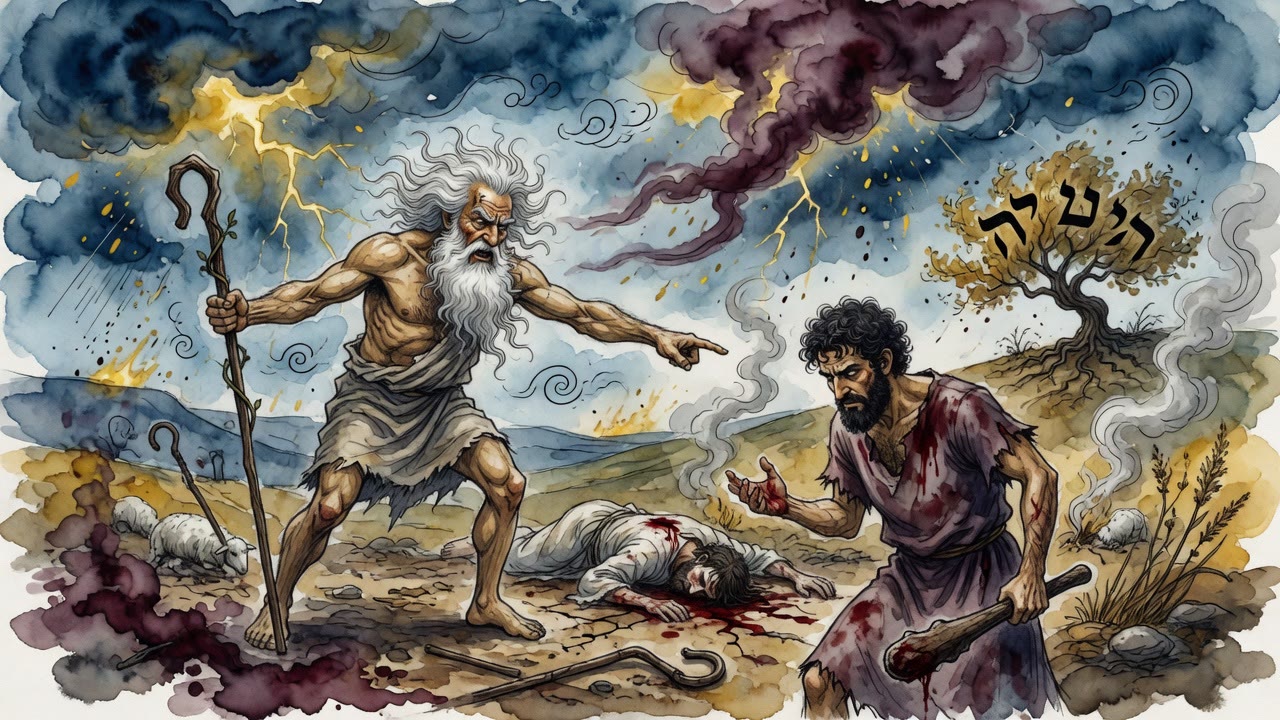
Lamech could not see, so his young son walked ahead of him and named whatever moved. Something horned, the boy said, out past the scrub. Lamech drew, and shot at the voice's direction, and the thing dropped.
They walked up to it together. "Father," the boy said, "you have killed something shaped like a man in every part, except it carries a horn on its forehead."
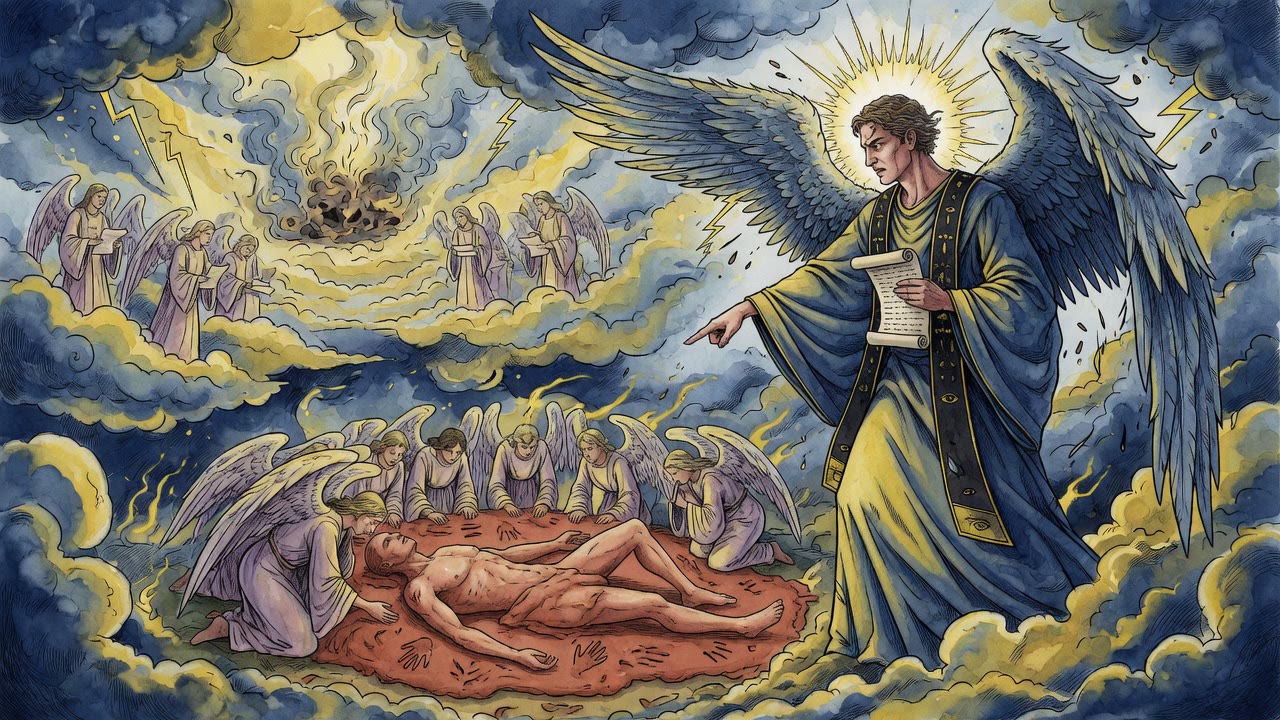
Lamech understood at once. The mark God had set on Cain so that no hand would touch him was a horn, and the horn had brought the arrow in. He struck his hands together the way a man does when the worst thing has already happened. His son was standing close. The blow killed him.
Then the earth opened and swallowed the four generations lying between the two of them, Enoch and Irad and Mehujael and Methushael, and closed over them.
Lamech was blind and could not find his way back. He sat down between his ancestor and his child and stayed there until his wives came looking for him toward evening. When they heard what he had done they wanted to leave him, since everyone descended from Cain was owed annihilation and they had no wish to be standing nearby when it came.
Lamech argued his own case in the dark. If Cain, who had meant every bit of it, was given seven generations before the sentence landed, then a man who had shot at a horn in the brush could hope for seventy-seven.
He took his wives and went to find someone to rule on it. The man he brought the case to was Adam. Adam heard both sides and found for Lamech. He had gotten good, by then, at granting other men the thing he had refused to ask for himself.
← All myths