The Field Creature Tethered to Earth by Its Navel
A traveler heard his host tell his wife to serve their man for dinner, and went out the door at a run. Nobody in that house ate people.
Table of Contents
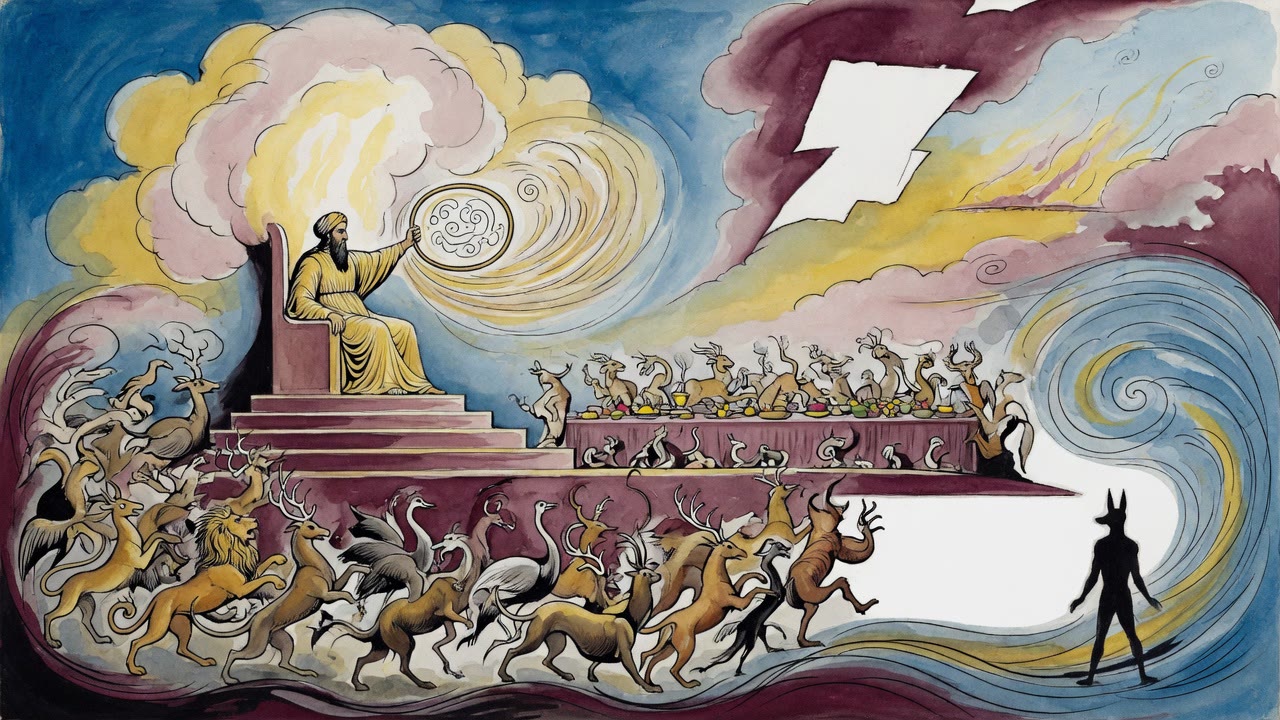
The guest had been given a seat and was waiting for supper when he heard his host in the next room asking his wife what they had that was good enough for a visitor. She went through the options. The host settled it. "We will give him our man."
 Click for full size
The guest was through the door and onto the road before either of them noticed. The host came out after him, calling, waving, running a little way down the road and then stopping, because a man who has decided he is dinner does not slow down for an explanation.
What the Host Meant by Our Man
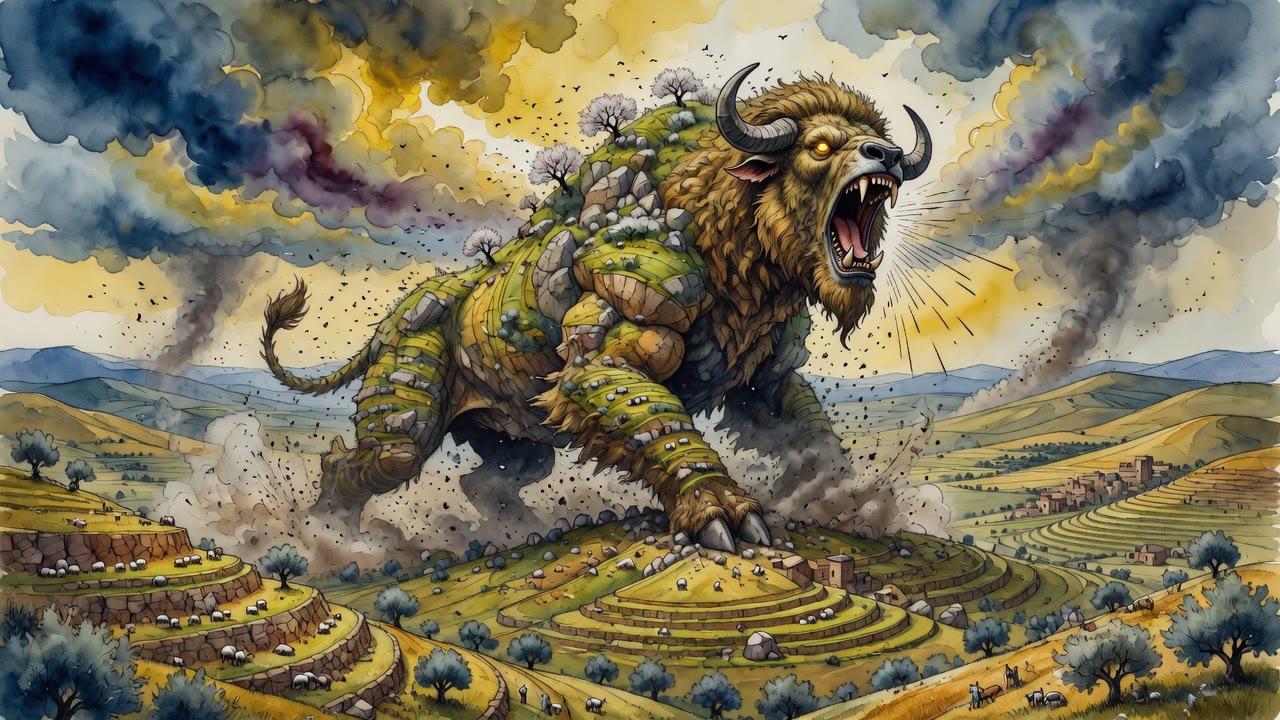
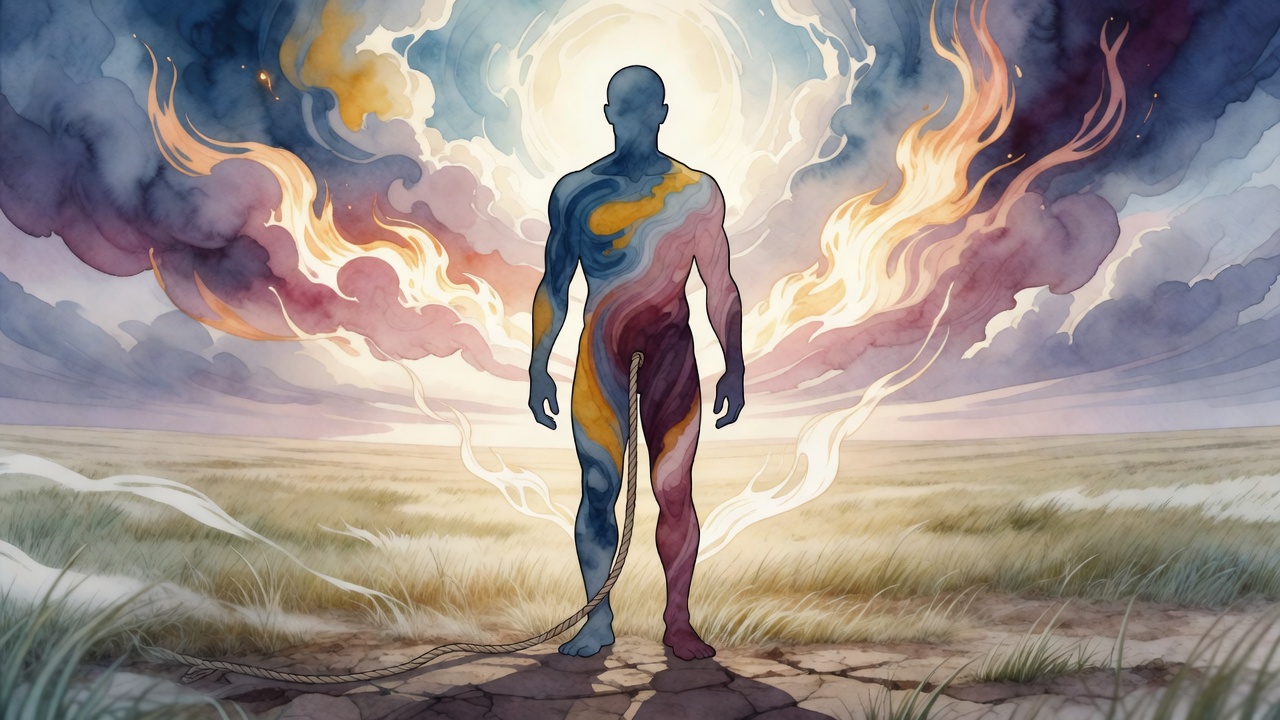
Out in the fields around that region there stood a creature shaped exactly like a person. Arms, legs, a face, upright, the height of a man. Out of its navel ran a cord, and the cord went down into the earth and stayed there, and the earth was where its life came from. Tethered like that, it could not take a single step past the length of its own cord. Sever the cord and the thing dies. Nothing else is required and nothing else works as well.
It ate whatever the soil pushed up around it, roots and fruit and greens, dragging itself as far as the tether allowed and grazing the circle clean. People called it the man of the mountain. In the books it is the Adne Sadeh, the lord of the field, and it was there before anyone farming that valley was there.
The Circle Nobody Walks Into
The cord ran long. In some accounts it stretched more than a mile, which drew a wide ring of ground around each one, and inside that ring the creature took whatever came. Not out of hunger. It had the whole circle to eat from. Anything that wandered close enough got seized and torn apart, a goat, a dog, a child chasing a goat, and then the pieces lay there and the thing went back to grazing.
A traveler crossing that country at a distance would see a figure standing alone in the middle of a field, perfectly still, facing him. He would raise a hand. It would not raise one back. If he kept walking toward it he would be inside the ring before he was close enough to see the cord.
The Dart
So nobody hunting one ever walks up to it.
You stop at the edge of the ring, where the grass is still growing, and you sight along the cord, and you throw the dart from there. The cord parts. The creature does not fall right away. It stands in its field and it groans, and the groaning goes on and carries across the valley, and everyone in the surrounding houses stops what they are doing and waits it out. Then it goes down, and the loose end of the cord lies in the dirt, and only then does anyone step over the line and walk in.
The Thing They Carried Home
Then the body is carried indoors, under a roof, into a house with people in it, and that is where the trouble starts.
When a human being dies inside a tent, everyone under that roof becomes unclean and stays unclean, and everything open in the room with him goes the same way. Animals do not do this. A dead sheep in the house is a dead sheep. So the sages had a question in front of them that could not be answered by looking, and they argued it: is the thing in the field a wild animal or is it a man?
Rabbi Yose gave his answer without hedging. It makes the tent unclean, he said, exactly as a person does. It grows on the face of the field, and it is alive through its navel, and when it dies under your roof you are in mourning conditions whether you knew the deceased or not.
Which is how a creature nobody could classify ended up on the record as human enough to contaminate a room, and never human enough to be worth burying.
What the Guest Found Out
The traveler learned the rest of it later, somewhere down the road, from somebody who knew the country. There had been no cannibals. There had been a host trying to honor a stranger with the best meat in the house, which in that valley came off the creature everyone called the man.
He had run for his life from a dinner. What nobody offered him was any reason to feel foolish about it, because the thing on the table had a face, and hands, and had died groaning at the end of a cord that ran into the ground where the vegetables came from.
← All myths