Retold in our words. Read the original at the link below.Sefaria Community Translation · CC0
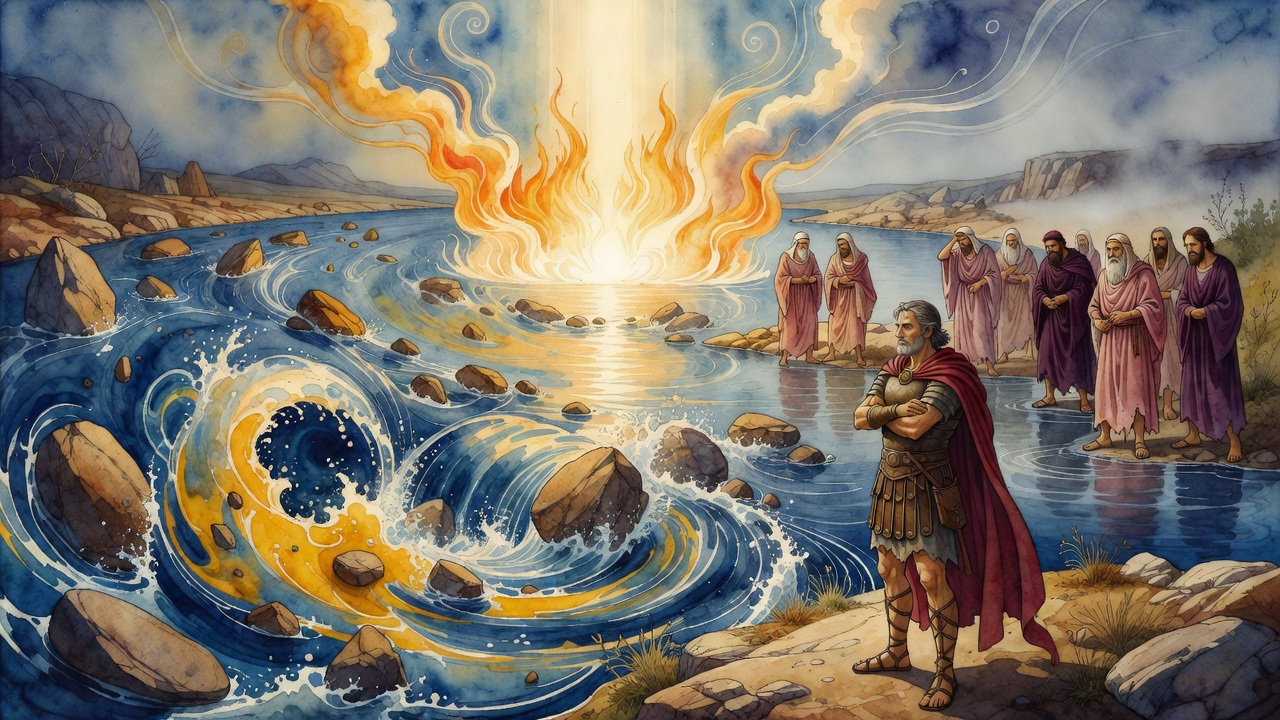
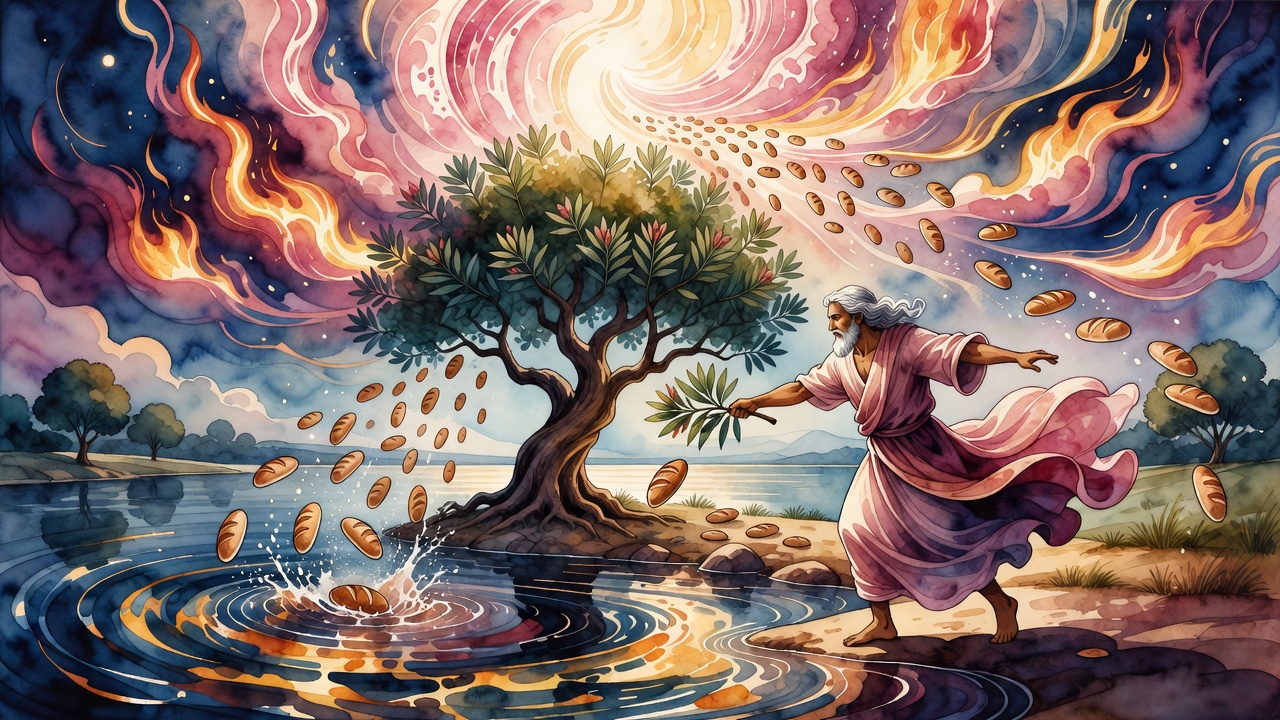
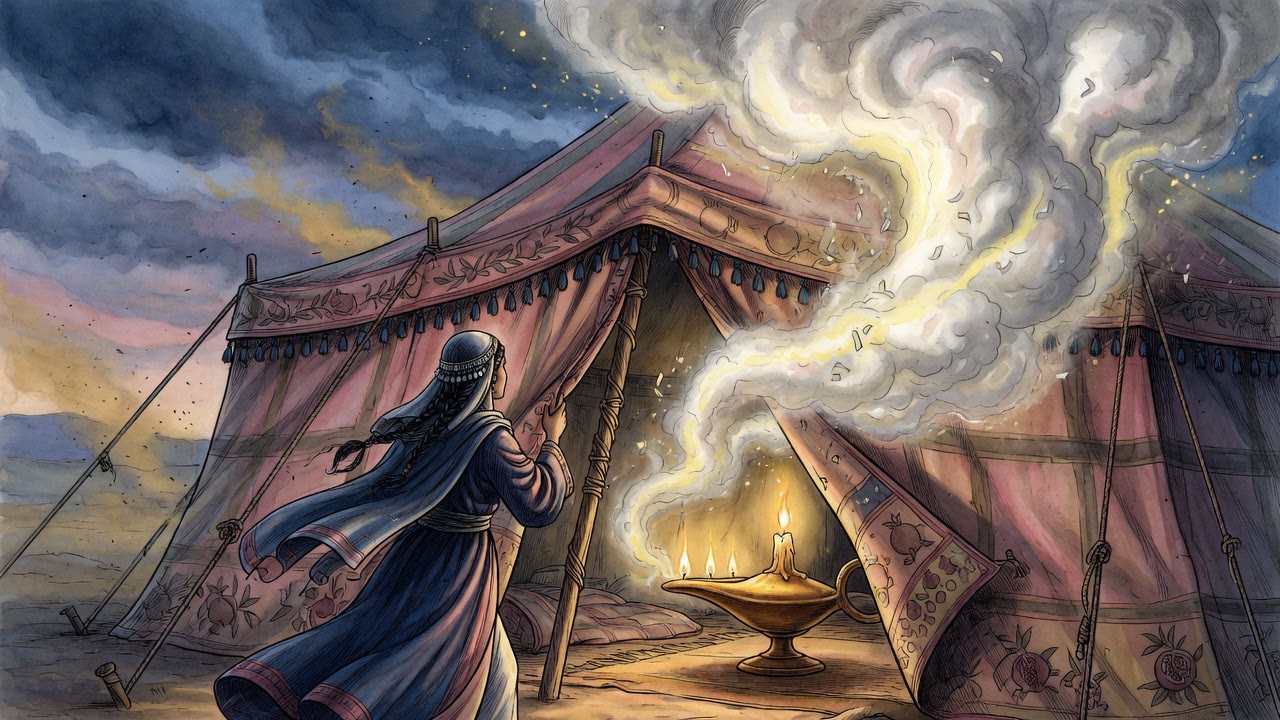
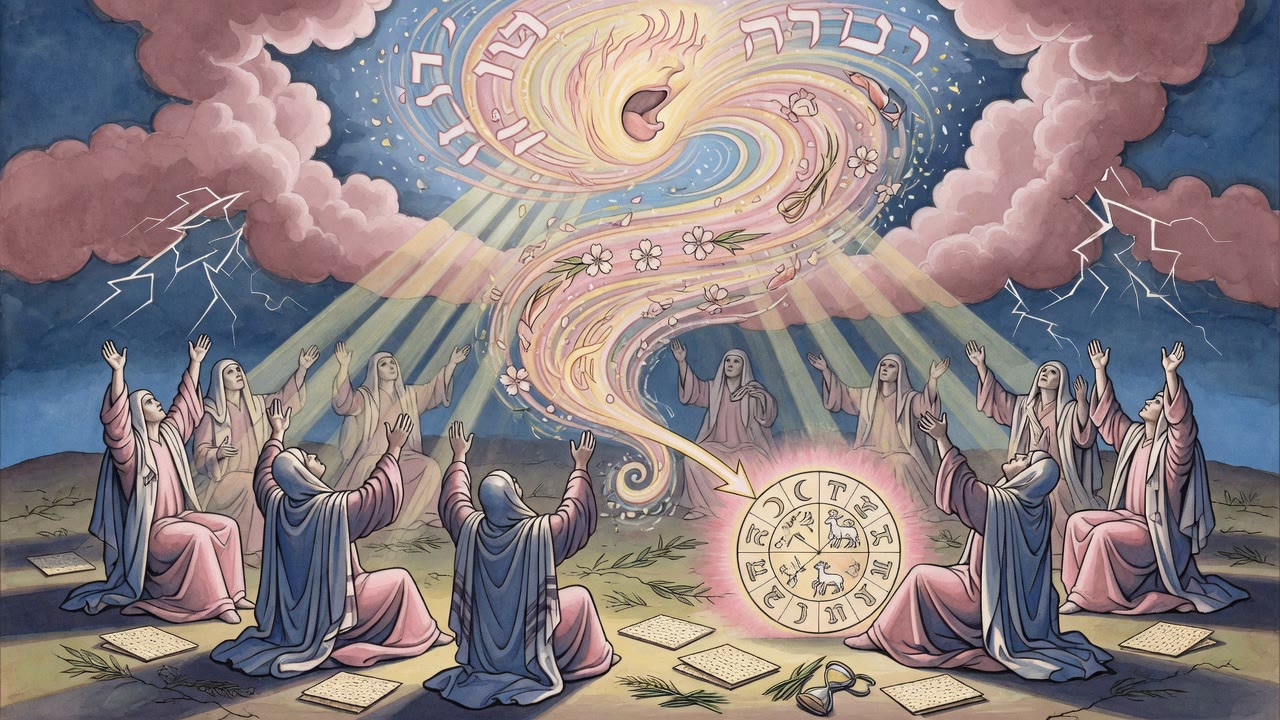
Story of Eldad the Danite, Narrative B In the name of the LORD God of Israel, blessed be His name, of our God the King, King of kings, Who chose Israel from among all nations and granted unto us the law of truth and planted everlasting life in our midst, statutes upright and life therein; and ye, our brethren, children of the exile, be strong and let your hearts be of good courage to keep the commandments of our God in their season, for as long as Israel doeth the will of the Omnipresent, no nation nor language doth prevail over them. And peace be unto you, our brethren, children of the exile, and peace unto Jerusalem, our glory's city, place of our God's abode Who doeth wonders among the nations, and place set before the Holy of Holies; and peace unto all the elders of Israel and the craftsmen of the Lord's Torah and its interpreters, its priests and levites, unto all tribes of Israel and Judah, both great and small. May God strengthen your hearts in the LORD our God and in the truth's prophet, Moses our teacher, the righteous servant of the LORD. [And now we will narrate to our brothers, the tribes of Jeshurun, about the matter of Eldad the Danite who doth tell all this, of how his egress happened throughout all the lands, for he is a noble of the tribe of Dan, and the LORD wrought a great miracle with him and delivered him from several places, and many troubles were overcome by him to go out to these lands to tell all the children of Israel dispersed in exile his matters and the matter of our land, to announce comfort unto them and to speak good words unto their hearts] (This is like an introduction to the following narrative, and the enclosed text is the note of the transcribing scribe. And Eldad wrote this narrative for the Jew of Spain who he went unto them to ask for their support). Thus was my departure beyond the rivers of Kush. A certain Jew from the tribe of Asher and I entered a small ship [to trade] with the seafarers and it happened at midnight, that the LORD sent forth a great and mighty wind and the ship was rent in sunder, and by God's providence, I caught hold of a timber plank, and when my companion saw such, he also grasped with me upon the same plank, and we went up and down upon it until the sea cast us unto a certain nation, whose name is Romranos (or Romrom in the kingdom of Kush), and they are black Kushites of stature, unclothed and unwrapped, for like the beasts are they compared, and they eat human flesh. When we came to their land, they laid hold on us, and seeing my comrade healthy and plump and delicate, they slaughtered and did eat him, and he cried out, woe unto me that I have encountered this nation for the Kushites will eat my flesh, and they took me for I was sick upon the ship and put me in a collar until I would become fat and healthy, and they brought before me all manner of goodly forbidden foods, yet did I not eat a thing, and I did conceal my eating, and they would ask if I had eaten and I would say yea, I did eat. And I was with them a long time until Hashem performed a miracle with me, and a great army from another place came unto them, and took them captive and spoiled them and slew them, and took me with them among the captives. And those wicked ones worshipped fire and I dwelt with them four years, and they made a great fire every morning and burnt and bowed down to it, until once they brought me unto the city of Atzitz (or Atzin, Tzin, Altzin, near the author of the Kuzari part B, chapter 19). And there found me a certain Jew a merchant from the tribe of Issachar and bought me for thirty-two gold pieces and returned with me to his land. And they are those in the mountains of Tehom (the mountains near the sea, for Tehom in Arabic is the land near the sea), and they are underneath the land of Medes and Persians and they keep this verse: "This book of the law shall not depart out of thy mouth" (Joshua 1:8), and they have no yoke of kingdom but the yoke of Torah, and with them are chiefs of armies but they war not with men but with Torah, and they are in solace and tranquility and there is no Satan nor evil occurrence, and they make journey of ten days upon ten days, and they have very many flocks and camels and donkeys and slaves and they raise not horses, and they have no weapon of war save slaughter knife. And also they have no oppression nor robbery, and even if they find on the way garments or money they will not stretch forth their hand to take, and near them are wicked fire worshippers and they take their aunts and sisters to wife, but they harm them not and doth not help (aid) them. And they have a judge and I enquired of him and they told me his name is Nahshon, and they have four capital punishments of the court and they speak in the holy tongue and in Persian. And the children of Zebulun are camped in the mountains of Paran (another version "Pariyan" and see the note from Epstein there), and they reach their [the children of Issachar's] neighborhood, and they plant tents of hair which come unto them from the land of Armenia, and they reach unto the river Euphrates and are engaged in commerce. And they have four capital punishments of court according to their fashion. And the tribe of Reuben is opposite them behind the mountain of Paran, and there is peace between them and brotherhood and companionship. And these (the aforementioned tribes) go together to war and rob (plunder) the ways, and all their spoil together they divide and they go by the way of the kings of Medes and Persians, and they speak in the holy tongue and in Persian, and with them are Scripture and Mishna and Talmud and Aggadah, and every Sabbath they open the reasons of Torah in the holy language and the explanations in Persian. And the tribe of Ephraim and half the tribe of Manasseh are there in the mountains opposite the land of "Makkah" an error of the Ishmaelites, and they are those of sullen soul and faint heart, owners of horses and robbers of the ways and they spare not their enemies and they have no livelihood save from the spoil, and they are those strong in war and one of them will go out against a thousand. And the tribe of Simeon and half the tribe of Manasseh are in the land of the Chaldeans (in other narratives "Kadraim" or "Kuzarim") far away six months, and they are those most numerous of all and they take tribute from twenty-five kingdoms and some of the Ishmaelites pay tribute. And we say in our land that it is a tradition in our hands that you children of the exile, the tribe of Judah and the tribe of Benjamin, under the faith of idolatry in the impure land, are scattered under Rome, who destroyed the house of our God, and the Greeks and the Ishmaelites, their sword shall enter their own heart, and their bows shall be broken. And we have a tradition from man to man that we the tribe of Dan in the beginning were dwellers of tents in the land of Israel, and there was in all the tribes of Israel no warriors of strength like us. And when Jeroboam the son of Nebat stood up, who made Israel sin and he made two golden calves, the kingdom of the house of David was split and the tribes gathered and said, rise up and fight against Rehoboam and against Jerusalem, they said to him why should we fight with our brothers and with the son of our lord David, king of Israel and Judah, God forbid and God forbid! In that hour the elders of Israel said thou hast not in all the tribes of Israel like the tribe of Dan, warriors. Immediately they said to the children of Dan, rise up and fight with the children of Judah. They said unto him by the life of the head of Dan our father we will not make war with our brothers and we will not spill their blood. Immediately the children of Dan took swords and spears and bows and gave themselves to die to go forth from the land of Israel, for we saw that we could not stand. Let us go now and find for us rest and place, and if we wait until the end they will lead us away. And they set their mind and counseled to go to Egypt to destroy it and to slay all its inhabitants. Our princes said unto us, and is it not written "Ye have seen Egypt no more again forever" (Exodus 14), and how shall you prosper? They said we will go against Edom or Ammon and Moab to annihilate them and we will dwell in their place. Our princes said it is written in the Torah that the Holy One, blessed be He, prevented Israel from crossing their border. At last they gave advice to go to Egypt and not by the road which our fathers went and also not to destroy but to pass over the river Pishon (Nile) to the land of Kush. And it happened that we came close to Egypt and all of Egypt were shaken and they sent unto us whether for war or for peace? And we said unto them peace! We will pass through your land to the river Pishon, for there shall we find a resting place. And it happened that they believed not and all Egypt stood on their watch until we crossed their land and we reached the land of Kush, and we found it a good land and fat, and therein fields and vineyards, gardens and orchards. And the children of Dan were not prevented from dwelling with them for with force they took the land. And it happened that they wanted to kill everyone and they became tributaries under Israel and dwelt with them many years until they were fruitful and multiplied exceedingly and we had great wealth. And thereafter Sennacherib king of Assyria came up and exiled Reuben and Gad and half the tribe of Manasseh and brought them to Halah and Habor, and the river of Gozan (1 Chronicles 5:26). And again Sennacherib came up a second time and exiled the tribe of Asher and the tribe of Naphtali and brought them to the land of Assyria (2 Kings 15:29). And after the death of Sennacherib the three tribes of Israel, Naphtali, Gad, and Asher went to the land of Kush, and they journeyed and camped in the wilderness until they came to their border and they slew of the men of Kush the journey of twenty days, and they fight to this day with the sons of the kingdoms of Kush. And these four tribes, Dan and Naphtali, Gad, and Asher, are camped in ancient Havilah where there is gold (and they are in good places and established in the kingdom of Pharaoh, government of Hauran, and they trust in their Creator first and God with their help. And these tribes place their hand upon the neck of their enemies, and every year they make war with seven kingdoms and seven lands. And the names of these lands are Thausena and Kamtav and Kovav and Triaugi and Takul and Karmav and Kaalum (with variations in other narratives) and they are beyond the rivers of Kush. And these four tribes, they have gold and silver and precious stones, many sheep and cattle and camels and donkeys, and they sow and reap and dwell in tents. And whenever they wish they journey and camp with their tents from border to border a journey of two days upon two days, and in the place where they encamp there is no place that a foot may enter and they encamp only in fields and vineyards). And the name of their king is Uzziel, and the name of the great prince is Elizaphan of the sons of Ahliab of the tribe of Dan, and his flag is white written in black: Hear, O Israel, the LORD our God is one LORD. And at the time when he desires to go out to war, the trumpeter shall cry aloud with the trumpet and the army chief shall come and the troops shall go forth one hundred twenty thousand small white flags. And every month (should read three months), one tribe goes out to war and the tribe stands outside for three months, and all that they bring from the spoil of their enemies they divide with their tribe. And they are of the sons of Samson of the tribe of Dan over all, not at all shall they flee for it is a great shame unto them, and they are as the sand of the sea now and they have no occupation but war, and when they fight they shall say, it is not good for the warrior to flee, let the young die and not flee, let his heart be strong unto the LORD, and they shall say many times and all shall cry out together, Hear, O Israel, the LORD our God is one LORD, and then they shall all be guarded. And thus they do until the three months are complete and they return, and they bring all the spoil to king Uzziel and he divides it all with all Israel. And this is the ordinance for them from king David until this day. And king Uzziel takes his portion and the king gives to all the wise Torah scholars dwellers of tents their portion and thereafter all take their portion and the prince over the war. And thus they do in three months Issachar goes out, in three months Naphtali goes out, and so all of them until a year is completed and they return God forbid. And yet another tribe of Moses our teacher of blessed memory, the righteous servant of the LORD, and they are called in our midst the tribe of Janus because they fled from idolatry and clung unto the fear of the LORD. And the sea surrounds them from a three months' journey upon three months' journey and they dwell in splendid houses and in elegant buildings and they prepare for themselves towers and in the time when they rejoice they ride upon the elephant, and with them there is no unclean thing, nor unclean bird nor unclean beast nor unclean cattle, nor flies nor fleas nor lice nor foxes nor scorpions nor snakes nor dogs, for all this came out of idolatry which they served in the land, except the sheep and cattle and fowl. And their sheep give birth twice a year, and also their seed they sow twice a year, and they sow and reap, and they have gardens and orchards and olive trees and pomegranates and figs and all kinds of legumes and melons and squash and onions and garlic and barley and wheat and from each comes forth a hundred [stalks]. And they are men of faith, and their Talmud is entirely in the holy tongue, and so they study: Thus have our rabbis taught us from the mouth of Joshua the son of Nun from the mouth of our teacher Moses from the mouth of the Almighty. And they know not of the sages for in the Second Temple they were and they did not reach them. And they know not to speak save in the holy tongue, and all of them are pure, owners of immersion, and they swear not at all, and he who remembers the Name in vain they shall cry out upon him and say that because of the iniquity of oaths your children shall die young (under the sin of vows, Shabbat 32a). And they prolong their days and live a hundred years or a hundred and twenty years, and no son shall die in the lifetime of his father, and they reach unto three or four generations, and they sow and reap [by themselves] for they have no servants nor maidservants, and all are equal. And they lock not their houses by night for it is shame unto them, and the youth walks with the flock a ten days' journey and they are not afraid neither of robbers nor of demons. And all of them are Levites and they have no priest nor Israelite and still [stand] in the holiness of Moses our teacher the righteous servant of the LORD. And yet they see not the sons of men and the sons of men [see] not them (them), except these four tribes who dwell beyond the rivers of Kush. And there is a place where they see one another and speak by shouting and the river Sambatyon is between them, and they say such has happened to us in war, and they informed all Israel what has befallen them. When they desire to speak or for a great matter, they have a kind of pigeons known amongst them and they write their tales and tie them on the wings or the pigeon's leg, and they go and cross the river Sambatyon and the pigeons come to their kings and to their princes. And yet they have very many precious stones and silver and gold, and they sow flax and raise cochineal worms and make beautiful garments without end. And they are as those who went out of Egypt five times for there is no number. And the breadth of that place the river is two hundred cubits like the drawing of a bow, and the river is full of great and small stones and the noise thereof thunders like the roar of a great wind in a storm at sea, and at night its voice is heard the journey of a day. And there are with them six springs and all gather to one lake and from them they water their land, and there breed in it clean fish. And the river goes and the stones and sand thunder six working days, and on the seventh day it rests and is at peace until the going out of the Sabbath. And beyond the river from the side near the four aforementioned tribes there is a blazing fire on the Sabbath and no man can move [in that place] much as a mile's journey. And this is my name, Eldad son of Mahli, son of Ezekiel, son of Hezekiah, son of ALUK, son of ABNER, son of Shemaiah, son of Hatir, son of Hor, son of Elkanah, son of Hillel, son of Toviah, son of Pedah, son of Enan, son of Naaman, son of Ta'am, son of Taami, son of Unam, son of Naol, son of Shalom, son of Caleb, son of Amram, son of Domam, son of Ovadiah, son of Abraham, son of Joseph, son of Moses, son of Jacob, son of Capur, son of Ariel, son of Asher, son of Job, son of Shalem, son of Eliab, son of Ahisamak, son of Hushim, son of Dan, son of Jacob our father of blessed memory and peace unto all Israel amen. [In that year of forty and three, this Master Eldad dispatched these epistles unto the land of Spain, and, this Master Eldad is replete with the Torah and the commandments, as if a man were to sit with him from dawn until eve, his tongue would not stay from the savor of Torah in the sacred tongue, and his words are sweeter than honey and the droppings of the honeycomb. The LORD of Hosts shall grant unto him goodly reward in this world and in the world to come.] Here endeth the Book of Eldad the Danite.

 Click for full size