Translation of the source text.William Davidson Edition - Vocalized Aramaic + William Davidson Edition - English · CC-BY-NC
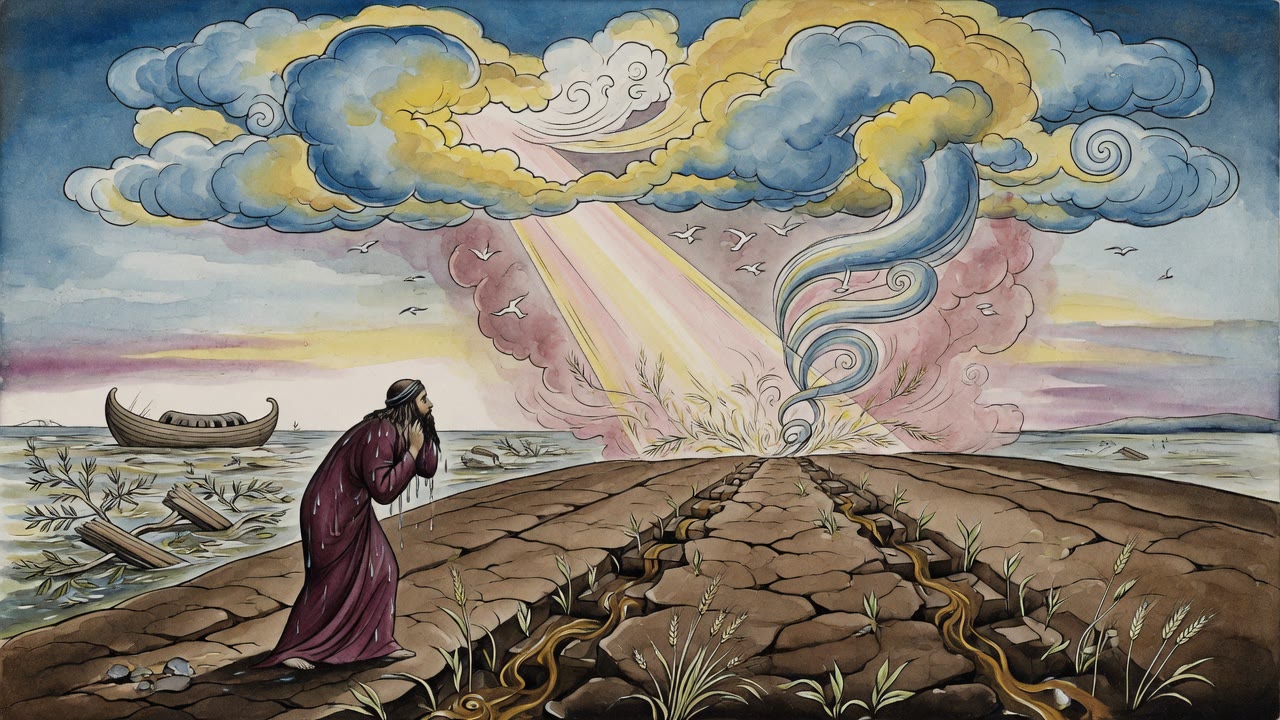
“In their season” means on Wednesday eves, i.e., Tuesday nights, and on Shabbat eves, i.e., Friday nights, because at these times people are not out in the streets, either due to fear of demonic forces that were thought to wander on Tuesday nights or due to the sanctity of Shabbat. As we found in the days of Shimon ben Shetaḥ that rain invariably fell for them on Wednesday eves and on Shabbat eves, until wheat grew as big as kidneys, and barley as big as olive pits, and lentils as golden dinars.
And they tied up some of these crops as an example [dugma] for future generations, to convey to them how much damage sin causes, as it is stated: “The Lord our God, Who gives rain, the former rain and the latter rain, in its season that keeps for us the appointed weeks of the harvest. Your iniquities have turned away these things, and your sins have withheld the good from you” (Jeremiah 5:24–25). And we likewise found that in the days of Herod that they were occupied in the building of the Temple, and rain would fall at night.
And the next day the wind would blow, the clouds would disperse, the sun would shine, and the people would go out to their work. And as rain would fall only at a time when it would not interfere with their labor, the nation knew that the work of Heaven was being performed by their hands. § The mishna taught: An incident occurred in which the people sent a message to Ḥoni HaMe’aggel. This event is related in greater detail in the following baraita.
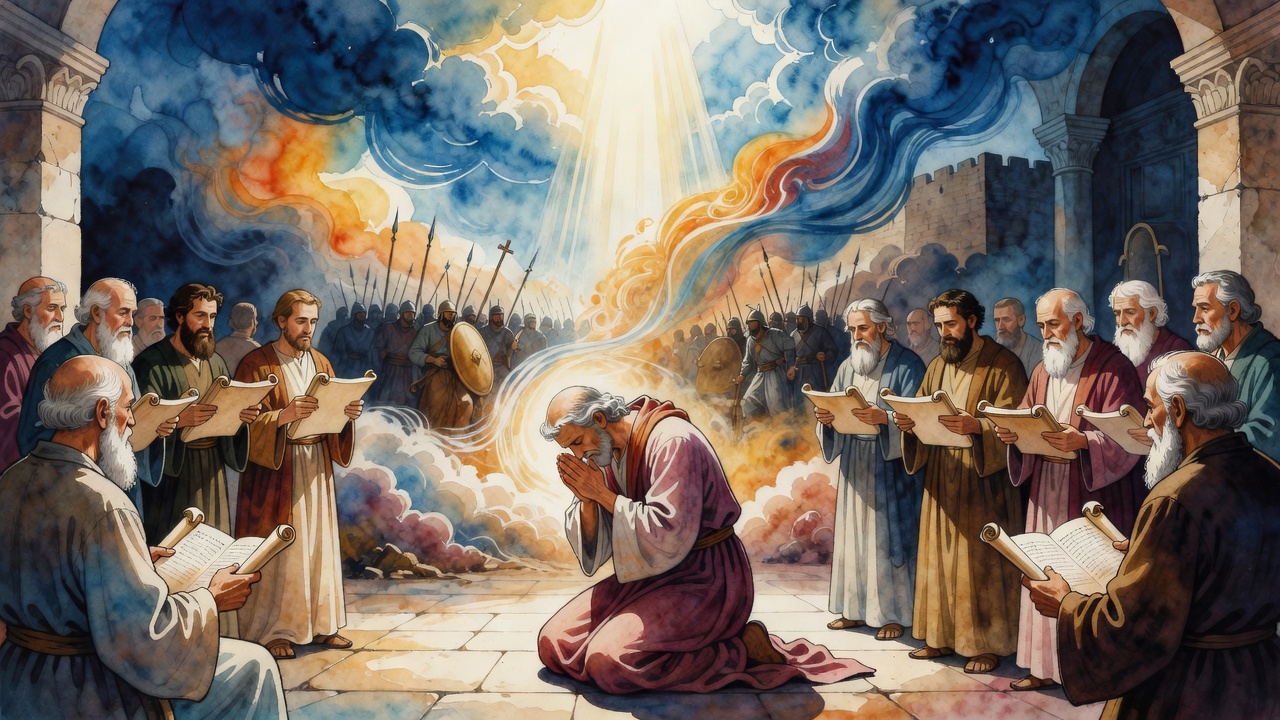
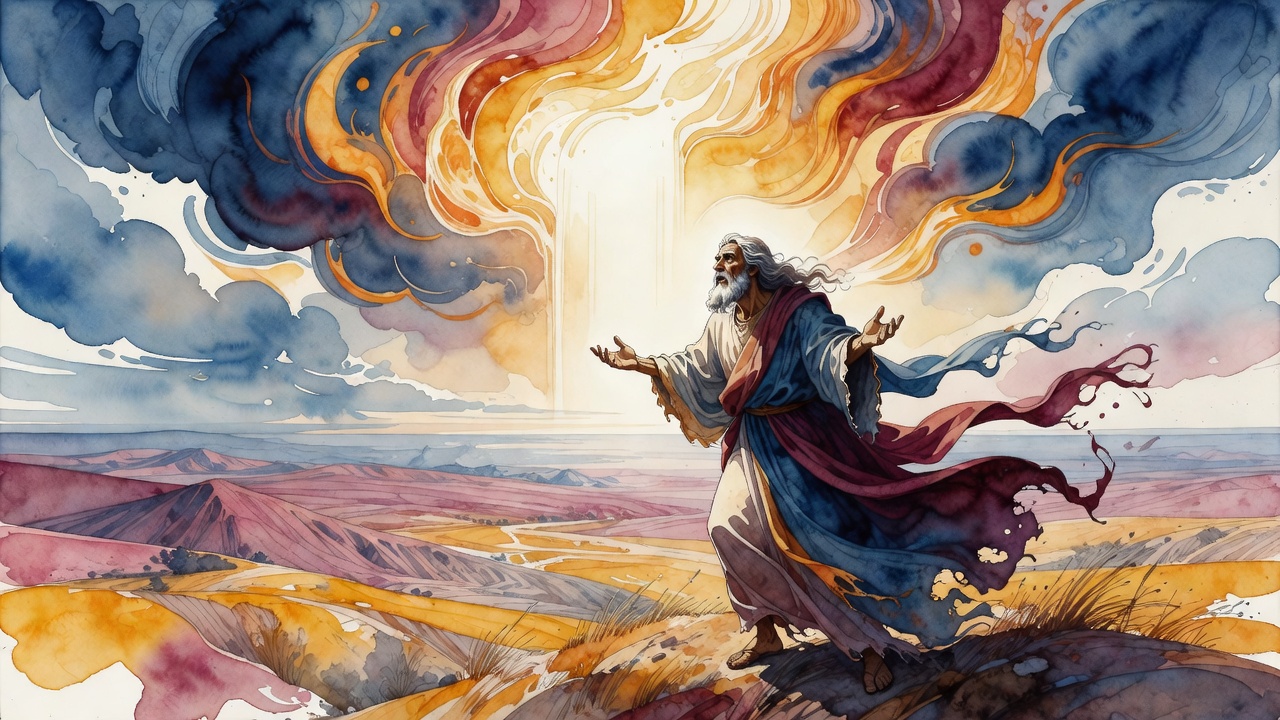
The Sages taught: Once, most of the month of Adar had passed but rain had still not fallen. They sent this message to Ḥoni HaMe’aggel: Pray, and rain will fall. He prayed, but no rain fell. He drew a circle in the dust and stood inside it, in the manner that the prophet Habakkuk did, as it is stated: “And I will stand upon my watch and set myself upon the tower, and I will look out to see what He will say to me, and what I shall answer when I am reproved” (Habakkuk 2:1).
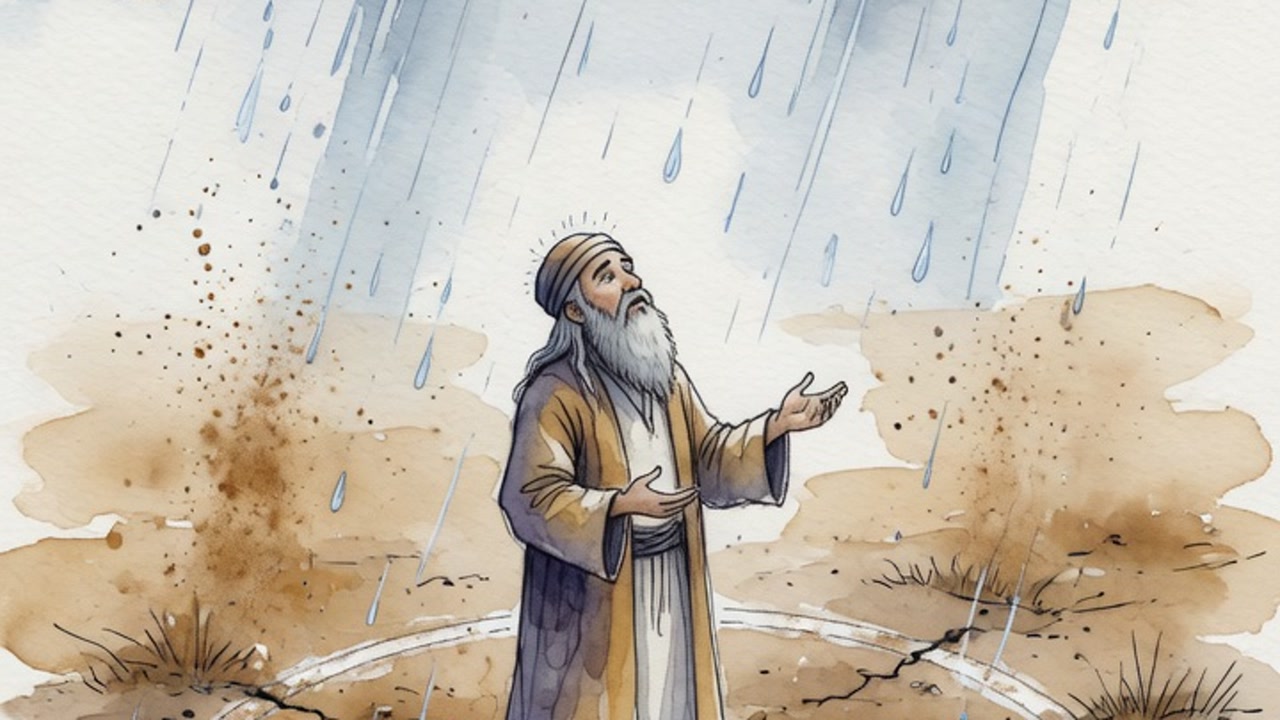
This verse is taken to mean that Habakkuk fashioned a kind of prison for himself where he sat. Ḥoni said before God: Master of the Universe, Your children have turned their faces toward me, as I am like a member of Your household. Therefore, I take an oath by Your great name that I will not move from here until you have mercy upon Your children and answer their prayers for rain. Rain began to trickle down, but only in small droplets.
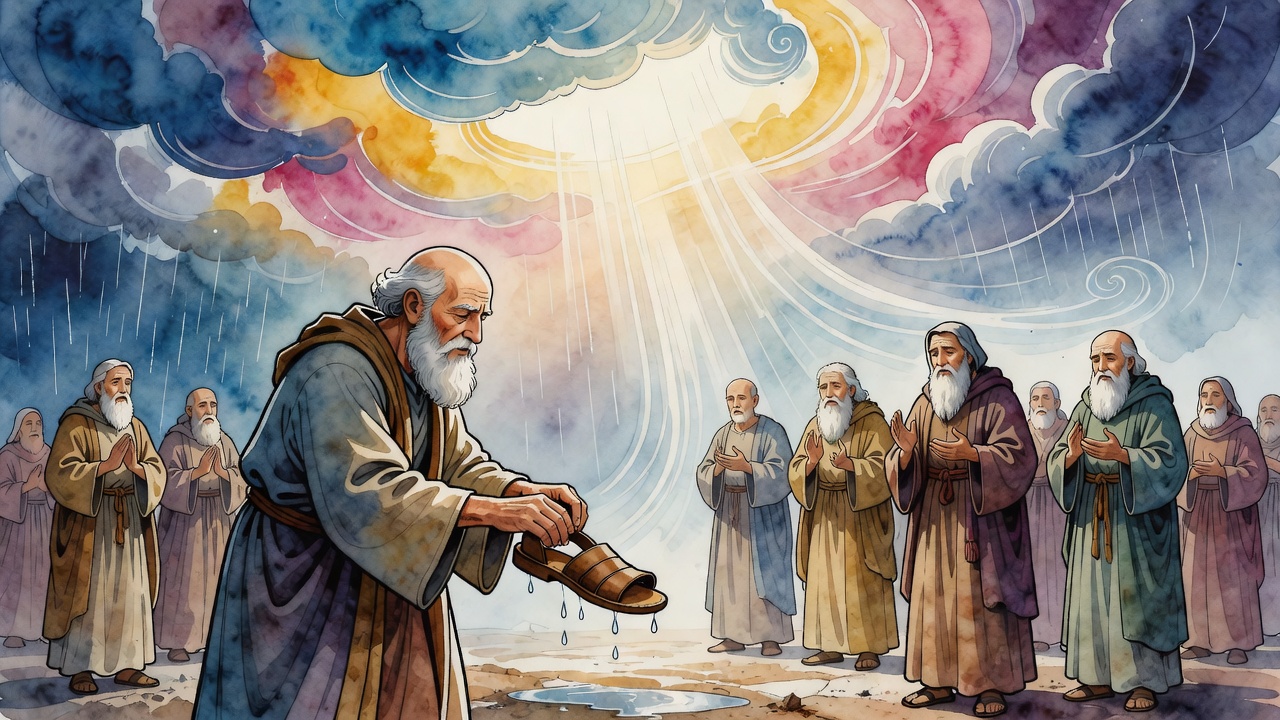
His students said to him: Rabbi, we have seen that you can perform great wonders, but this quantity of rain is not enough to ensure that we will not die. It appears to us that a small amount of rain is falling only to enable you to dissolve your oath, but it is not nearly enough to save us. Ḥoni said to God: I did not ask for this, but for rain to fill the cisterns, ditches, and caves. Rain began to fall furiously, until each and every drop was as big as the mouth of a barrel, and the Sages estimated that no drop was less than a log in size.
His students said to him: Rabbi, we have seen that you can call on God to perform miracles and we will not die, but now it appears to us that rain is falling only to destroy the world. Ḥoni again said before God: I did not ask for this harmful rain either, but for rain of benevolence, blessing, and generosity. Subsequently, the rains fell in their standard manner, until all of the people sought higher ground and ascended to the Temple Mount due to the rain.
They said to him: Rabbi, just as you prayed that the rains should fall, so too, pray that they should stop. He said to them: This is the tradition that I received, that one does not pray over an excess of good. Ḥoni continued: Nevertheless, bring me a bull. I will sacrifice it as a thanks-offering and pray at the same time. They brought him a bull for a thanks-offering.
He placed his two hands on its head and said before God: Master of the Universe, Your nation Israel, whom You brought out of Egypt, cannot bear either an excess of good or an excess of punishment. You grew angry with them and withheld rain, and they are unable to bear it. You bestowed upon them too much good, and they were also unable to bear it. May it be Your will that the rain stop and that there be relief for the world.
Immediately, the wind blew, the clouds dispersed, the sun shone, and everyone went out to the fields and gathered for themselves truffles and mushrooms that had sprouted in the strong rain. Shimon ben Shetaḥ relayed to Ḥoni HaMe’aggel: If you were not Ḥoni, I would have decreed ostracism upon you. For were these years like the years of Elijah, when the keys of rain were entrusted in Elijah’s hands, and he swore it would not rain, wouldn’t the name of Heaven have been desecrated by your oath not to leave the circle until it rained?
Once you have pronounced this oath, either yours or Elijah’s must be falsified. However, what can I do to you, as you nag God and He does your bidding, like a son who nags his father and his father does his bidding. And the son says to his father: Father, take me to be bathed in hot water; wash me with cold water; give me nuts, almonds, peaches, and pomegranates. And his father gives him.
About you, the verse states: “Your father and mother will be glad and she who bore you will rejoice” (Proverbs 23:25). The Sages taught: What message did the members of the Chamber of the Hewn Stone, the Great Sanhedrin, send to Ḥoni HaMe’aggel? About you, the verse states: “You shall also decree a matter, and it shall be established for you; and the light shall shine upon your ways. When they cast down, you will say: There is lifting up, for He saves the humble person.
He will deliver the one who is not innocent and he will be delivered through the cleanness of your hands” (Job 22:28–30). They interpreted: “You shall also decree a matter”; you, Ḥoni, decree from below, and the Holy One, Blessed be He, fulfills your statement from above. “And the light shall shine upon your ways”; a generation that was in darkness, you have illuminated it with your prayer. “When they cast down, you will say: There is lifting up”; a generation that was cast down, you lifted it up with your prayer.
“For He saves the humble person”; a generation that was humble in its transgression, you saved it through your prayer. “He will deliver the one who is not innocent”; a generation that was not innocent, you have delivered it through your prayer. “And he will be delivered through the cleanness of your hands”; you have delivered an undeserving generation through the clean work of your hands. § The Gemara relates another story about Ḥoni HaMe’aggel.
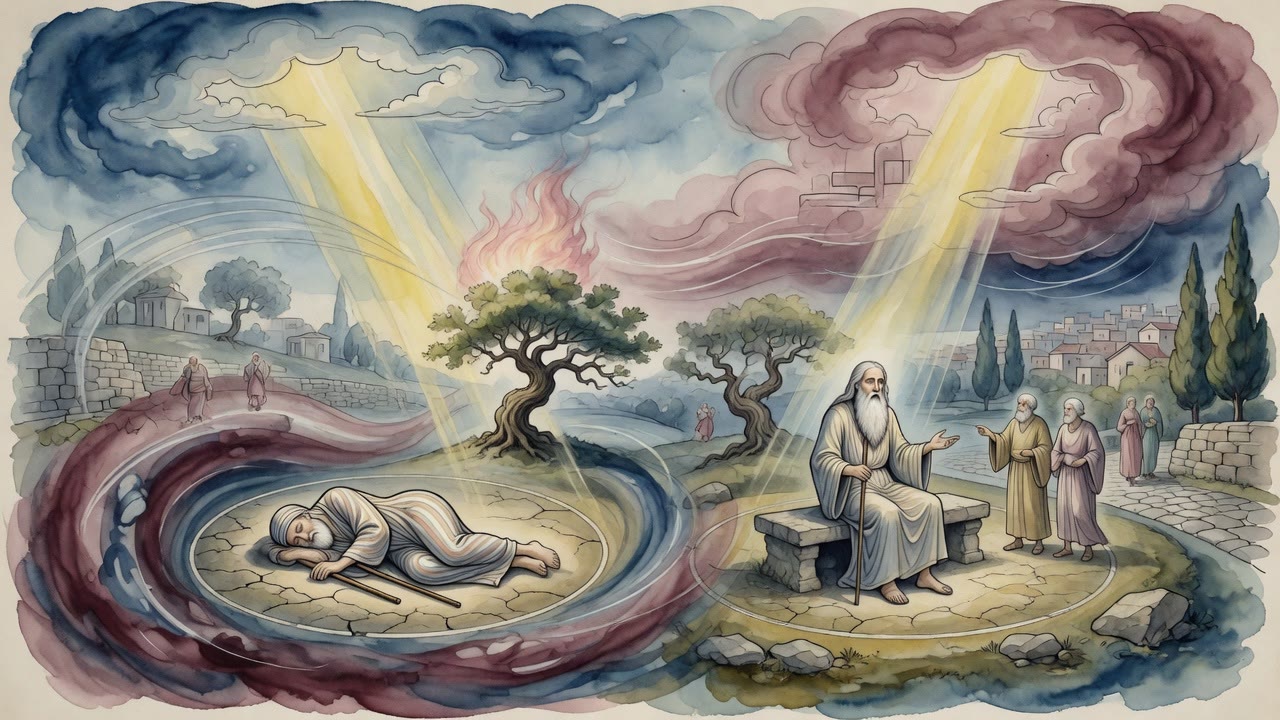
Rabbi Yoḥanan said: All the days of the life of that righteous man, Ḥoni, he was distressed over the meaning of this verse: “A song of Ascents: When the Lord brought back those who returned to Zion, we were like those who dream” (Psalms 126:1). He said to himself: Is there really a person who can sleep and dream for seventy years? How is it possible to compare the seventy-year exile in Babylonia to a dream?
One day, he was walking along the road when he saw a certain man planting a carob tree. Ḥoni said to him: This tree, after how many years will it bear fruit? The man said to him: It will not produce fruit until seventy years have passed. Ḥoni said to him: Is it obvious to you that you will live seventy years, that you expect to benefit from this tree? He said to him: That man himself found a world full of carob trees.
Just as my ancestors planted for me, I too am planting for my descendants. Ḥoni sat and ate bread. Sleep overcame him and he slept. A cliff formed around him, and he disappeared from sight and slept for seventy years. When he awoke, he saw a certain man gathering carobs from that tree. Ḥoni said to him: Are you the one who planted this tree?
The man said to him: I am his son’s son. Ḥoni said to him: I can learn from this that I have slept for seventy years, and indeed he saw that his donkey had sired several herds during those many years. Ḥoni went home and said to the members of the household: Is the son of Ḥoni HaMe’aggel alive? They said to him: His son is no longer with us, but his son’s son is alive. He said to them: I am Ḥoni HaMe’aggel.
They did not believe him. He went to the study hall, where he heard the Sages say about one scholar: His halakhot are as enlightening and as clear as in the years of Ḥoni HaMe’aggel, for when Ḥoni HaMe’aggel would enter the study hall he would resolve for the Sages any difficulty they had. Ḥoni said to them: I am he, but they did not believe him and did not pay him proper respect. Ḥoni became very upset, prayed for mercy, and died.
Rava said: This explains the folk saying that people say: Either friendship or death, as one who has no friends is better off dead. § The Gemara relates another story, this time about Ḥoni HaMe’aggel’s descendants, who were also renowned for their righteous deeds. Abba Ḥilkiyya was the son of Ḥoni HaMe’aggel’s son. And when the world was in need of rain they would send Sages to him, and he would pray for mercy, and rain would fall.
Once the world was in need of rain, and the Sages sent a pair of Sages to him so that he would pray for mercy and rain would fall. They went to his house but they did not find him there. They went to the field and found him hoeing the ground. They greeted him,

 Click for full size