Translation of the source text.William Davidson Edition - Vocalized Aramaic + William Davidson Edition - English · CC-BY-NC
and you derived pleasure from it, and because of this you were held responsible by Heaven. Rabbi Eliezer said to him: Akiva, you are right, as you have reminded me that once I was walking in the upper marketplace of Tzippori, and I found a man who was one of the students of Yeshu the Nazarene, and his name was Ya’akov of Kefar Sekhanya. He said to me: It is written in your Torah: “You shall not bring the payment to a prostitute, or the price of a dog, into the house of the Lord your God” (Deuteronomy 23:19).
What is the halakha: Is it permitted to make from the payment to a prostitute for services rendered a bathroom for a High Priest in the Temple? And I said nothing to him in response. He said to me: Yeshu the Nazarene taught me the following: It is permitted, as derived from the verse: “For of the payment to a prostitute she has gathered them, and to the payment to a prostitute they shall return” (Micah 1:7).
Since the coins came from a place of filth, let them go to a place of filth and be used to build a bathroom. And I derived pleasure from the statement, and due to this, I was arrested for heresy by the authorities, because I transgressed that which is written in the Torah: “Remove your way far from her, and do not come near the entrance of her house” (Proverbs 5:8). “Remove your way far from her,” this is a reference to heresy; “and do not come near the entrance of her house,” this is a reference to the ruling authority.
The Gemara notes: And there are those who say a different interpretation: “Remove your way far from her,” this is a reference to heresy and the ruling authority; “and do not come near the entrance of her house,” this is a reference to a prostitute. And how much distance must one maintain from a prostitute? Rav Ḥisda said: Four cubits. With regard to the derivation of the verse by Yeshu the Nazarene, the Gemara asks: And what do the Sages derive from this phrase: “Payment to a prostitute”?
The Gemara answers: They explain it in accordance with the opinion of Rav Ḥisda, as Rav Ḥisda says: Any prostitute who hires herself out to others for money will become so attached to this practice that ultimately, when others no longer wish to hire her, she will hire others to engage in intercourse with her. As it is stated: “And in that you gave payment, and no payment is given to you, therefore you are contrary” (Ezekiel 16:34).
The Gemara comments: And Rav Ḥisda, who stated above that the Torah requires one to maintain a distance of four cubits from a prostitute, disagrees with the opinion of Rabbi Pedat. As Rabbi Pedat says: The Torah prohibited only intimacy that involves engaging in prohibited sexual relations, as it is stated: “None of you shall approach to any that is near of kin to him, to uncover their nakedness” (Leviticus 18:6).
The prohibition against intimacy in the Torah applies exclusively to sexual intercourse, and all other kinds of intimacy that do not include actual intercourse are not included in the prohibition. The Gemara relates: When Ulla would come from the study hall, he would kiss his sisters on their hands. And some say: On their chests. And the Gemara points out that this action of his disagrees with another ruling that Ulla himself issued, as Ulla says: Mere intimacy with a woman with whom one is prohibited from engaging in sexual intercourse is prohibited, due to the maxim: Go, go, we say to a nazirite, go around, go around but do not come near to the vineyard.
Just as a nazirite is warned not even to come into close proximity of a vineyard lest he consume a product of the vine, so too one is obligated to distance himself from anyone with whom intercourse is forbidden. § In connection to the earlier mention of heresy and the ruling authorities, the Gemara cites a verse: “The horseleech has two daughters: Give, give” (Proverbs 30:15). What is meant by “give, give”?
Mar Ukva says: This is the voice of the two daughters who cry out from Gehenna due to their suffering; and they are the ones who say in this world: Give, give, demanding dues and complete allegiance. And who are they? They are heresy and the ruling authority. There are those who say that Rav Ḥisda says that Mar Ukva says: The voice of Gehenna cries out and says: Bring me two daughters who cry and say in this world: Give, give.
The following verse in Proverbs makes reference to a foreign woman, which according to the Sages is a euphemism for heresy: “None that go to her return, neither do they attain the paths of life” (Proverbs 2:19). The Gemara asks: Since those that are drawn to heresy do not return, from where would they attain the path of life? Why is it necessary for the verse to add that they do not attain the paths of life?
The Gemara explains that this is what the verse is saying: In general, those who go to her do not return, and even if they return, they do not attain the paths of life, i.e., the pain of their regret will shorten their lives. The Gemara asks: Is this to say that anyone who separates himself from heresy and returns from his mistaken ways must die? But what about that woman who came before Rav Ḥisda to confess to him, and she said to him: The lightest of the light, i.e., the least of the sins that she committed, is that she conceived her younger son from engaging in intercourse with her older son.
And Rav Ḥisda said to her: Prepare funeral shrouds for her, i.e., yourself, as you will certainly die soon, but she did not die. The above incident refutes the claim that anyone who repents for the sin of heresy must die, as from the fact that she said that the lightest of the light of her sins was that she conceived one son from engaging in intercourse with another son, by inference one can learn that she was also involved in heresy, and yet she did not die.
The Gemara answers: That is a case where the woman did not repent properly, and due to that reason she did not die. There are those who say there is a different version of the objection to the Gemara’s statement that those who repent for the sin of heresy must die: Is that to say that if one repents for the sin of heresy, yes, the result is death, whereas if one repents for the sin of forbidden sexual intercourse he does not die?
But what about that woman who came before Rav Ḥisda to confess to him and Rav Ḥisda said to those present: Prepare funeral shrouds for her, and she died? The Gemara answers: From the fact that she said: The lightest of the light, by inference one can learn that she was also involved in heresy. The Gemara asks: And is it correct that one who repents of the sin of forbidden sexual intercourse does not die?
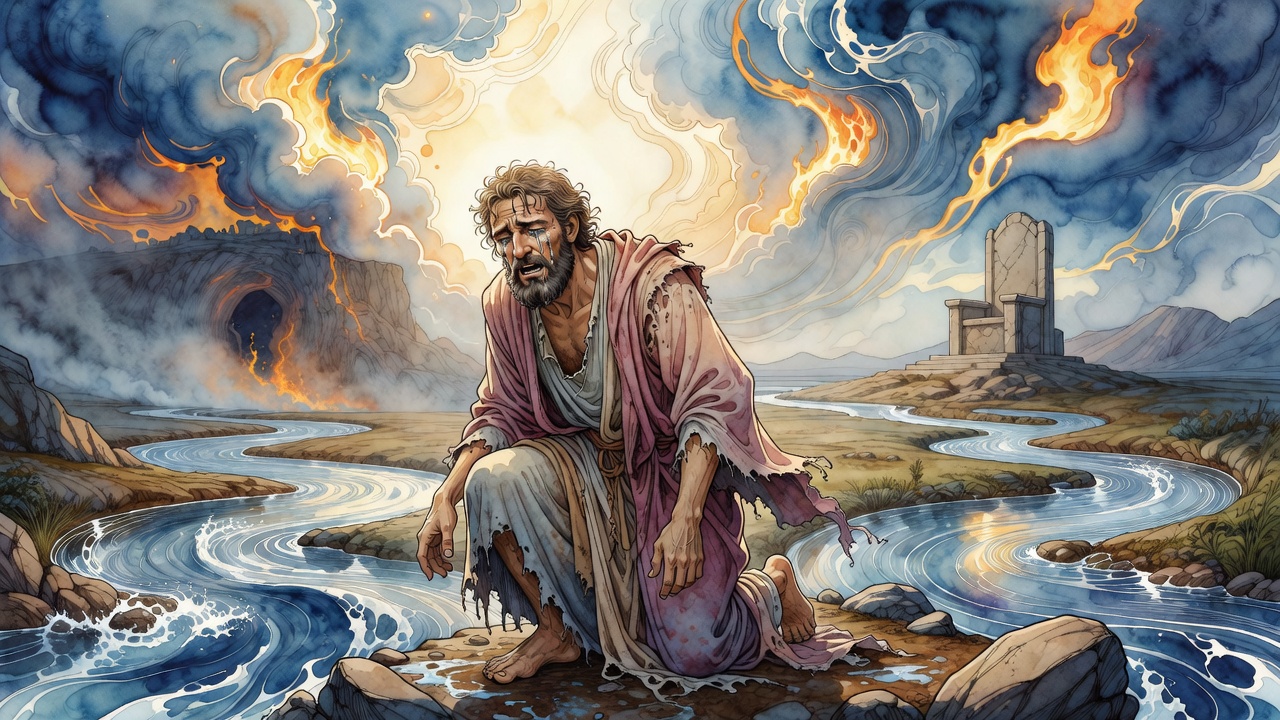
But isn’t it taught in a baraita: They said about Rabbi Elazar ben Durdayya that he was so promiscuous that he did not leave one prostitute in the world with whom he did not engage in sexual intercourse. Once, he heard that there was one prostitute in one of the cities overseas who would take a purse full of dinars as her payment. He took a purse full of dinars and went and crossed seven rivers to reach her.
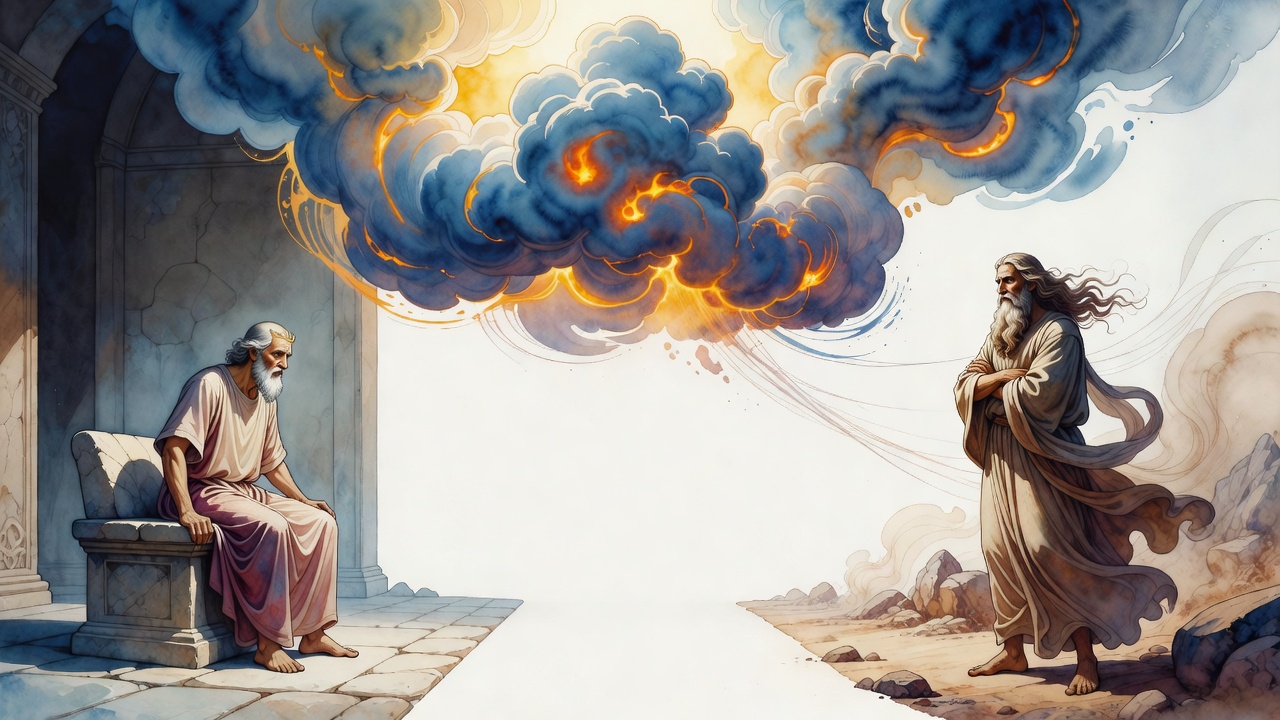
When they were engaged in the matters to which they were accustomed, a euphemism for intercourse, she passed wind and said: Just as this passed wind will not return to its place, so too Elazar ben Durdayya will not be accepted in repentance, even if he were to try to repent. This statement deeply shocked Elazar ben Durdayya, and he went and sat between two mountains and hills and said: Mountains and hills, pray for mercy on my behalf, so that my repentance will be accepted.
They said to him: Before we pray for mercy on your behalf, we must pray for mercy on our own behalf, as it is stated: “For the mountains may depart, and the hills be removed” (Isaiah 54:10). He said: Heaven and earth, pray for mercy on my behalf. They said to him: Before we pray for mercy on your behalf, we must pray for mercy on our own behalf, as it is stated: “For the heavens shall vanish away like smoke, and the earth shall wax old like a garment” (Isaiah 51:6).
He said: Sun and moon, pray for mercy on my behalf. They said to him: Before we pray for mercy on your behalf, we must pray for mercy on our own behalf, as it is stated: “Then the moon shall be confounded, and the sun ashamed” (Isaiah 24:23). He said: Stars and constellations, pray for mercy on my behalf. They said to him: Before we pray for mercy on your behalf, we must pray for mercy on our own behalf, as it is stated: “And all the hosts of heaven shall molder away” (Isaiah 34:4).
Elazar ben Durdayya said: Clearly the matter depends on nothing other than myself. He placed his head between his knees and cried loudly until his soul left his body. A Divine Voice emerged and said: Rabbi Elazar ben Durdayya is destined for life in the World-to-Come. The Gemara explains the difficulty presented by this story: And here Elazar ben Durdayya was guilty of the sin of forbidden sexual intercourse, and yet he died once he repented.
The Gemara answers: There too, since he was attached so strongly to the sin, to an extent that transcended the physical temptation he felt, it is similar to heresy, as it had become like a form of idol worship for him. When Rabbi Yehuda HaNasi heard this story of Elazar ben Durdayya, he wept and said: There is one who acquires his share in the World-to-Come only after many years of toil, and there is one who acquires his share in the World-to-Come in one moment.
And Rabbi Yehuda HaNasi further says: Not only are penitents accepted, but they are even called: Rabbi, as the Divine Voice referred to Elazar ben Durdayya as Rabbi Elazar ben Durdayya. § In relation to the issue of distancing oneself from idol worship and prostitution, the Gemara relates: Rabbi Ḥanina and Rabbi Yonatan were once walking along the road when they came to a certain two paths, one of which branched off toward the entrance of a place of idol worship, and the other one branched off toward the entrance of a brothel. One said to the other: Let us go by the path that leads to the entrance of the place of idol worship,

 Click for full size