Eleazar Refused One Meal and Shamed an Empire
The officers offered Eleazar a way out. Bring your own food, they said, and only pretend to eat what the king requires. He was ninety, and he said no.
Table of Contents
Eleazar was ninety years old, and the empire still needed his mouth.
 Click for full size
That is how weak the empire was. It had soldiers, decrees, public humiliations, and the memory of bodies thrown from towers. Still, it needed one old man to pretend.
The Meal That Was Really a Trial
Antiochus IV had ordered the Jews of Judah to abandon their law. The prohibition on forbidden foods was one of the decrees. Not because the king cared about what Judeans ate, but because eating was public, observable, and symbolic. If a respected elder could be made to eat swine, the news would travel. Every young person who saw it would know the law had boundaries that could be moved.
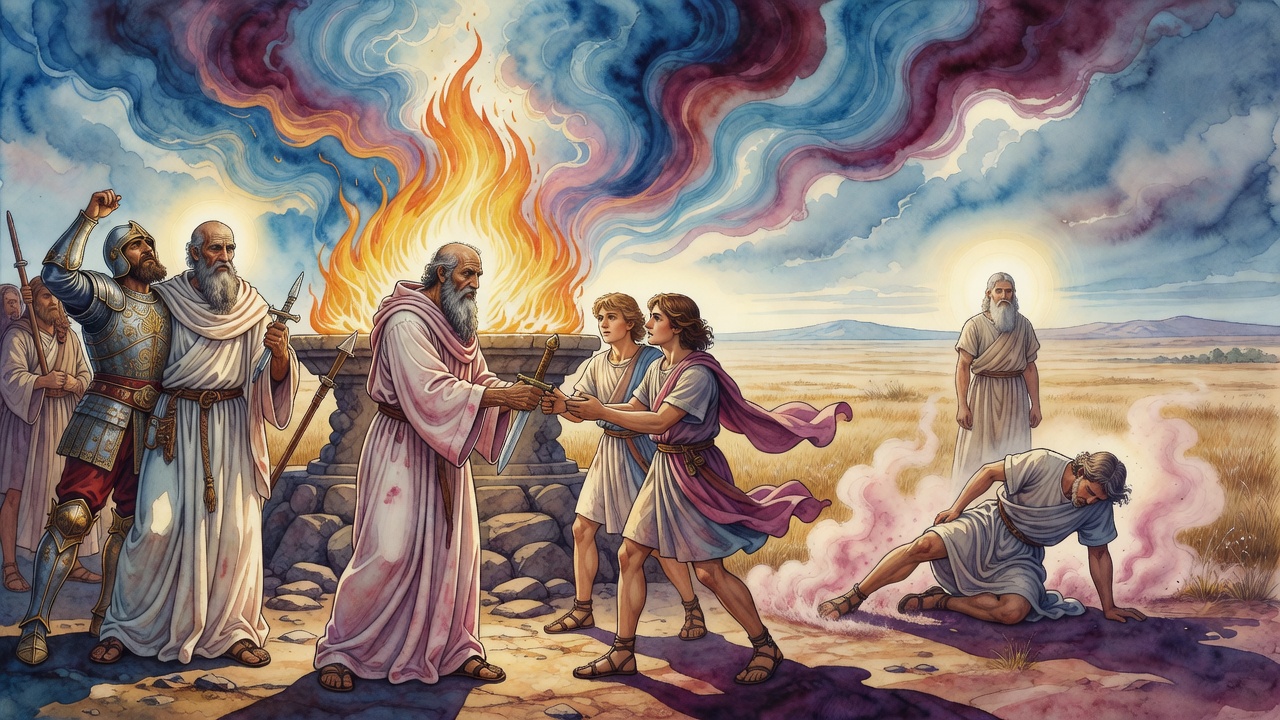
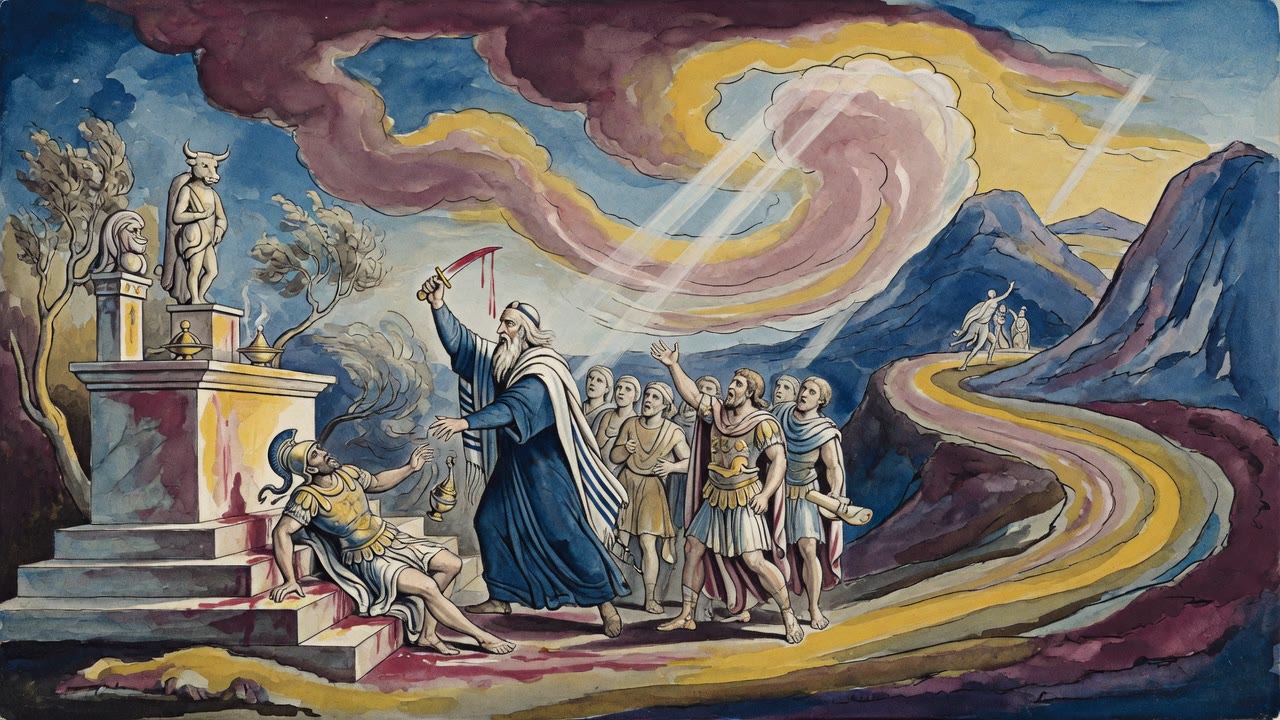
The officers brought Eleazar forward and ordered him to eat. He was a priest, known throughout Jerusalem, ninety years old, a man whose entire life had been shaped by the distinction between permitted and forbidden food. The officers had chosen him carefully. His surrender would mean more than a thousand ordinary compliances.
He refused.
The officers, and even some who pitied him, offered a compromise. "Bring your own food," they said. "Something you are permitted to eat. Sit here among us and only pretend to eat what the king requires. You will be seen complying. You will live. No one need know the difference."
Eleazar considered the offer with the attention it deserved, and then he said no to that as well.
Why Pretending Was Not Innocent
His reasoning was not simple piety. He thought it through. He was ninety years old. If he pretended now and someone found out later, every young person who had looked to his example would learn that Eleazar, when the pressure was real, had invented an escape. They would learn that the law was negotiable when the cost was high enough. That lesson would outlast his life by decades.
And even if no one found out, he would know. He would spend whatever years remained to him knowing that he had performed loyalty he did not practice. The appearance of integrity without its substance was not a kind of integrity. It was its opposite dressed in its clothes.
He was not willing to teach that lesson. Not at ninety. Not at any age.
What an Empire Cannot Buy
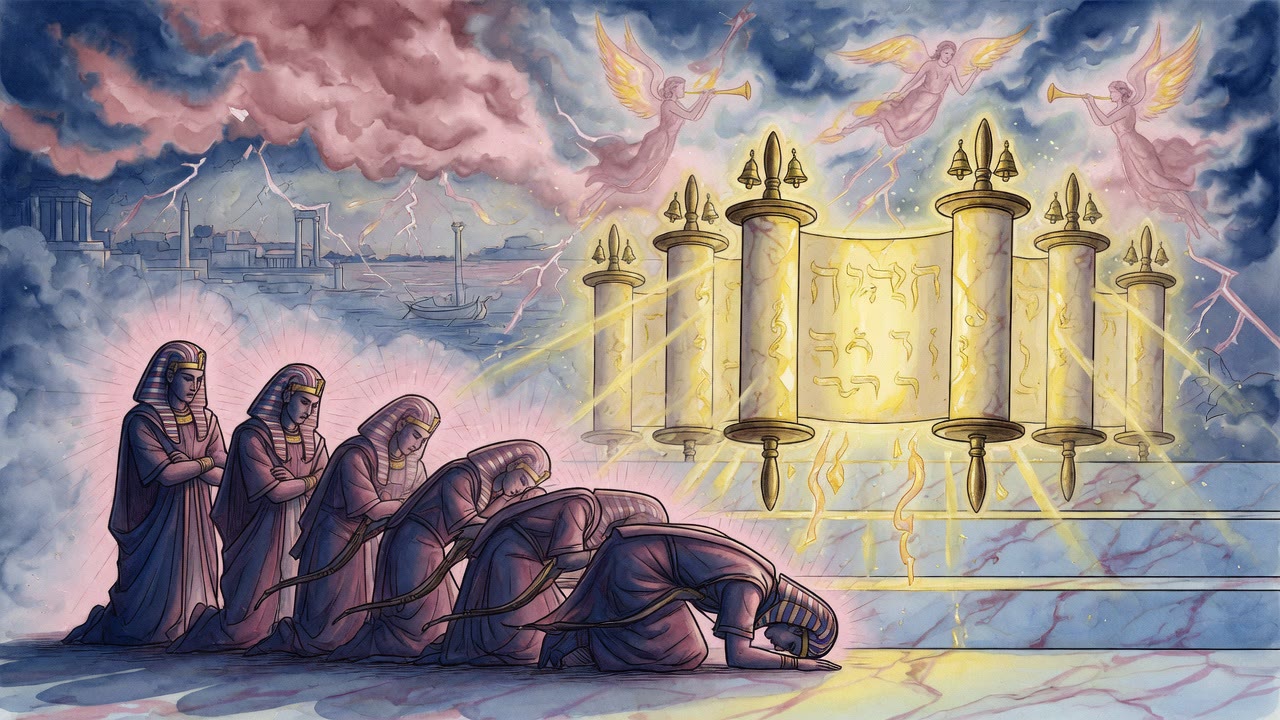
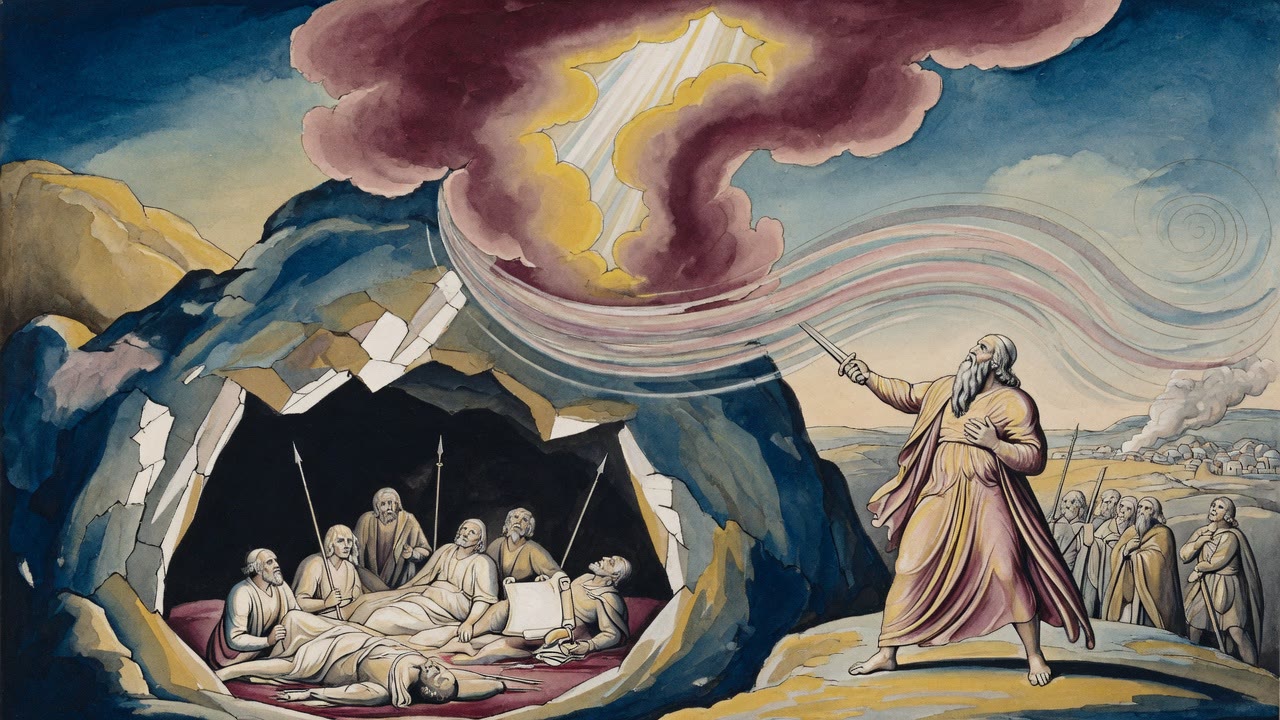
Chronicles of Jerahmeel, the twelfth-century Hebrew chronicle translated by Moses Gaster in 1899, preserves the story as part of a larger account of Antiochus IV's persecution. The chronicle notes the methodical quality of the oppression: Torah study forbidden, worship banned, the pious slaughtered with precision. Two women hanged by their breasts with their circumcised infants. Others sealed in caves and burned. The regime was not improvising. It was conducting a campaign against identity itself.
Into that campaign, Eleazar walked backward. His refusal was not only about one meal. It was about what the empire's offer assumed: that everything has a price, that the body's comfort is the final argument, that old age produces the fear that makes surrender reasonable. He answered all of those assumptions by refusing the food and the escape with equal firmness.
The Seven Sons Watched the Same Logic
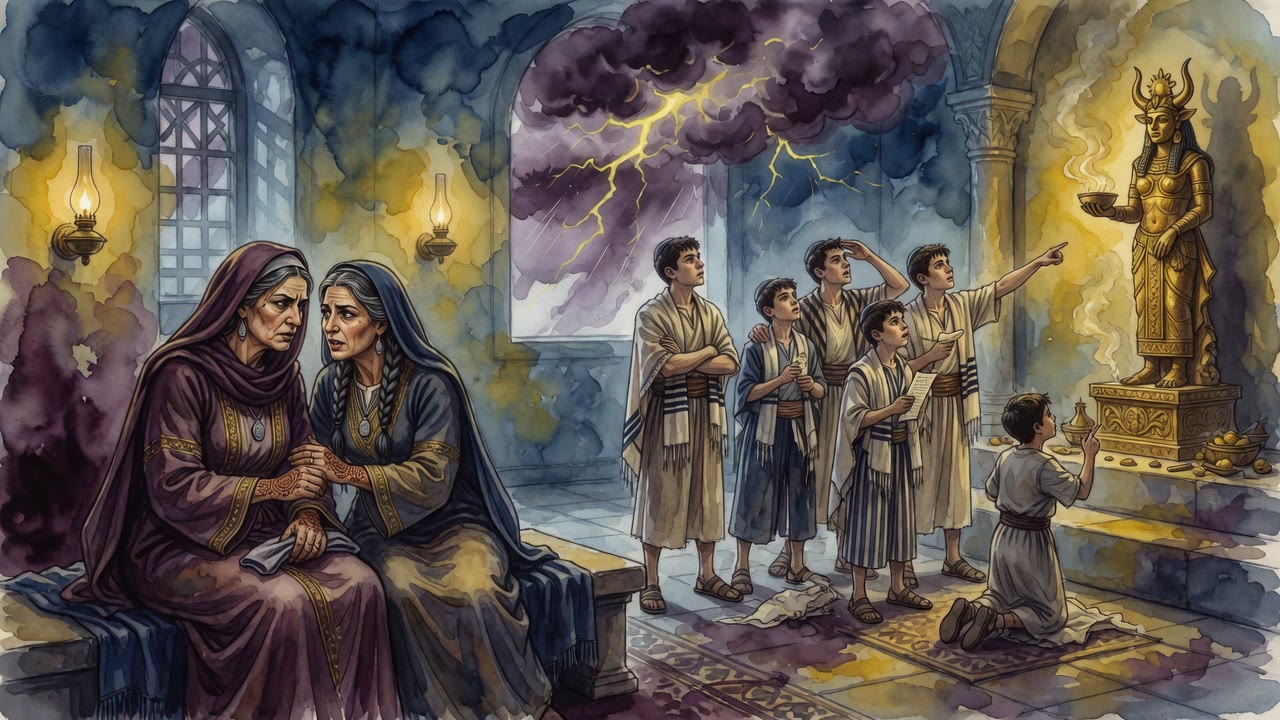
Second Maccabees adds another scene from the same persecution. A mother and her seven sons were brought before the king in succession. Each son, as he was brought forward moments from death, used his last breath to speak. One called out that God would strike the king and his house. Another warned that power built on lies would fall. Another declared that the God of Israel was watching what happened in the throne room and would remember it.
The king had the power to kill them. He did not have the power to make them afraid of him. That gap, between power over bodies and power over souls, was the gap they widened with every refusal.
Josephus records the political and military context of the decrees in his Antiquities: the internal collapse of the Jerusalem priesthood under Jason and Menelaus, the Greek gymnasium built inside the holy city, the men who reversed their circumcisions to exercise naked. Antiochus had been invited in by some Jews before he turned predator. The martyrs were dying in part for a city that had not yet decided what it wanted to be.
← All myths