Elijah in Disguise Tested What People Really Did
After Carmel, Elijah put on other faces and walked into the world. He came for the charitable and the contemptuous alike.
Table of Contents
 Click for full size
The Judge About to Be Executed
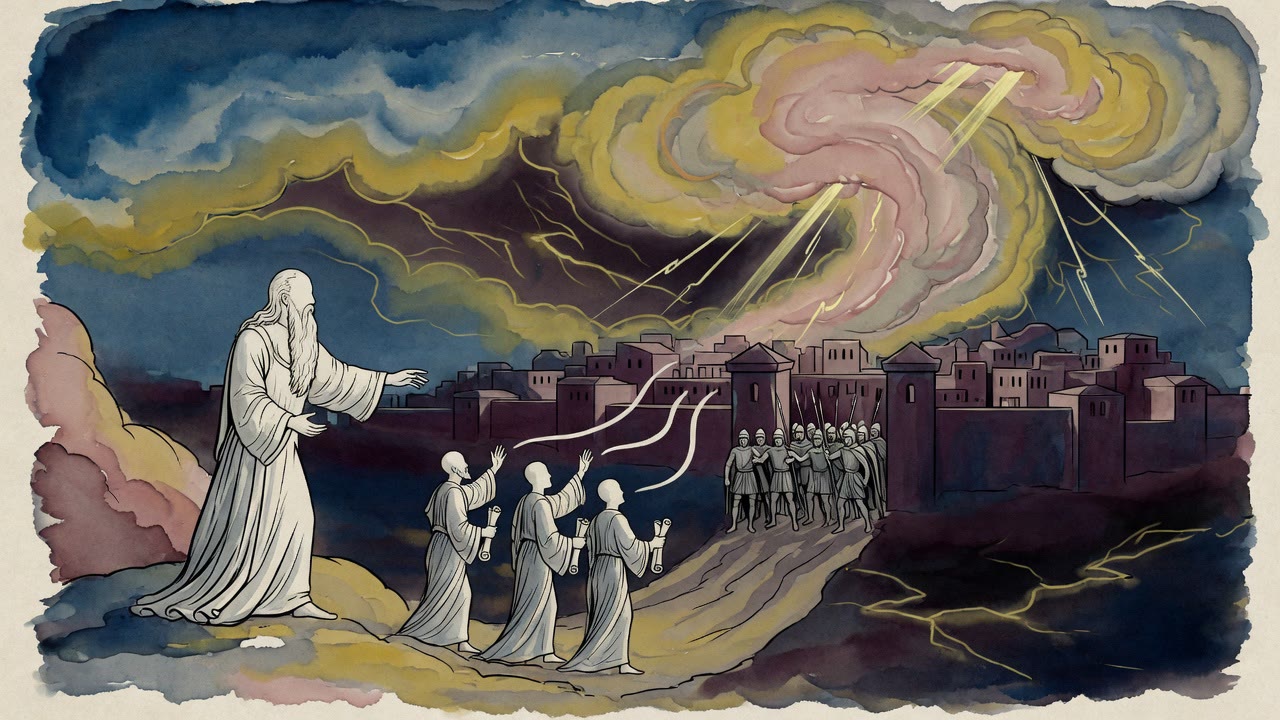
Rabbi Shila was a Jewish judge operating under Persian rule, and someone had reported him to the authorities. The charge: administering Hebrew law in a Persian court's jurisdiction. The punishment would be death. Shila stood before the officials with no defense prepared and no allies in the room.
A Persian official appeared from nowhere and intervened. He spoke the bureaucratic language of the empire fluently, redirected the officials' attention, introduced enough procedural confusion to make the charge dissolve before it could be formally lodged. Shila survived. When he turned to thank the man, there was no one there. He had been saved by paperwork, by misdirection, by a stranger who knew exactly how empires operated and used that knowledge with surgical precision.
The stranger had been Elijah.
This is the Elijah the fire-on-Carmel narrative hides: the one who moved through the world in ordinary clothing, testing whether people's private behavior matched their public declarations. He appeared wherever righteousness needed to be confirmed or challenged. He wore the faces available to him. Whatever the mission required, he provided.
Two Coins and What They Revealed
He came to a poor but devout man disguised as an Arab traveler and gave him two coins. Almost nothing. But the coins were a seed. The man's fortune changed immediately, two coins became ten, then a hundred, then a trading empire. He grew wealthy. And then, as often happens to wealthy men, his piety faded. His generosity contracted. His attention moved from compassion toward preservation.
Elijah came back in a different disguise, this time as a poor man asking for help. The formerly devout man turned him away. Elijah looked at him. The fortune vanished as suddenly as it had arrived. Not as punishment for being rich, but as consequence for forgetting what the wealth was for. The two coins had been a test. The man had passed the first part and failed the second. Elijah recorded both results.
The Vestibule That Muffled Crying
There were two friends whose long friendship ended over a renovation. One of them built a vestibule at the entrance to his home, a waiting room, an anteroom, a reasonable architectural addition. But the vestibule muffled the sounds from outside. The cries of poor people asking for help no longer reached the inner rooms clearly. The man had not become cruel. He had simply rearranged his house so that he could no longer hear suffering easily. His friend, recognizing what this meant about the man's character, ended the friendship.
When Elijah heard about the rupture, he confirmed it was right. Not because the man had committed a crime, but because he had made a structural choice to become less responsive to suffering. The choice revealed something about him that the friend had correctly perceived. Elijah always watched for exactly this: not spectacular wickedness but the small architectural decisions by which people arrange their lives to avoid inconvenience.
The Widow's Son and the Decree That Could Not Find Its Target
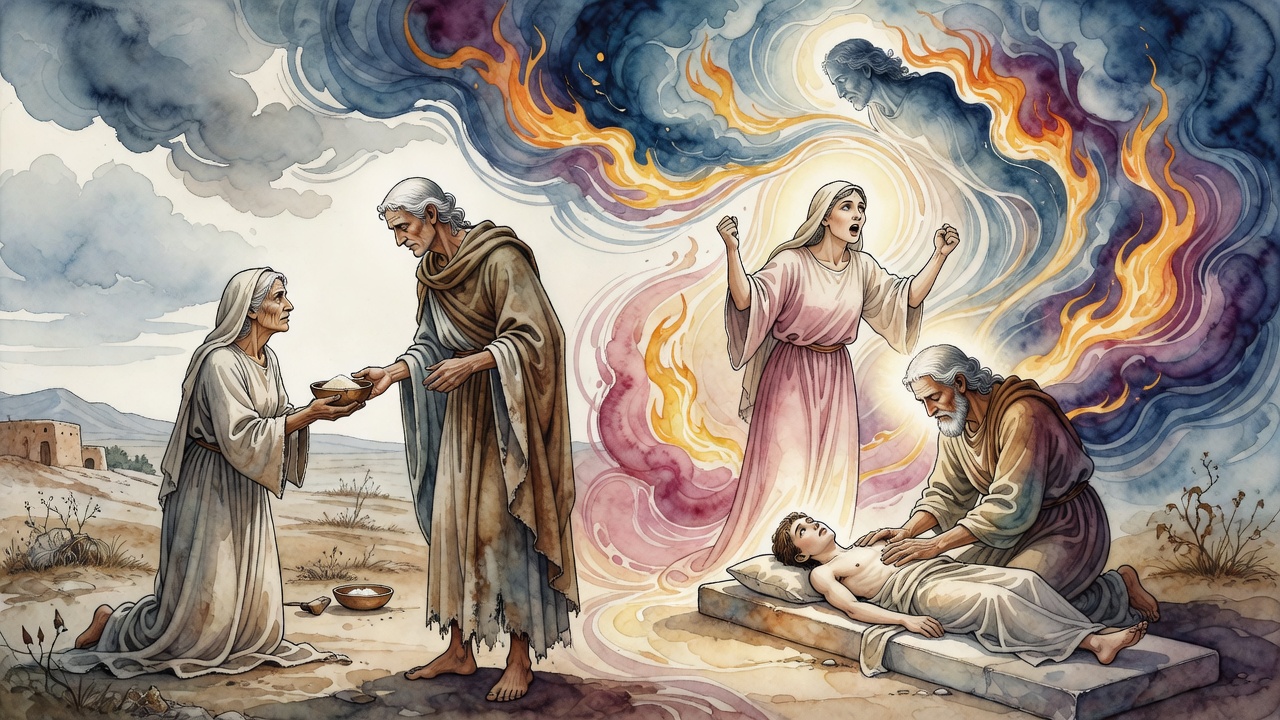
The widow of Zarephath, whom the tradition identifies as the mother of Jonah, welcomed Elijah into her home during famine at the cost of what she believed was her last meal. When her son died, Elijah stretched himself over the child three times and prayed with the full force of his prophetic authority. The child lived. The rabbis read this as the demonstration of a principle: that righteousness expressed as charity, tzedakah, carries power sufficient to overcome death itself, at least in the hands of someone who has mastered it absolutely.
One final story extends the principle further still. A man whose death-decree had already been sealed in heaven was visited by Elijah and told: give charity before the appointed date, and the decree will be reversed. The man gave everything he had to the poor. Death came on the appointed day and could not find him. The act of giving had changed him so thoroughly that the decree could no longer identify its target. He had become someone else. Elijah had known this was possible. He had been watching it happen for centuries.
The Scholar Who Looked at a Face and Saw a Problem
Rabbi Eliezer, son of Rabbi Shimon ben Yohai, was walking along the seashore after a long session of Torah study, full of the particular pride that follows intense learning. He encountered a man described as very ugly. The man greeted him pleasantly. Rabbi Eliezer responded with contempt, commenting on the man's appearance.
The man asked him quietly: have you taken this up with the craftsman who made me?
Rabbi Eliezer understood immediately what had happened and ran after the man, begging forgiveness. He was refused. The man, understood by the tradition to be Elijah in yet another disguise, led Eliezer into the nearest town, demonstrated the scholar's shame in public, and then forgave him. The correction was not gentle. A man could not immerse himself in Torah and stay contemptuous of the human beings walking in front of him. The disguise made the humiliation unavoidable: the man Eliezer had dismissed as ugly had been the one with the power to destroy his reputation, and had chosen mercy instead.
← All myths