Ezra Drank Fire and Restored 94 Sacred Books
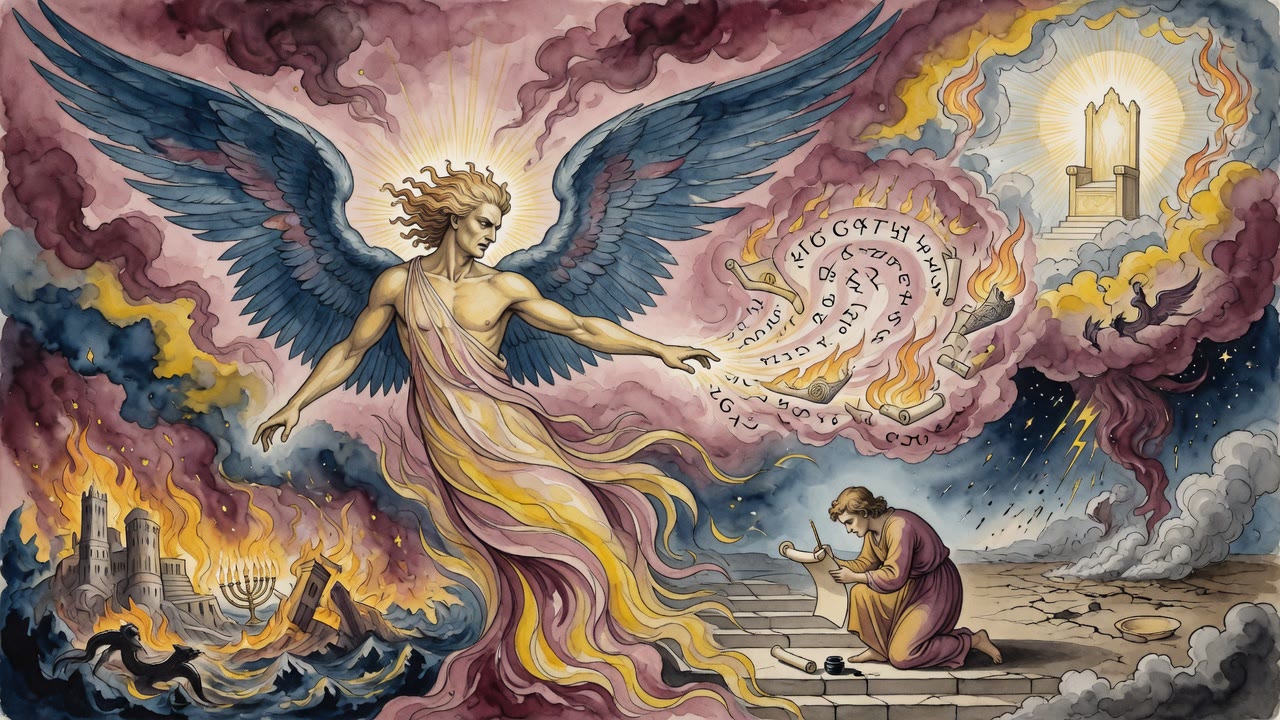
The law had burned with Jerusalem. The tablets were gone. Ezra asked for forty days before heaven took him, and five men who could write fast.
Table of Contents
 Click for full size
The Bush Called Him by Moses' Name
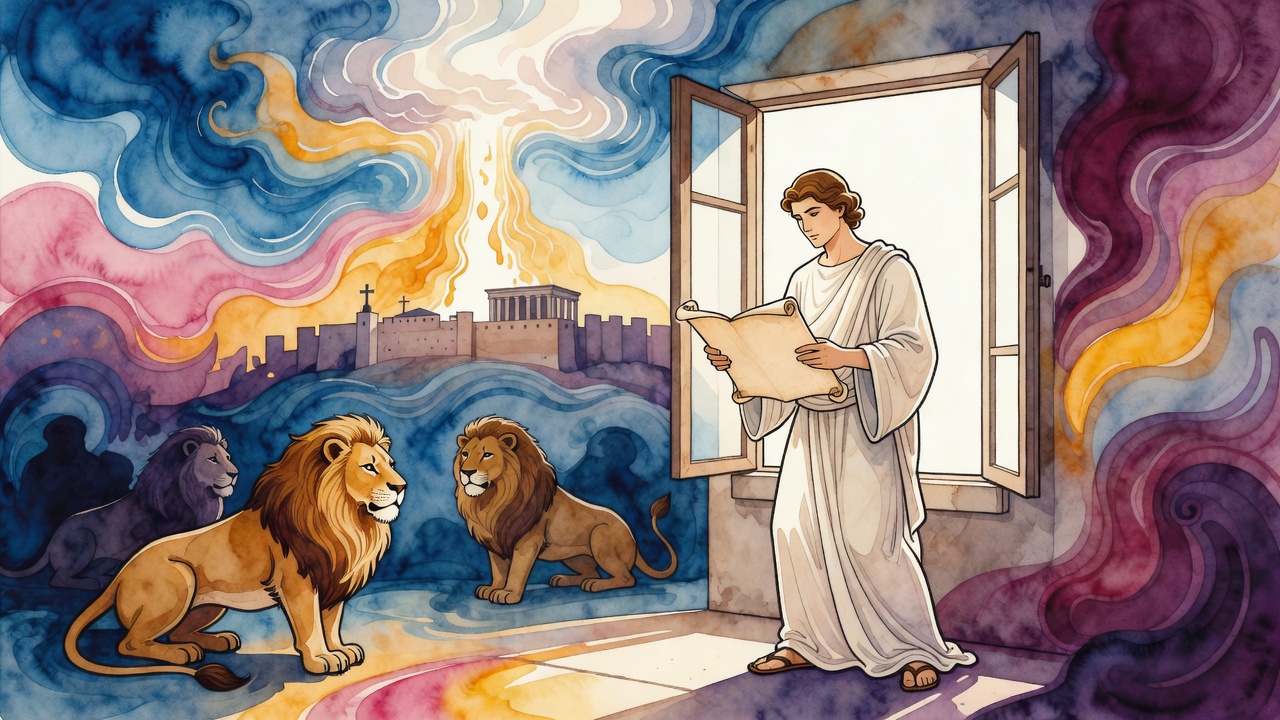
The city still smelled of smoke. Ezra sat under an oak anyway. Across from him a bush held a voice.
"Ezra. Ezra."
He got to his feet. "Here I am, Lord."
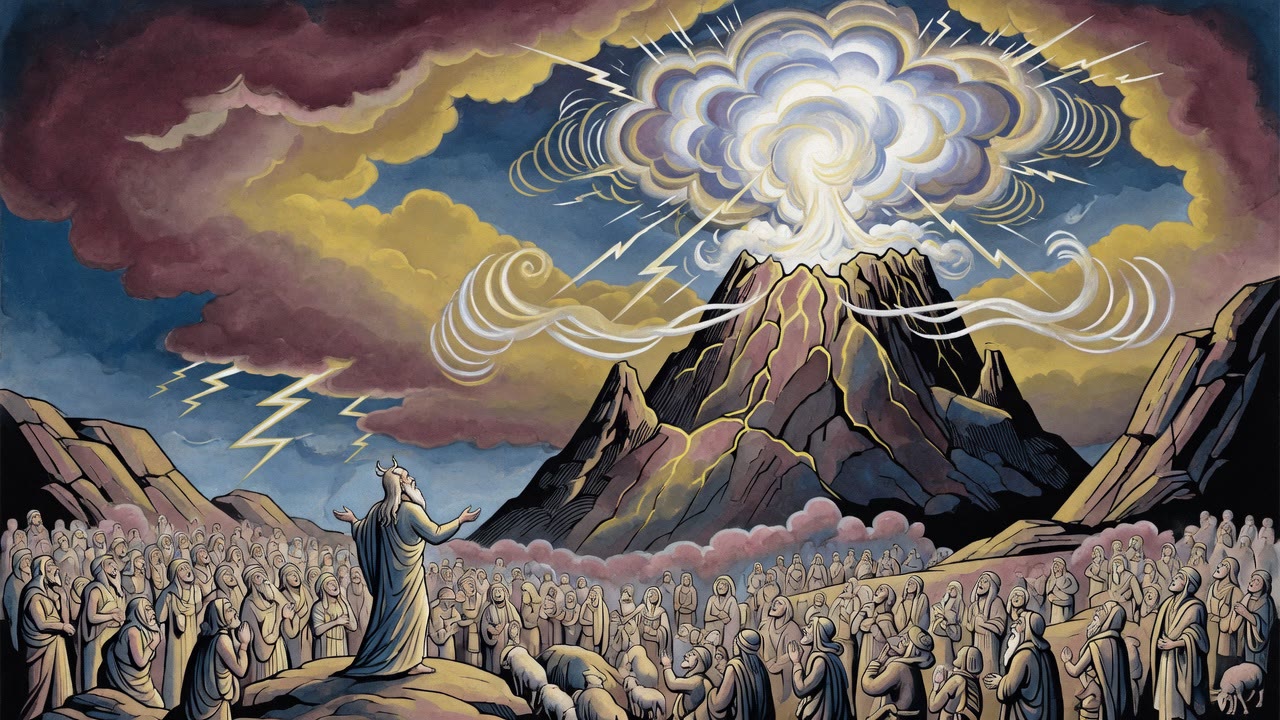
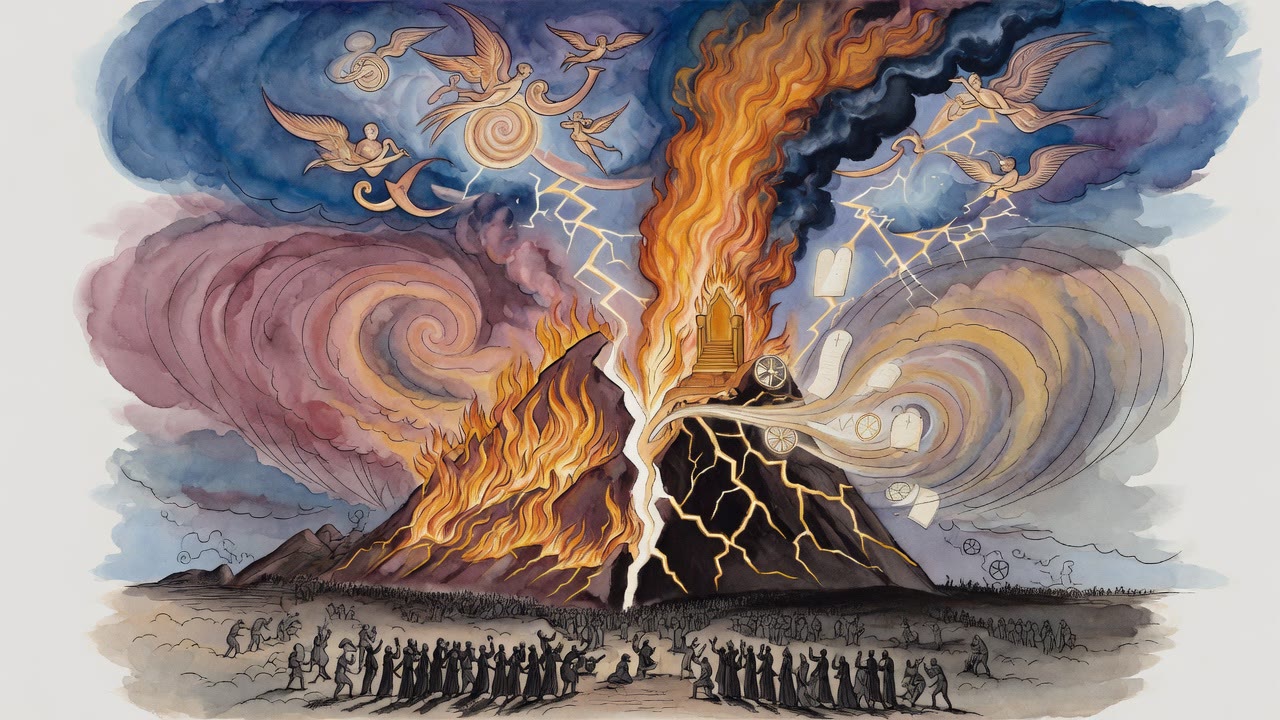
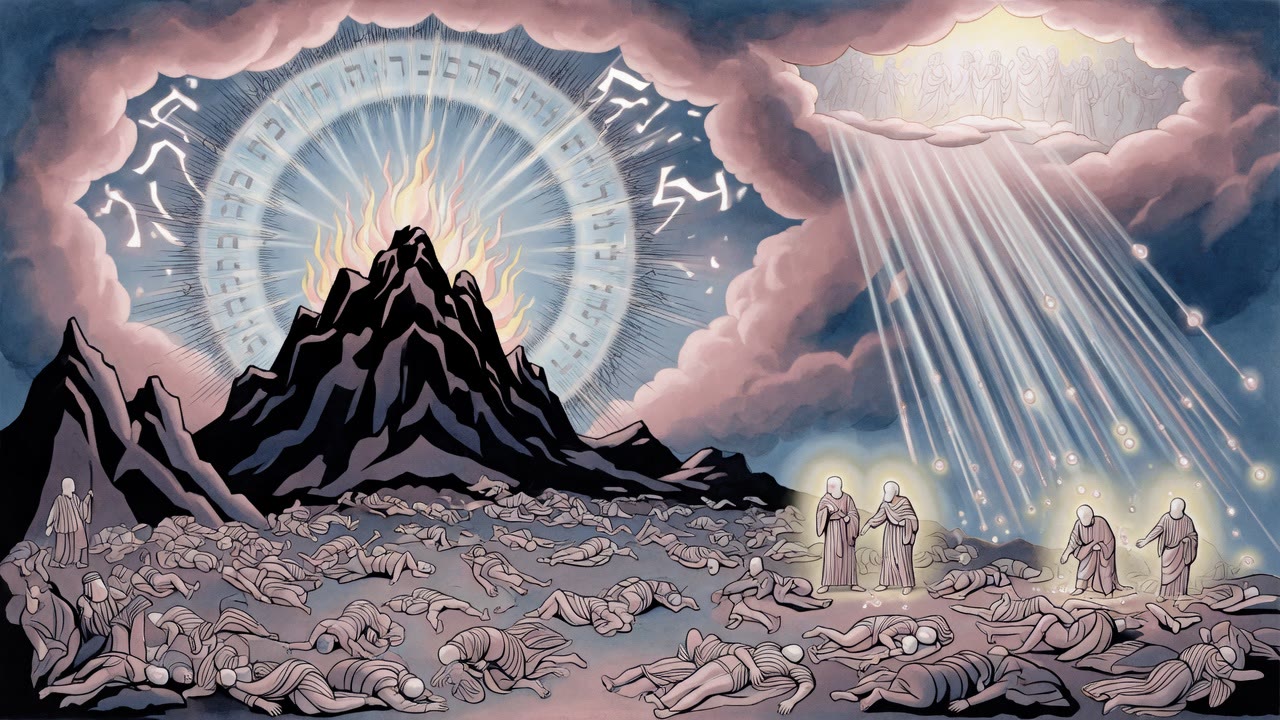
"I showed Myself in a bush and spoke to Moses when My people were slaves in Egypt. I sent him. I brought them out. I took him up the mountain and kept him with Me many days. I told him wonders. I showed him the secrets of the times and how the times would end. Then I gave him an order. These words you publish in the open. These you keep back."
Ezra had already been arguing for weeks. He had asked why the nations devour Israel if the world was made for Jacob's seed. An angel had answered with a riddle: Esau is the heel of this age, Jacob the hand of the next, and between heel and hand there is nothing to seek. He had prayed over a child kept nine months in fire and water, and asked what the labor was for if the work would be destroyed. Now the bush used Moses' name on him and did not wait for another brief.
"Now I say the same to you."
Set Your House in Order
What came next was not a job. It was a notice.
Lay up in your heart the signs you have been shown, the dreams you have seen, the explanations you have been given. You are going to be taken up out of the middle of the human race. After that you live with the one I have chosen, and with the others like you, until the times run out.
The age has lost its youth. It was cut into twelve parts. Nine are gone, and half of the tenth. Two and a half are left.
"Set your house in order. Correct your people. Comfort the ones at the bottom. Teach the ones who can be taught. Put down the life that rots. Put down the thinking of a mortal man. Lay aside the heaviest things you are carrying and hurry out of these times. Worse is coming than anything you have already watched. The older and weaker this world gets, the more evil multiplies in it. Truth is moving further off. Lying is moving closer. The eagle you saw in your vision is already on the road."
He Asked About the Unborn
Ezra did not argue about dying. He argued about the gap.
"Let me speak in front of You, Lord. I will go the way You have told me. I will correct the people who are alive now. But who warns the ones who are going to be born? The world is lying in the dark. The people in it have no light. Your law has been burned. Nobody knows what You have done, and nobody knows what You are going to do. If I have found favor with You, put Your spirit into me. I will write everything that has happened in the world from the start, and everything that was in Your law. Then the road can be found. Anyone who wants to be alive in the last days can live."
The answer came back as a set of arrangements.
Go and gather the people. Tell them not to look for you for forty days. Prepare a great many writing tablets. Take Sarea, Dabria, Selemia, Ethanus, and Asiel with you, those five, because they have been trained to write fast. Then come back here. I will light a lamp of understanding inside your chest, and it will not go out until what you have to write is finished. When it is done, some of it you make public, and some of it you hand to the wise in private. Tomorrow at this hour you begin.
The Last Thing He Said to Them
He went and called the whole people together. He did not soften anything.
"Listen, Israel. Our fathers lived as foreigners in Egypt and were brought out of it and were handed the law of life. They did not keep it, and neither did you after them. Land was given to you in Zion. You and your fathers did wrong in it and did not walk the way you were told to walk. Because He is a fair judge He took back what He had given, at the proper time. And here you are. And your brothers are further inland than you."
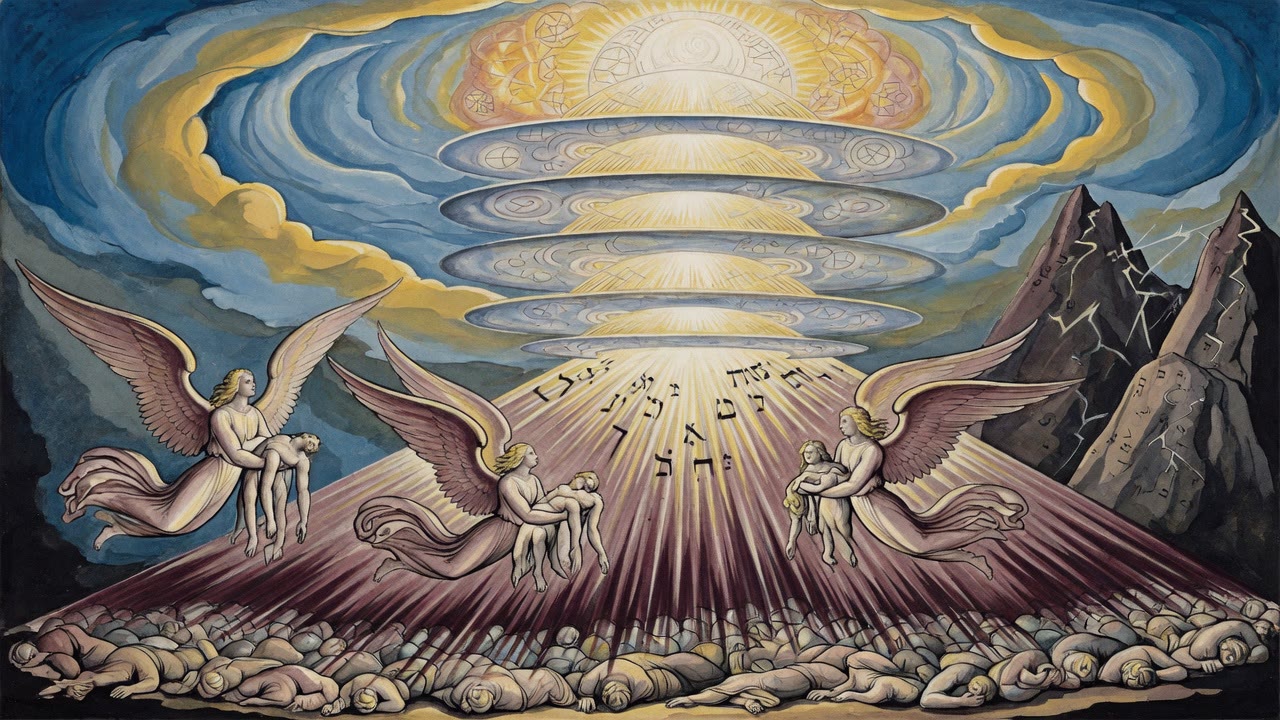
"Govern your own minds. Discipline your own hearts. Do that and you stay alive. When you die you will be shown mercy. After death there is a judgment and we live again. Then the names of the decent will come out into the open, and so will everything the wicked did."
Then the last sentence any of them heard from him for forty days. "Let nobody come to me now. Let nobody look for me."
He took the five men and walked out to the field.
He Opened His Mouth and Drank
The next day the voice called him again. "Ezra. Open your mouth, and drink what I give you to drink."
He opened his mouth. A full cup was held out to him. What was in it looked like water and was the color of fire.
He drank it.
His heart poured understanding out of itself. Wisdom went up in his chest. His spirit held on to everything it was given. His mouth came open and did not shut again.
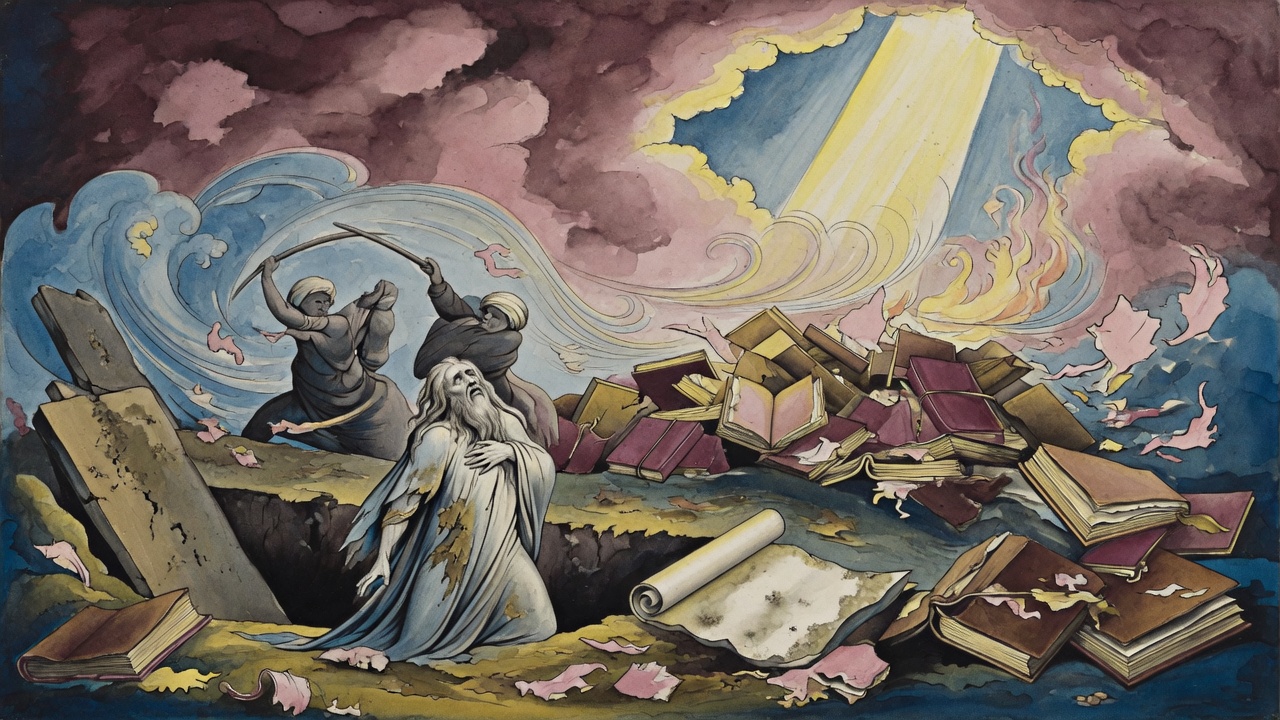
The five men sat down and wrote. They took it in turns. They wrote in letters they could not read, characters nobody in that field had been taught, the new square script the exiles had brought back with them. They worked through the daylight and ate their bread after dark. He spoke through the daylight and did not stop at night either. Forty days of it. One man talking. Five hands moving. At the end of the forty days there were 94 books stacked in the field.
"The twenty-four you wrote first, make public. Let the worthy read them and let the unworthy read them. The seventy you wrote last, hold back. Give them to the wise among your people. The spring of understanding is in them, and the fountain of wisdom, and the river of knowledge."
He did it. The sacred books that had burned with the city were restored out of one man's mouth in forty days. Then he was taken up out of the middle of the human race, exactly as he had been told. The title that stayed behind him was scribe of the knowledge of the Most High, for ever.
← All myths