14 myths
Each story names the sources it was written from.
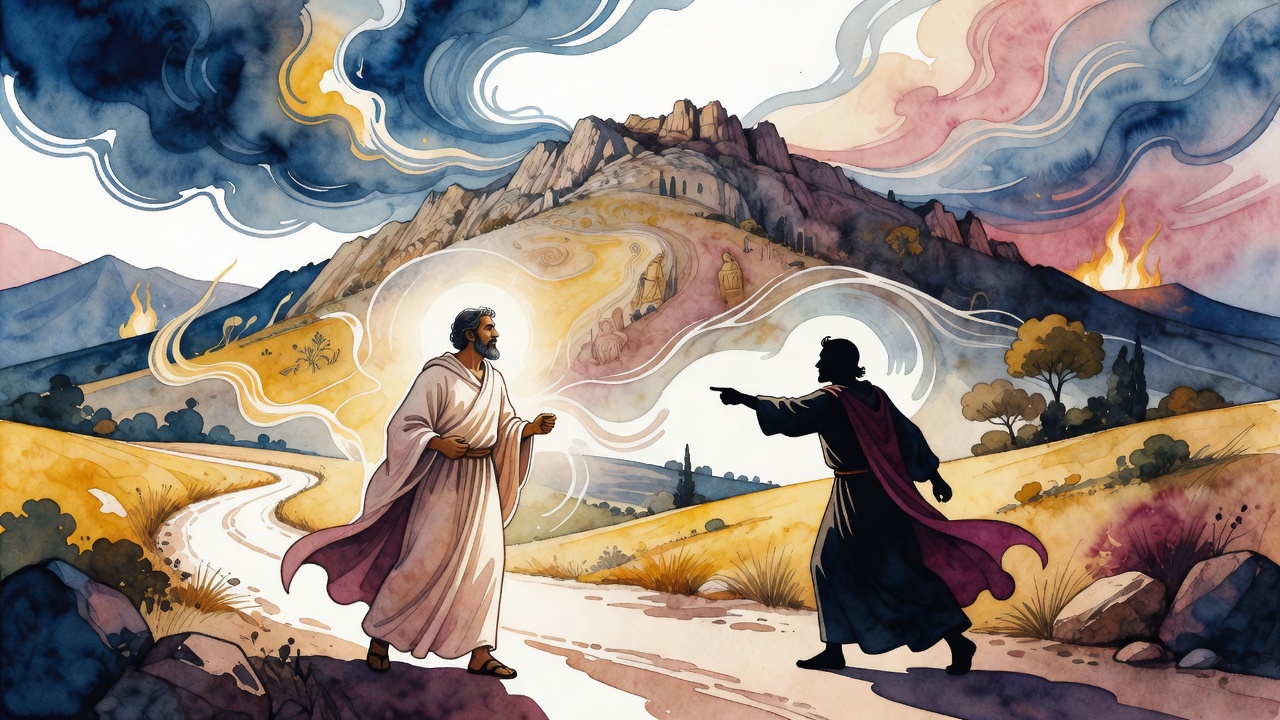
A man on Gerizim asked why walk to Jerusalem's ruins. Rabbi Ishmael named the refuse under the mountain, then ran for his life after dark.
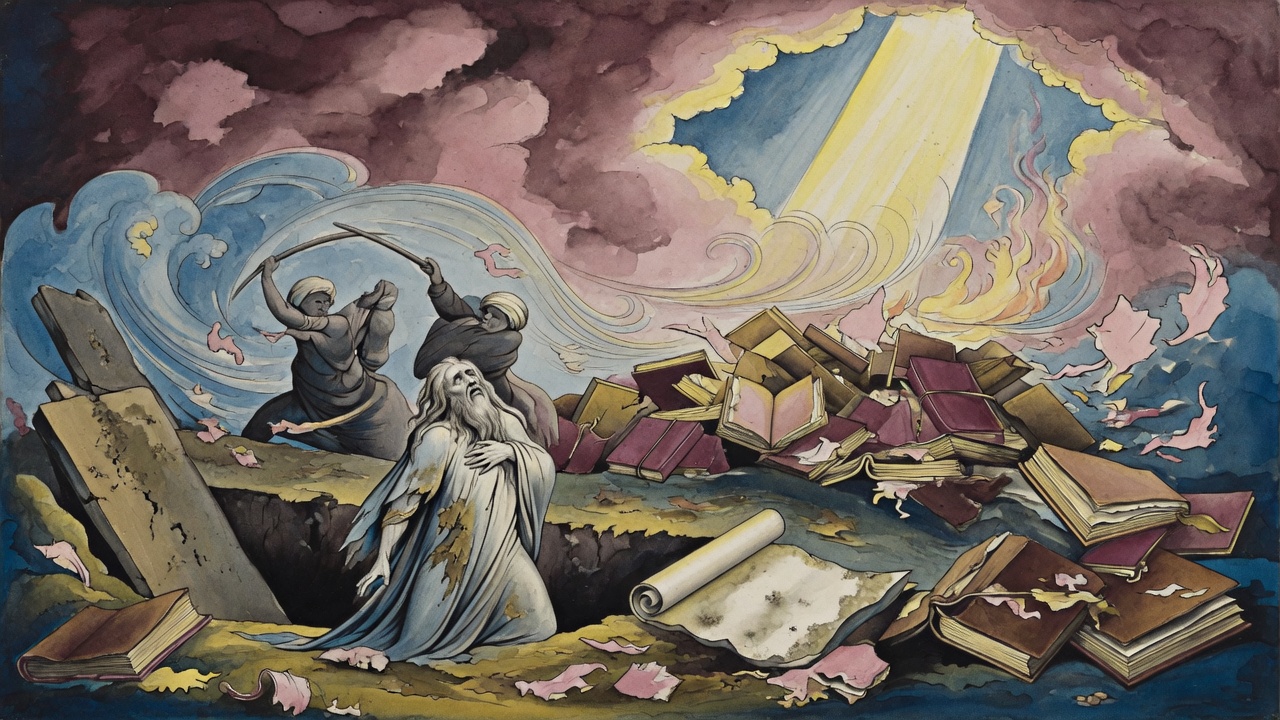
The law had burned with Jerusalem. The tablets were gone. Ezra asked for forty days before heaven took him, and five men who could write fast.
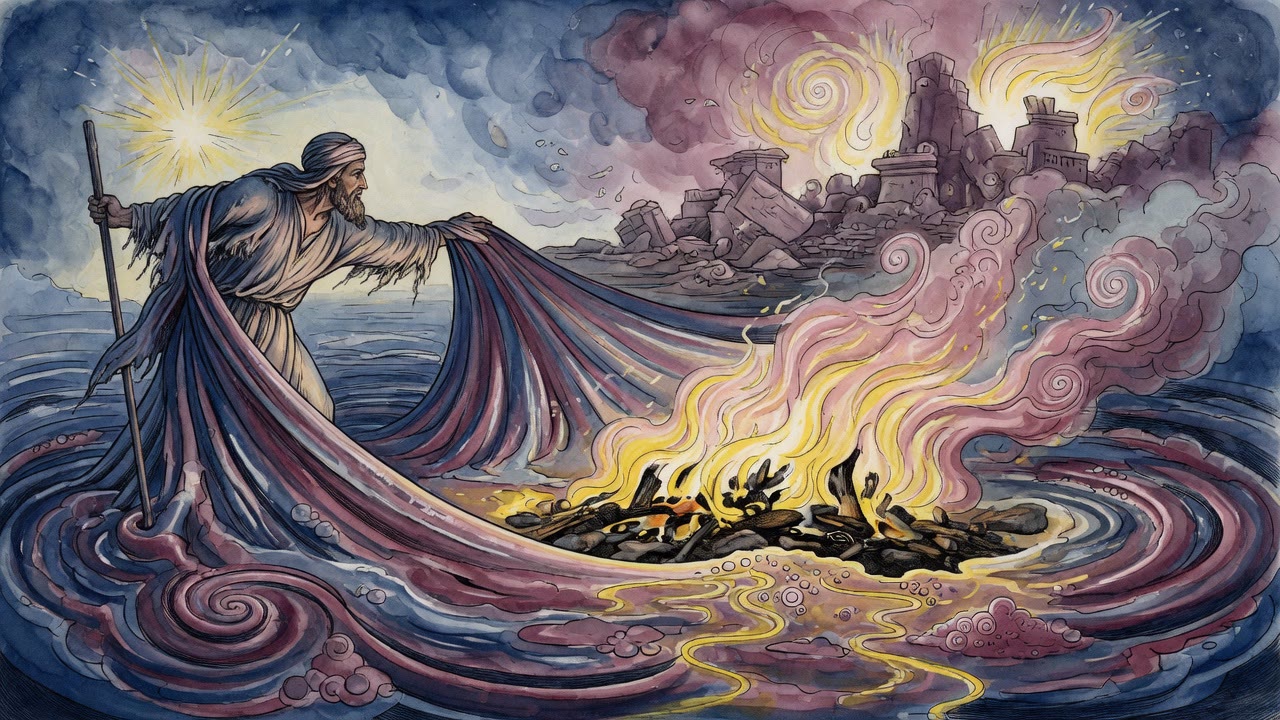
Ezra sat in a field and ate only flowers for seven days. A woman in ash became a city. Then the sea gave up a man.
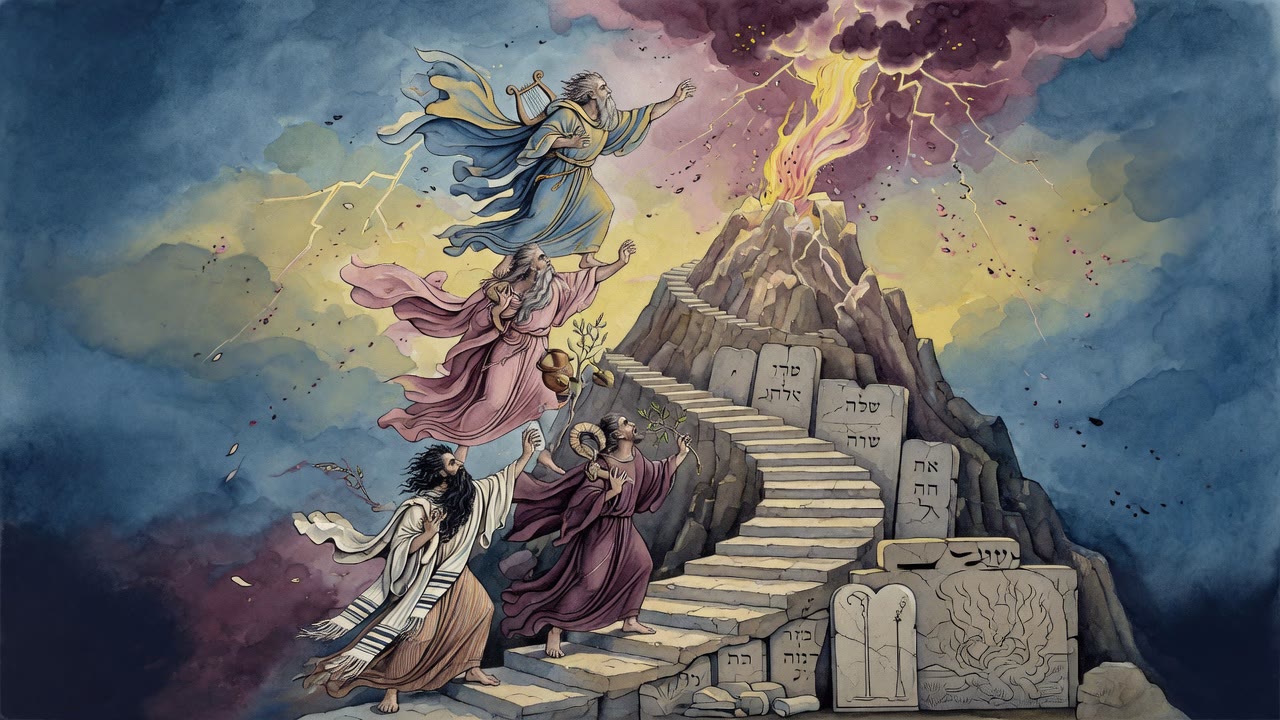
One more word from the mountain would have killed them. They sent Moses in. God agreed to speak through prophets after that.
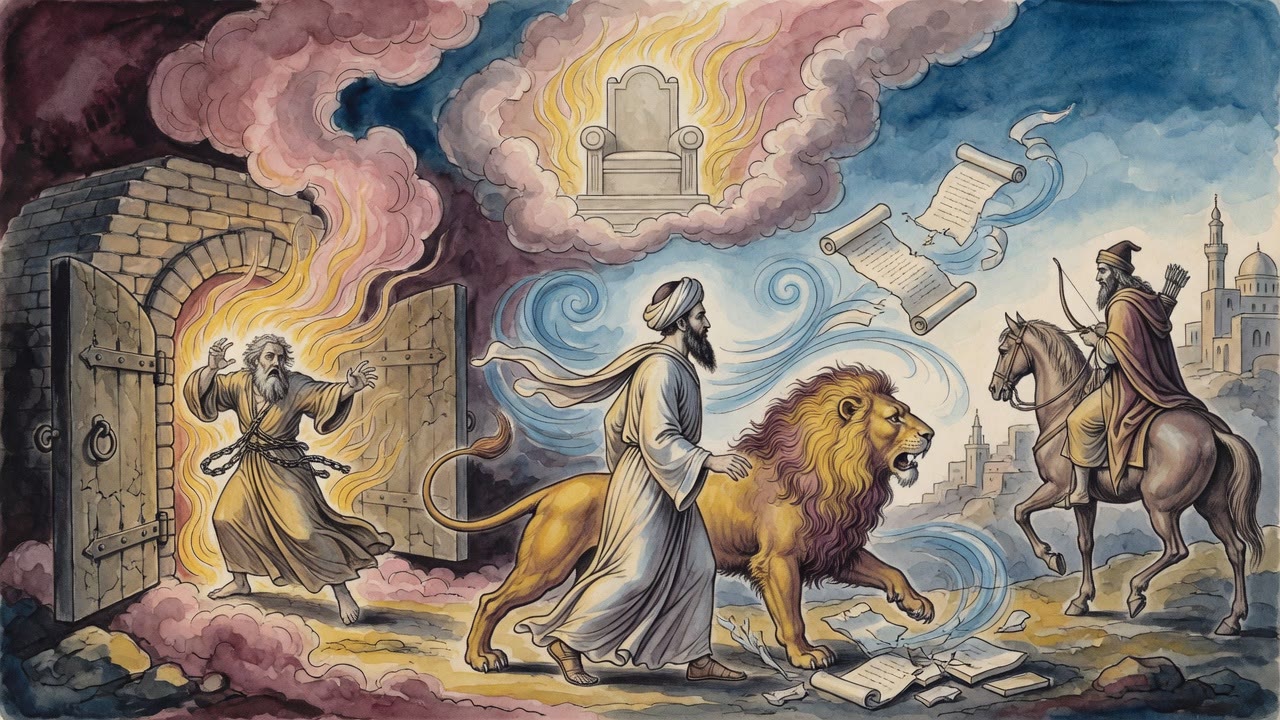
Jacob held God's own promise yet trembled before Esau. His fear unlocked a question the sages carried all the way to Ezra's silent exile return.
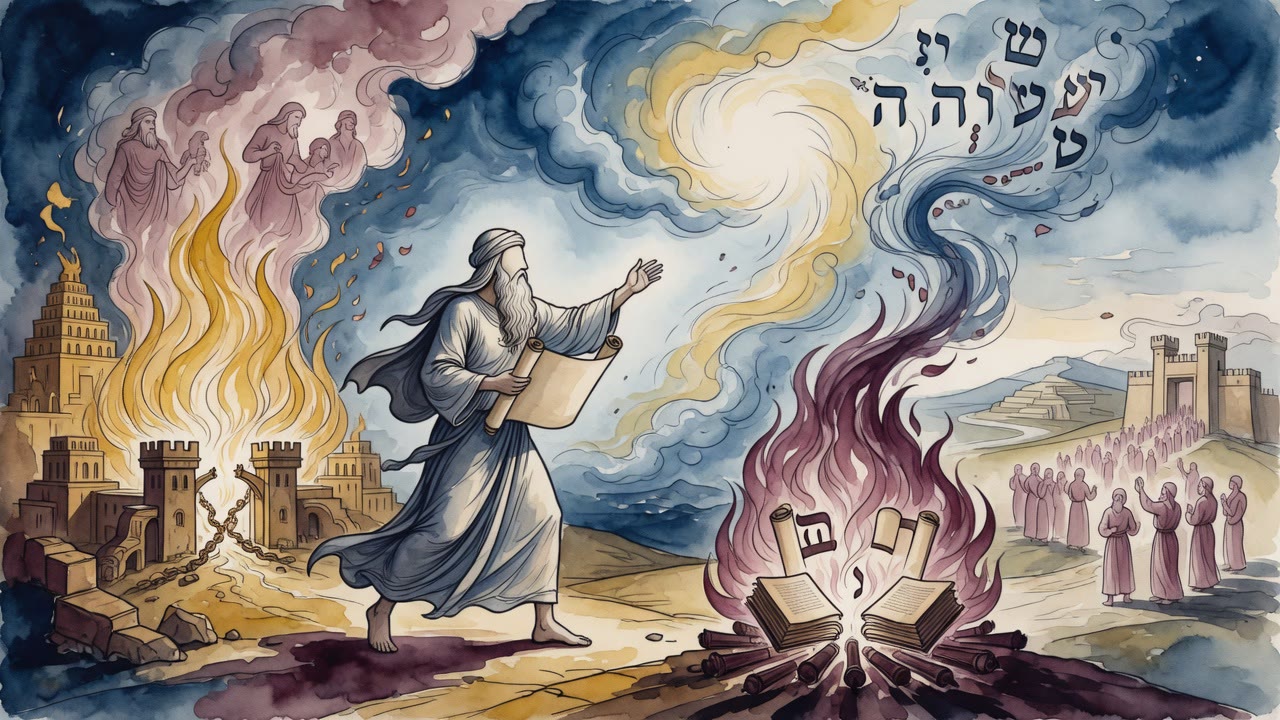
Two fires drove Ezra home from exile, a hunger for the bloodline and a hunger for Torah, into a country that answered his summons in a whisper.
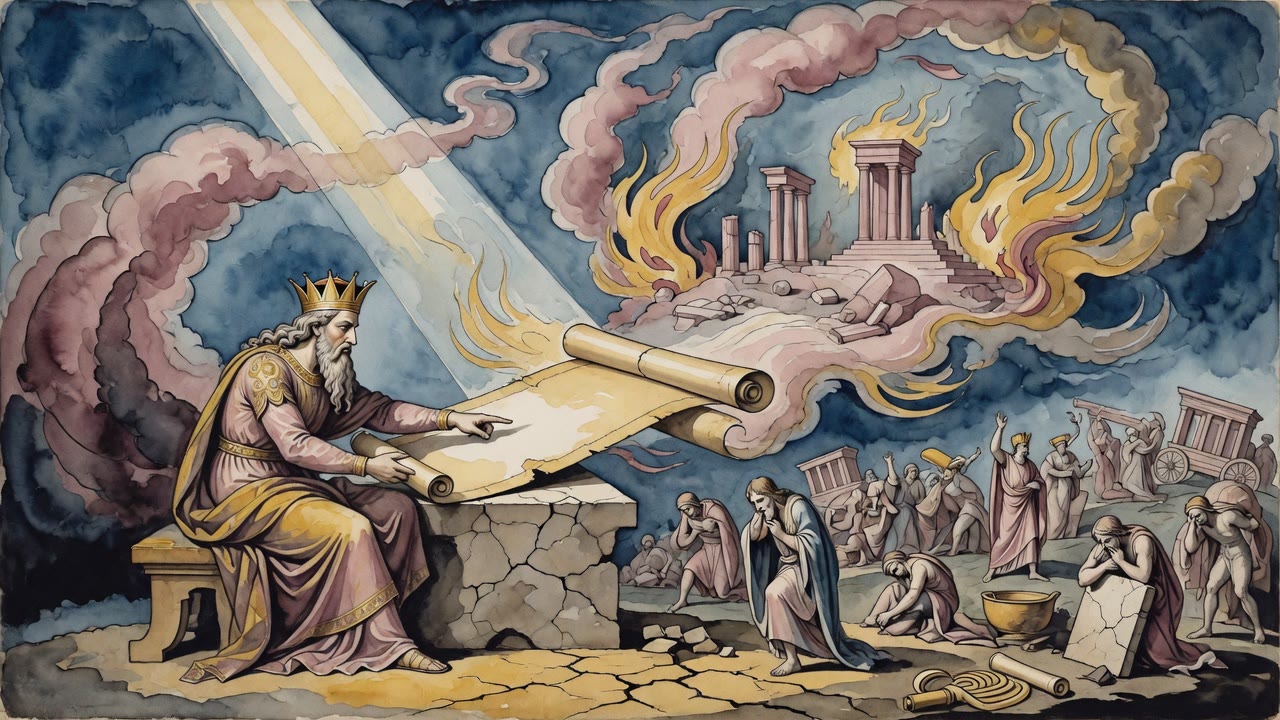
A Persian king read his own name in an old scroll and freed a nation, but the return home curdled into sabotage and weeping over a forgotten Law.
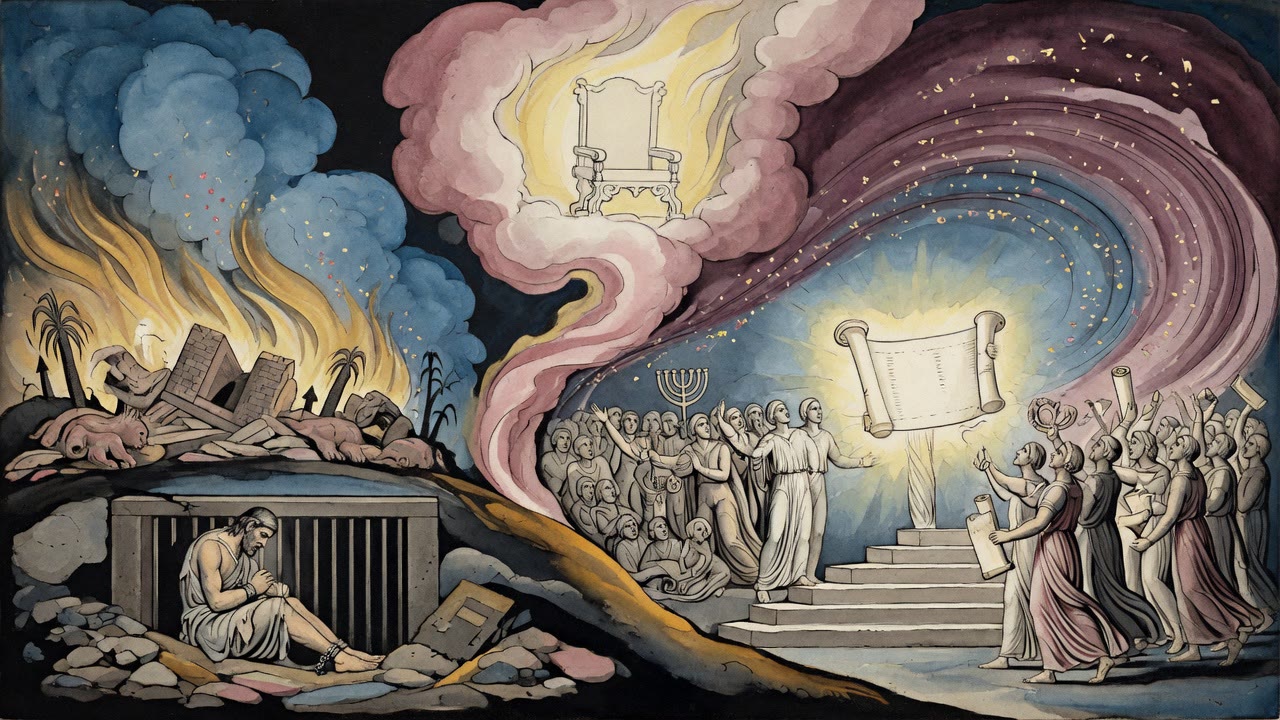
Babylon burned the Temple and left one prince of David in a jail cell. Seventy years later Ezra led a company of exiles home to rebuild the walls.
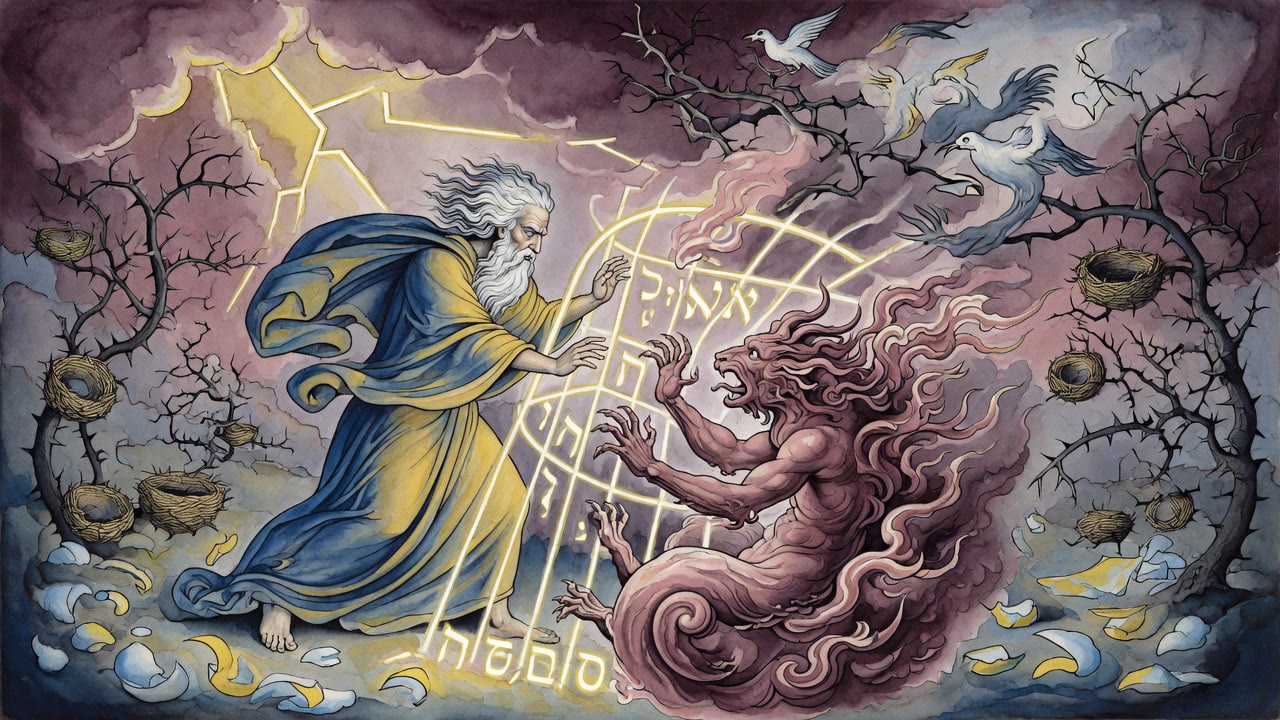
The first prisoner went into the cell and never came out. The second one warned them, before they took it, what would happen if they won.
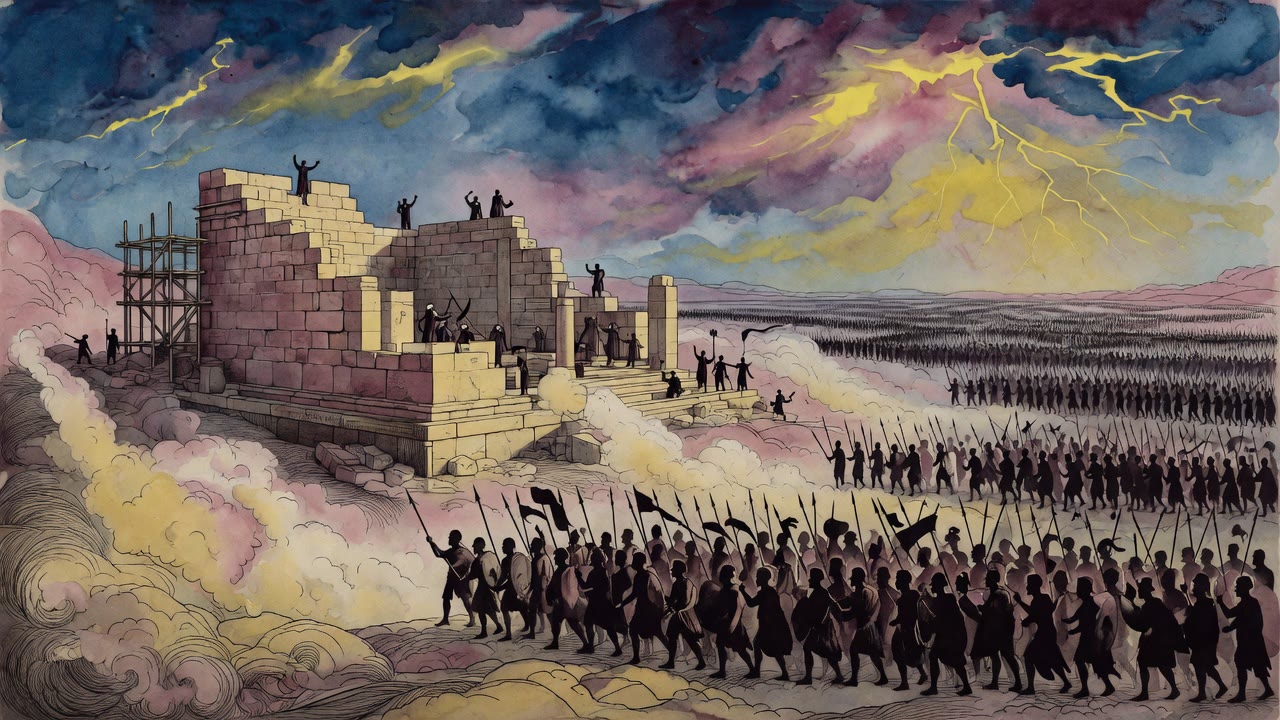
Zerubbabel and Jeshua got the first courses laid before the Cutheans mustered. Then came the friendly invitations to meet Nehemiah in a village.
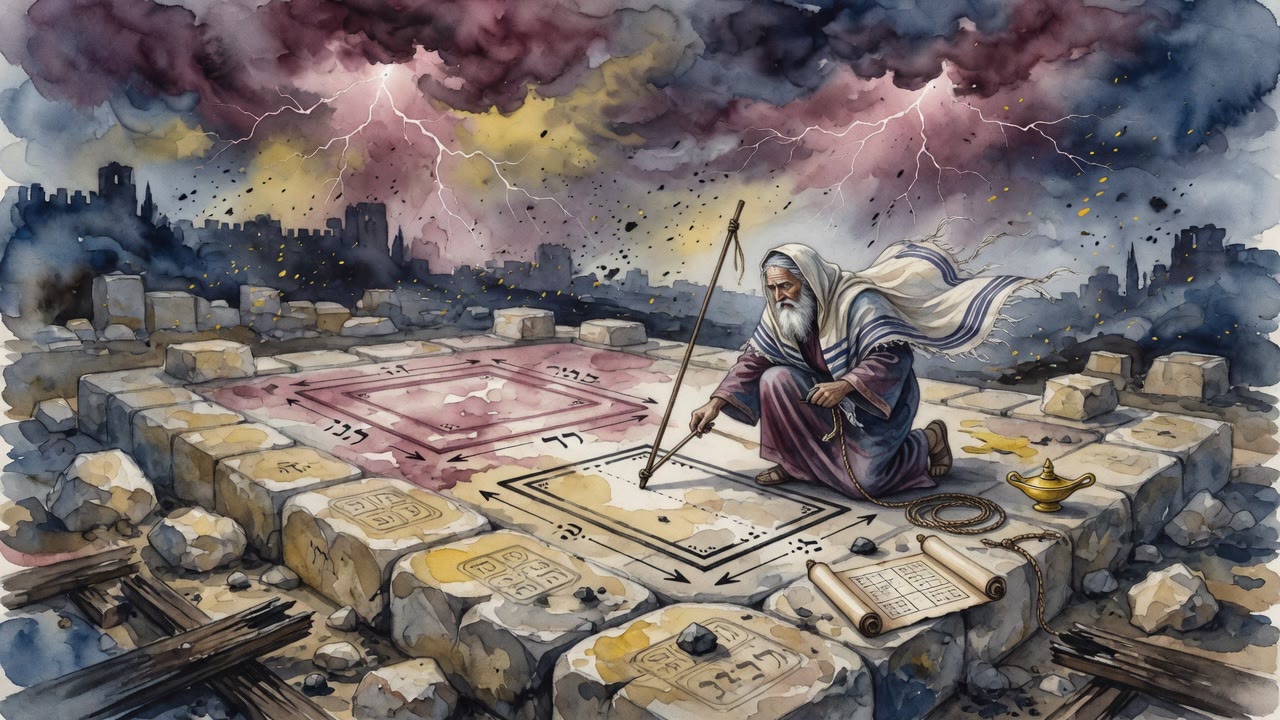
Rebuilding turned up a skull in the dust: Araunah, who sold David the threshing floor. The priests could not say how far the bone defiled.
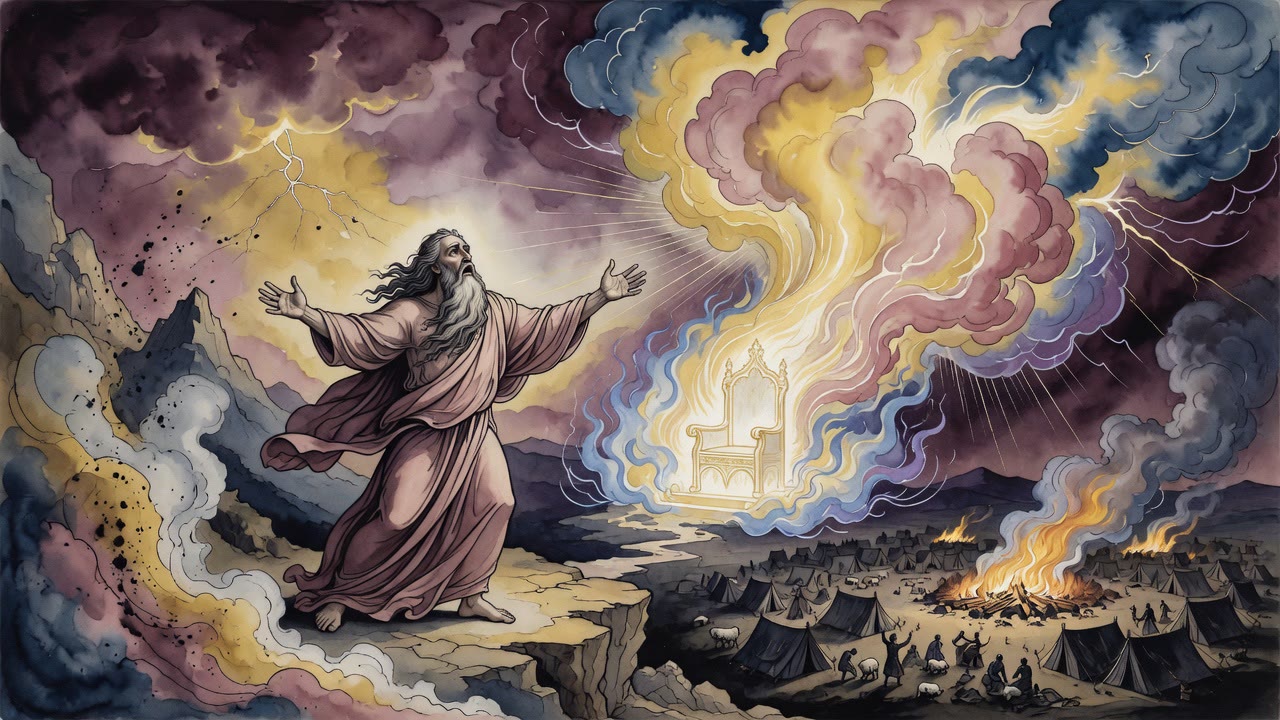
God would break one vow, not two. Live, and the people fall. Moses looked at both ends of the rope and left his own life on the table.
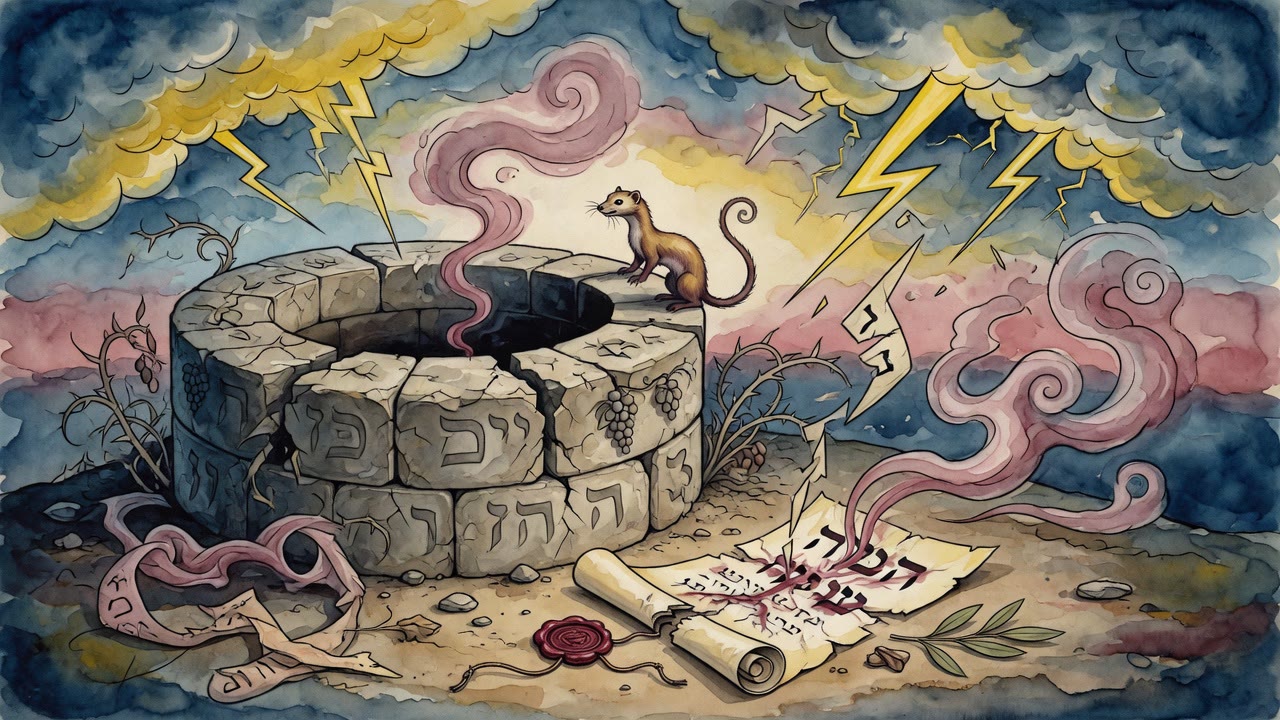
Returned exiles found no sacred fire until an old man led Ezra to Jeremiah's cache, oil that rose into pure flame.
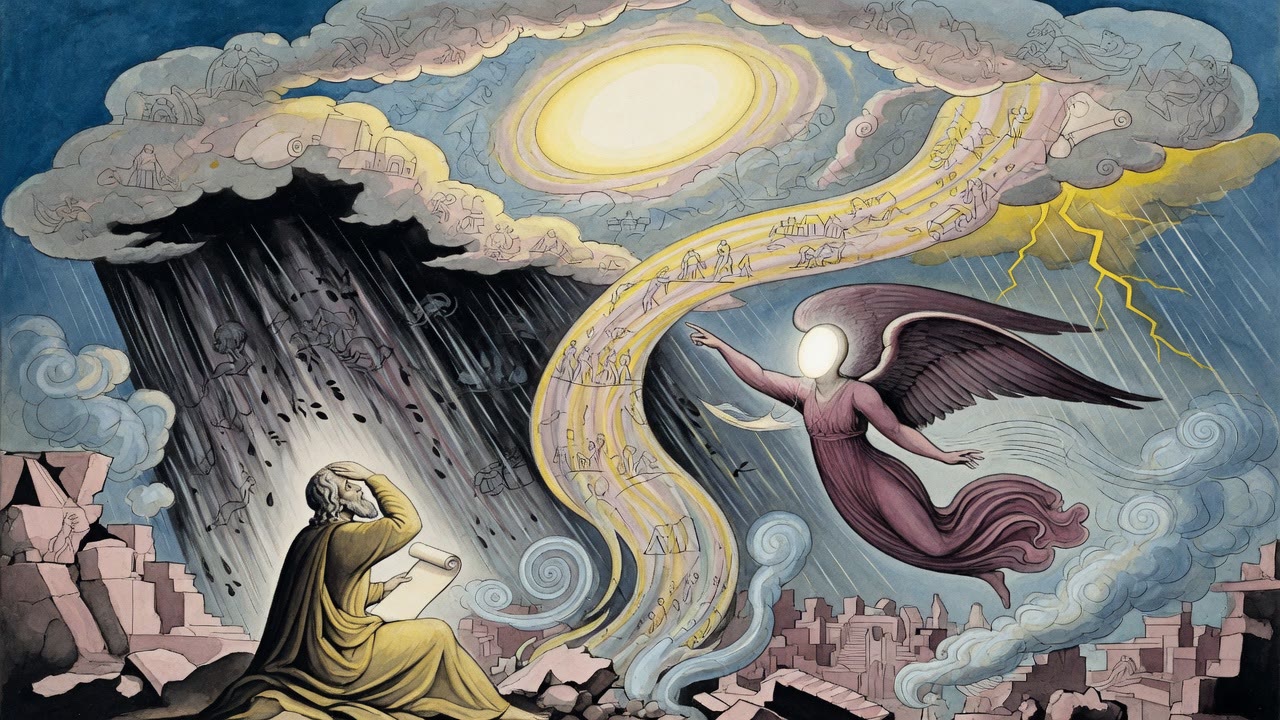
After Jerusalem falls, Baruch sees a cloud pour Adam's black waters and Abraham's bright ones. Ramiel names each flood until history itself becomes weather.
