Ezra Saw a Man Rise From the Heart of the Sea
Ezra sat in a field and ate only flowers for seven days. A woman in ash became a city. Then the sea gave up a man.
Table of Contents
God told Ezra to go into a field where no house had been built. Eat only flowers. Drink no wine. Pray without stopping for seven days. Then come back and speak.
 Click for full size
Ezra went. He sat among the plants of a place called Ardat and ate what grew there. By the third day a woman was standing in front of him, and she would not stop weeping.
The Woman Who Became a City
Her garments were torn. Ash was on her head. She said she had mourned thirty years for a son who died on his wedding night, and she had not stopped. Ezra's own grief was for Jerusalem destroyed. He began to speak to her the way a man speaks when he thinks he is the one doing the helping.
Zion's grief is larger than any single woman's loss, he told her. Your tears are real. They cannot exceed the city's sorrow. He was trying to make her stand up. He was telling her to put the ash off.
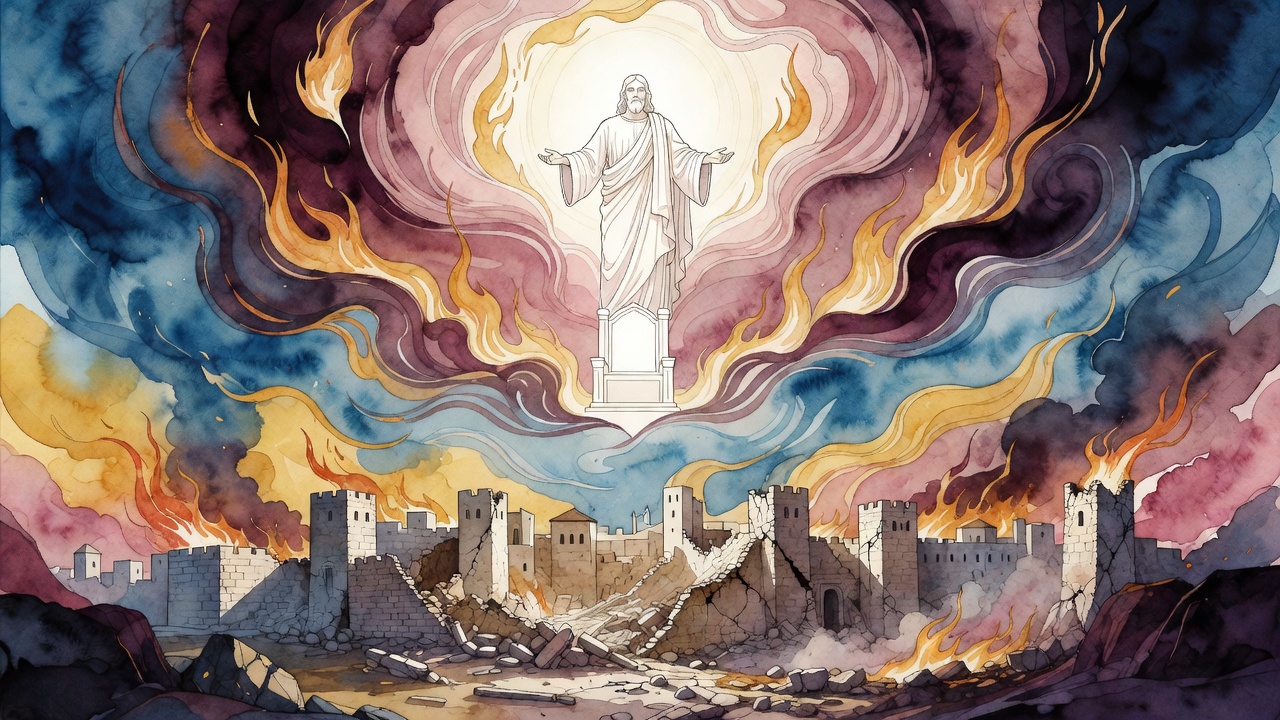
Then her face began to shine. Then she was gone. In her place stood a city, massive, shining, built on enormous foundations. Ezra cried out and fell on his face. The angel Uriel came and told him what he had seen. The woman was Zion. The son was the Temple. The thirty years of grief was the time of sacred service before the first destruction. Now, having spoken truth to her, he was permitted to see her rebuilt.
Ezra thought he had been consoling a stranger in a field. He got up with dirt on his mouth and the city still standing where the woman had been.
The Eagle That Covered the Earth
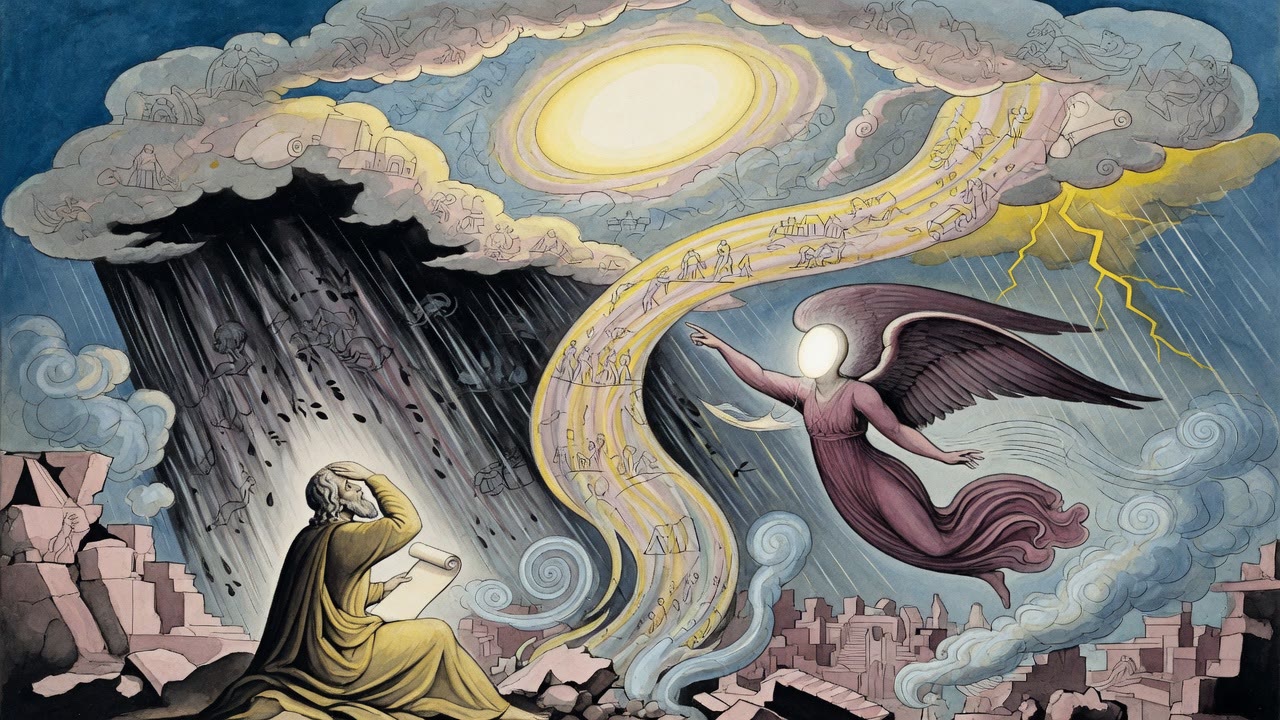
On the second night of another fast, something rose from the sea. An eagle, enormous. Twelve feathered wings. Three heads. When it spread those wings they covered the whole earth. All the winds of heaven blew upon it. Every living creature was subjected to it. No creature dared speak against it.
The eagle commanded its wings. Do not watch all at once. Let each sleep and watch in its turn. One by one the wings rose on the right side and reigned. Each held power for a time, then vanished, some quickly, some after long rule. A voice told the second wing, "After you, no one shall rule as long as you, or even half as long."
The heads did not sleep. They observed everything. When the heads began to devour each other, a voice rose from the forest of the land and rebuked the last head. It was the voice of a lion. It told the fourth kingdom that its time of arrogance had ended.
Ezra watched the eagle until it was no longer an eagle. He did not wait for Uriel to name the size of it. A thing that large does not leave the world politely.
A Man From the Heart of the Sea
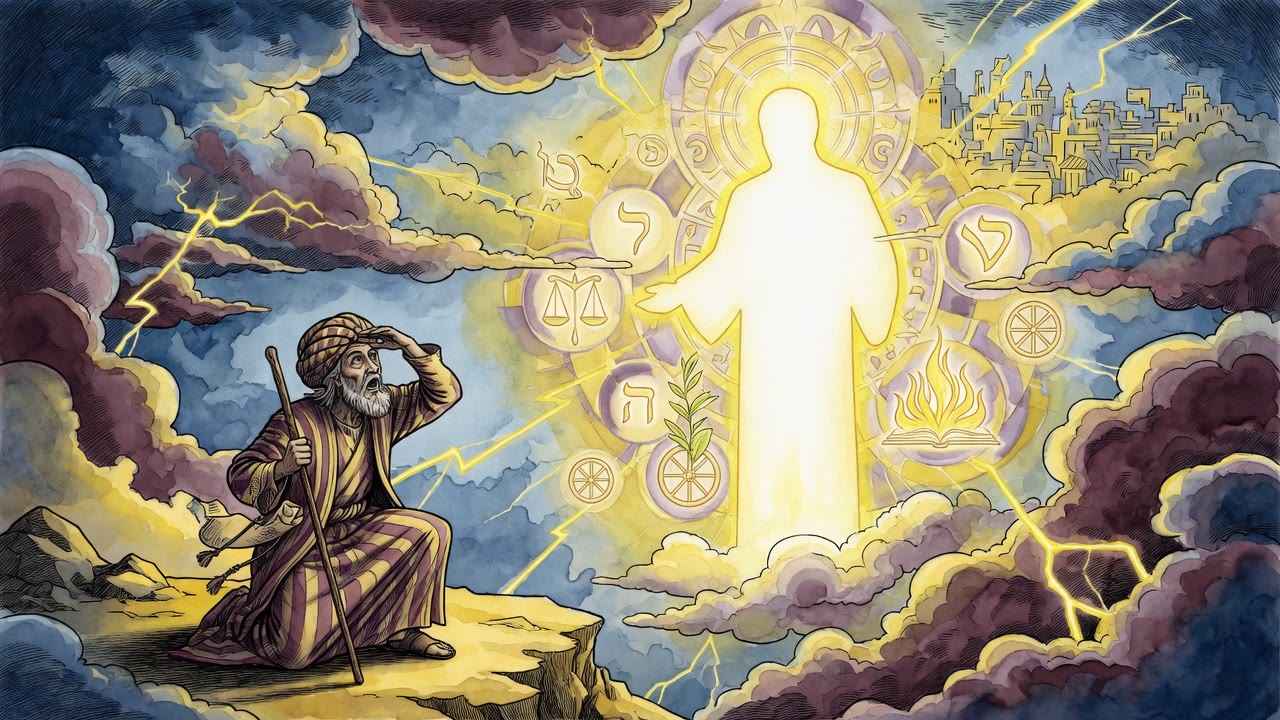
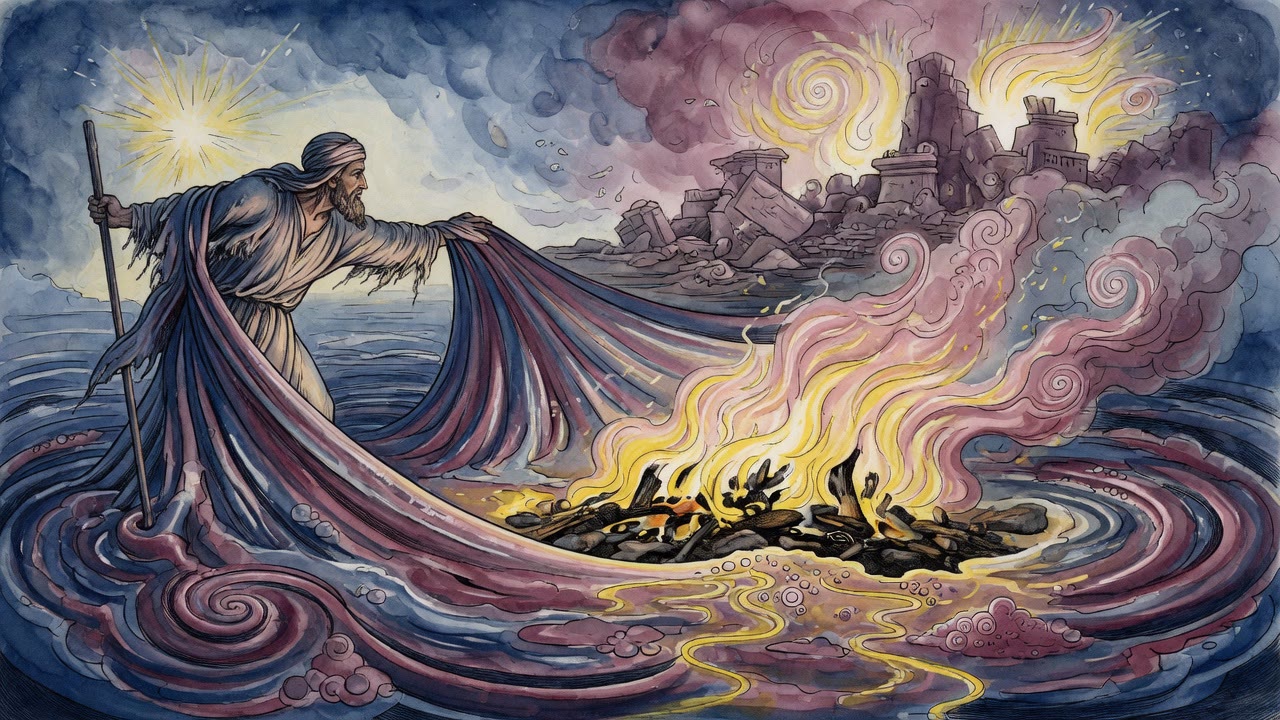
Seven days of fasting. Then, in the dead of night, a wind rose from the sea and churned all its waves. From the heart of the sea, not its surface, not its shallows, a figure emerged. He had the form of a man. He flew with the clouds of heaven. Wherever he turned his face, everything trembled. Whenever his voice came out of his mouth, all who heard it melted like wax before fire.
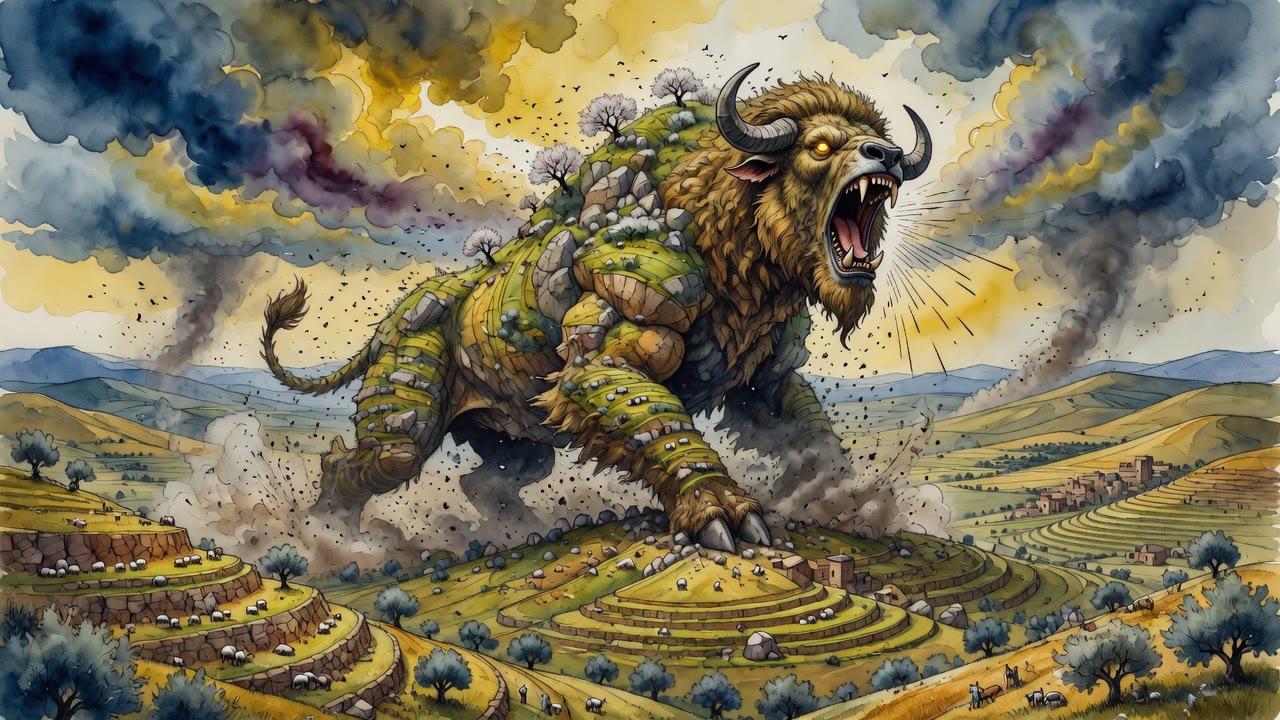
A multitude gathered from the four winds to fight him. The figure carved a great mountain out of nothing and flew up on top of it. Ezra tried to see where the mountain came from. He could not. The multitude attacked. The man did not raise a spear. He sent streams of fire from his lips and burning breath from his tongue, and the attacking multitude was burned to ash before it reached him.
Then he came down from the mountain and called to him a peaceful multitude: another people, the lost tribes walking home from a distant land.
Uriel interpreted. The man from the sea is the one whom God has kept for the end of days. The mountain is Zion. The fire from his lips is the Torah, which judges without a sword.
The City Began to Rise
Ezra was not done. In the days to come, a voice said, the city that is now invisible will appear, and the land that is now concealed will be seen. He looked at the ruined hill he knew. The hill lifted. The earthly city rose. Its heavenly counterpart came down to meet it. One hill. Two motions. The place where God chose to let the Name dwell would not stay in the dust forever.
He came back from the field where he had eaten flowers and drunk nothing and prayed for seven days. He had seen the grief of Zion become a city of light. He had watched an eagle cover the earth and then be rebuked by a lion. He had seen a man from the sea's deepest heart burn armies with his mouth and call home the lost. He had watched Jerusalem begin to rise.
He carried those visions in his body for the rest of his life and wrote them down for those who would need them. The flowers were still on his tongue when he picked up the pen.
← All myths