Translation of the source text.Torat Emet (Yalkut Shimoni) · CC-BY-NC
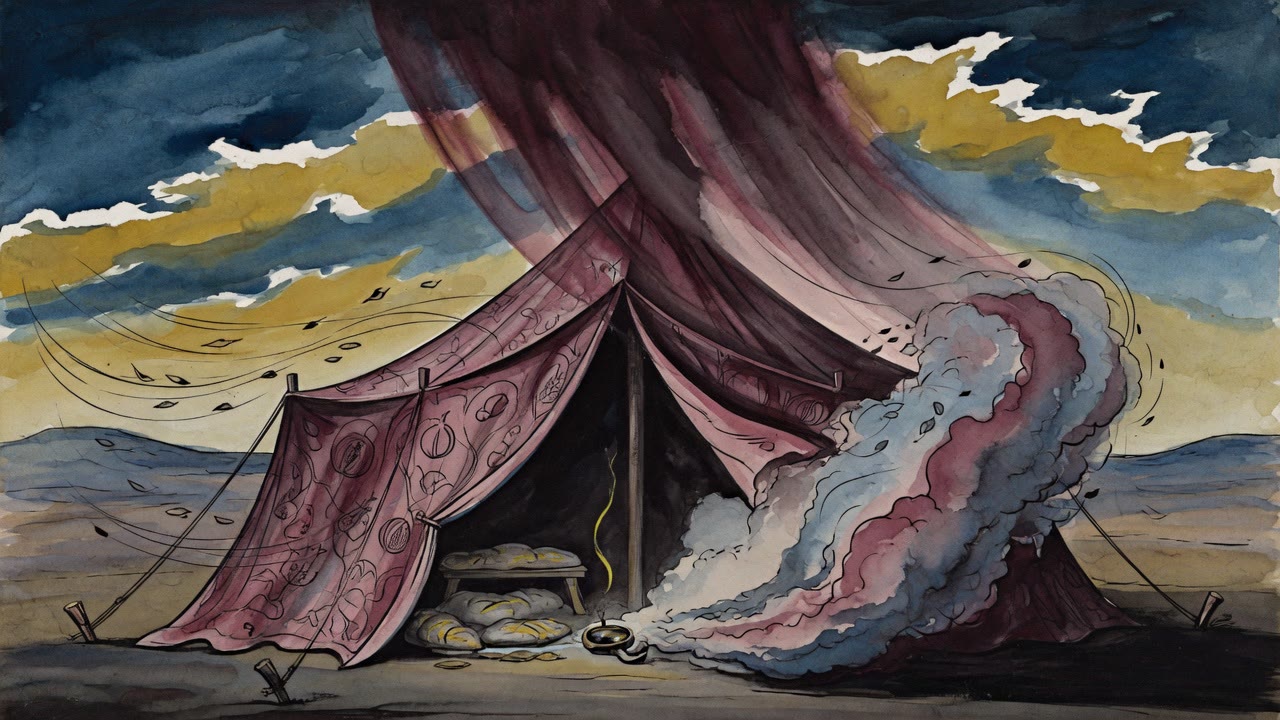
"When a fire goes out" (Exodus 22:5). Why is this stated? Before one could say, I can establish it by legal inference: since a person is liable when damage comes through [thorns], is he not certainly liable when it comes through the fire itself? If I have established the matter by inference, why does Scripture say "when a fire goes out"? Rather, Scripture comes to make the accident like the willful act, the one who did not intend like the one who intended, and the woman like the man in all the damages in the Torah. "And finds thorns": the thorns come only to set the measure. If there are thorns, there is a measure; if there are no thorns, there is no measure. From here they said: if a fire crossed a river, a road, or a wall higher than ten handbreadths and caused damage, one is exempt from paying. How is the matter assessed? They view him as though he were standing in the middle of a field the size of a kor and kindling it, the words of Rabbi Elazar ben Azaryah. Rabbi Eliezer says: sixteen cubits, like a public road. Rabbi Akiva says: fifty cubits. Rabbi Shimon says: "he who kindled the blaze shall surely make restitution," all according to the fire. It once happened that a fire crossed the Jordan and caused damage because it was large. When is one exempt? When it leapt. But if it was crackling and going along, even for a mile, he is liable. "And a stack is consumed": everything is implied, including a pile of reeds or beams, and also a layer of stones or pebbles prepared for lime. "Or the standing grain": even a tree is implied. "Or the field": even if it scorched the soil. If there were utensils hidden in the stack and the fire burned them, Scripture therefore teaches "or the standing grain or the field": just as a field is exposed, so standing grain means what is exposed. "He who kindled the blaze shall surely make restitution." Why is this stated? Because Scripture says "a man." From "a man" I would know only a man. From where do I know a woman, a tumtum, or an androgynos? Scripture therefore teaches "the one who kindled," in any case.
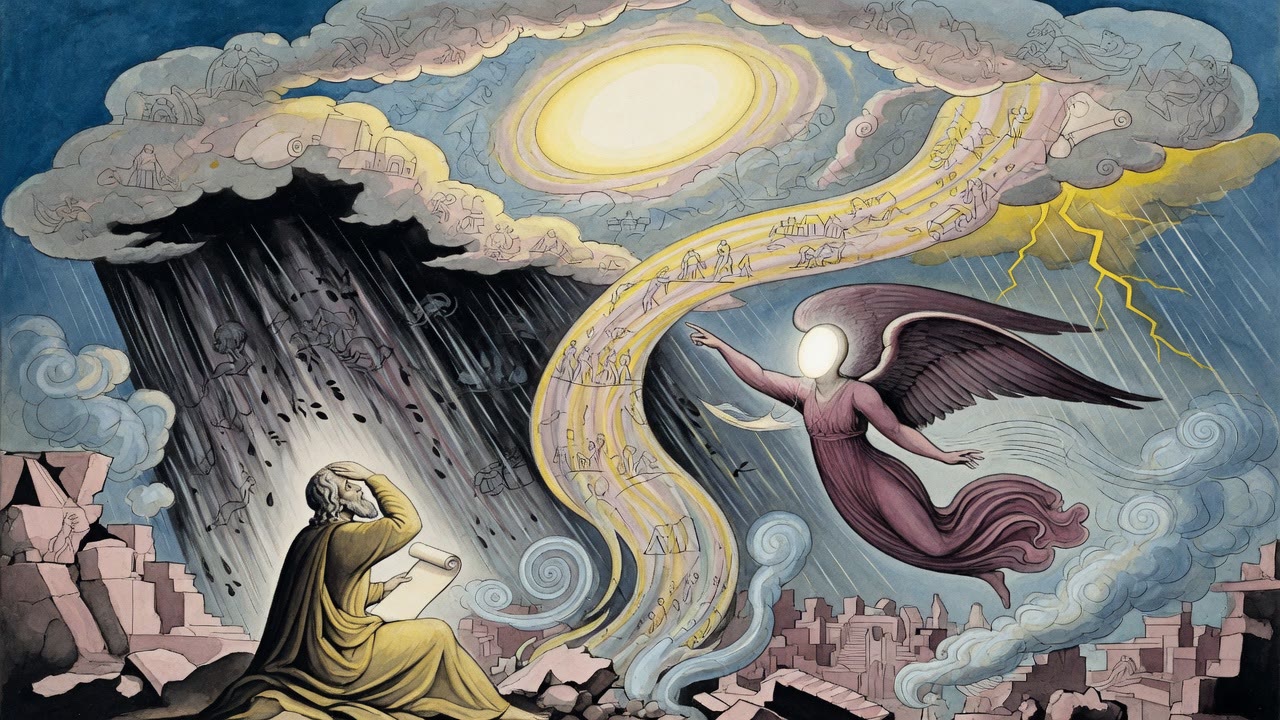
I would know only kindling and the blaze. From where do I know all the other causes of damage in the Torah? You derive them by a paradigm case from between the two: kindling is not like the blaze, and the blaze is not like kindling, but the common feature is that their way is to cause damage, their guarding is upon you, and when they cause damage the damager must pay damages from the best of the land. Rabbi Shimon ben Elazar used to state four rules in the name of Rabbi Meir concerning damages: wherever the damager has permission to be there and the injured party does not, he is exempt. Wherever the injured party has permission and the damager does not, he is liable. Where both the injured party and the damager have permission, even in a designated place such as a partners' courtyard or an inn, he is liable. Where neither the injured party nor the damager has permission, such as another domain, for tooth and foot he is liable, and for [the ox], a forewarned one pays full damages while an unwarned one pays half damages. In every place where both the injured party and the damager have permission, and in a valley, a public domain, and the like, for foot he is exempt, while for a forewarned ox he pays full damages and for an unwarned ox he pays half damages. It was stated: concerning one's fire, Rabbi Yochanan said, one's fire is because of one's arrows. Rabbi Shimon ben Lakish said, one's fire is because of one's property. Why did Rabbi Shimon ben Lakish not say like Rabbi Yochanan? One's arrows go by his own force; this does not go by his own force. And why did Rabbi Yochanan not say like Rabbi Shimon ben Lakish? One's property has substance; this has no substance. Rava said: the verse and the Mishnah support Rabbi Yochanan. The verse says "when a fire goes out," of itself, and then says "he who kindled the blaze shall surely make restitution." Learn from this that one's fire is because of one's arrows. The Mishnah also supports it: Scripture opened with damage by one's property and concluded with damage by one's body, to tell you that one's fire is because of one's arrows. And one who holds that it is because of one's arrows also holds that it is because of one's property. The practical difference between them is to obligate him in the four categories of personal injury. On "when a fire goes out and finds thorns," Rava said: Why did the Merciful One need to write thorns, stack, standing grain, and field? All are necessary. If the Merciful One had written only thorns, I would have said that the Merciful One made him liable for thorns because fire is commonly near them and negligence is common, but for a stack, where fire is not commonly near it and negligence is not common, perhaps he should not be liable. If the Merciful One had written only stack, I would have said it is because the loss is great, but for thorns, where the loss is small, perhaps he should not be liable. Why did the Merciful One write standing grain? Just as standing grain is exposed, so all liability is for what is exposed, excluding hidden things in a fire. And Rabbi Yehudah, who obligates for hidden damage in a fire, why does he need standing grain? To include all things that stand upright. The Rabbis derive that from "or the standing grain." Rabbi Yehudah needs that phrase to divide the cases. The Rabbis derive the division from "or the field." Rabbi Yehudah says that since Scripture wrote "or the standing grain," it also wrote "or the field." Why did the Merciful One write field? To include a case where the fire scorched his plowed ground and singed his stones. And why not let the Merciful One write field and not need the others? If Scripture had written field and not the others, I would have said that what is in the field is included, but the field itself is not. Therefore it teaches that even if the fire scorched his plowed ground and singed his stones, he is liable.
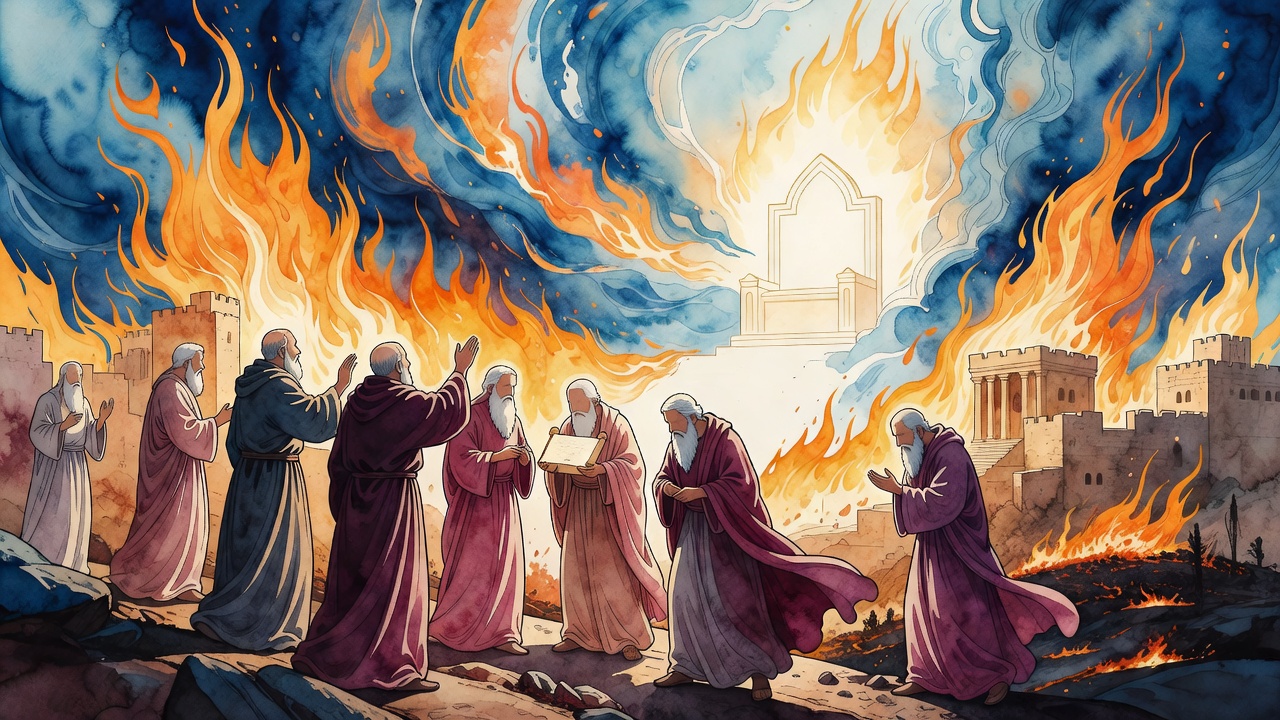
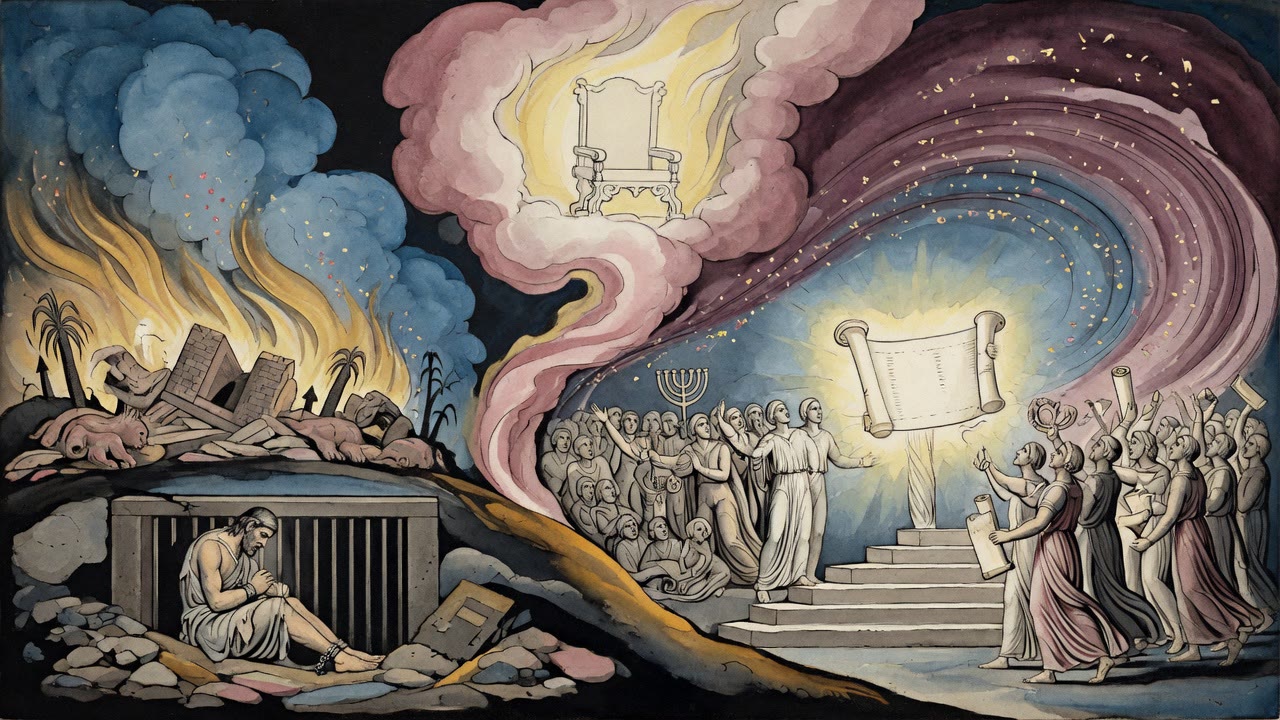
Rabbi Shmuel bar Nachman said in the name of Rabbi Yonatan: punishment does not come to the world except when the wicked are in the world, and it begins only with the righteous first, as it says, "when a fire goes out and finds thorns." When does the fire go out? When the wicked are present. And it begins only with the righteous, as it says, "and a stack is consumed." It does not say "and it consumes a stack," but "a stack is consumed," teaching that it had already been consumed. Rav Ami and Rav Asi were sitting at the entrance of Rabbi Yitzchak Nappacha. One said to him, let the master tell us a matter of law, and one said to him, let the master tell us a matter of aggadah. He opened to say a matter of law, and the other did not let him. He opened to say a matter of aggadah, and the other did not let him. He said to them: I will tell you a parable. To what is the matter like? To a man who had two wives, one young and one old. The young one plucked out his white hairs; the old one plucked out his black hairs. He ended up bald on both sides. He said to them: I will tell you a matter equal for both of you. "When a fire goes out," of itself. "He who kindled the blaze shall surely make restitution": the Holy One, blessed be He, said, I set fire in Zion, as it is said, "and He kindle[d] a fire in Zion" (Lamentations 4:11), and I am destined to rebuild it with fire, as it is said, "and I will be to her, says the LORD, a wall of fire around (her), and for glory I will be in her midst" (Zechariah 2:9). The legal teaching is this: Scripture opened with damage by one's property and concluded with damage by one's body, to tell you that one's fire is because of one's arrows.

 Click for full size