Abraham Saw Four Kingdoms in a Ram Caught by Its Horns
The knife came down on nothing. When Abraham looked up, an animal was fighting free of one thicket only to catch in the next, and it would not stop.
Table of Contents
 Click for full size
The Ram That Could Not Get Free
The knife had come down on nothing. Isaac was breathing, and the wood was still stacked, and the fire was still going, and Abraham stood on the mountain with his arm shaking and no sacrifice.
Then he lifted his eyes and there was a ram behind him, caught in a thicket by its horns.
It was not sitting there waiting to be taken. It was fighting. Abraham watched it wrench its head loose from the branches, stagger two steps into the scrub, and hook itself fast in the next thicket. It tore out of that one and caught in another. Head down, twisting, ripping free, snagged again. An old man stood on Moriah with a knife in his hand and watched an animal do that over and over and could not look away.
So Will Your Children
The voice that had stopped his arm spoke again, and this time it was not about the boy.
So will your children be caught. They will pull loose from Babylon and hook fast in Media. They will tear out of Media and snag in Greece. They will get free of Greece and be held by Edom. Each time they will think the last thicket was the last one.
Abraham had asked for descendants like stars. He was being shown what the stars would spend their history doing.
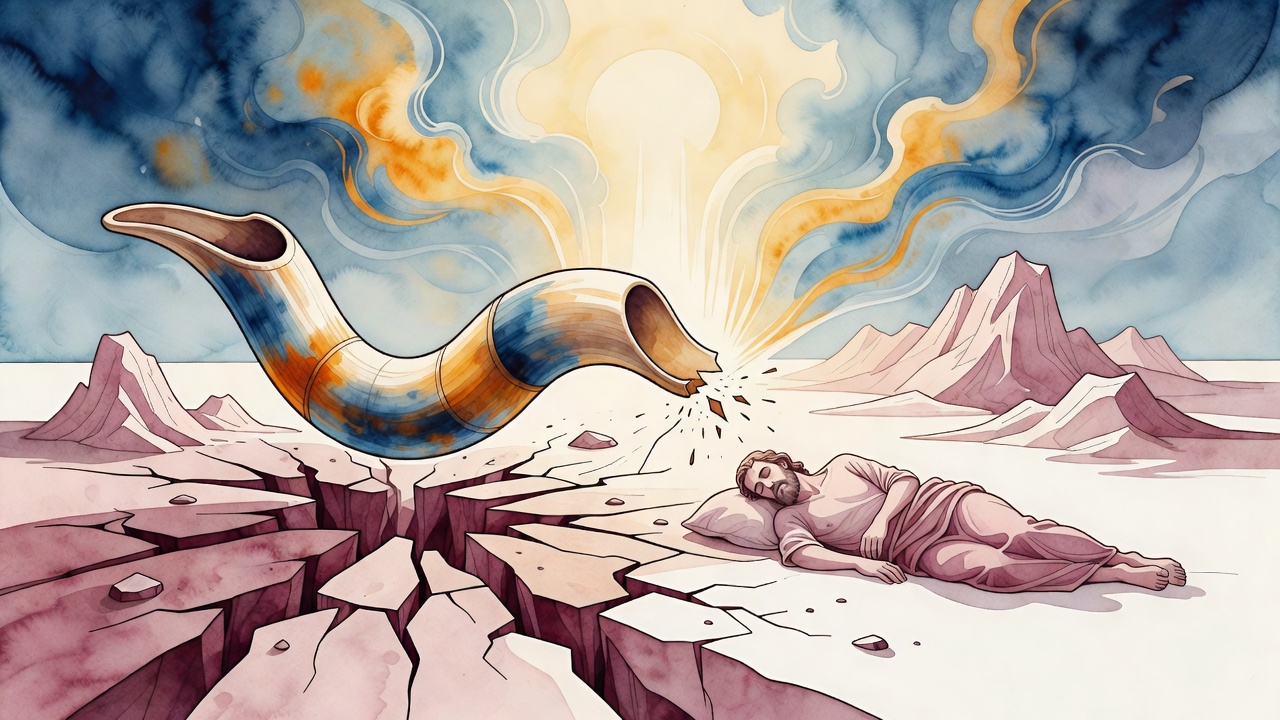
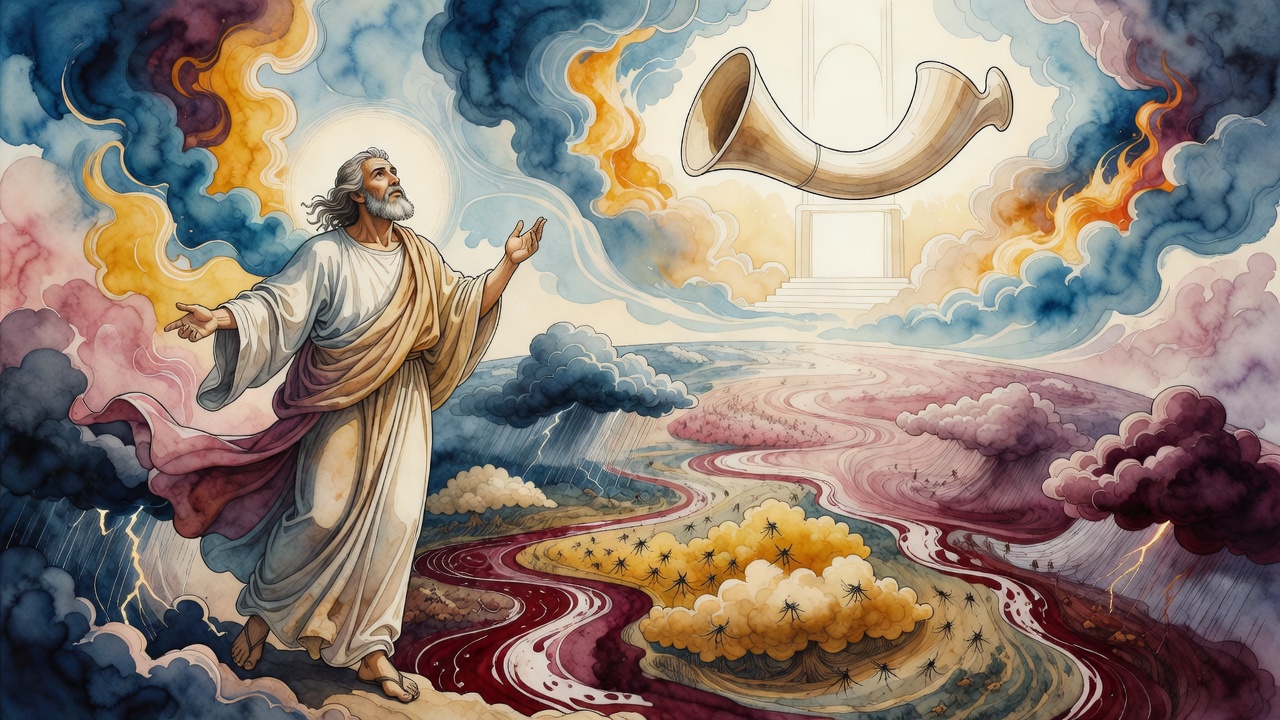
And then the end of it. The same horns that are holding this animal here will be the thing that gets them out. On that day the great shofar (a ram's horn) will sound.
Count It as My Son's Blood
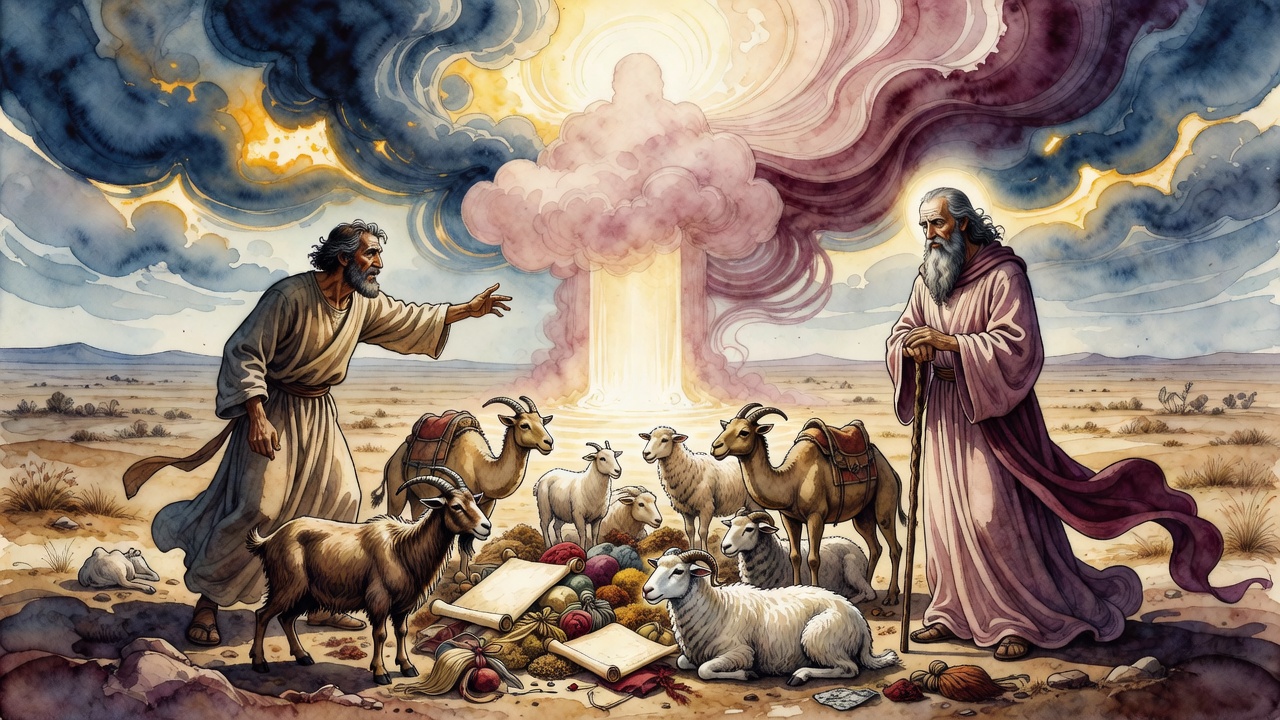
Abraham went and took the ram and lifted it onto the wood in place of his son, and while he was doing it he began to argue.
"Master of the universe. Look at this blood as though it were Isaac's blood."
He was not asking for credit for good intentions. He was using the exact language a man uses when he substitutes one animal for another that has already been consecrated, the language of this in place of that, this exchanged for that, this is the substitute. He wanted the record to show a completed act. Count it, he said, as though I had offered my son first, and only afterward offered this ram in his place.
The fat went up off the stones. Whatever the ledger in heaven said before that morning, Abraham was standing there insisting on what it should say after.
The Name With a Plea Folded Inside It
He named the mountain before he came down, and the name carried an argument.
He reminded God that he had been given every reason to refuse. Yesterday the promise had been that this boy was the whole future. Today the command had been to put a knife in him. The two would not stand in the same room together, and Abraham had gone up the mountain anyway with his own mercy shoved down out of the way where it could not reach his hands.
So let it stand on the record. When the children of Isaac stumble into sin, when they are in the middle of some later thicket and there is no argument left to make on their behalf, let this morning come up and stand in front of the Judge.
He walked back down to his servants with that lodged where it could not be taken out.
Robbers in the Standing Grain
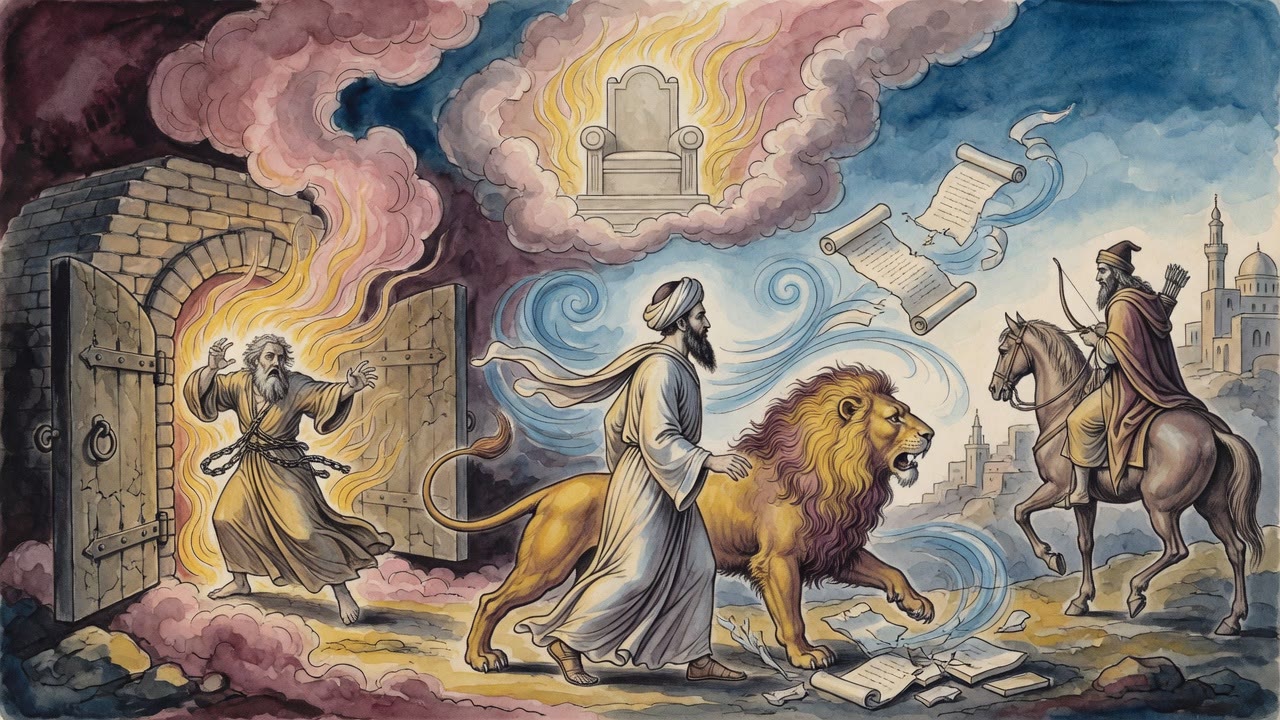
The empires he had been shown were not abstractions to him. He fought four kings in his own lifetime and the names were already the names. Amrafel of Shinar was Babylon. Arioch of Ellasar was Greece. Chedorlaomer of Elam was Media. Tidal, called king of nations, was the fourth, the one that conscripts its soldiers out of every people on earth. Four warlords sacking the cities of the plain, and the whole schedule of Israel's history was sitting in the roster.
Out of that war Abraham came up. That is the part the sages fixed on. The kings turned on each other, and in the noise of them turning on each other a man with three hundred and eighteen servants got his nephew back and his name known. So when kingdoms are provoking one another, that is not the world coming apart at random. Those are footsteps.
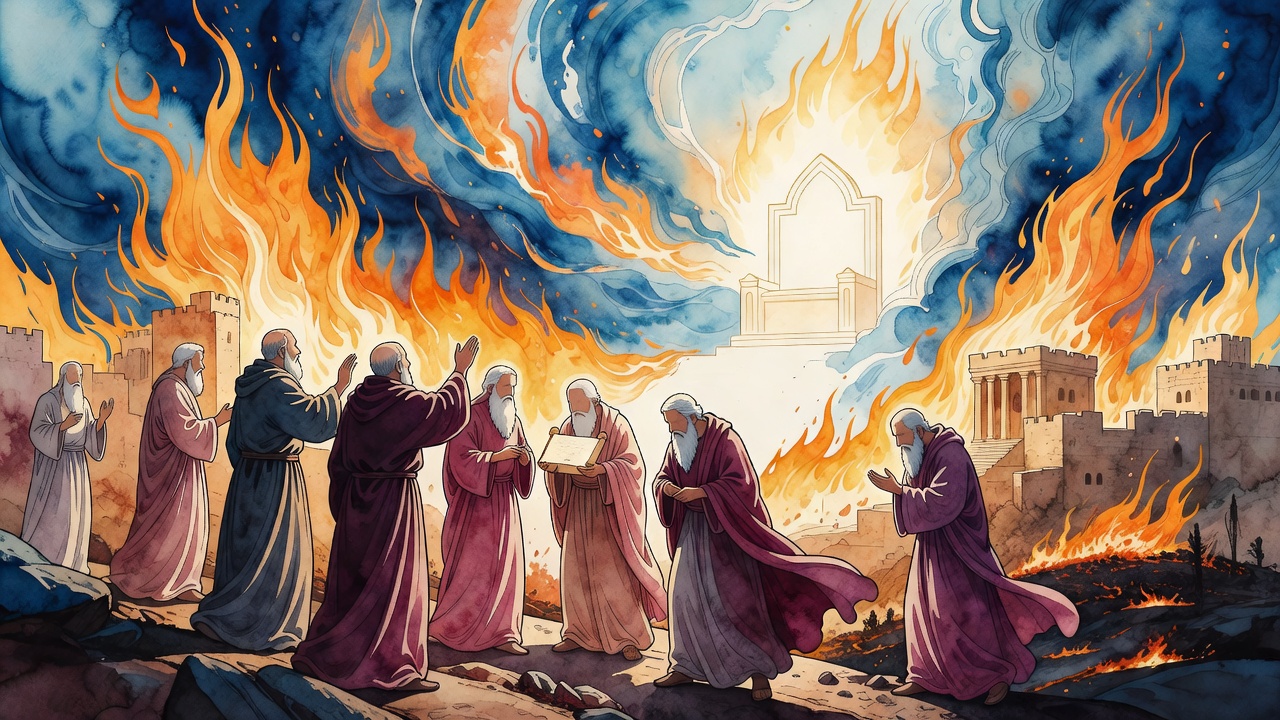
The exiles came the way robbers come. They walk into a man's field and cut down his standing grain and he says nothing. They cut his sheaves and he says nothing. They keep going until their tubs are full and then they leave, and only then does he understand that no one was ever going to stop at the first row. Judah and Benjamin went out in the seventh year of Nebuchadnezzar, and again in the eighteenth, and again in the twenty-third. Exile after exile, the way the ram caught and caught and caught.
The instruction for the road out was one sentence long. Set up signposts. Keep the commandments in a strange country so that when you come back they will not be new to you, so that a people returning is not a people starting over. Give heart to the road you walked out on.
Somewhere ahead of all of it, the ram horns that fought a thicket on a mountain in front of an old man are still waiting to be blown, and the redemption out of all four kingdoms is inside that sound.
← All myths