The Gifts Jacob Sent Esau and the Debt Still Unpaid
An unlearned man told a rabbi that Jacob's tribute to Esau was never really given away. It was lent, and it comes due in the days of the Messiah.
Table of Contents
 Click for full size
An Unlearned Man With a Theory
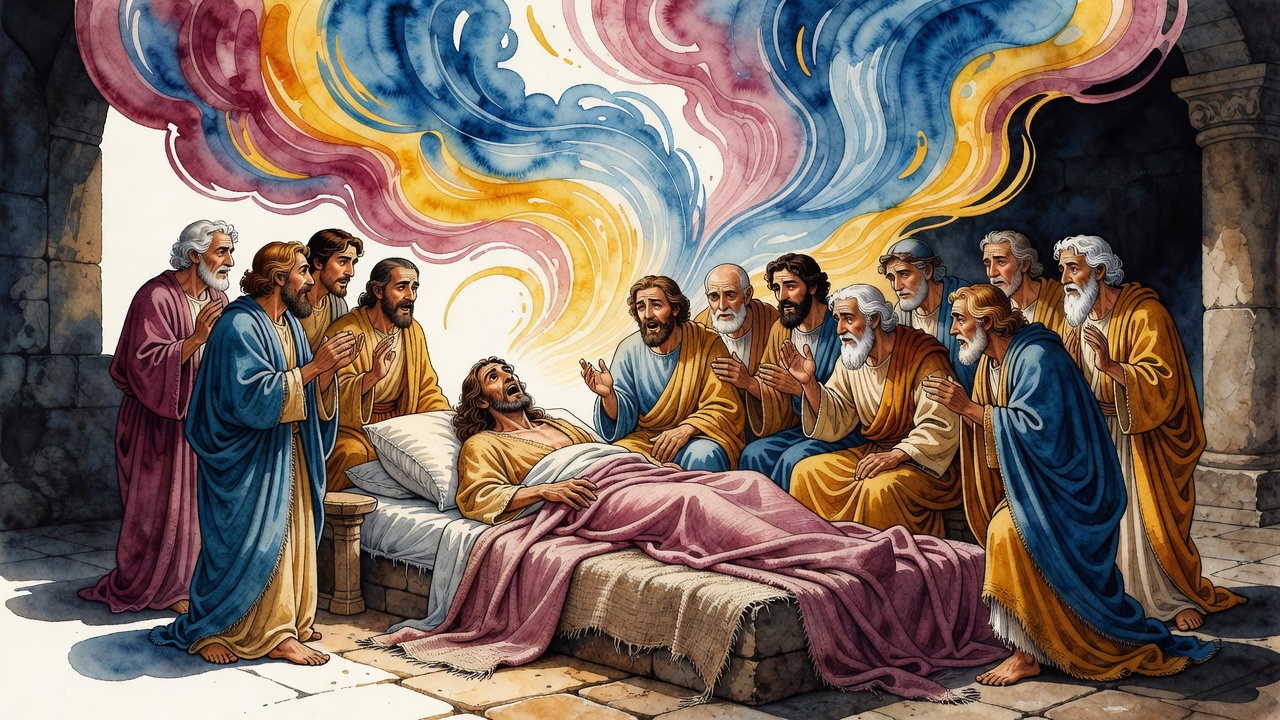
He walked into the study house of Rabbi Oshaya and made a proposition. If the idea is good, the man said, will you take it and say it publicly in my name? The rabbi heard something in the question and agreed to listen. What the man said next turned a moment of fear from Jacob's past into a financial instrument payable at the end of history.
The Bribe at the Jordan
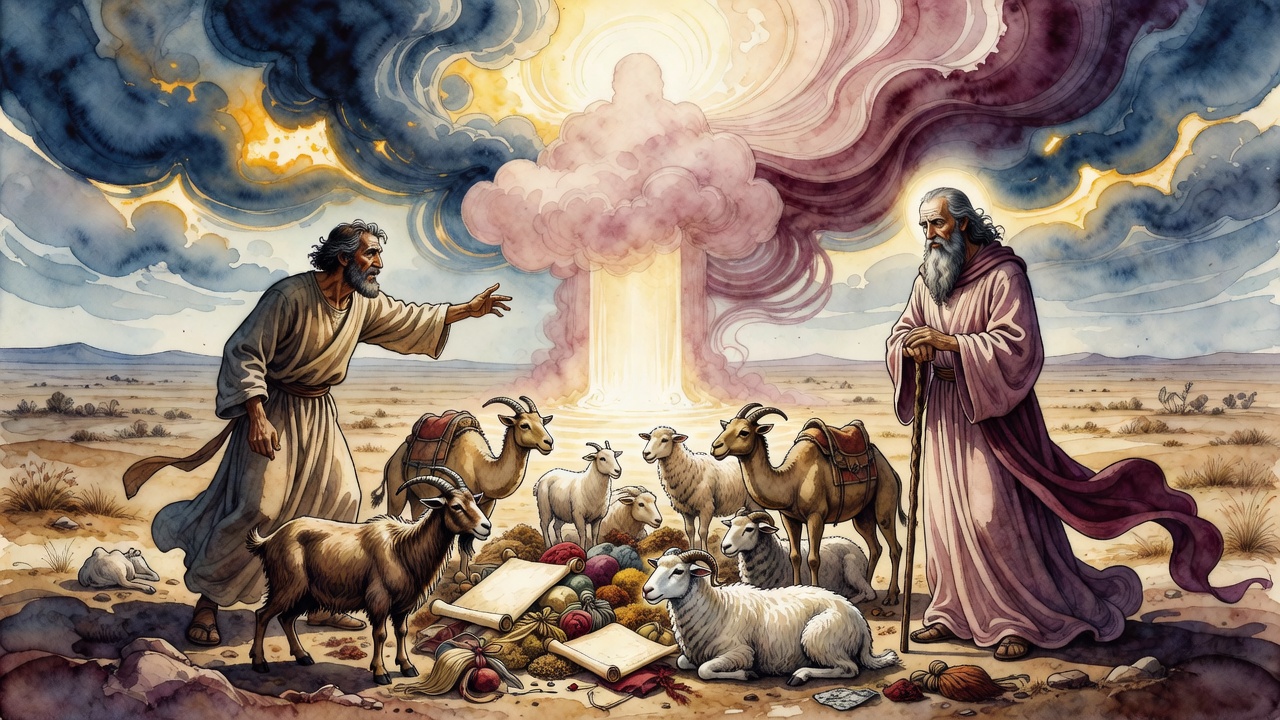
Go back to the night before the brothers met again. Jacob had stolen the blessing from Esau with goatskins on his arms and deception in his mouth, and now Esau was coming with four hundred men and Jacob was doing the arithmetic of a frightened debtor. He divided his camp into two so that if one half died the other might survive. He prayed to the God of his fathers. Then he sent gifts ahead in waves: goats and sheep and camels and cattle and donkeys, herds flowing toward Esau like a tide of apology, gift after gift, each one announced ahead of the next so that by the time Esau reached Jacob the gifts had been working on his mood for hours.
The brothers embraced. They parted. The Torah moved on as if the goats and the gold were simply absorbed into Esau's wealth, gone the way tribute always goes when power accepts it from a weaker hand.
The unlearned man would not let them go.
A Loan Against the End of Days
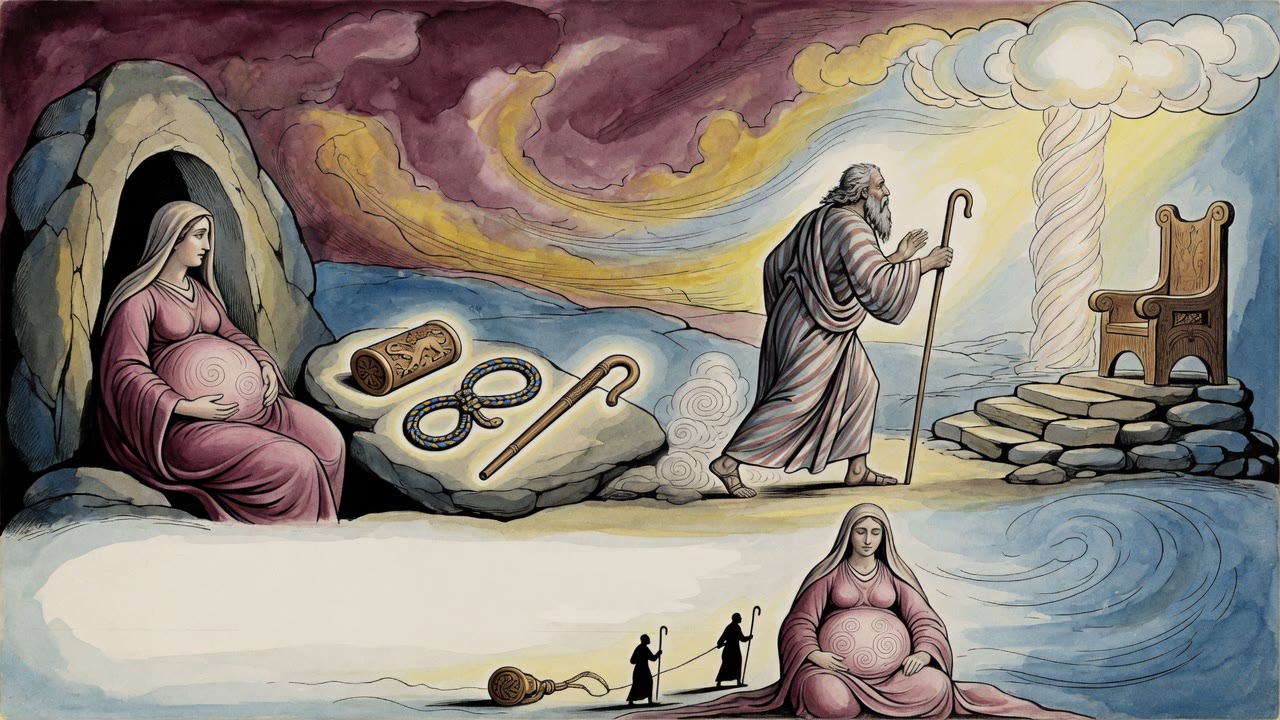
Those gifts, he told Rabbi Oshaya, were never actually given. They were lent. The nations who descended from Esau's portion hold everything Jacob sent as a trust, a deposit against a day of reckoning that is still coming. They are not owners. They are custodians of what Jacob gave under pressure, and one day they will have to give it back. Not to Jacob's heirs scattered across the world in exile. To the King Messiah himself.
The proof was a single verb in a Psalm. The psalmist had sung of a coming day when the kings of Tarshish and the isles would bring tribute to the anointed king. Scripture does not say those kings will offer the tribute as a gift. It says they will return it, like a deposit being restored to its rightful owner. The Messiah will not be receiving something new. He will be collecting something old.
Why Jacob Never Went to Seir
There is a second strand in this cluster that the Yalkut Shimoni on Torah preserves with the first. When the brothers parted, Jacob told Esau he would follow him to Seir and meet him there. He never went. He turned aside to Sukkoth and then to Shechem and never appeared at Seir at all.
The tradition refuses to read this as a polite evasion, the kind of thing people say at partings they do not intend to keep. It reads it as a prophecy. Jacob will go to Seir, the tradition teaches, but not yet. Not in his lifetime. Not in the generations that followed. The meeting at Seir is scheduled for the end of days, for the time when the prophet Obadiah's vision of saviors ascending Mount Zion to judge Mount Esau is finally fulfilled. When that day comes, Jacob will have arrived at Seir in the only sense the verse ever really meant.
Tribute at the End
The same Psalm that spoke of the kings returning the tribute also pointed forward to the great nations who had received from Esau's inheritance. They hold Jacob's gold in trust, and the Messiah's arrival is the moment of settlement. What Esau accepted in the field east of the Jordan comes home at last, not through conquest or negotiation but through the simple fulfillment of a term that has been running since the morning the goat herds crossed the ford.
← All myths