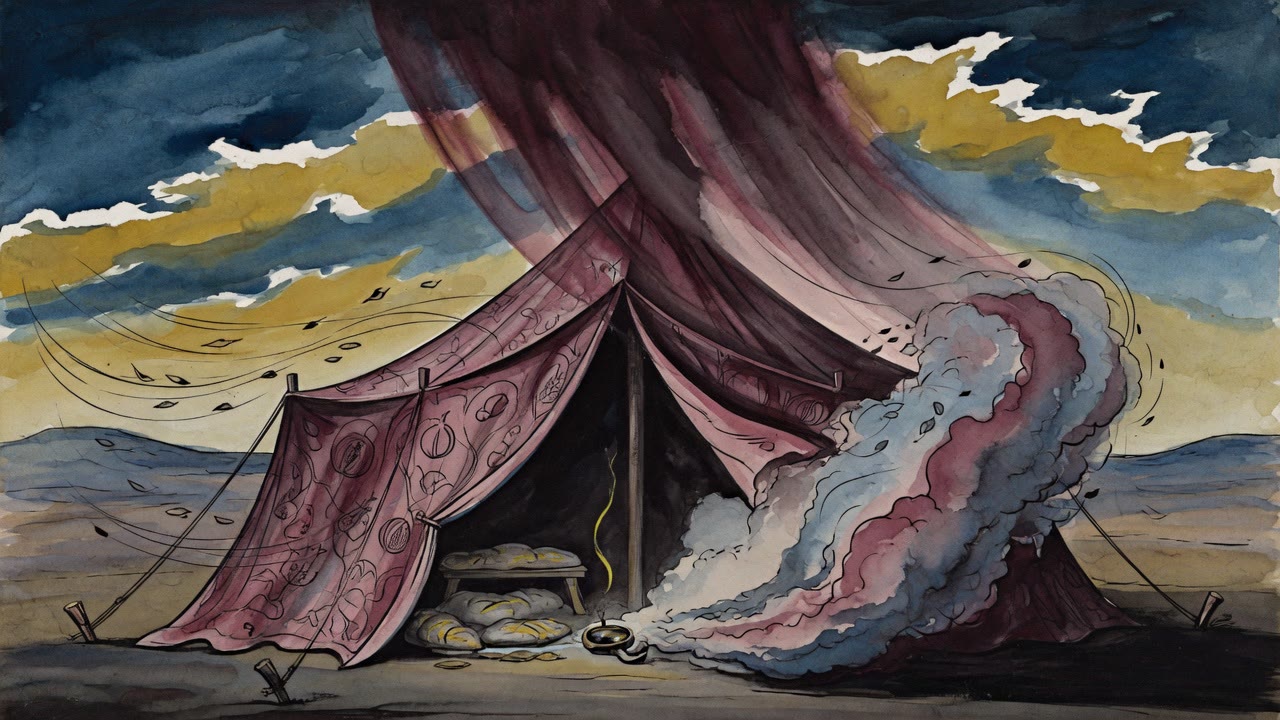
Amalek Left God's Throne Missing Its Letters
After Rephidim, Moses names shared trouble at the altar while God swears the divine name and throne stay incomplete until Amalek is erased.
Table of Contents
 Click for full size
The Attack That Hit Higher Than Israel
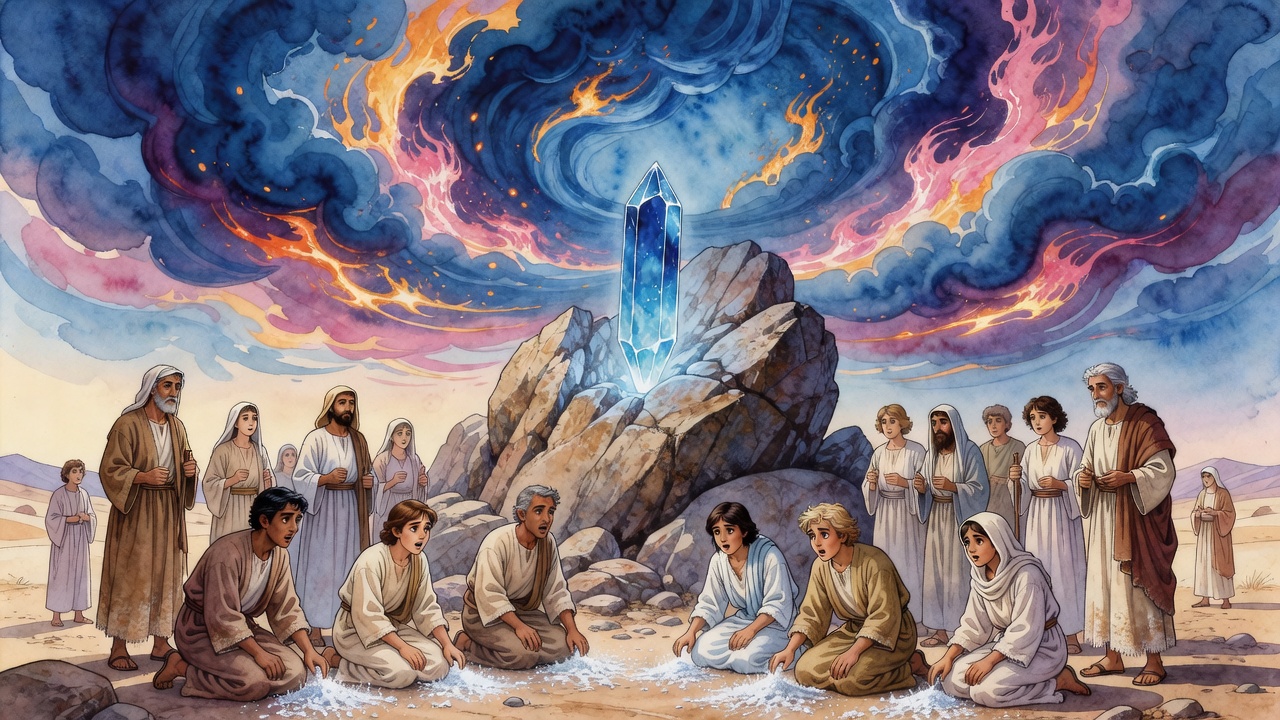
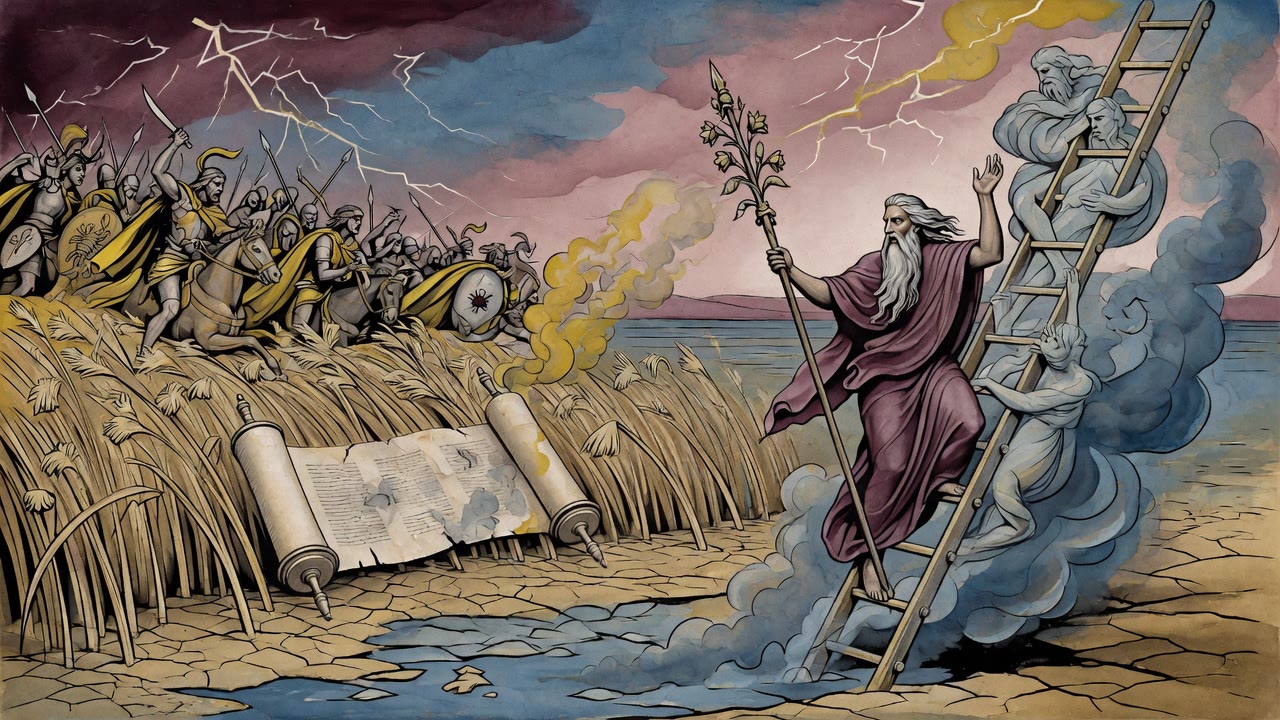
Amalek attacked at Rephidim when Israel had just come through the sea and was still learning to walk in the wilderness. They struck the stragglers at the rear of the column: the tired, the weak, the people who were falling behind. The Torah records the attack. The rabbis in Yalkut Shimoni on Torah, compiled in the thirteenth century CE, record where the wound traveled after it left the stragglers.
It went up. It went higher than Israel. Amalek reached for something that Israel itself did not have yet: the stability of the divine throne. The Yalkut gathers the verses after Rephidim and builds from them a claim that takes several readings to absorb. The battle at Rephidim was not only a military assault on a people. It was a theological attack on the Name and the Throne of God.
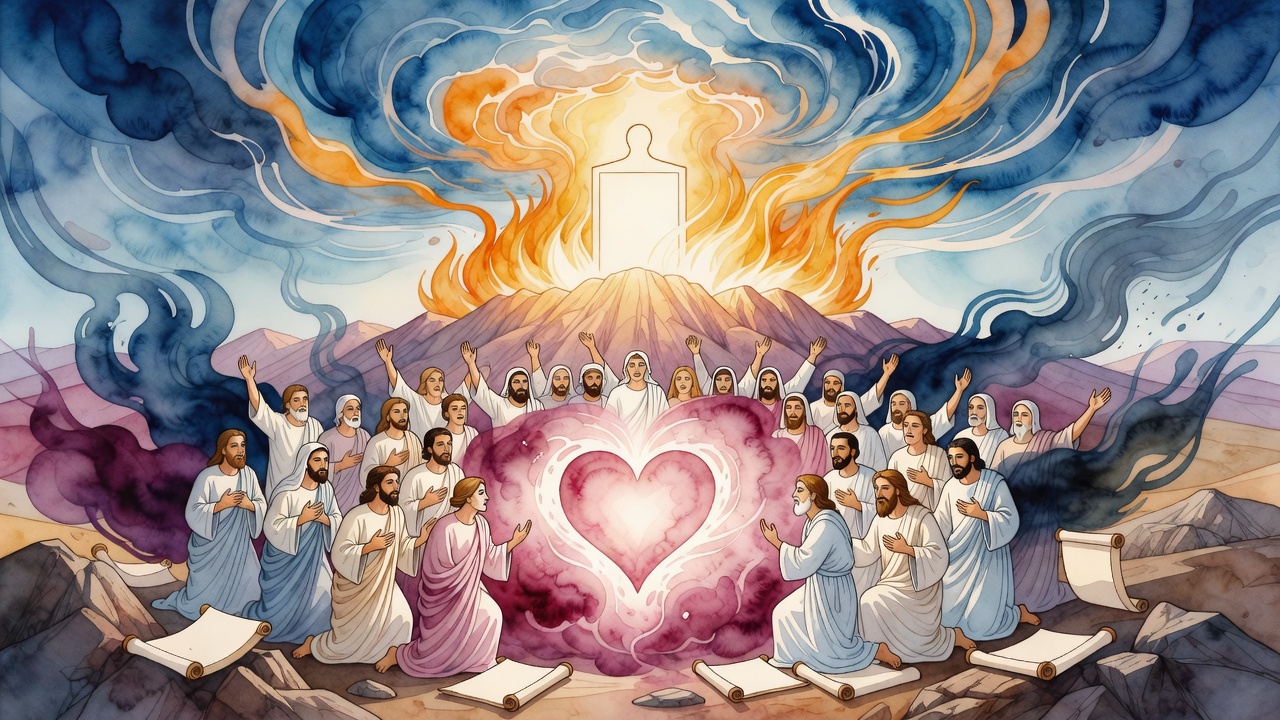
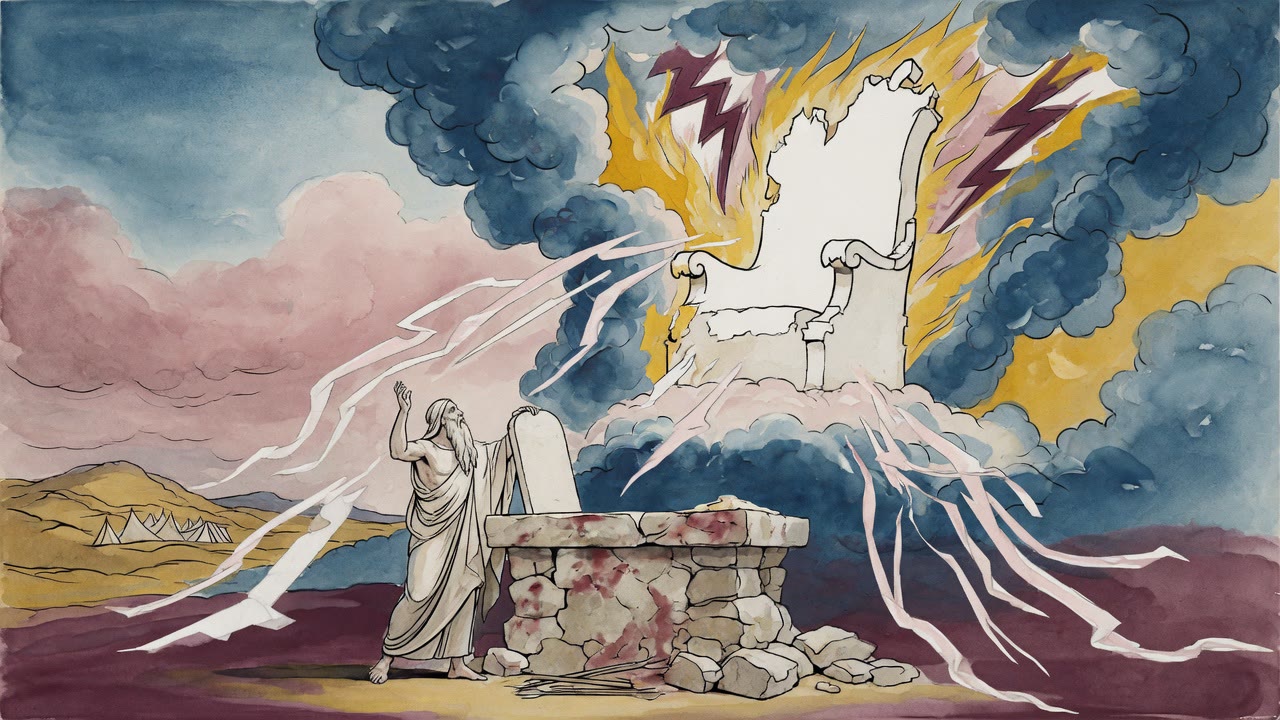
That is why Moses built the altar and called it YHWH Nissi, the LORD is my banner. The sages hear in that name something intimate and troubling. Rabbi Eleazar of Modi'in says Moses was not making a triumphant declaration. He was identifying a shared condition. When Israel suffers, trouble stands before God. When Israel rejoices, joy rises before God. The banner is not a military flag. It is the proof that Israel's pain is not experienced at a distance by the One who watches from above.
The Name Was Cut
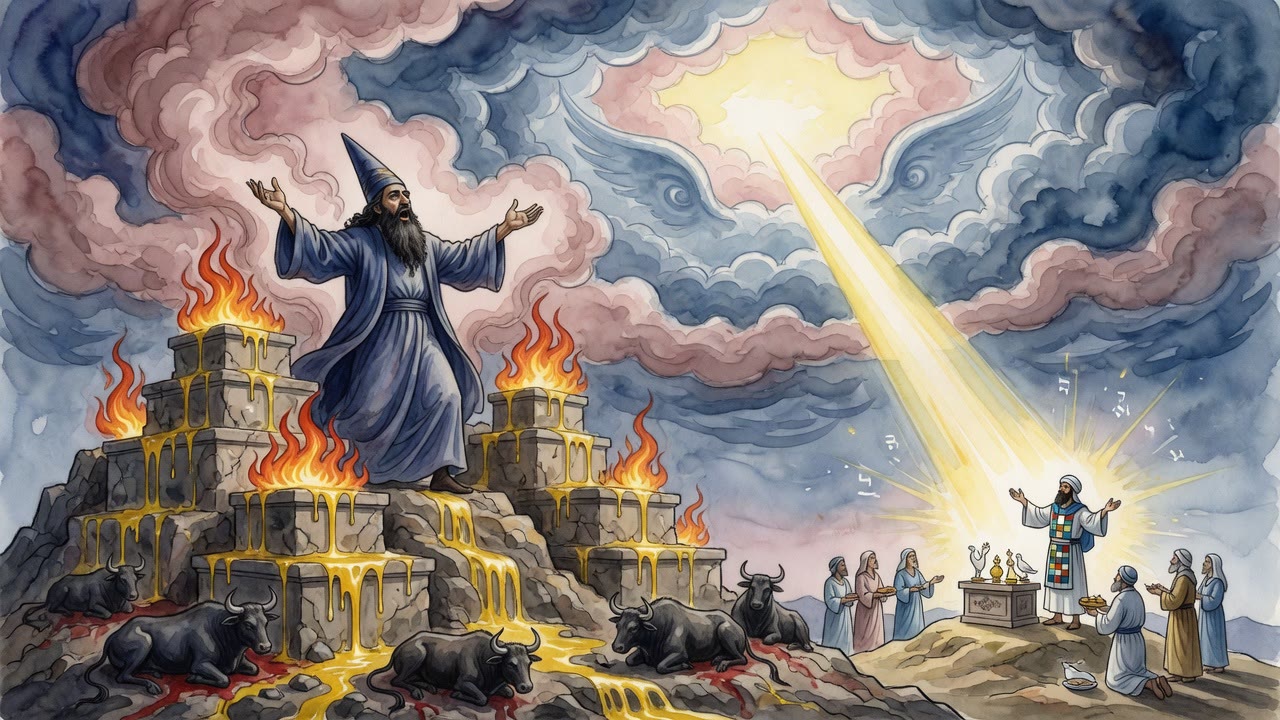
The verse after the altar reads: the LORD swore by His throne. And the Yalkut pushes on both words. In the Hebrew, the word for throne in this verse is written kes, missing the letter aleph that normally appears in kisse. The word for name is yah, the abbreviated divine Name, missing the heh and vav that make it whole. Neither the name nor the throne appears in its complete form in the oath God takes against Amalek.
The incompleteness is not incidental. God's oath says: I will have war with Amalek from generation to generation, and until Amalek is erased from under the sky, neither the Name nor the Throne will be written complete. God swore this on an incomplete throne using an incomplete Name, and the incompleteness of both is the witness to what Amalek did. The attack on Israel at Rephidim created a deficiency in the divine record that cannot be repaired until the memory of Amalek is finally erased.
Moses Feared for the Students of the Torah
The Yalkut records Moses' prayer after the battle with a detail that sounds strange until it settles in. Moses was not afraid for Israel's military survival. He was afraid for the Torah. His hands held up during the battle made the difference between victory and defeat, and the question Moses kept returning to, even while his arms grew heavy and Aaron and Hur had to hold them up for him, was about the future students. If Amalek wins, he thought, who will study what I have been given to write?
That fear locates the battle correctly in the Yalkut's reading. Amalek did not attack a nation. Amalek attacked a library in formation, a people still in the process of receiving a tradition that would need to be learned and transmitted and argued over for every generation that followed. Kill the students, and the text has no future. Scatter the teachers, and the transmission breaks. Amalek understood, in whatever form an army understands theology, that the nation it attacked at Rephidim was not simply another people with a god. It was the carrier of a specific covenantal project that could be undone if the carrier was destroyed early enough.
From Moses to Mordecai
The Yalkut traces the war across the generations because God's oath was generational. Moses at Rephidim. Samuel telling Saul to destroy Amalek completely and Saul failing to do it. Mordecai and Esther facing Haman the Agagite, who carried Amalek's lineage into the Persian court. The Yalkut says the war was not finished at Rephidim, not finished with Samuel, not finished with Haman. The oath on the incomplete throne says the Name and the Throne will not be whole until the memory itself is gone.
Each generation that fought Amalek was not only fighting a specific enemy. It was fighting to restore two missing letters: the aleph in kes and the completion of the divine Name. The war was theological before it was military, and it was going to be long precisely because Amalek understood what it was doing when it struck the stragglers at the back of the column. It struck the weakest point of the carrier people and hoped the chain would break there.
The chain did not break. But the throne stayed incomplete, and the name stayed abbreviated, and God's oath waited.
← All myths