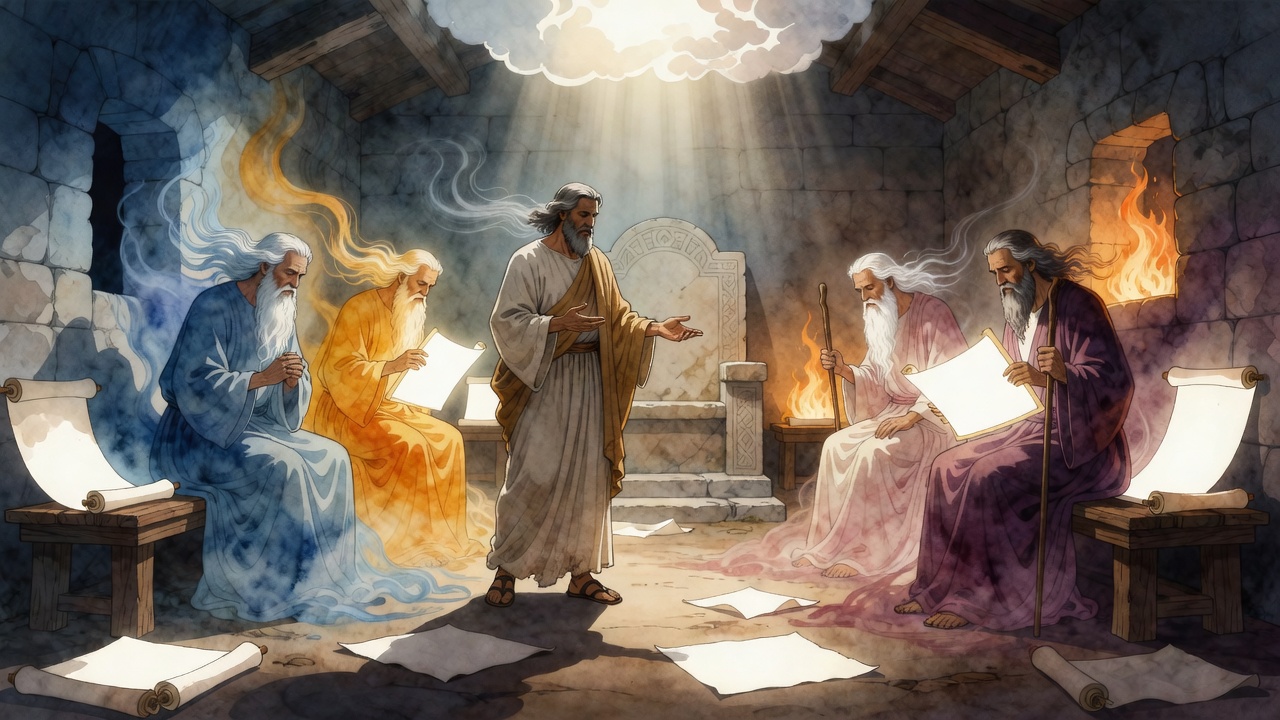
The Shofar That Will Wake Abraham From His Sleep
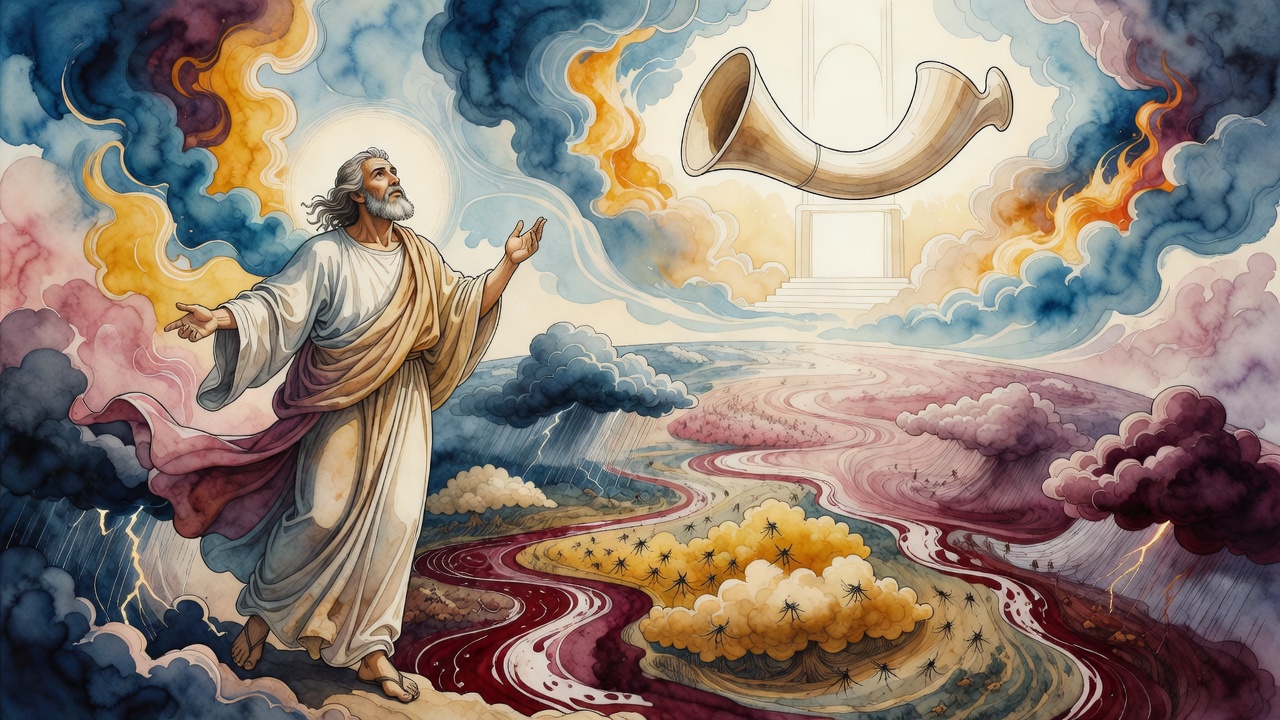
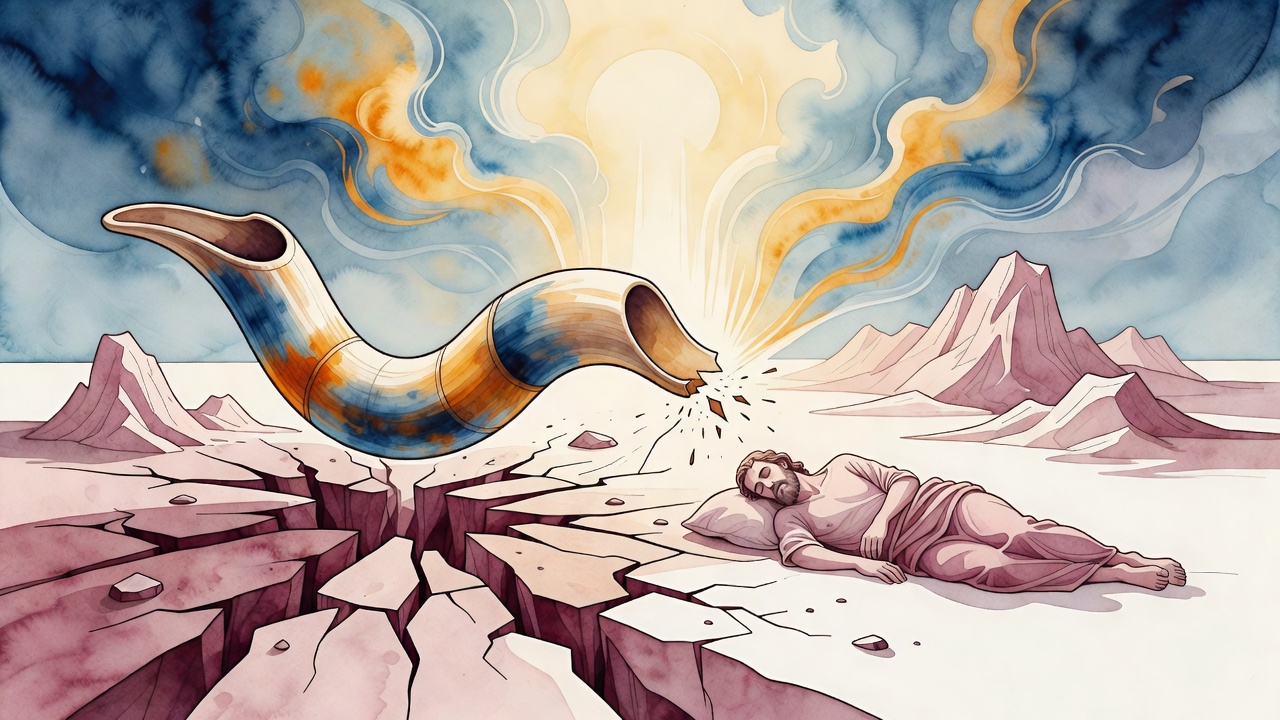
Three shofar (a ram's horn) blasts will shatter and remake the earth at the end of days. The broken teruah blast is aimed at Abraham, asleep in the world to.
Table of Contents
 Click for full size
Abraham Lies Waiting in the World to Come
Somewhere in the world to come, Abraham is asleep. Not dead in the ordinary sense, because the patriarchs do not simply end, but resting, held in a state between the present age and the age that has not come yet. He has been there since he died in Canaan at the age of one hundred and seventy-five, full of years. He has been there through the slavery in Egypt and the exodus and the conquest and the kingdoms and the destructions of the Temple and the long exile. He is waiting, the way a man waits when he knows exactly what he is waiting for and has no way to hurry it.
What will wake him is a ram's horn. Not the horn from the thicket at Moriah, the one that took the place of his son Isaac on the altar. A different horn, one that will be sounded at a volume the world has never heard, will reach wherever he rests and will pull him into the messianic era. The Tikkunei Zohar, the great mystical compilation of thirteenth-century Castile, identifies the exact blast: it is the teruah, the broken, staccato sound, the one that falls apart in the air, nine short cries in rapid sequence instead of one held note.
What Three Shofar Blasts Do to the World
The Tikkunei Zohar reads the three sounds of the shofar (the ram's horn), tekiah, shevarim, and teruah, as three distinct operations performed on the structure of reality at the end of days, each one associated with a patriarch, each one accomplishing a task that the others cannot.
The tekiah is the long, unbroken blast, a single sustained note that holds without wavering. This belongs to Isaac. Isaac is the patriarch of Gevurah, divine judgment and strict order, the sefirah (one of the ten channels of divine energy) whose quality is holding a line without flinching. The tekiah's long, unyielding note matches his nature: it is the sound of structure that does not bend. At the end of days, this blast will do something to the existing order that only the force of unbending judgment can do.
The shevarim is three medium blasts, the sound of something breaking in an orderly way. This belongs to Jacob, whose life was a sequence of structured breakings, the ladder, the wrestling, the blessing stolen and then earned, the sons who tore him apart and reunited him. Jacob's sound is not the clean hold of the tekiah or the chaos of the teruah. It is three deliberate breaks, the sound of transformation that knows what shape it is moving toward.
The Blast Aimed at Abraham
The teruah is Abraham's. Nine short, fractured cries, the sound that Isaiah heard when he described the earth utterly broken, utterly shattered, utterly split. The Tikkunei Zohar takes these three intensifications from Isaiah 24:19 and maps them onto the three sounds of the shofar, but the teruah and Abraham belong together for reasons that go deeper than the parallel. Abraham is the patriarch of Chesed, divine lovingkindness, the force that pours without limit. He is also the man who was broken on Moriah, who raised the knife over his son and had everything he had staked his life on held in suspension between the knife and the angel's call.
The teruah's brokenness is his brokenness. The nine short cries are the sound of a man whose certainty shattered and reformed and shattered again, who built his faith not on smoothness but on fracture. When this blast sounds at the end of days, Abraham will recognize it. It is the sound that belongs to him. It will reach wherever he is resting and wake him, and when he wakes, the age he has been waiting for will have arrived.
The Desert Between Exile and Redemption
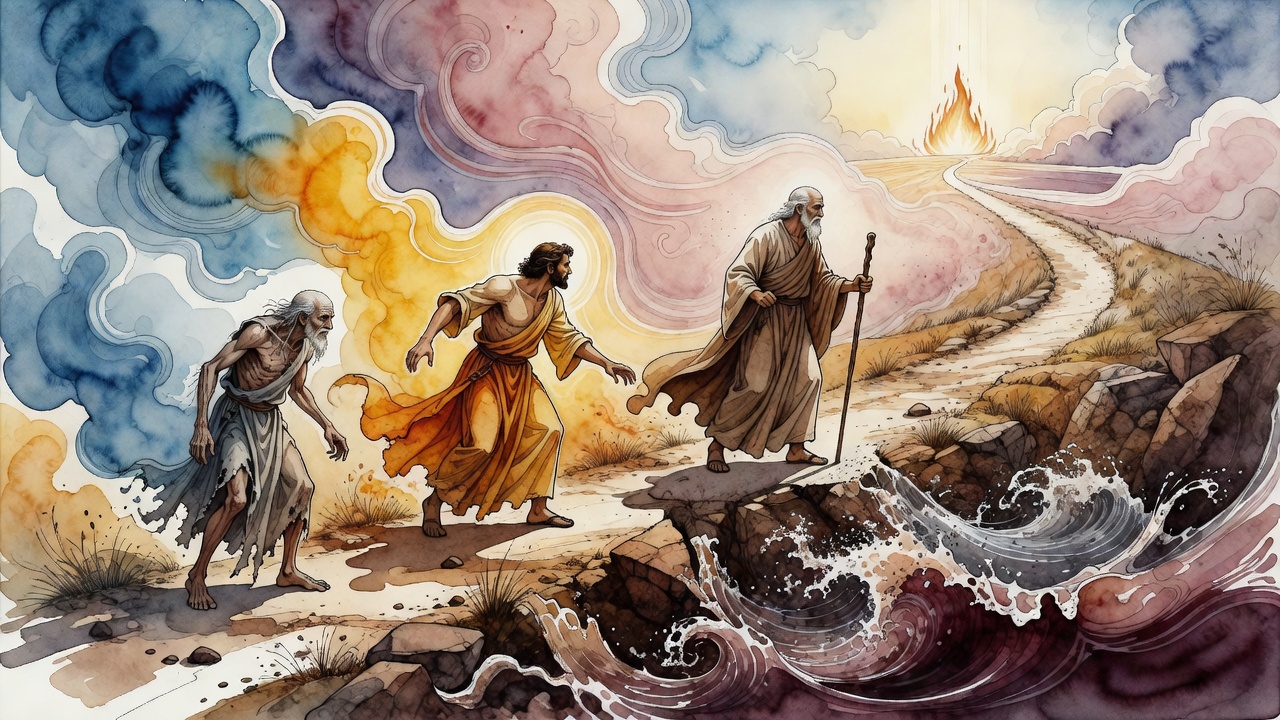
The tradition also preserved a reading of the shofar (a ram's horn) as a navigational instrument, a sound that guides through the spiritual desert between exile and redemption the way the pillar of cloud guided through the physical desert between Egypt and Canaan. The shofar blasts at Sinai, the tradition notes, grew louder as the revelation continued, not softer. The proximity of the divine increases the sound rather than reducing it to silence. At the end of days, when the great shofar sounds, it will do to the present age what the shofar at Sinai did to the wilderness: orient it, direct it, make a path where there was no path.
The ram's horn that sounds at Rosh Hashanah every year is the rehearsal for this. The congregation stands and hears the three sounds in their prescribed order and their prescribed numbers, and somewhere below the level of ordinary hearing, what is being rehearsed is the waking of the patriarchs, the shattering of the present structure, the arrival of what Abraham has been waiting for across all the centuries of his rest.
← All myths