The Foundation Stone Under Zion Kept the Deep From Rising
Before the Temple was built, a stone already held the abyss under Zion, engraved with the Name, and King David nearly lifted it and flooded the world.
Table of Contents
 Click for full size
Before the Temple, a Stone
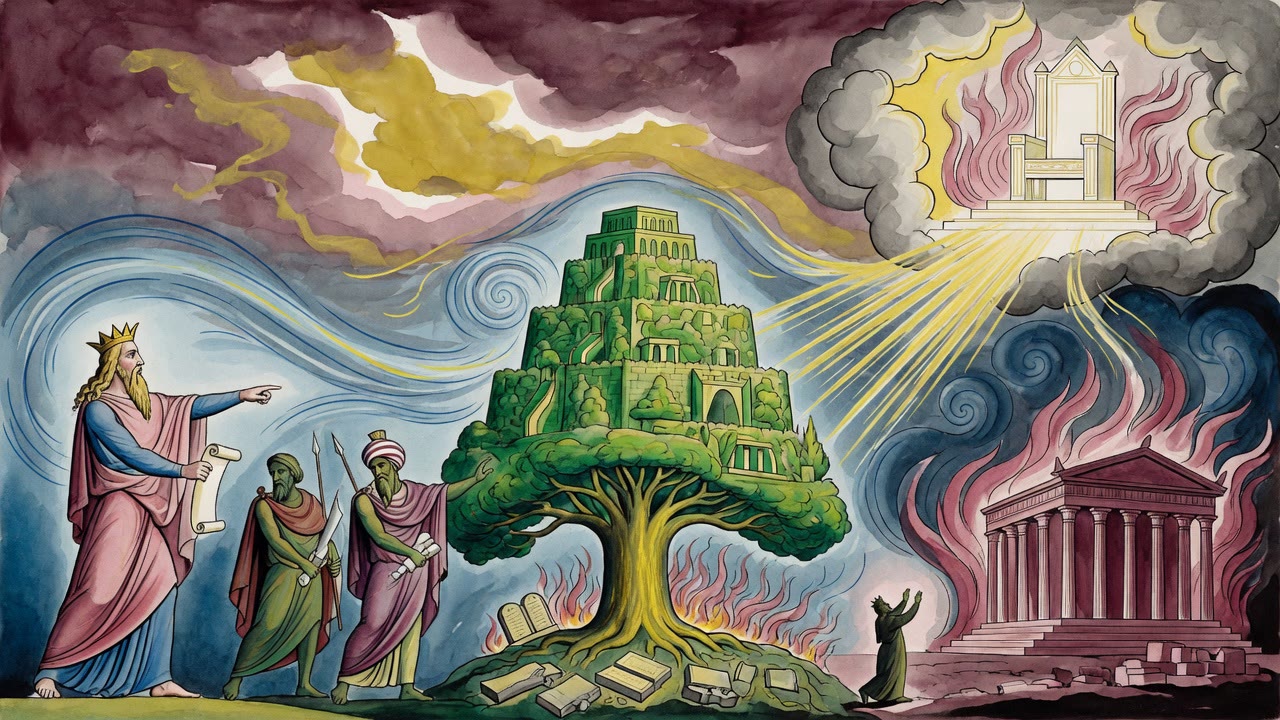
Before the Temple was built, before Solomon laid the first cedar beam, before the priests arrived and the ark was brought up from Shiloh, a stone already lay beneath the ground of what would one day be the Holy of Holies. It had been there since the beginning. It was called the Even ha-Shetiyah, the Foundation Stone, and from it, tradition said, the world had been founded.
The lower waters of the primordial abyss had tried to rise at the moment of creation. The tehom, the deep, surged upward toward the heavens, and there was nothing yet in existence to stop it. God carved a stone and engraved the Ineffable Name on its surface in forty-eight different forms. He set the stone over the mouth of the abyss. The waters subsided. The world steadied. The stone remained where God had placed it, silent beneath the dust, holding everything down.
David Dug Fifteen Thousand Cubits
When David decided to build the Temple's foundations, he dug. He dug fifteen thousand cubits into the earth, going straight down through the layers of soil and rock, until his tool struck something that was not ordinary stone. He did not know what he had found. He tried to pry it out.
A voice called out. Stop. If you lift that stone, the waters will flood the world.
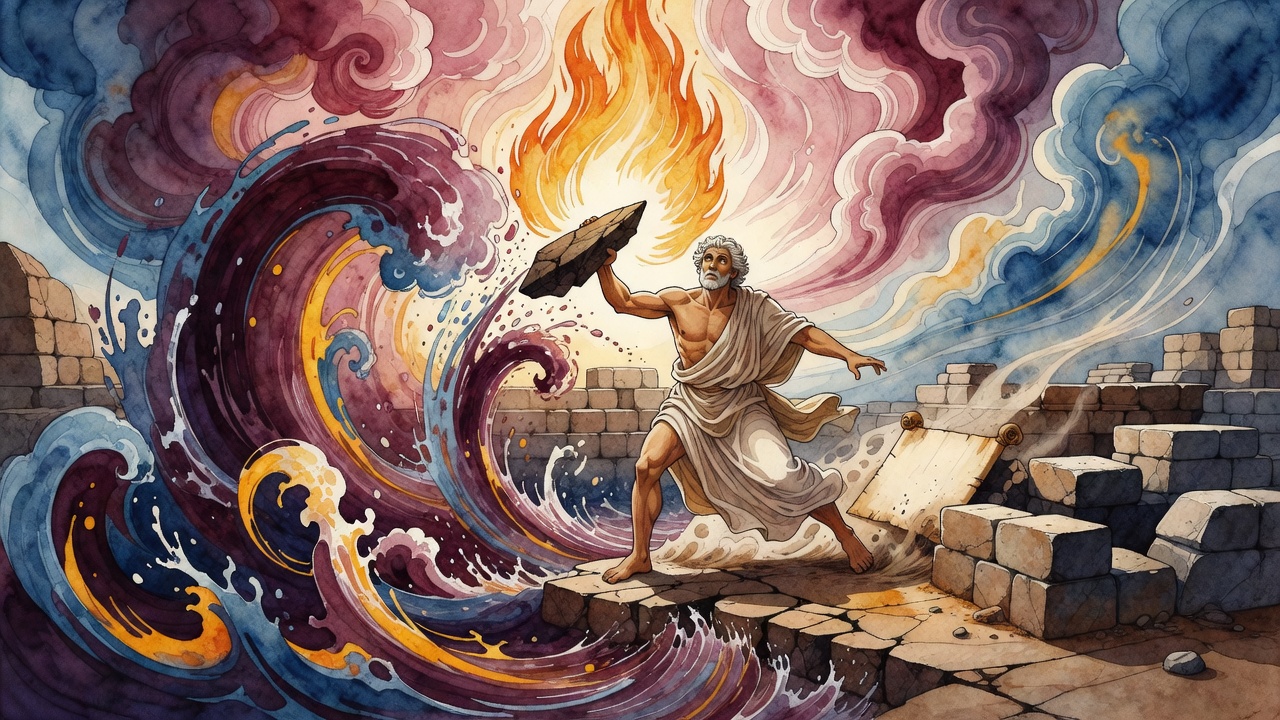
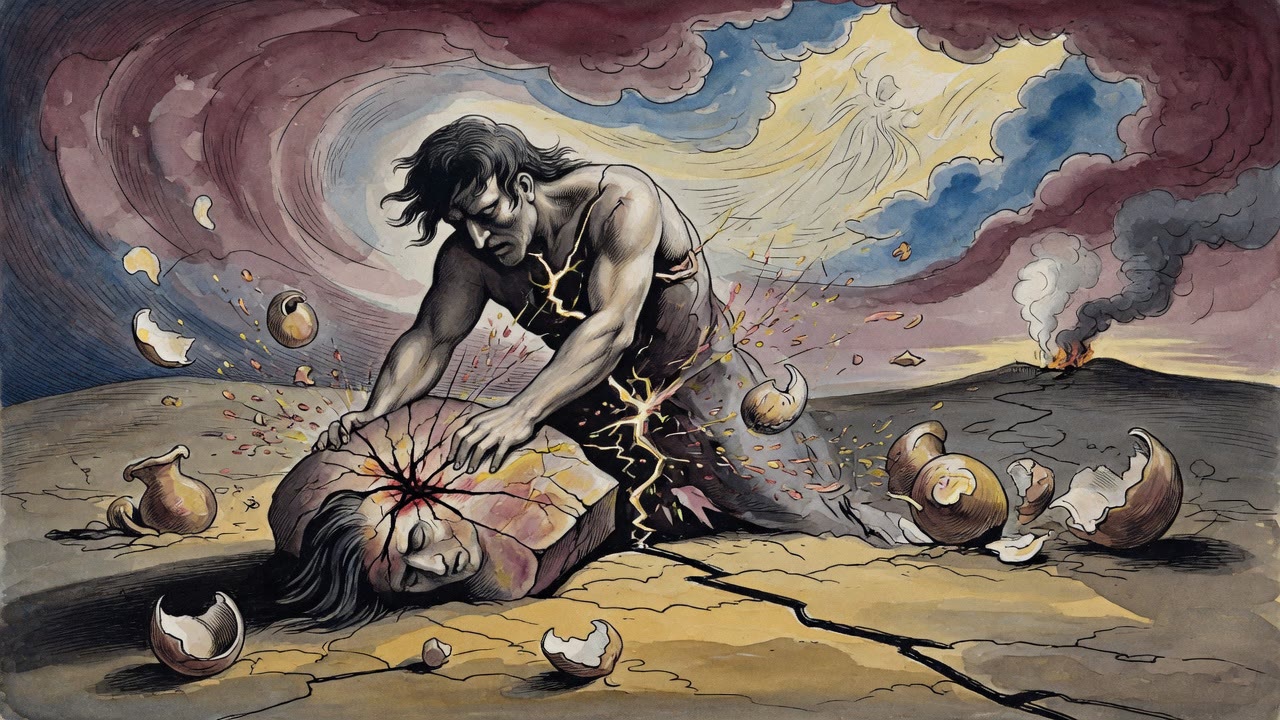
David did not listen. He pulled the stone up. The engraved Name had vanished from its surface. The moment the stone moved, the abyss beneath it began to surge. The waters of the deep rose toward the gap where the stone had been, climbing through the fifteen thousand cubits of excavated earth toward the world above.
David understood too late what he had done. He asked whether there was a way to write the Name back onto the stone and force it down again before the flooding completed. His advisors debated. David wrote the Name on a shard of pottery and threw it into the rising water. The Name landed on the surface of the surge and the waters shrank back. The stone settled. The world held.
David had nearly ended everything by not listening to a voice that told him to stop, and he had saved everything by writing the Name on a broken piece of pottery and trusting it to the water. Creation's maintenance turned out to be less ceremonial than its founding had been.
The Navel at the World's Center
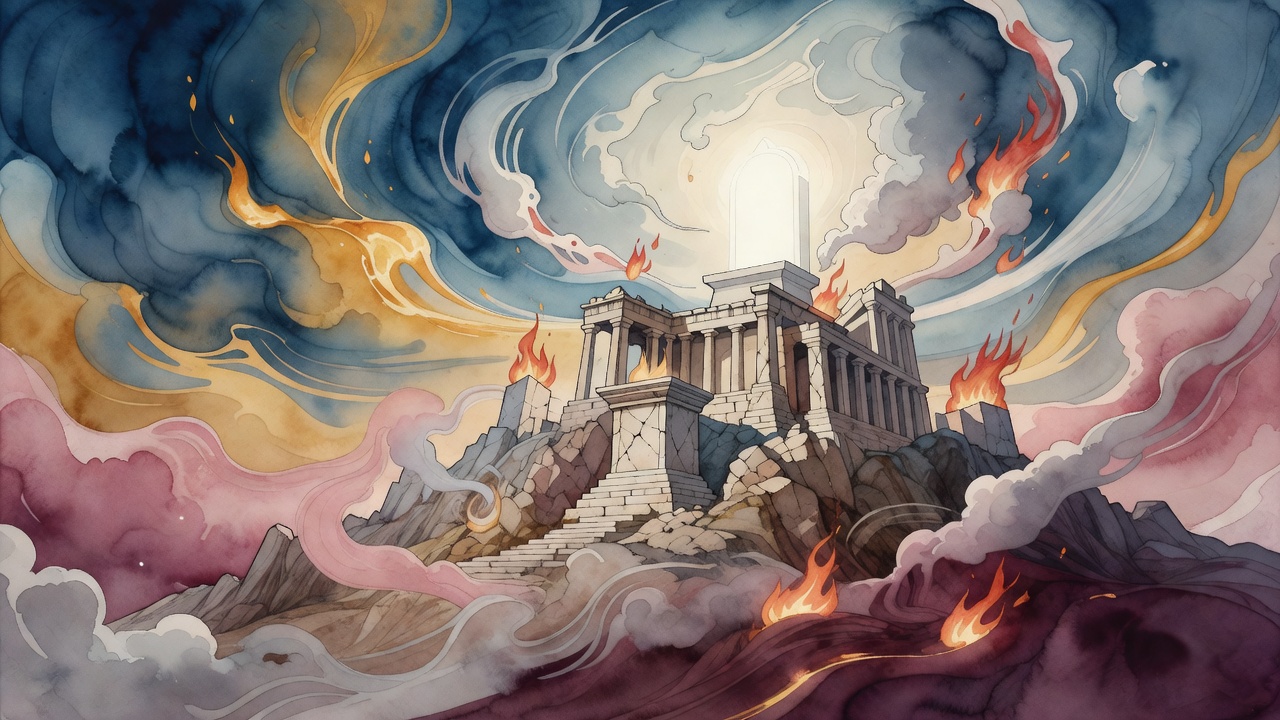
The Holy of Holies stood at the world's center point, the place where heaven and earth touched and where the umbilical connection between the two had never been severed. God had created the world the way a child forms in the womb, beginning at the center and expanding outward. The center was Jerusalem. The center of Jerusalem was the Temple Mount. The center of the Temple Mount was the Holy of Holies. The center of the Holy of Holies was the stone that rose three fingerbreadths from the floor after the ark was removed.
Three fingerbreadths. That was all that remained visible of the stone that held the world. The entire weight of the myth was concentrated in a rise barely taller than a hand's three fingers above a floor that priests could see. The holiest center in Jewish geography looked like a slight elevation in the flagstones, while underneath it the Name held the abyss at bay in forty-eight forms that no one living could read in full.
The Gate That Never Closed
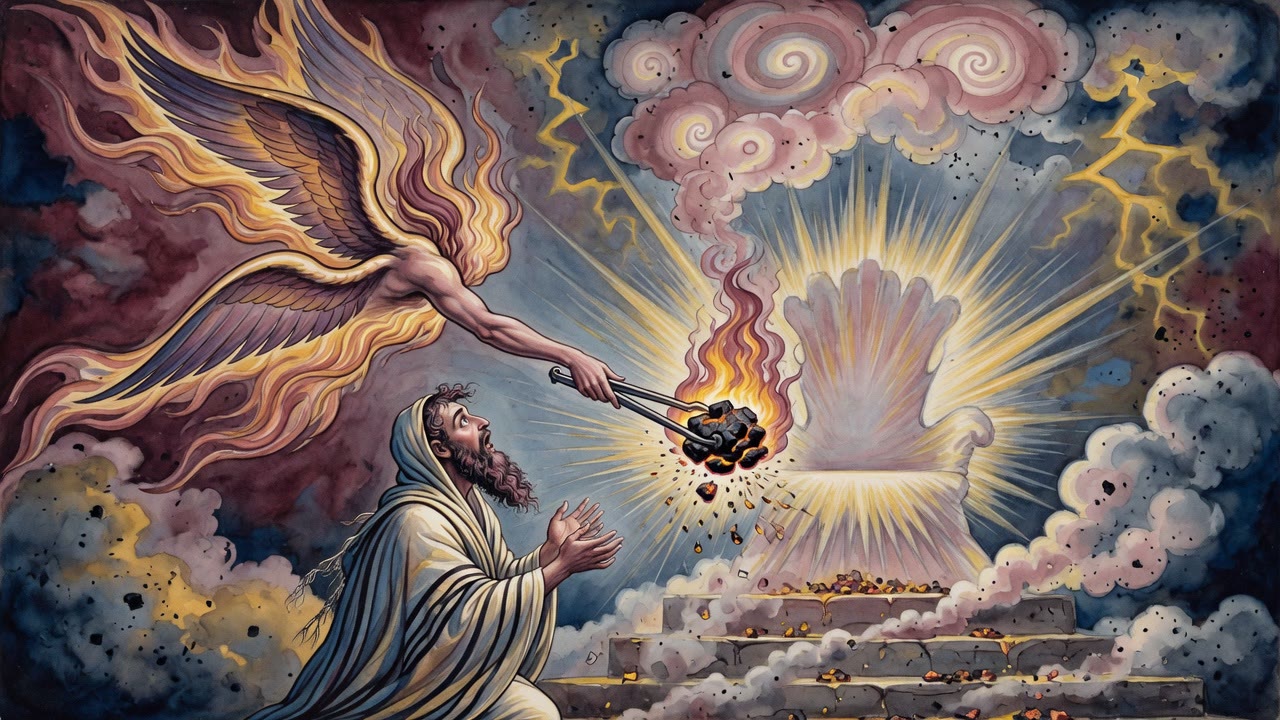
The mystical tradition added one further claim. The Foundation Stone stood at the exact point where the gate of heaven opened, and that gate was always open. A person standing in the Holy of Holies on Yom Kippur was standing at the one place on earth where the barrier between worlds was not a barrier at all but an open door maintained by divine courtesy and a stone carved with names that most people never got to see.
Empires could conquer the city. Armies could level the Temple. The Foundation Stone's work did not stop for any of that. The abyss did not know about armies. It only knew about the Name, and the Name was still engraved in forty-eight forms on the stone beneath the dust, doing its work without witnesses, holding everything up.
← All myths