Ha-Satan Became a Deer and Led David Into Philistine Land
David followed a deer into country he did not know. Ishbi, Goliath's brother, threw him into a winepress and waited for the crush.
Table of Contents
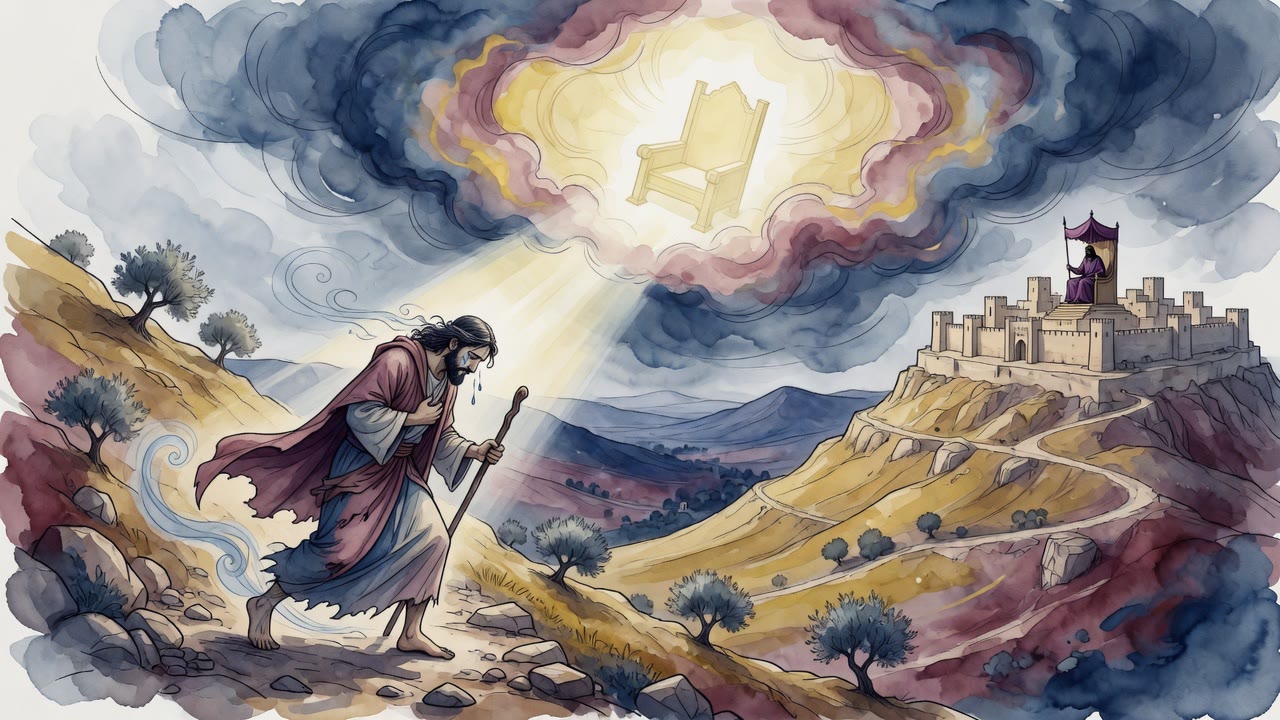
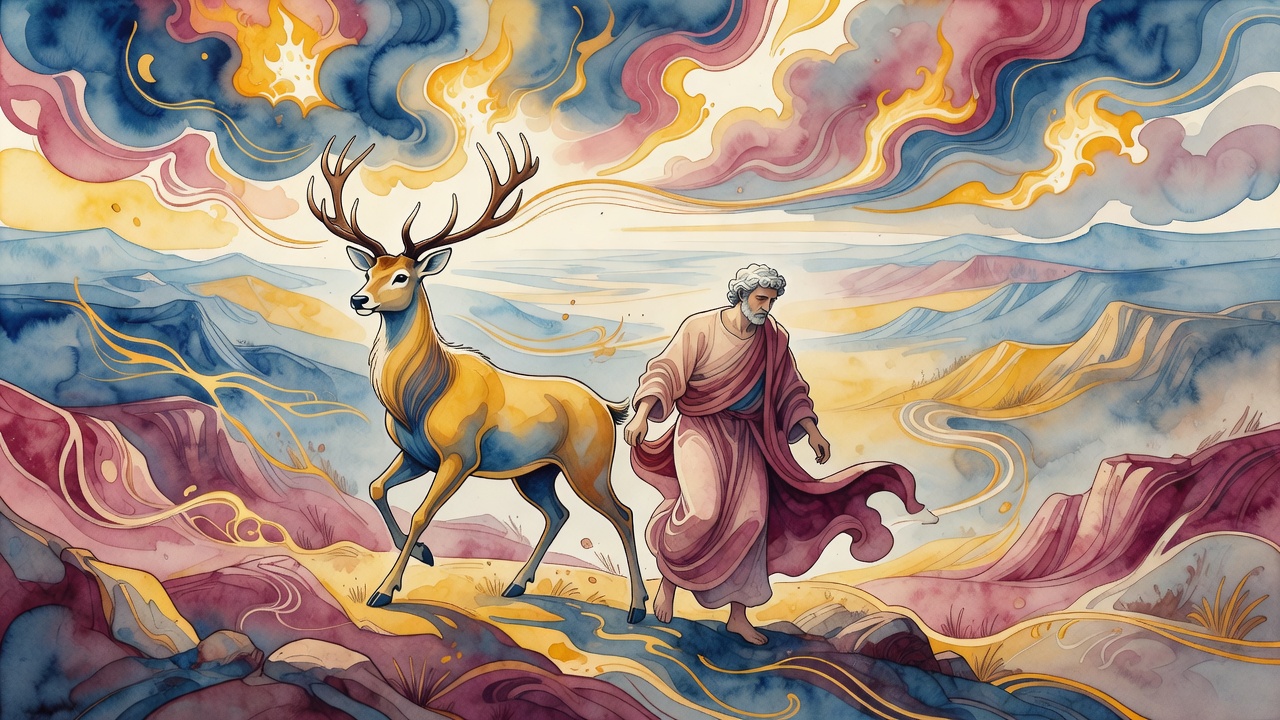
The deer did not run the way a deer runs. It stood at the edge of the field where David was hunting, too still for the hour, too fine for the season, and when he stepped toward it the animal moved just far enough to keep him walking.
 Click for full size
He notched an arrow. The deer shifted. He came close enough to hear it breathe and it slipped through a gap in the rocks. He followed.
That was the whole method. Beauty, then distance, then another ridge. Ha-Satan (הַשָּׂטָן), the Accuser who works inside God's court, became a deer and led him because David was a hunter, and a hunter will cross a border for a coat like that.
The Country Changed Under His Feet
By the time David looked up, the deer was gone and the ground was Philistine. Someone nearby had already matched his face to a name.
Ishbi was a giant, and he was Goliath's brother. He had been collecting that debt for years. A king of Israel standing alone in his country, far from any Israelite line, was not a battle. It was a gift.
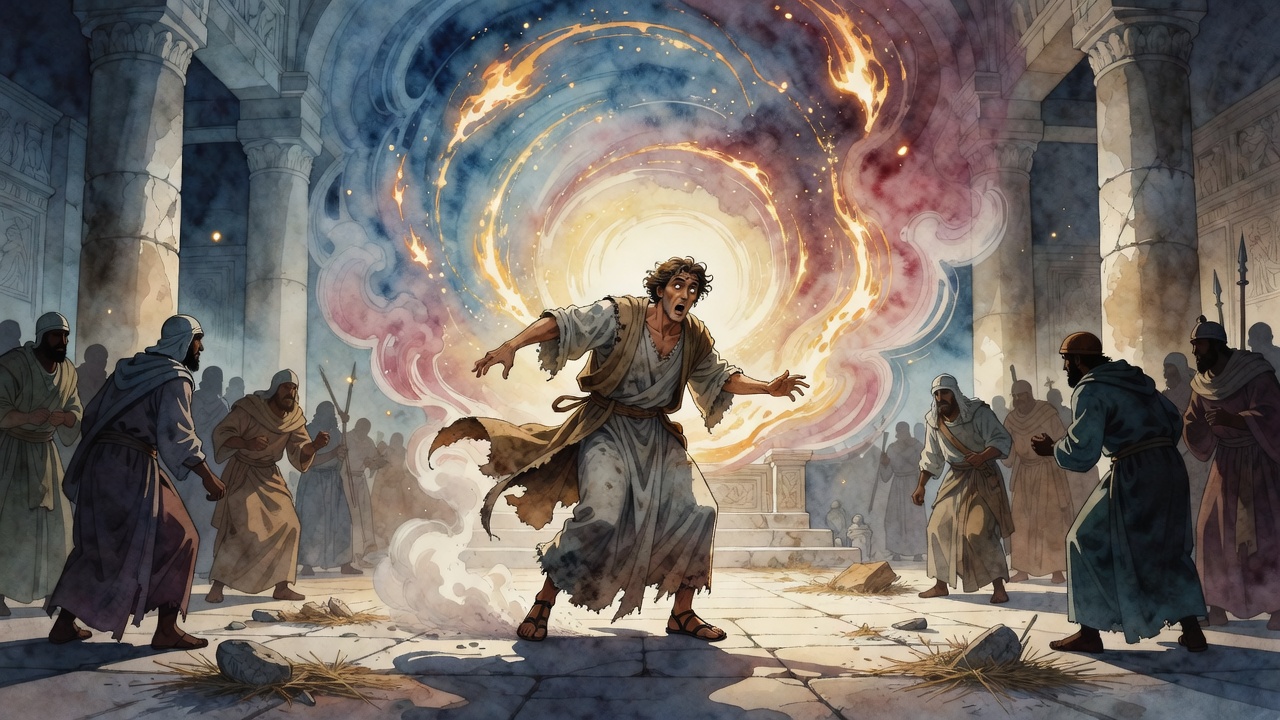
Ishbi seized him and threw him into a winepress. The beams and stones of the press were built to crush grapes until they ran. Ishbi meant to crush a man the same way, slow enough to pay for a brother, hard enough that no psalm would come out of the mouth at the bottom.
David hit the floor of the vat. The weight came down.
The Earth Sank Under the Press
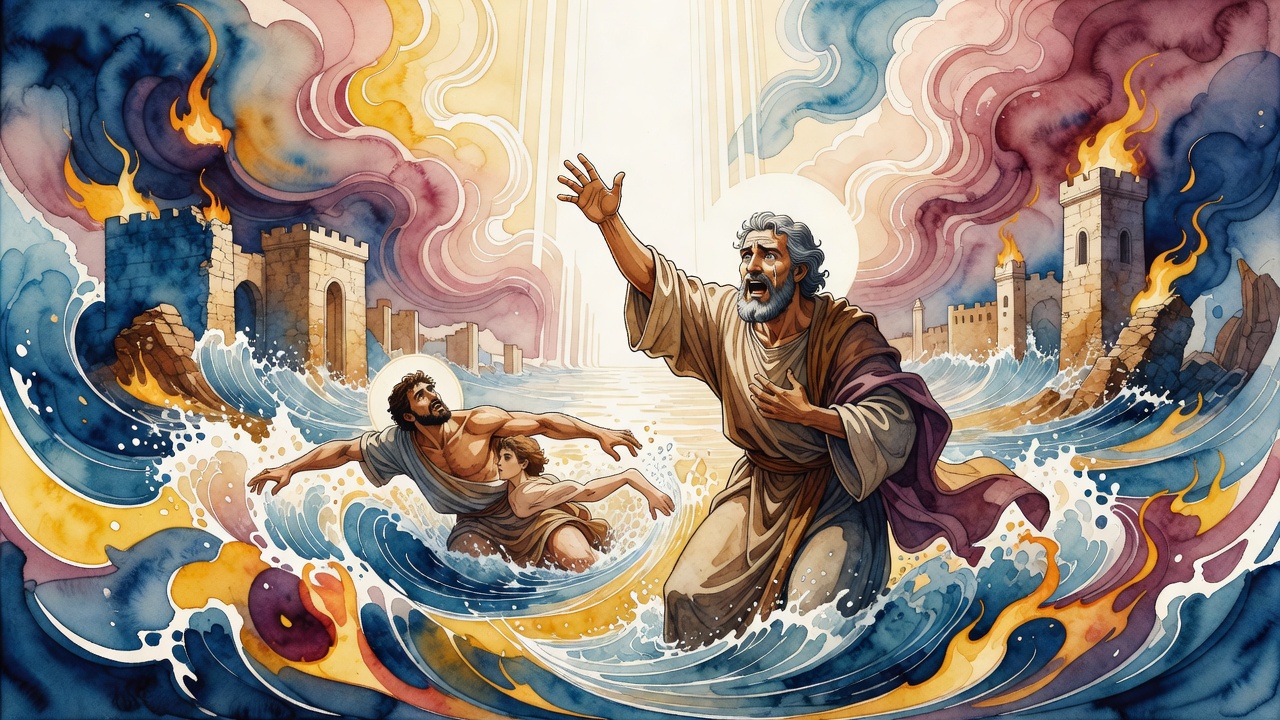
The earth under him gave way. Not a collapse, not a grave. A sinking, just enough that the press could not finish its work. He dropped with the floor while the beams chewed air where his chest had been.
He was still in the vat. He was still in Philistine land. He was still a king with no army, under a giant who wanted him as juice. The first miracle had only bought him pain instead of a quick death. His plight stayed desperate. A second miracle had to come, because the Accuser's deer had done its job too well, and Ishbi was still standing over the press.
David did not climb out by skill. The hunt had ended the moment the country changed. He lay in the sinking floor of a winepress and waited for a rescue he could not arrange, the way grapes wait, except grapes are supposed to die there.
Close Your Eyes for David
In the halls above, a seer was being held against a teacher's chest. "What do you see?" the teacher asked.
"I see seven lightnings which strike as one."
"My son, close your eyes, that you not be shaken by those that shall go forth to meet David."
The ophanim turned. The seraphim burned. The holy beasts moved. Treasuries of snow and treasuries of hail opened. Clouds of glory, planets, stars, ministering angels, fiery spirits of the fourth heaven, all of them cried out in one tumult, a psalm thrown up as if the hunt below had no claim: "For the chief musician, a psalm of David. The heavens are telling the glory of God."
A great uproar came from Gozen. "The Lord shall reign forever and ever."
Then David came first.
The Crown That Lit Both Ends of the World
All the kings of the house of David followed him. Each wore a crown. David's crown was not like the others. It was more brilliant. Its splendor went forth from one end of the world to the other, a light that did not ask whether the man it belonged to was, in that same hour, under a Philistine press with the Accuser's dust still on his heels.
The seer had been told to shut his eyes so the greeting party would not shake him apart. The greeting party was for the king whose psalm the heavens were already singing. Down below, the same king was a body in a vat, saved from one death by a floor that sank, waiting on a second mercy because the first had only postponed the crush.
Ishbi did not get the revenge he had measured. David lived. The deer was gone. The border he had crossed for a coat of wrong-season beauty stayed in him as a knowledge: the Accuser does not need a rebellion. He needs a hunter, and something worth chasing one ridge too far.
In the fourth heaven they did not stop the psalm for the winepress. They sang him through it.
← All myths