Haman Owned the Empire and Could Not Taste His Dinner
Every man in Susa bowed when Haman rode past. One man at the gate stuck out his knee instead, so that Haman could read what was written on it.
Table of Contents
 Click for full size
The Knee at the Gate
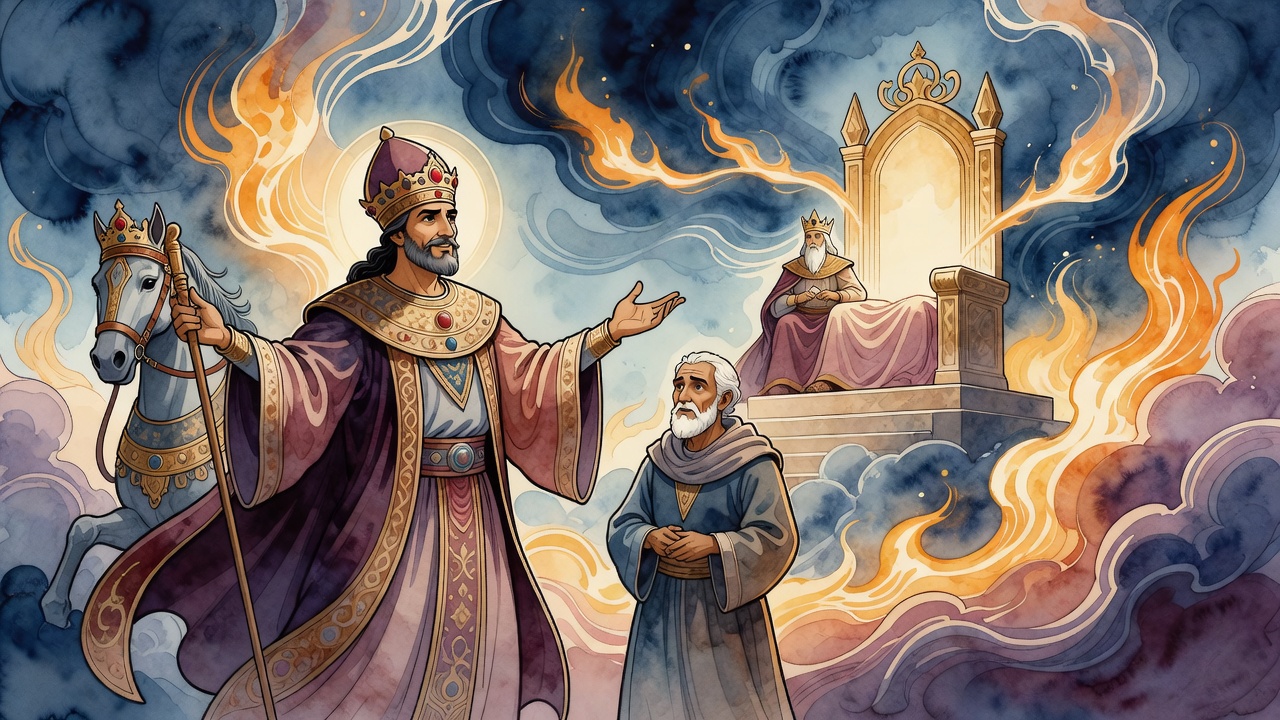
The horse came up the street and the street went down. Merchants, porters, the men selling salt fish, the guards at the inner court: all of them folded as Haman passed, because the king had put it in writing that they would.
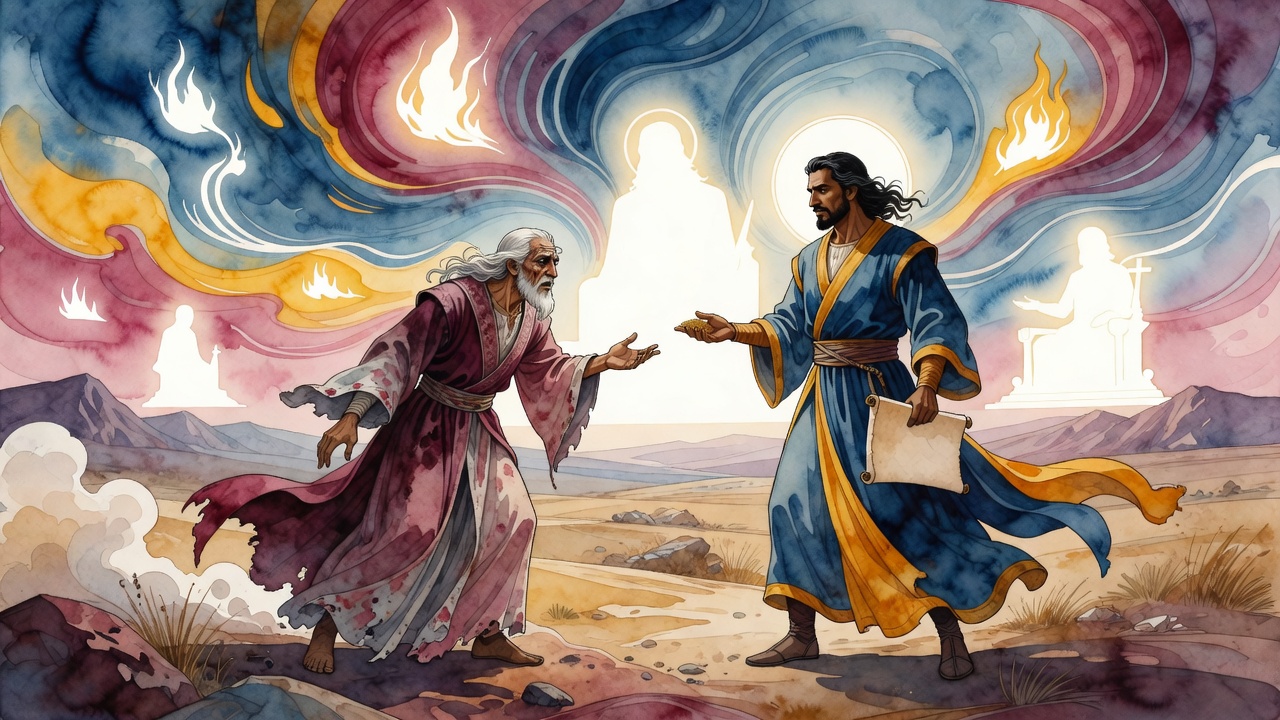
At the gate Mordecai stayed on his bench. He did not kneel. He did not lower his head. He pushed one leg out into the road and pulled the cloth back from his knee, so that Haman, from the saddle, could read what was written there.
It was a bill of sale. Haman was the merchandise.
Sixty Thousand Men and Nothing to Feed Them
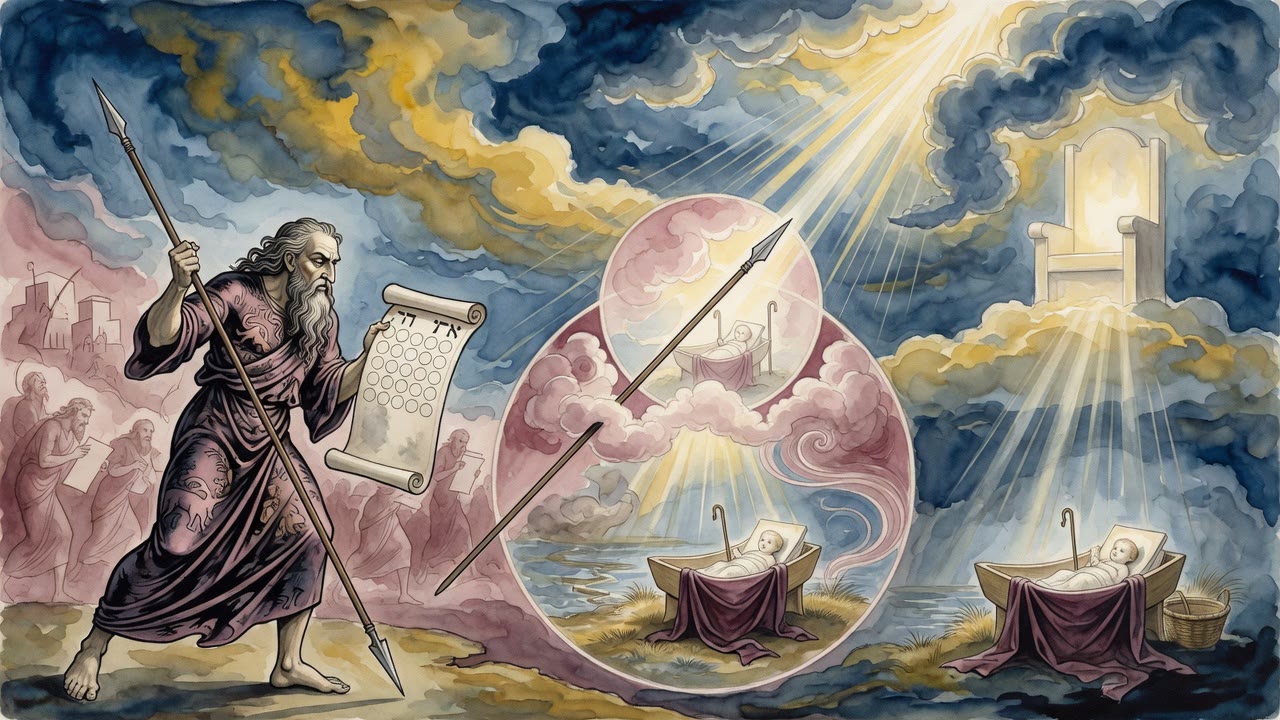
Years before, the king had sent two officers east against an Indian city, sixty thousand soldiers apiece and provisions for the march. Mordecai came back with his stores intact. Haman spent his, and then went looking for a loan.
He asked Mordecai for grain at interest. Mordecai refused to lend at interest, on the grounds that Jacob and Esau had been brothers, and so he lent nothing. Haman had sixty thousand hungry men and one way out. He sold himself.
The document he signed made him Mordecai's slave in perpetuity, him and his children and his children's children to the end of time. It set out the penalty for refusing the service, or for denying the sale, or for turning on his owner the way Esau turned on Jacob after the birthright: a beam was to be pulled out of the house of whoever broke it, and he was to be hanged on that beam. He wrote it out himself and put his own name to it. "I, Haman, son of Hammedatha, of the family of Agag, being under no restraint, do hereby consent with my own will."
Mordecai had it copied onto his knee. Whenever the two of them met in the street, out came the leg.
What He Told the King About Their Holidays
An arrest would have been enough. Haman wanted the whole people.
He went to Ahasuerus with a complaint dressed as a fiscal report. There is one nation scattered through every province of the empire, he said, and their laws are not like anyone else's, and they do not keep the king's laws, and it is not worth the crown's while to tolerate them. He said it with a hidden barb in the first word. The way he pronounced it, the one people belonged to the One God, and that God was asleep on their behalf.
Then he got to the real grievance, which was the calendar. Their teeth are enormous, he said. They eat and drink and call it delight in the Sabbath, delight in the festivals. Every seventh day they stop. Every new moon they stop. Passover in Nisan, Shavuot in Sivan, then in Tishrei a new year and a great fast and a week of booths. They are eating the assets of the world.
"They are commanded that way in their Torah," the king said.
"Then let them keep ours as well," Haman said. "They hold your holidays in contempt. They keep neither the calends nor the Saturnalia." He put ten thousand talents of silver on the table to close it.
The Answer From Above the Ceiling
The answer to the first insult came back before the ink was dry on the letters.
There is no sleep in this place, God said. The guardian of Israel does not slumber and does not sleep, and you have told a king that He does. By your life, I will wake up against that man and take him out of the world.
The answer to the second was worse for Haman, because it used his own complaint as the instrument. You slander their festivals, God said. I will bring you down in front of them, and they will add one more festival on top of the others, and it will be about your fall.
While Haman denounced Israel in the throne room below, Michael stood up in the court above and spoke for them. "Master of the universe. Your children are not accused of idolatry. They are not accused of licentiousness. They are not accused of bloodshed. They are accused of keeping Your laws."
The reply was four words long, and it settled the case. "I have not forsaken them."
Zeresh Was Not Home
Haman came back from the palace with the decree granted and his wife out.
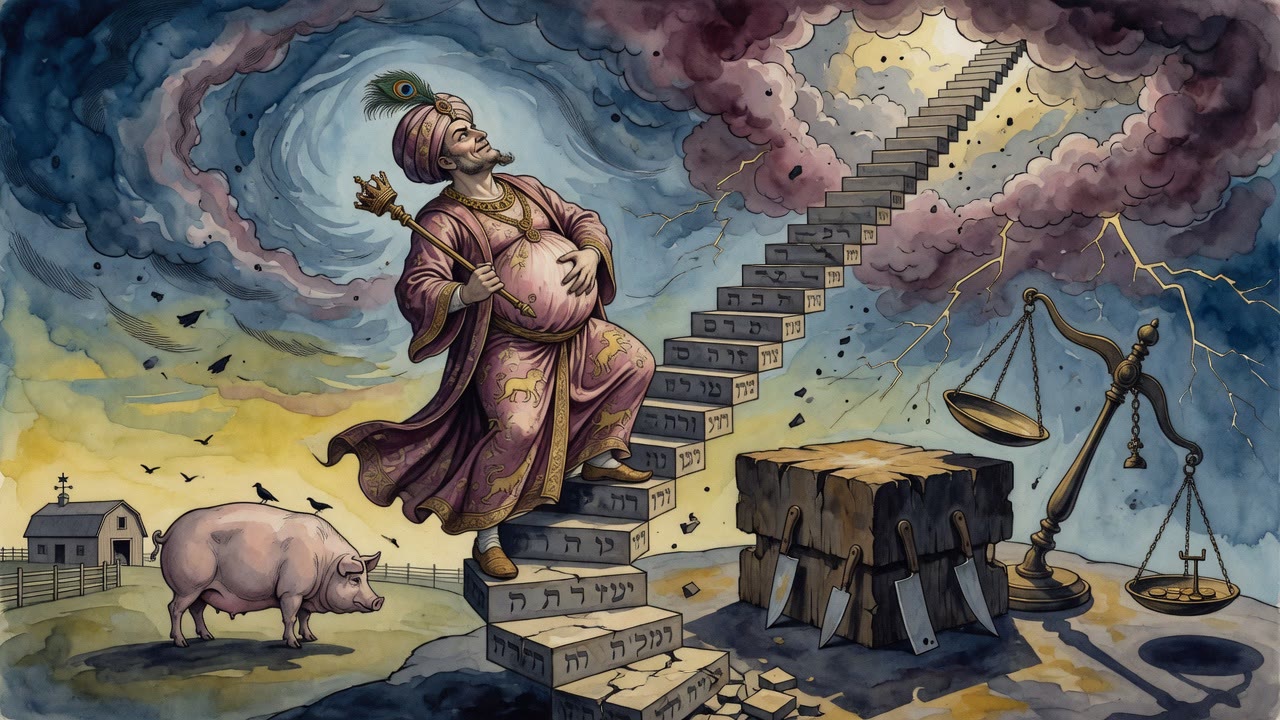
Zeresh was the daughter of the Persian satrap Tattenai, and whenever her husband was at court she was with her lovers. He sent for her. He sent for the three hundred and sixty-five advisers as well, and they filled the room, and he stood in front of all of them and touched the ornament hanging on his chest, a little worked model of his own treasure house.
"All of this is worth nothing to me," he said, "while I look at Mordecai the Jew. What I eat and what I drink lose their taste, if I only think of him."
Three hundred and sixty-five counselors, ten sons, the king's ring, an empire's worth of silver, and a man at a gate with a bad knee and a piece of writing on it.
← All myths