Heaven Was Built From Fire, Water, and the Letter Heh
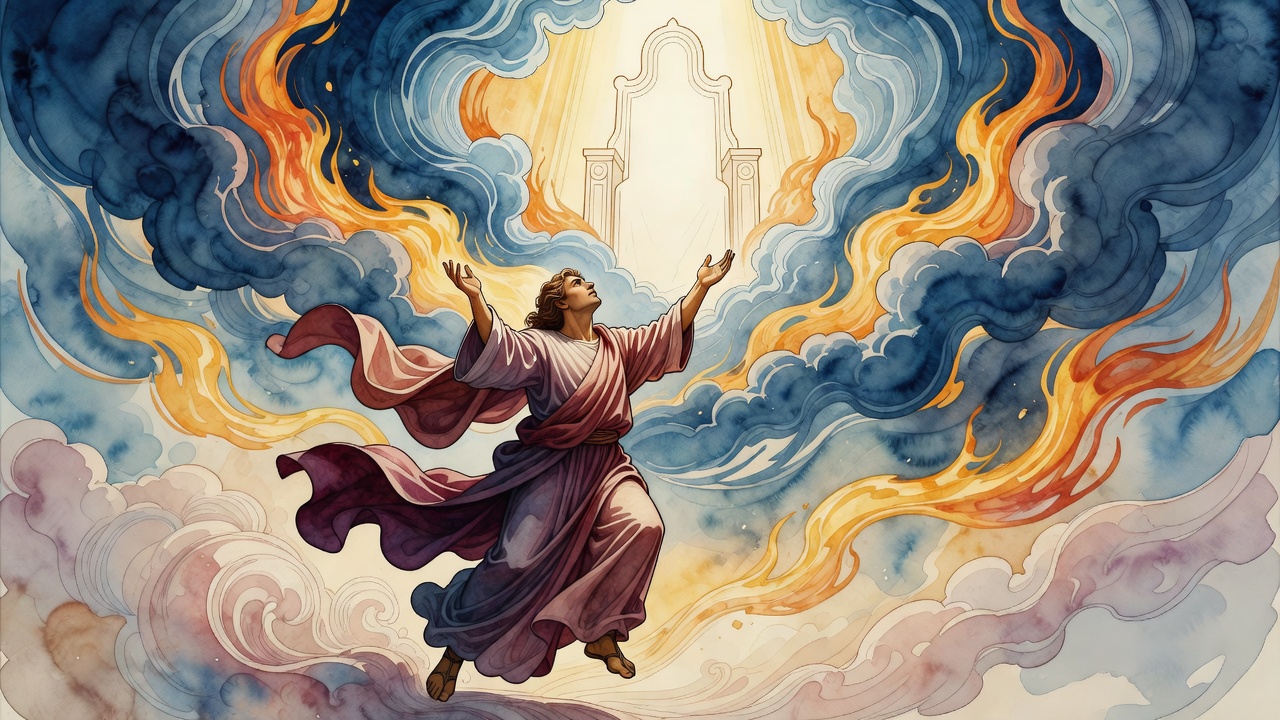
God took fire in one hand and water in the other and pressed them together until they held. Then a human body stretched across the whole sky.
Table of Contents
 Click for full size
Fire and Water Fused Into One Sky
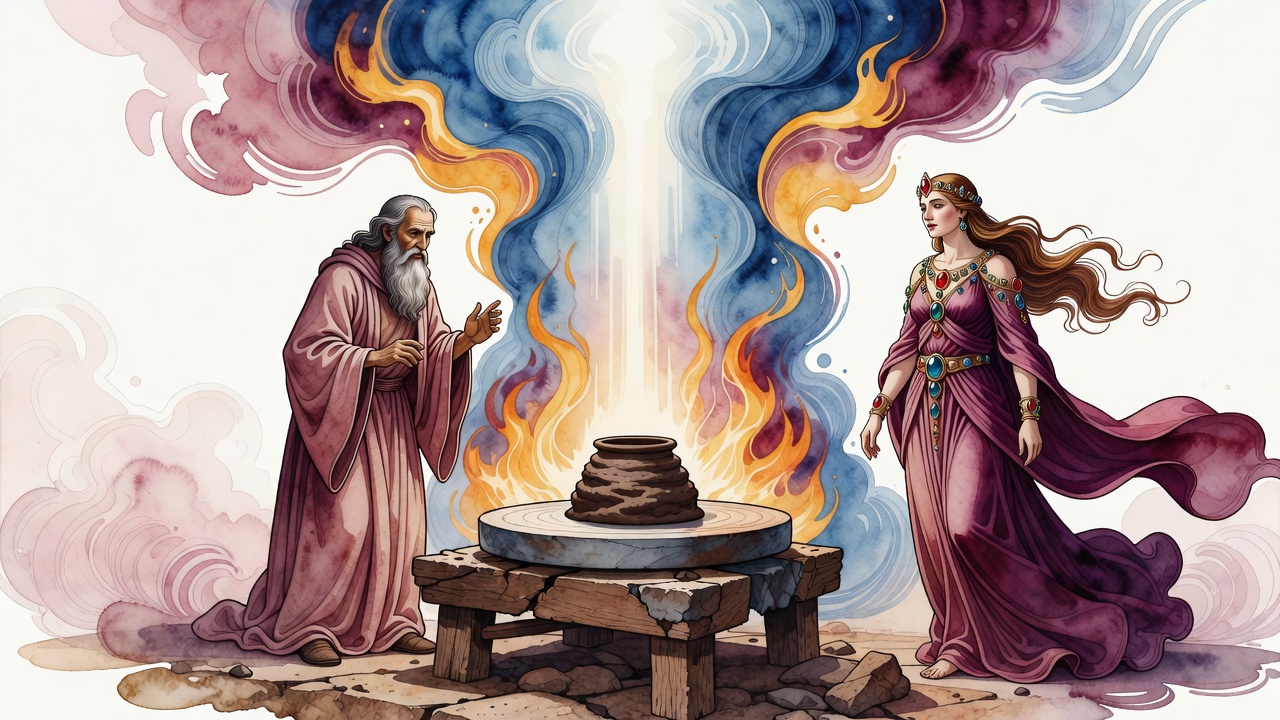
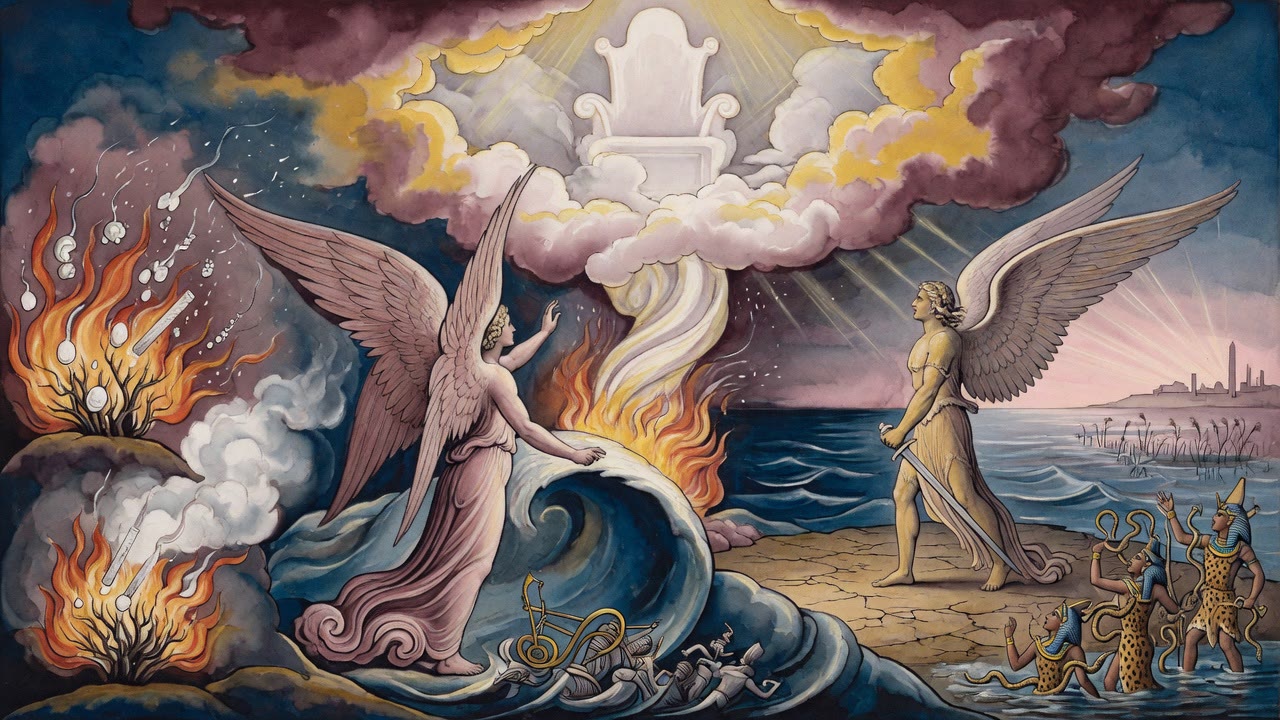
The Babylonian sage Rav looked at the Hebrew word for sky and heard two opposing words fighting inside it. Esh: fire. Mayim: water. He said the heavens are both at once. Rabbi Abba bar Kahana, repeating him in the next generation, said God took fire in one hand and water in the other and pressed them together until they held. The sky is a chemistry experiment that should have boiled or frozen on contact. Instead it became something that holds.
The Sky That Watches and Remembers
The other rabbis would not leave the word alone. Shamayim sounded like shamim, they noted, the thing that watches. If the one below is righteous, the sky proclaims his righteousness to the heavens. If the one below is wicked, the sky proclaims that too. The sky is not background. It is a standing witness with a long memory.
A third reading pulled in a verb. Shamayim sounds like sham, there, and mayim, water. The water was placed there when it was told to be there, and it stayed. The sky is obedience made permanent.
The Letter That Held It All
The sky was not just made of fused elements. It was built in the shape of one letter. The rabbis opened the letter heh and saw a doorway. The bottom is mostly closed. One corner is open, small, just wide enough for one person to pass through. The rabbis said that this world was created with the letter heh for exactly this reason: people can enter it from below, through the small opening at the bottom, but they fall through it too.
The opening at the bottom is the path of repentance. The rabbis were specific about this. If someone sins and wants to return, the door at the base of the letter is open. But the large opening at the top, the one that faces the direction of return without any floor, that is for those who will not repent. They fall into the space under the letter, into the absence that has no ground beneath it.
One letter holds the shape of the entire world's moral architecture. The sky itself, fused from opposing elements, is built in the form of an open question.
The Human Body That Filled the Sky
Adam was created full-sized. That is what the rabbis taught, and they meant it architecturally. His head reached the firmament. He lay across the world from one end to the other. The sky that had been built from fire and water and shaped like a single letter was, on the day of the first human, entirely occupied.
Then God reduced him. The angels had been frightened, mistaking Adam for a rival god. So God pressed His hand down and the man shrank to the dimensions of a person who could walk the earth without his head scraping the dome of heaven. But the memory of his original size stayed in the tradition. A human being who fills the sky is a human being whose proper scale is cosmic.
That is the strange mathematics of the three passages together. The sky is fused opposites held by will. It is shaped as a moral doorway. And it was originally the floor for a human being whose proper home was at the top of the world. The distance from where Adam ended up to where he started is the distance the rabbis spent centuries trying to explain.
← All myths