Abraham Was Built Into the World to Argue With God
Abraham wanted to jump from fifty righteous people to five. God told him to back up, then poured more water into the clock so he could keep counting.
Table of Contents
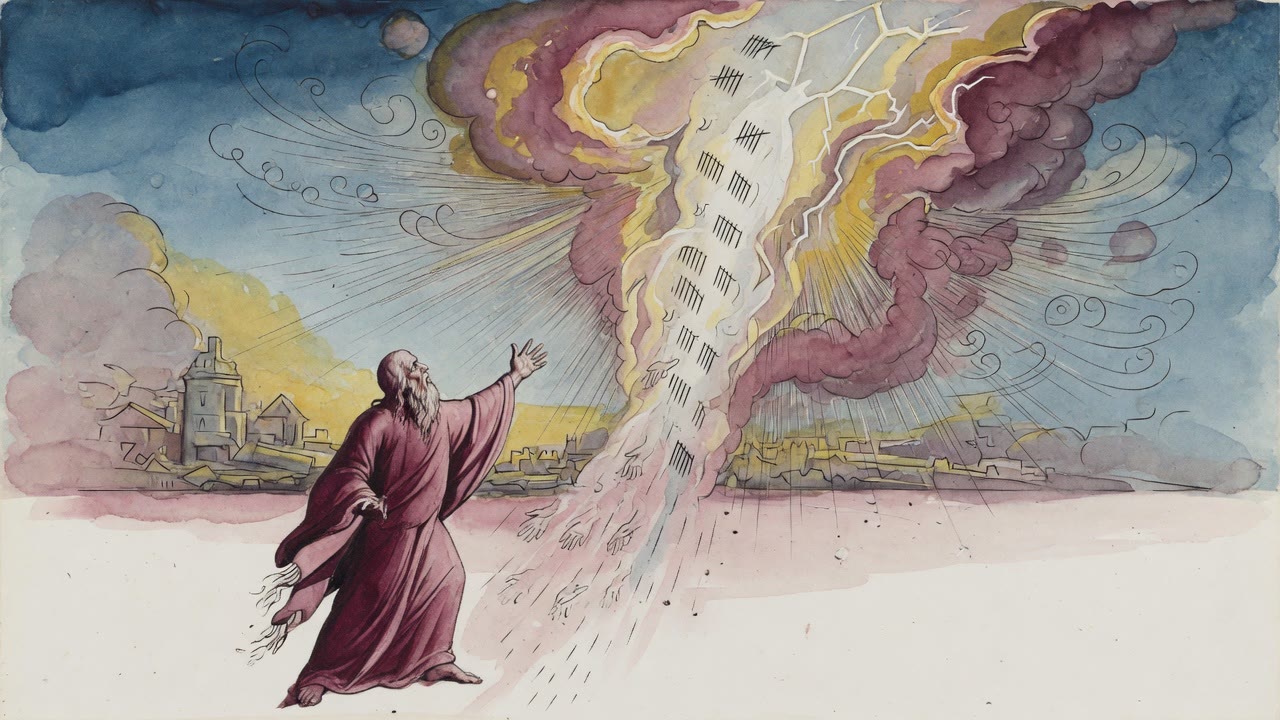
Abraham stood on the ridge above the cities of the plain with the afternoon still on his wound. Three days after the knife of circumcision, he had run toward three men and fed them. Two of them were already walking toward Sodom. The verdict was moving. Abraham opened his mouth anyway.
 Click for full size
God had built him into the world for this hour. Twenty generations after the first word, a man who would not let a city burn without a count.
He Wanted to Jump to Five
"Perhaps the fifty righteous will lack five," Abraham said. "Will You destroy the entire city for the five?" He was already aiming at the bottom. Fifty to five in one breath, a collapse of the argument so he could finish before the angels reached the gate.
God said, "Back up."
The Holy One would not let him skip the numbers. Forty-five. Then forty. Thirty. Twenty. Ten. Each pause was a refusal to hurry. Abraham's throat was ready to spend the whole case at once. God made him spend it slowly.
Water Went Back Into the Clock
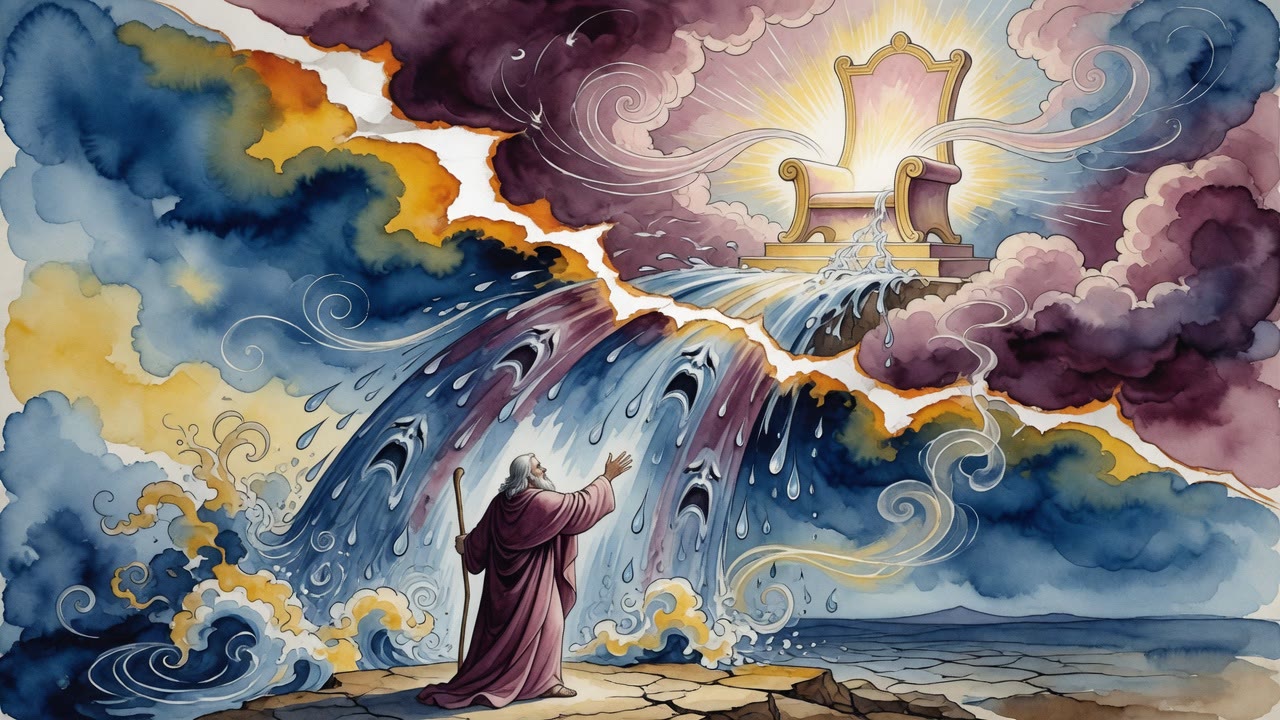
In the courts of that world an advocate speaks while water runs out of a vessel. When the clock is empty, his mouth is empty. If a judge wants him to continue, he says, add water. God added water. Go on with your pleas, only use smaller steps.
Abraham counted. He waited. He counted again. The cities still smoked in the future, but the present was a man and a God and a clock that would not be allowed to run dry until the last honest number had been spoken. Ten. Abraham had no smaller coin that would still be a city.
He could grieve for Sodom and still love God. He could know the count would fail and still insist on finishing it. That double grip was what the angels did not have. They arrived as single intentions dressed in light. He had been built to hold two things at once.
The Judge Waited, Then Stood
As long as the advocate pleaded, the Judge waited. As long as the Judge's face stayed open, Abraham spoke. When Abraham went silent, the Lord went. When the Judge stood, the advocate had nothing left to say, and Abraham returned to his place.
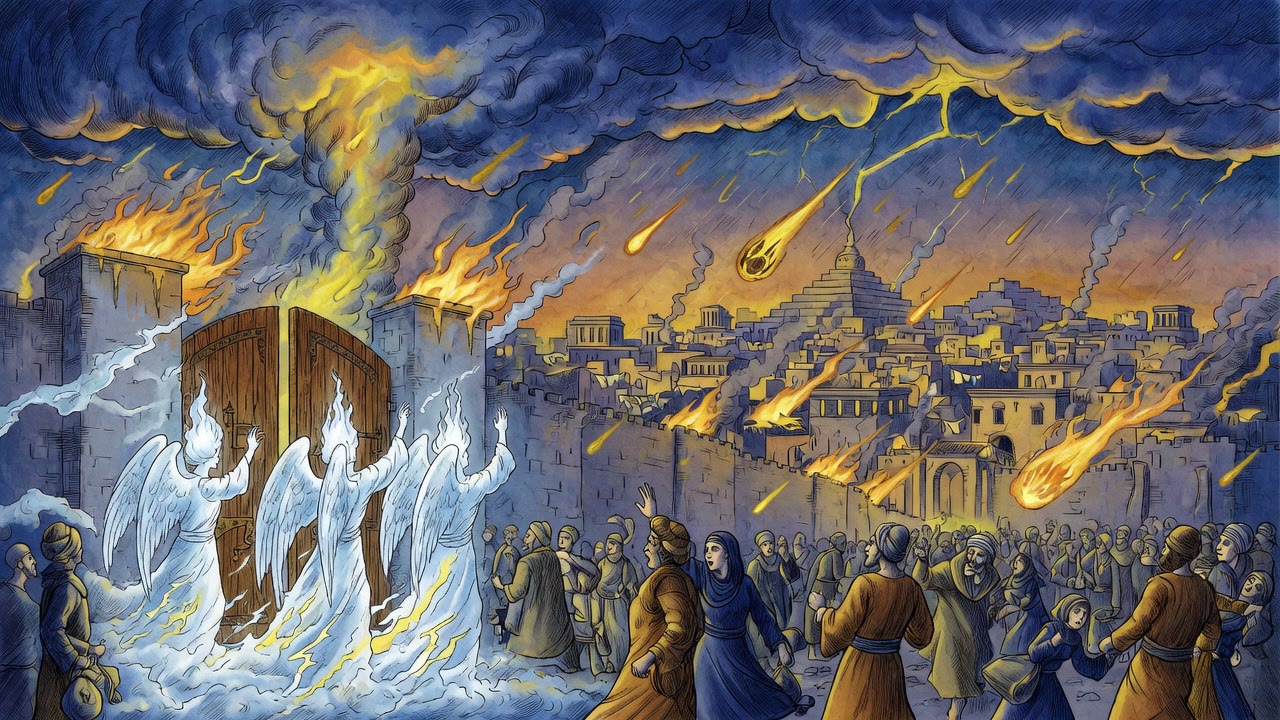
The two who had eaten in the tent reached Lot's door by evening. Their mission was one thing. They could not hold healing and destruction in the same hands. The one who had come to heal Abraham's wound had already finished and stayed behind. The two who walked into Sodom walked as a sentence wearing feet.
Sodom Had Already Named Him
The men of the city pressed Lot and reached for the door. "Move aside," they said. "This one came to sojourn, and he sits in judgment?" They had a rule among themselves. Any guest who comes here, we will force ourselves on them and take their possessions. Even the one who teaches righteousness and justice. Even Abraham, if he walked through the gate, we would do this to him and empty his bags.
Abraham had just spent his voice on their lives. They had already voted on his body. The count went down to ten, and the city had no ten, and the door began to crack under hands that would have done the same to the man on the ridge.
He had been built to argue. He argued until the clock was empty. Then he went home, and the angels went on without him.
← All myths