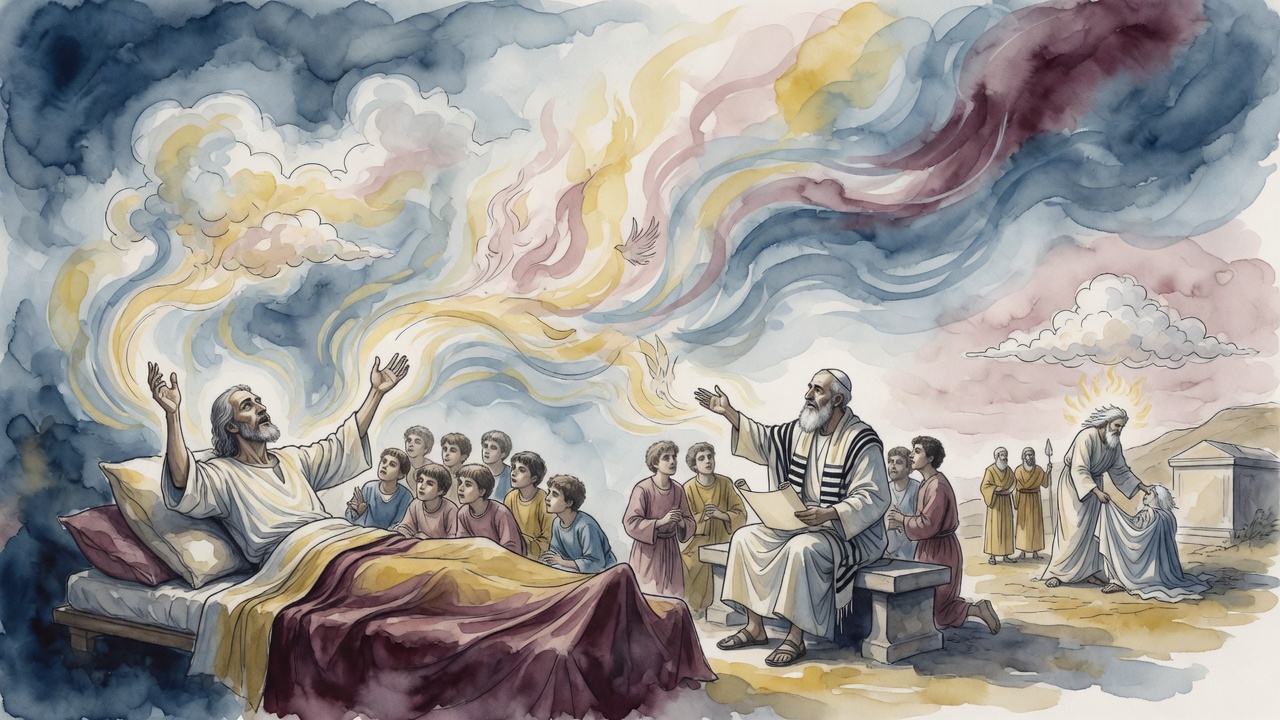
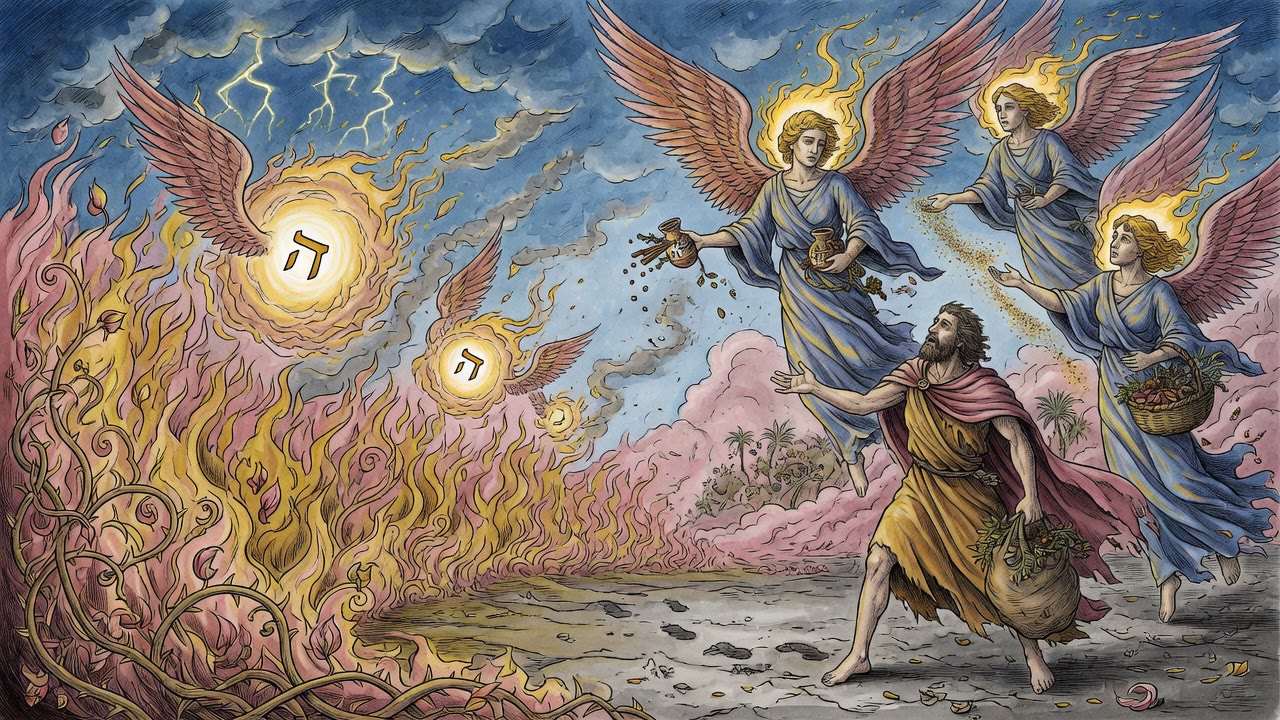
The Potter Built Eve, the Woman Who Glowed
The wheel was still wet when He built her. The serpent wanted that woman, and the ground that fed them was cursed with them.
Table of Contents
 Click for full size
The Wheel Did Not Stop
The sixth day ended. The clay did not go back on the shelf.
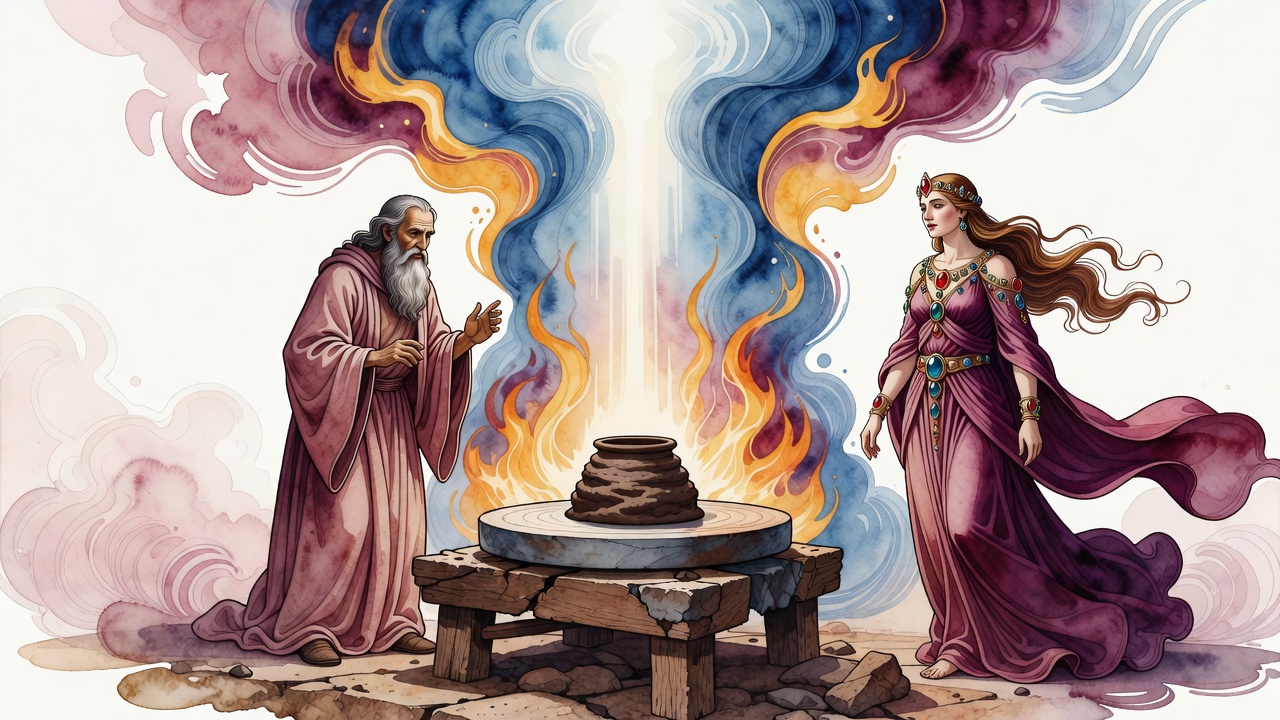
God sat at a potter's wheel with His hands still wet. Rabbi Huna read it out of a line in Job, wheels revolving by His own devices, and the picture arrived already moving. This was not a figure of speech for a finished week. The Potter was still leaning into the spin.
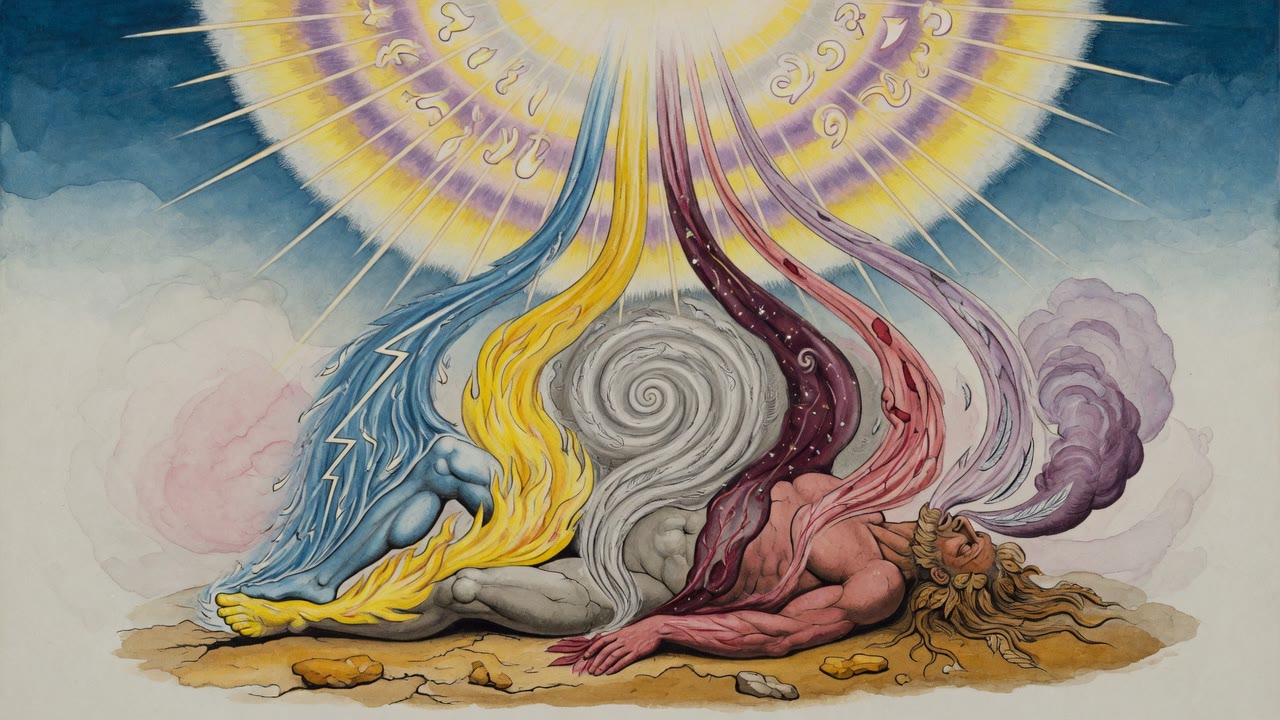
When a person walked toward righteousness and loving-kindness, the wheel turned one way and the clay yielded. The day went easy under the foot. When a person turned toward cruelty, the wheel reversed. Soft ground went hard. What felt like bad luck was the potter putting resistance back into the lump in answer to the direction it was taking.
Adam stood up from the soil he had been. The wheel kept turning.
He Built Her and She Glowed
The verse says He built her. Not formed. Built. The same hands that had been wet with Adam's clay went to work on Eve as construction.
He braided her hair. Strand by strand, drawing it through His fingers, stacking it in the high plaits a bride wore when she was being presented. The fingers that turned the world now lifted and twisted and pinned. He was doing a bride's hair before the introduction.
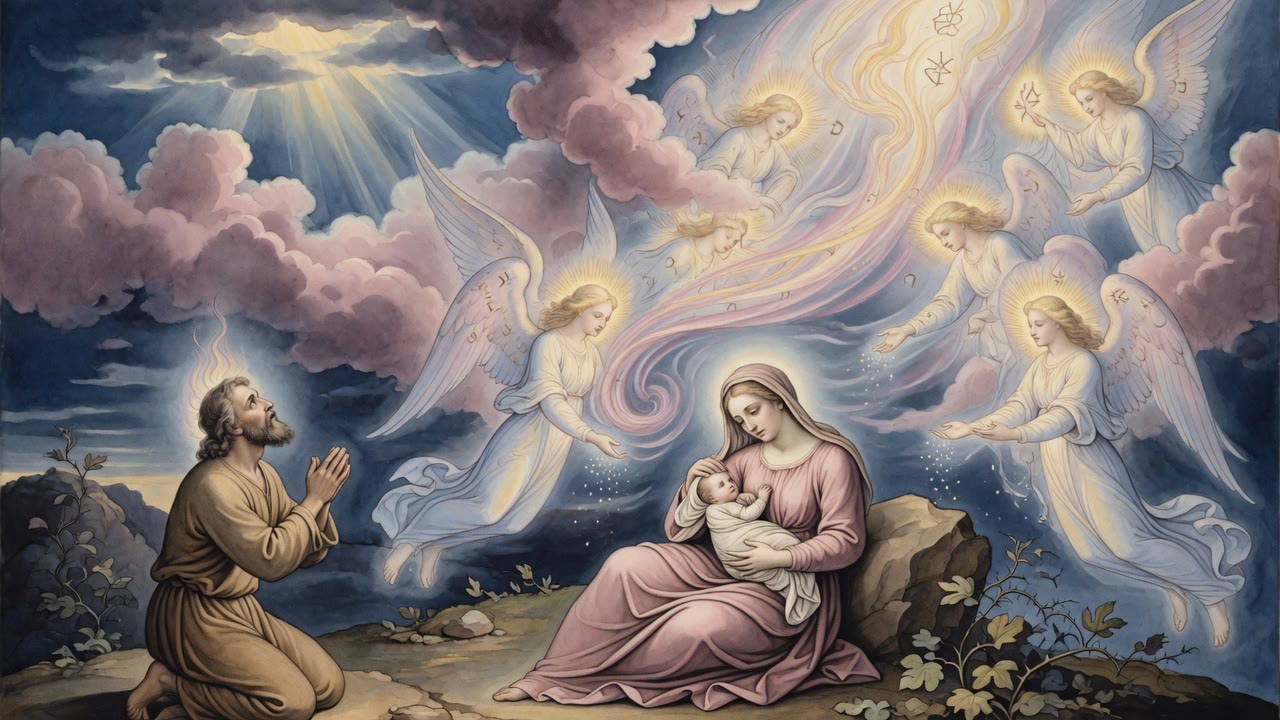
She walked into the garden glowing. Skin that had not existed a day before caught the light the trees held and threw it back. Adam, who had named every animal and watched them pair off without finding a mate, stood there looking at someone built to a scale he had not seen. Braided. Lit. Made by the same wheel that had spun the dirt he was made from.
The Serpent Wanted That Woman
The serpent looked at her and the whole of his work bent toward that looking. Because of this woman. Every move he made after that was for her.
He talked her to the tree. She ate. She gave it to Adam. He ate. God came walking in the cool of the day, and the wheel that had been yielding went the other way. The ground that had been soft under Adam's heel began to fight him.
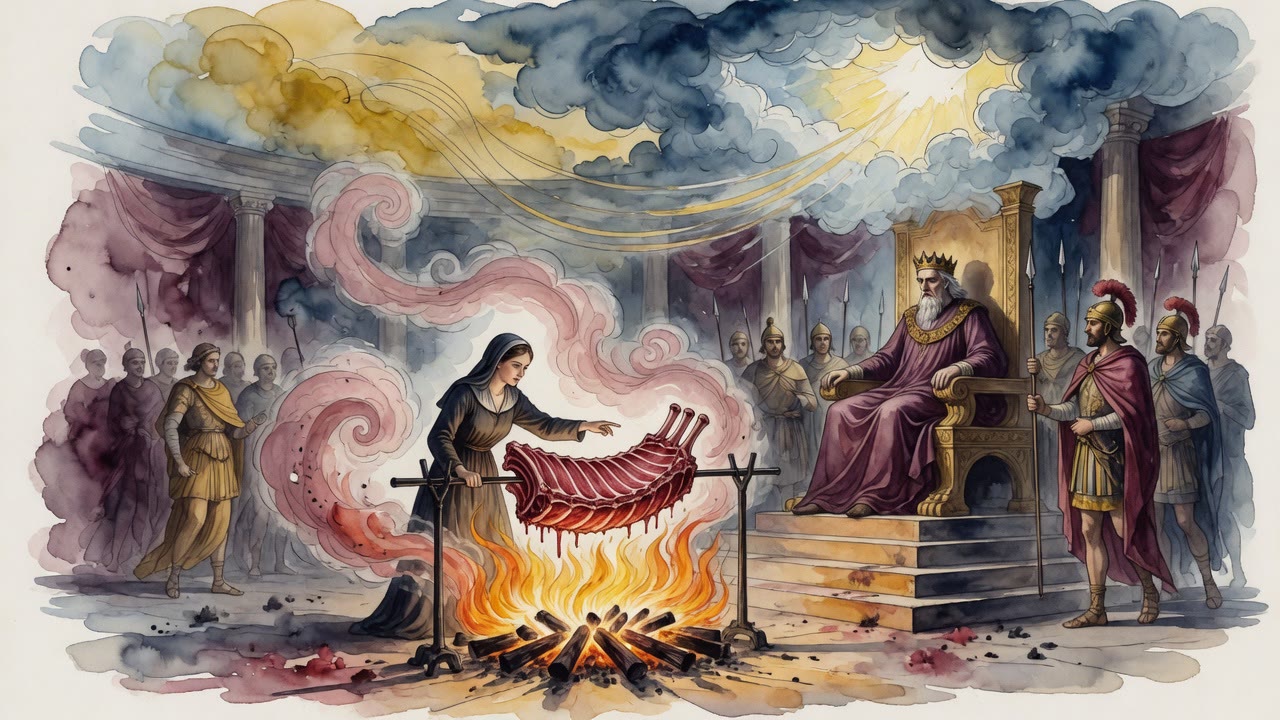
God turned His face toward the serpent. From the first word of the book to that sentence, the divine Name appears seventy-one times. Seventy-one is a full court. The snake was not sentenced by a lone judge. He had a Sanhedrin sitting on him, a capital docket, blotches like stones laid on his skin as leprosy, and a pregnancy for his kind that would last seven years.
Four Stood Liable
Three were brought to judgment. Four came out liable.
Adam. Eve. The serpent. And the ground.
The earth had been told to put forth fruit trees bearing fruit, the tree as edible as the fruit. It did not. It produced trees that hold fruit and cannot themselves be eaten. Wood you can build with. Wood you cannot chew. Rabbi Natan counted that as a violation. Rabbi Pinhas said the opposite: the earth did more than it was asked, and even the non-fruit trees put out fruit. Either way the curse landed on it, the way a man curses the breasts a child nursed from when he is cursing the child. The ground had fed them. It would now feed them gnats, flies, and fleas.
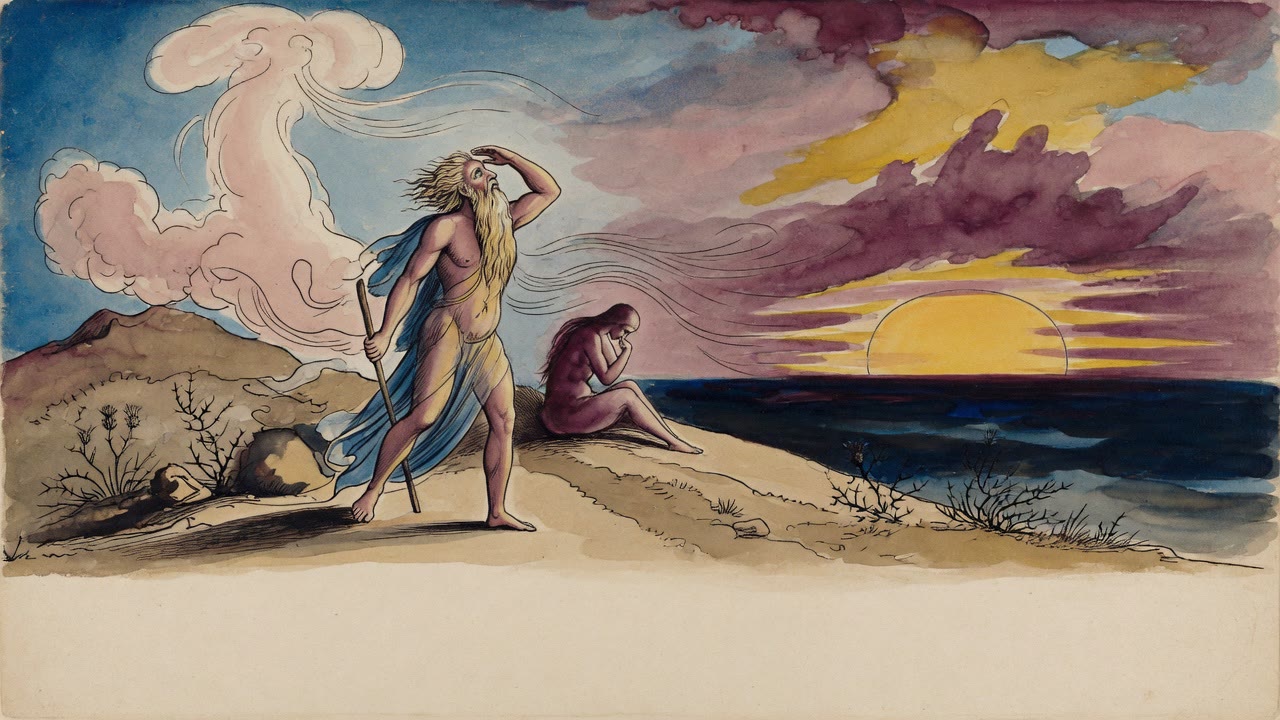
Adam would drag food out of soil that fought him. Eve would bring children through pain. The serpent would go on his belly with the court still sitting in the count of the Name. The potter did not set the clay down. He changed the spin.
The Earth Paid in Gnats
Dew still came down. Rain still came down. Springs still rose. None of that was a pardon. The same earth that had opened for grass on the third day now opened for pests. Rabbi Yitzhak said even those are of use. Use is not the same as blessing.
Eve still glowed in the light she had been built for. The glow did not keep the sentence off her. The wheel did not stop for a bride, or for a man named from dirt, or for a snake who had wanted her, or for the ground that had nursed them all.
God sat at the wheel after the sixth day was over, and the world that came off it was a world that could resist the hands that made it.
← All myths