God Warned Cain Before the Murder and Cain Refused to Listen
Smoke from Abel's flock went up. Cain's fruit sat on the stones unused. Then God spoke, and Cain still walked into the field.
Table of Contents
 Click for full size
The Smoke Chose Abel
Cain stood over his stones with fruit in his hands. He had taken what the ground gave and kept the rest. He divided. He set a portion down and carried the better share home in his mind even as his arms moved. That is how a lover of self makes an offering. He is a distributor. He gives a cut and names it devotion.
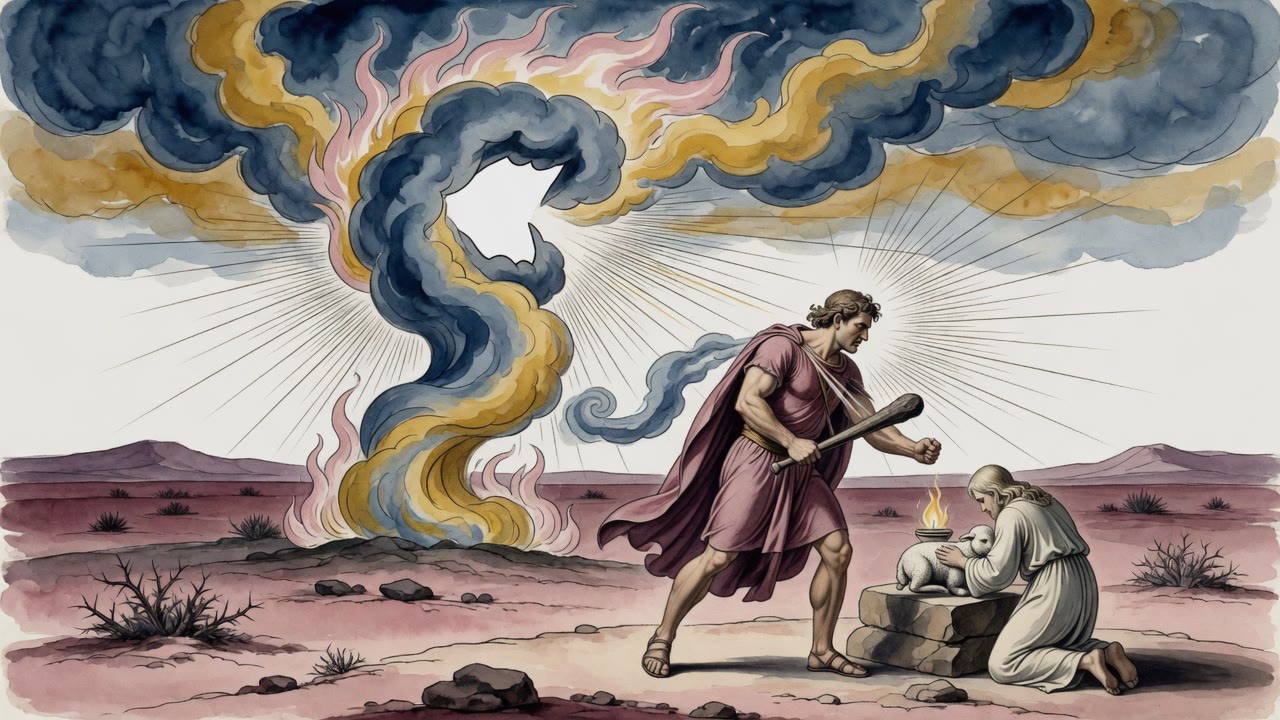
Abel came with a firstborn of the flock, fat still on it. He laid the whole animal down and walked back empty-handed. A gift, not a split. The smoke from Abel's offering went up. Cain's fruit sat on the stones. God regarded Abel. God did not regard Cain.
Cain's face fell. The rejection did not teach him a better gift. It showed him what he already knew and had arranged never to look at. He was not a person who gave his best. He had built his whole self around not having to admit it. When Abel's smoke rose and his did not, the arrangement collapsed.
He looked at his brother and could not bear the looking.
Sin Crouched at the Door
Before the field, before the blow, before Abel was in the ground, God spoke to Cain directly. The warning came between the rejected offering and the murder, so close that ignorance would never be a defense.
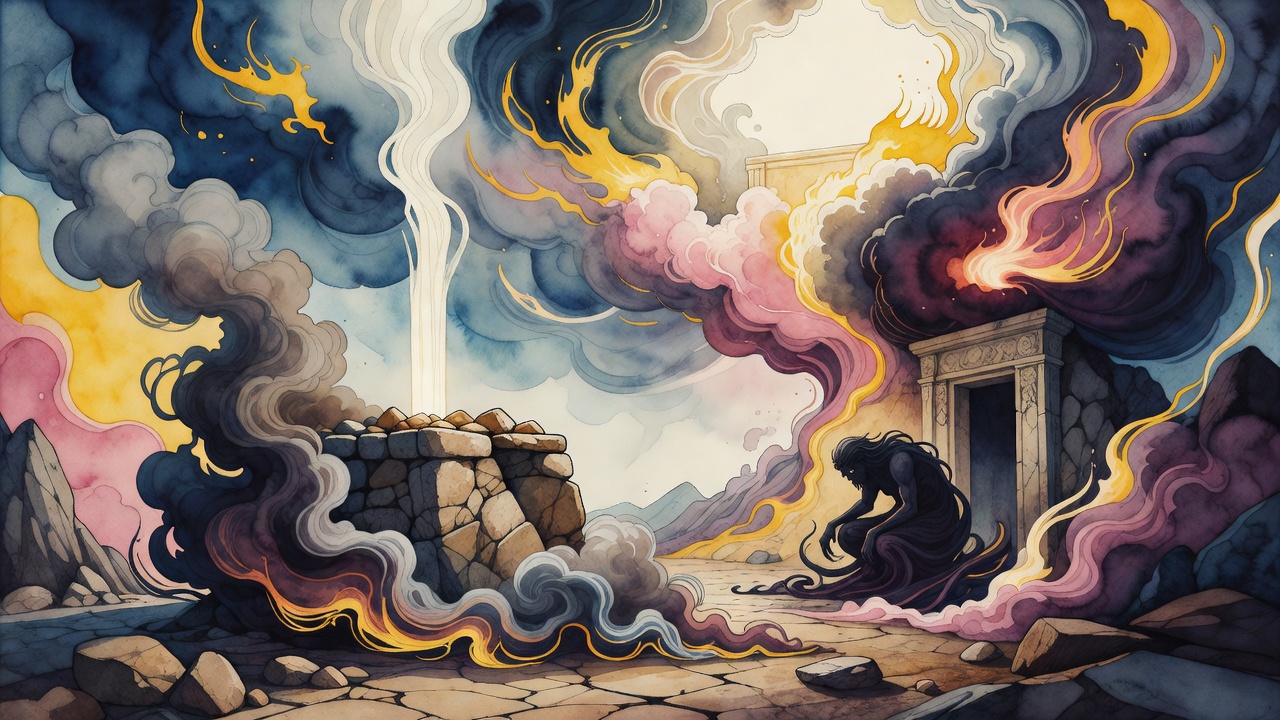
"Sin is crouching at the door," God told him. "Its desire is toward you. But you can rule over it." (Genesis 4:7)
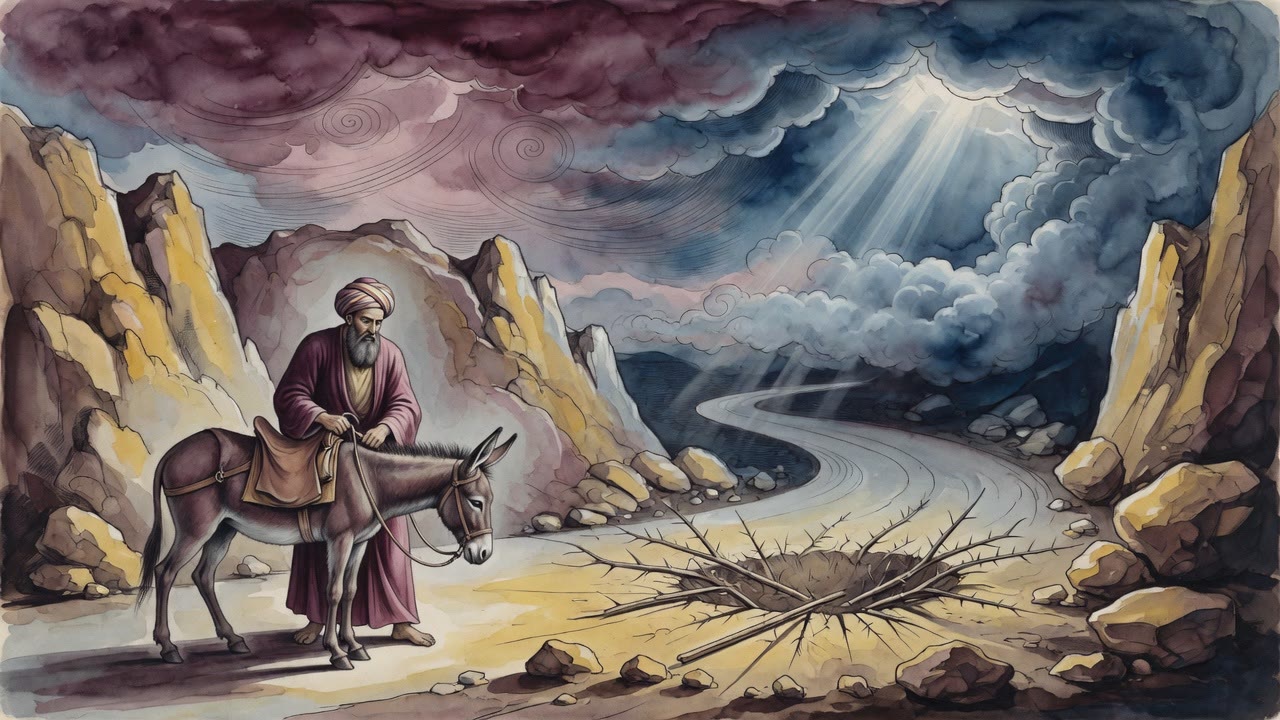
Cain heard the words. He did not step back. The thing at the door was still small enough to put a foot on. He left it crouched there and went on being angry.
He had already stood at that door more than once. He stood there when he kept the better fruit. He stood there when he watched Abel's smoke and let envy do the watching for him. He stood there when God spoke with a directness that required no interpreter. At each threshold the door was still open. At each threshold he walked through.
The Desire Was Not a Gift
Cain heard one phrase as consolation. Unto you shall be his desire. He took it as a promise. Abel would bow. The younger would belong to the older. If heaven would not take the fruit, it could at least hand him his brother as a prize to soothe the sting.
That is not what God had said. The desire moving toward Cain was not Abel's tribute. It was the weight of what Cain's own choices had already set in motion. Guilt does not drift off into the air. It attaches. It follows. It becomes the thing that moves toward him no matter how far he walks.
Cain wanted a gift. He was being told about a hunter. The crouching thing at the door wanted in. If he opened, it would not pay him. It would take up residence and bring the next iniquity on its back. One wicked act does not finish. It calls another. He began in the keeping back of fruit. The next act was already leaning toward him, waiting for a field.
He did not receive good into his hand. He received the momentum of his own will. "Do not talk about necessity," the warning had already said. "Talk about your own habits." The act is voluntary. The next act will be too.
They Went Into the Field
Cain spoke to Abel his brother. The speaking is recorded. The words are gone. Whatever he said, they were in the field after it. Some later mouths filled the gap with a quarrel over land, or flocks, or who would inherit the world. The field itself does not tell. It only holds them.
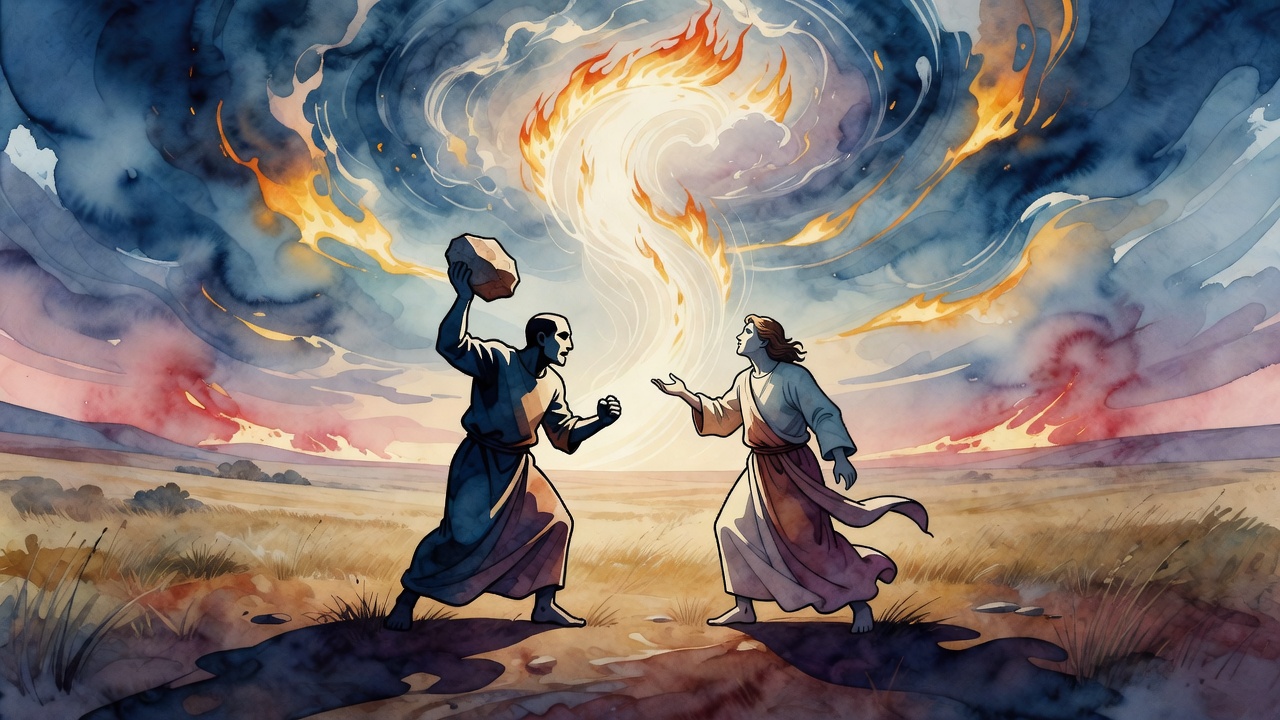
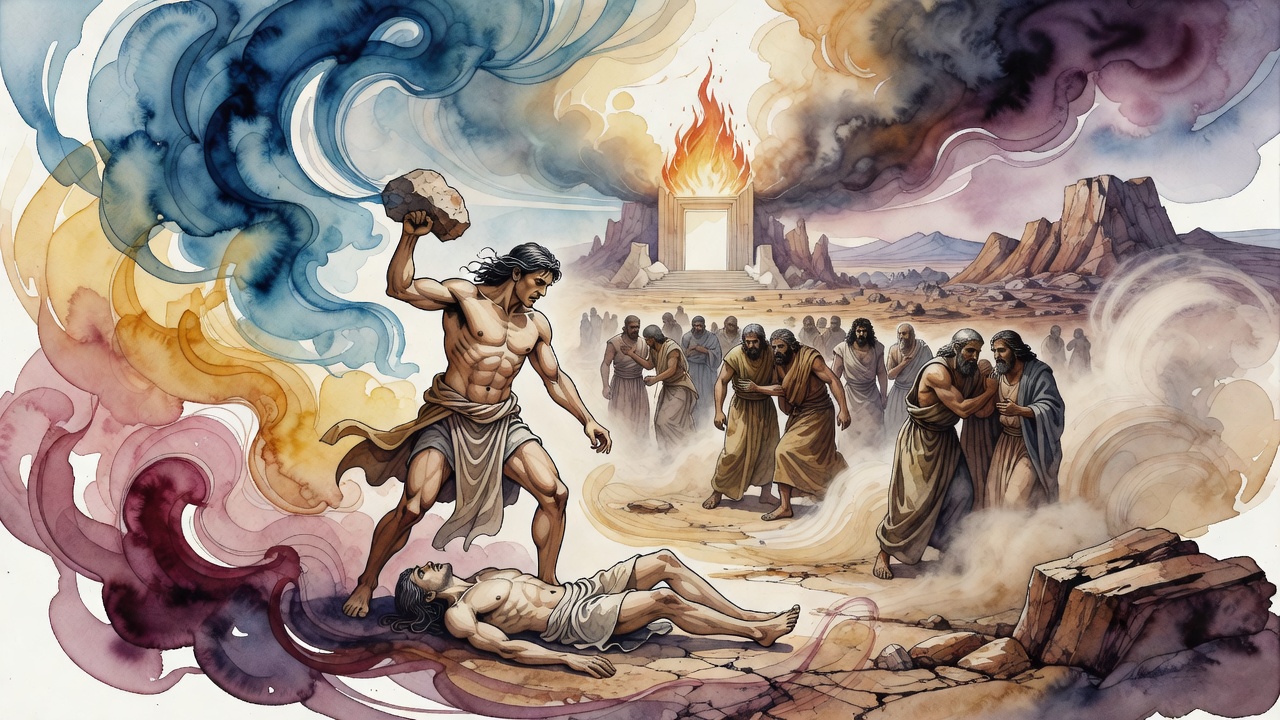
Abel walked out with him. He still trusted the older brother enough to go. Cain's hands, which had divided fruit and kept a share, closed on something else. The blow landed. Abel fell. The ground that had grown Cain's offering took Abel's blood instead.
Cain did not become a murderer in that instant alone. He became one earlier, when the crouching thing was still small enough to rule and he decided not to. The distance between a neglected offering and a body in a field is shorter than it looks. Each unpaid threshold trains the next.
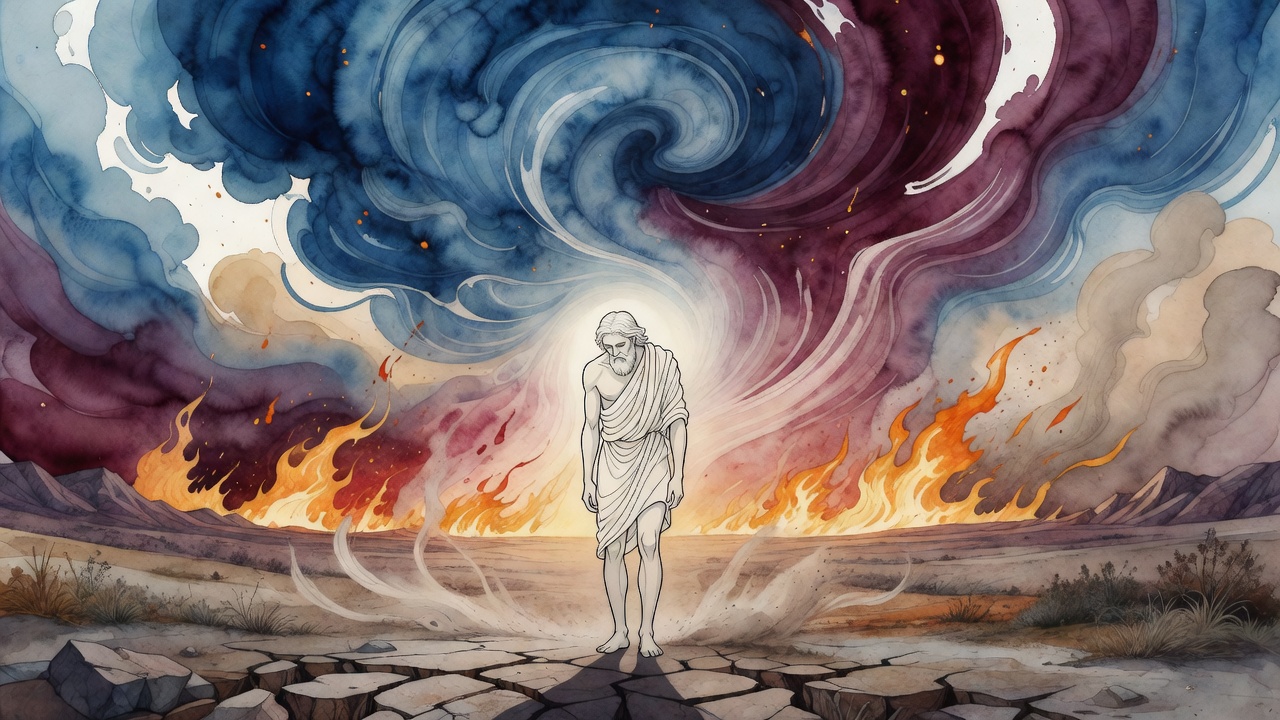
He left Abel there and walked. The desire God had named walked with him. It was not Abel's bow. It was the act, stuck to the actor, going wherever he went. The field stayed quiet. The blood did not.
← All myths