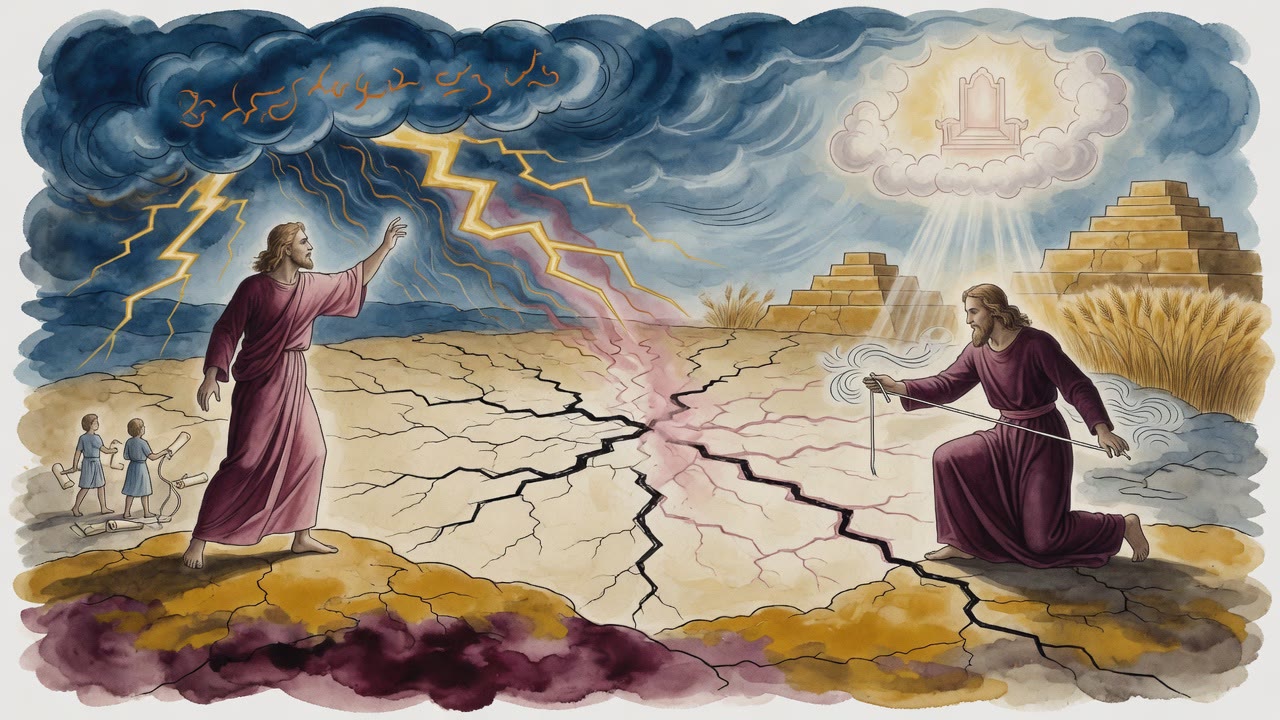
How the Sin of Ham Became the Kabbalistic Model for Desire
Ham sinned against his father Noah and was cursed. The Kabbalists asked why this particular sin was so severe. Their answer mapped the yetzer hara onto the human body in a way that changed how desire is understood.
Table of Contents
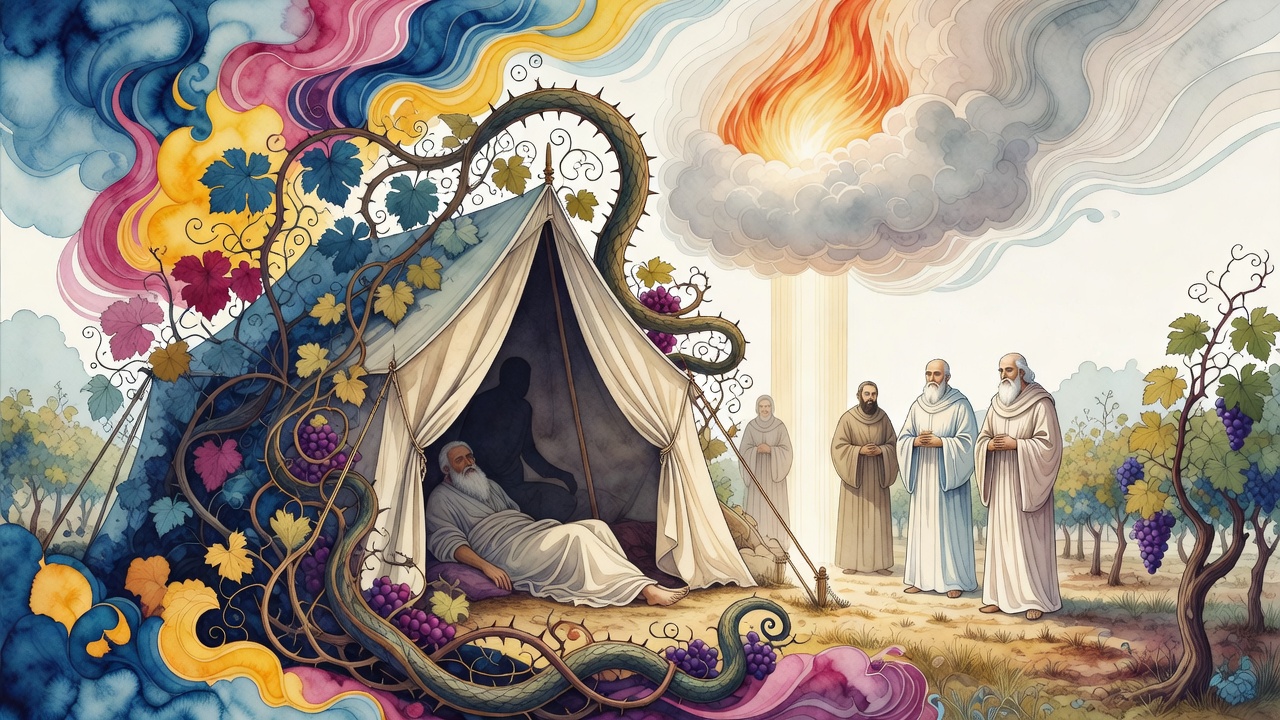
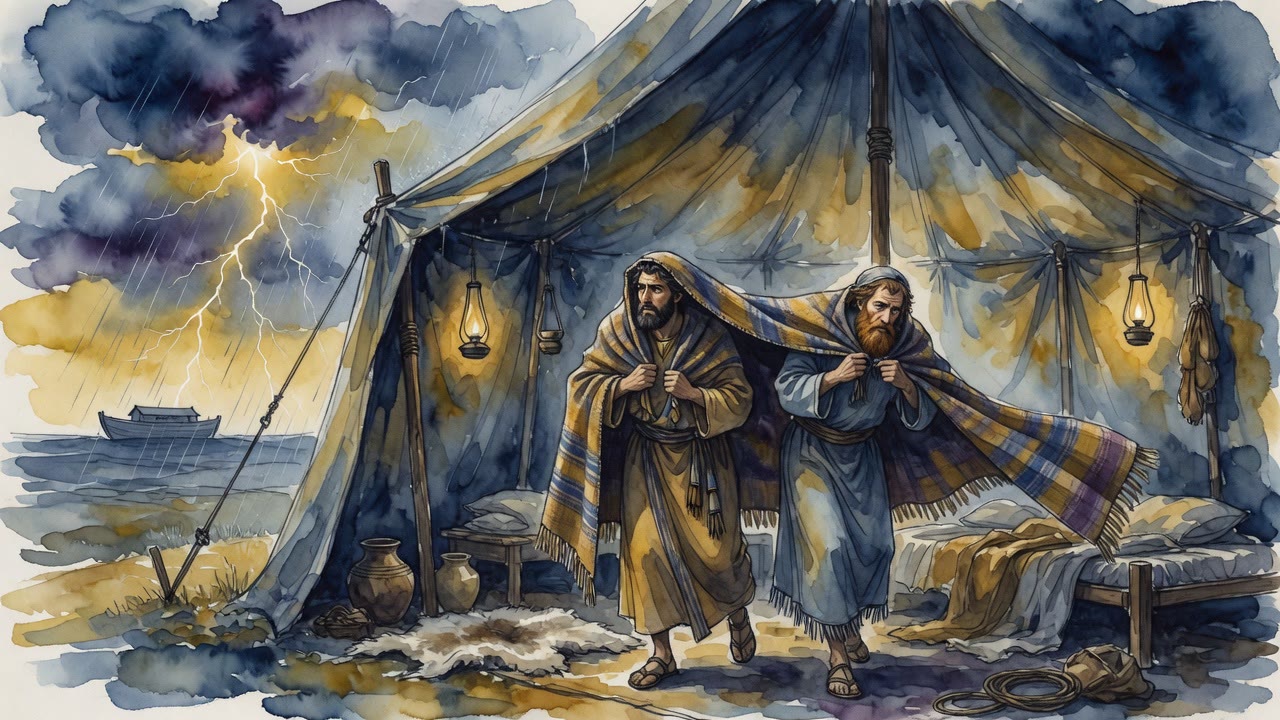
Ham looked at his father's nakedness and did nothing to cover it. His brothers Shem and Japheth walked backward into the tent with a garment held between them, careful not to look, and covered Noah. When Noah awoke and learned what had happened, he cursed Ham's son Canaan with a severity that has puzzled readers for millennia. What exactly did Ham do? The text in (Genesis 9:22) is deliberately vague. It says only that Ham saw and then went and told his brothers. The Tikkunei Zohar is not puzzled. It knows exactly what Ham did, because the sin of Ham is not an isolated biblical incident for the Kabbalists. It is the paradigm case of the yetzer hara, the evil inclination, acting through the human body, and the analysis of it illuminates how desire works at the deepest level of the psyche.
The Tikkunei Zohar, compiled in Castile c. 1290 CE, takes up the figure of Ham in its seventy-third tikkun in the context of a broader discussion about 'ervah, which translates roughly as sexual obscenity but carries a wider sense of uncovering what should be covered, exposing what should remain hidden. The text's analysis moves between psychology, anatomy, and cosmic structure with the characteristic Kabbalistic ease that treats all three as aspects of the same underlying reality.
What Ham's Name Means
The Tikkunei Zohar begins with etymology. Ham's name in Hebrew, cham, means hot. This is not decorative wordplay. In the Kabbalistic system, heat is one of the primary qualities associated with the yetzer hara, the evil inclination. The yetzer hara is the inclination toward transgression that every human being carries from birth, the inner voice or drive that pushes toward immediate gratification at the expense of broader integrity. It is not evil in itself; the rabbinic tradition consistently maintains that without the yetzer hara, no one would marry or build a house or have children. It is the raw energy of desire, which can be directed toward legitimate ends or allowed to run unchecked toward destructive ones.
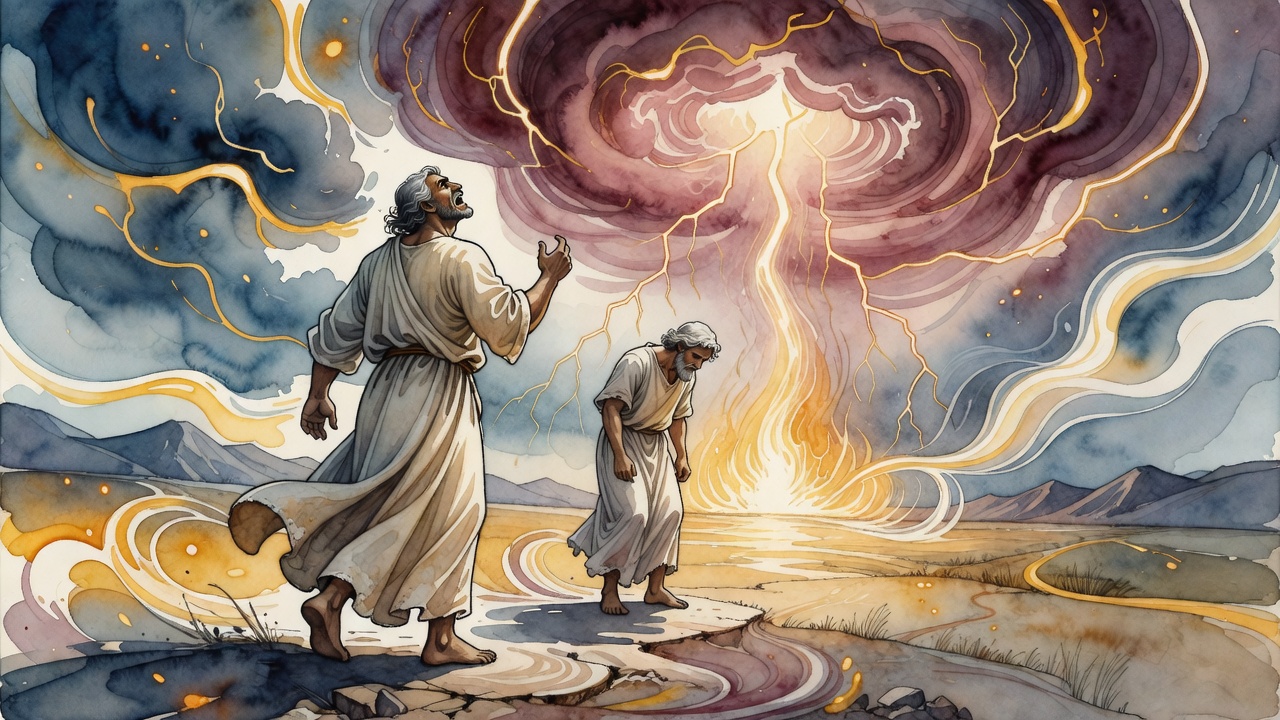
The heat of Ham's name represents the unchecked version. Where heat should warm and sustain, Ham's heat scorches and exposes. Where the yetzer hara's energy should be channeled into building life, Ham's inclination turns toward what it should not see and then cannot keep quiet about what it has seen. The midrashic tradition in Midrash Rabbah on Genesis, compiled in the Land of Israel during the fifth century CE, discusses what exactly Ham did with interpretations ranging from the explicit to the symbolic. All of them agree that Ham's action was characterized by an inability to turn away, a failure of the internal check that should have governed the yetzer hara's heat.
The Body as a Map of the Struggle
The Tikkunei Zohar locates the sin of Ham and the operation of the yetzer hara in specific regions of the human body. The Kabbalistic tradition understands the human body as corresponding to the divine body of the Sefirot, with each body part associated with a specific divine attribute and a specific potential for alignment or misalignment with the divine structure. The yetzer hara operates most intensely in the regions of the body associated with the lower Sefirot, particularly Yesod, foundation, and Malkhut, sovereignty, the two lowest positions in the divine architecture.
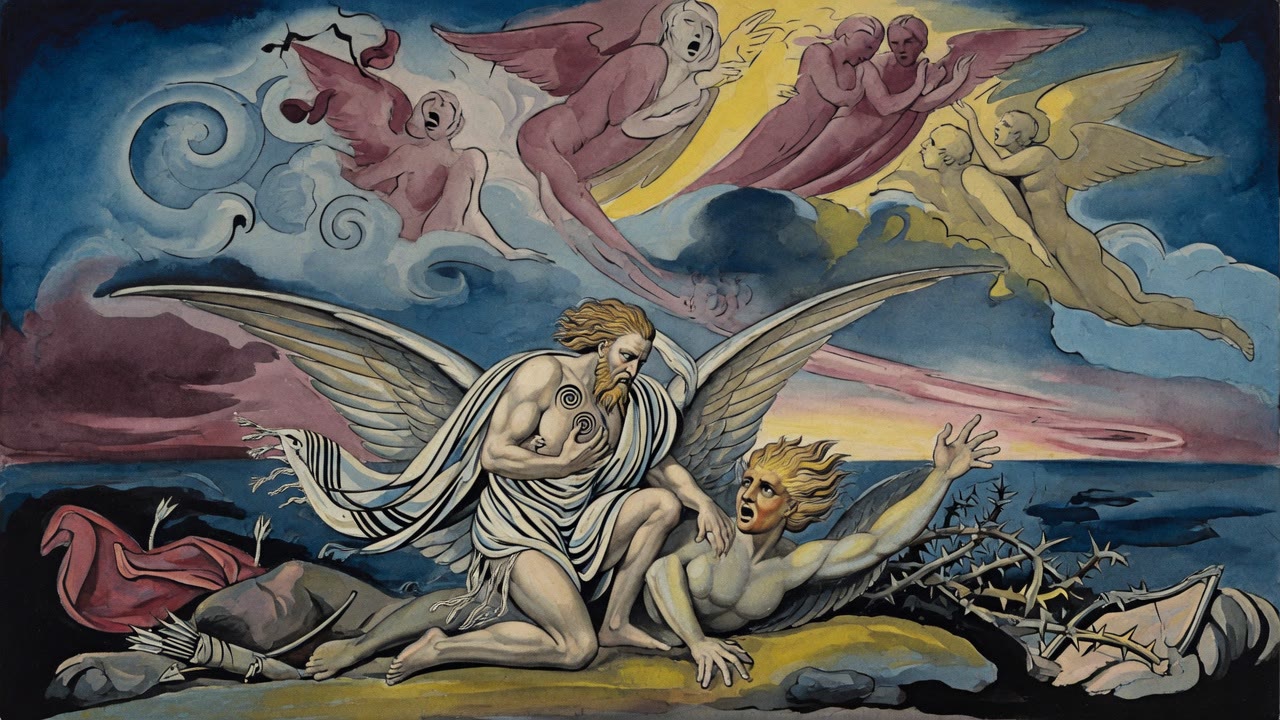
This anatomical precision is not arbitrary prudishness. The Tikkunei Zohar's point is that the body itself has a Kabbalistic structure, and that desire's most intense expression occurs precisely at the point in the body that corresponds to Yesod, the channel through which divine blessing flows into the world. When that channel is misused or overwhelmed by unchecked heat, it does not merely fail to carry blessing. It inverts its function. Instead of channeling divine energy downward into creative and generative expression, it becomes a conduit for the force that the tradition calls sitra achra, the other side, the destructive inversion of the divine structure.
Why Did the Curse Fall on Canaan and Not Ham?
The puzzle of why Noah cursed Canaan rather than Ham himself has occupied the tradition for a long time. Ginzberg's Legends of the Jews, compiled between 1909 and 1938 from extensive midrashic sources, records several explanations: that Ham had already received blessing from God and could not be directly cursed; that Canaan had participated in or even encouraged Ham's act; that the curse was genealogically appropriate because the transgression of 'ervah tends to propagate through generations. The Tikkunei Zohar's understanding adds a structural dimension to this last explanation.
If the sin of Ham is paradigmatically connected to the misuse of the Yesod channel, then the consequences of that misuse are also genealogical in a literal sense. Yesod governs the life-force that flows into future generations. When the channel associated with Yesod is corrupted by the act of unchecked desire, the corruption affects not only the individual who performed the act but the generative capacity that was involved in it. The curse on Canaan is the curse of an inheritance marked by the same misalignment that Ham enacted, transmitted precisely through the channel that Ham misused. The yetzer hara's heat, the Tikkunei Zohar implies, does not simply warm the individual who gives in to it. It scorches the line that runs forward from that individual.
The Repair the Story Points Toward
The Tikkunei Zohar does not leave the Ham analysis as a warning without a corresponding path of repair. The same text that examines the sin of Ham in its seventy-third tikkun also discusses the figure of Joseph, whose refusal of Potiphar's wife in (Genesis 39) is the positive inversion of Ham's failure. Where Ham gave in to the heat of his yetzer hara and exposed what should have been covered, Joseph fled from an invitation that would have drawn him into the same misalignment. Where Ham's action transmitted a corrupted inheritance, Joseph's action preserved the Yesod channel in its integrity and transmitted a blessing that sustained entire nations through famine.
The pairing of Ham and Joseph in the same tikkun is deliberate. The Kabbalistic tradition understands repair, tikkun, as operating through exact inversions. The specific form of a sin determines the specific form of its repair. Ham's sin was an act of looking at what should not be seen and exposing it further. Joseph's righteousness was an act of refusing to look, of turning away from what would corrupt the channel of Yesod. Between them, the text implies, lies the entire range of what the yetzer hara's heat can do: it can burn down the house of Noah, or it can be the warmth that, disciplined and directed, sustains the world.
The midrashic tradition, particularly in the Pirkei DeRabbi Eliezer compiled in the eighth century CE, records that Noah himself, after the flood, had to learn how to manage the heat that was already present in the world before the flood and had contributed to its destruction. The vineyard Noah planted was not a failure of wisdom but an attempt at repair, the channeling of the earth's energy into cultivation. That Ham looked at what Noah planted and then looked further than he should have is the story of the yetzer hara turning cultivation back into destruction, warmth back into fire that consumes. The Tikkunei Zohar's analysis does not resolve this tension. It names it precisely, which is the first condition for not being consumed by it.