Jerusalem Children Outsmarted the Sages of Athens
An Athenian sent a boy to buy food he could eat, fill up on, and still carry away. The boy came back with salt, and he was right.
Table of Contents
Jerusalem was ruined, but its children still knew how to win an argument.
 Click for full size
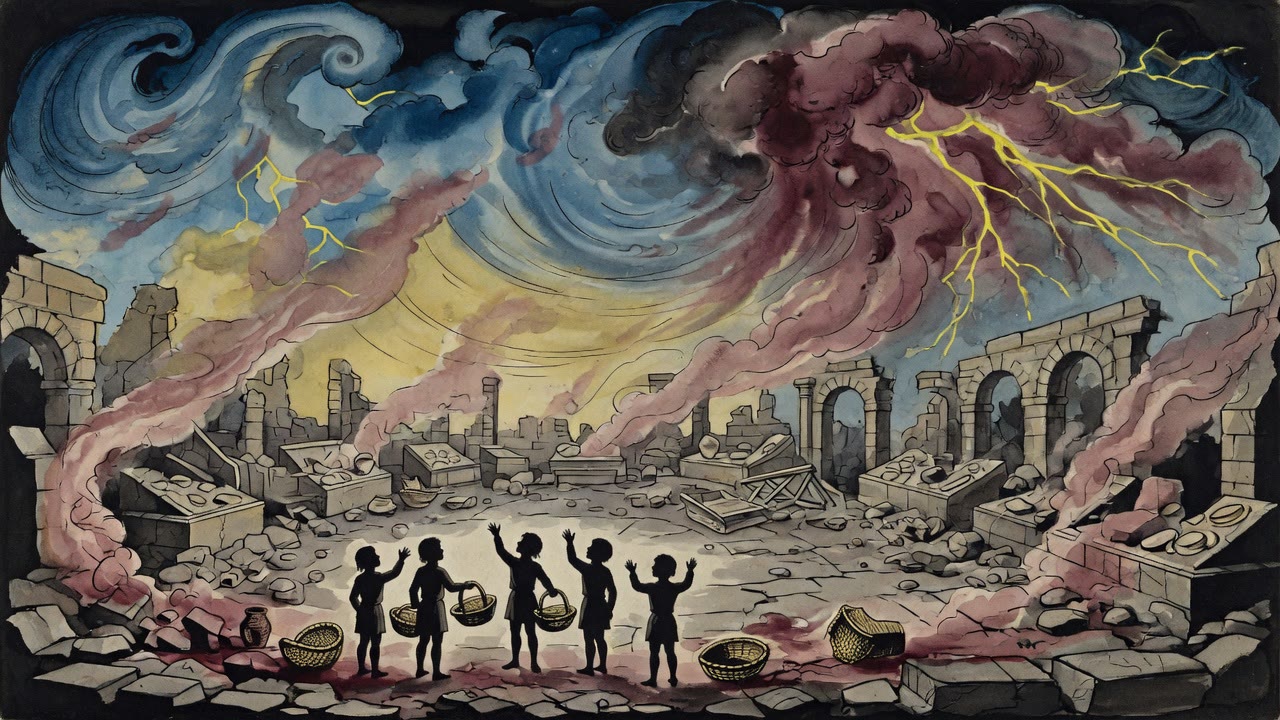
The Athenians arrived expecting to find a city of fools, the kind of people whose city falls and whose pride deserves mockery. They found instead a city of children who played with adult cleverness, answered every riddle backwards, and sent their visitors home smaller than they arrived.
The Child Who Divided the Fruit
Eikhah Rabbah 1:6, a midrash on the Book of Lamentations compiled in the Land of Israel around the fifth or sixth century CE, opens the cycle with a coin and a child.
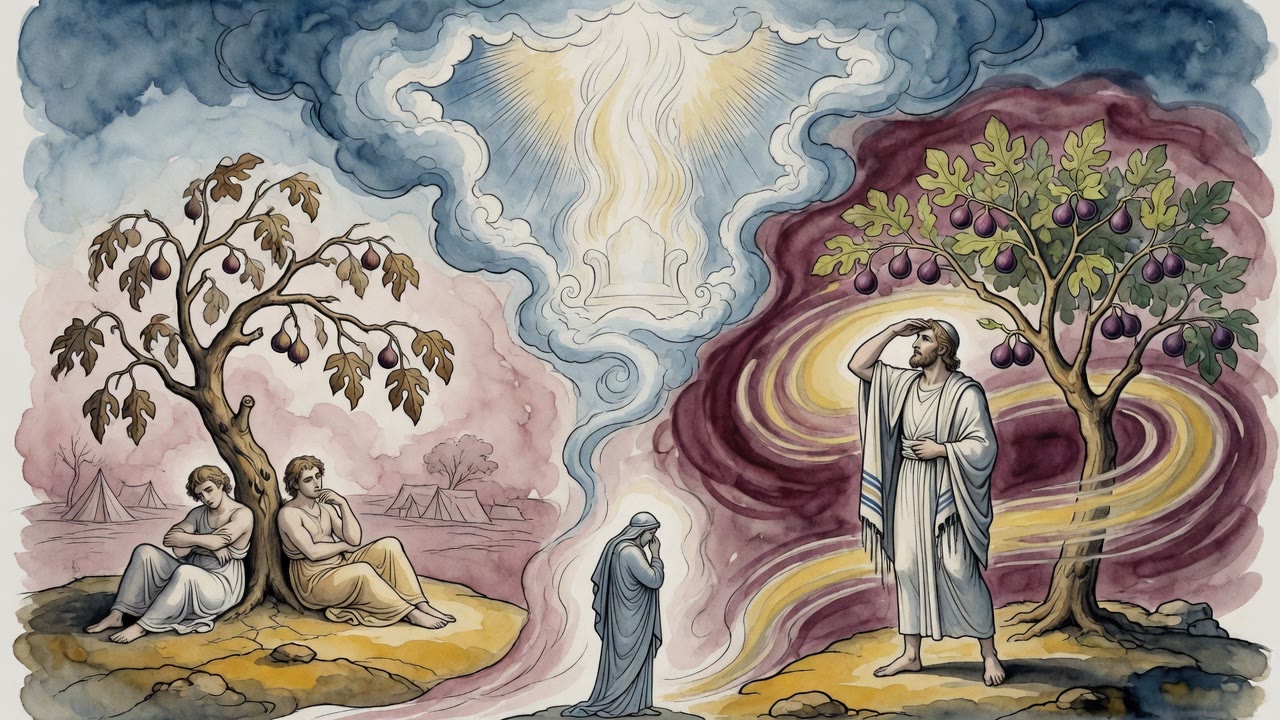
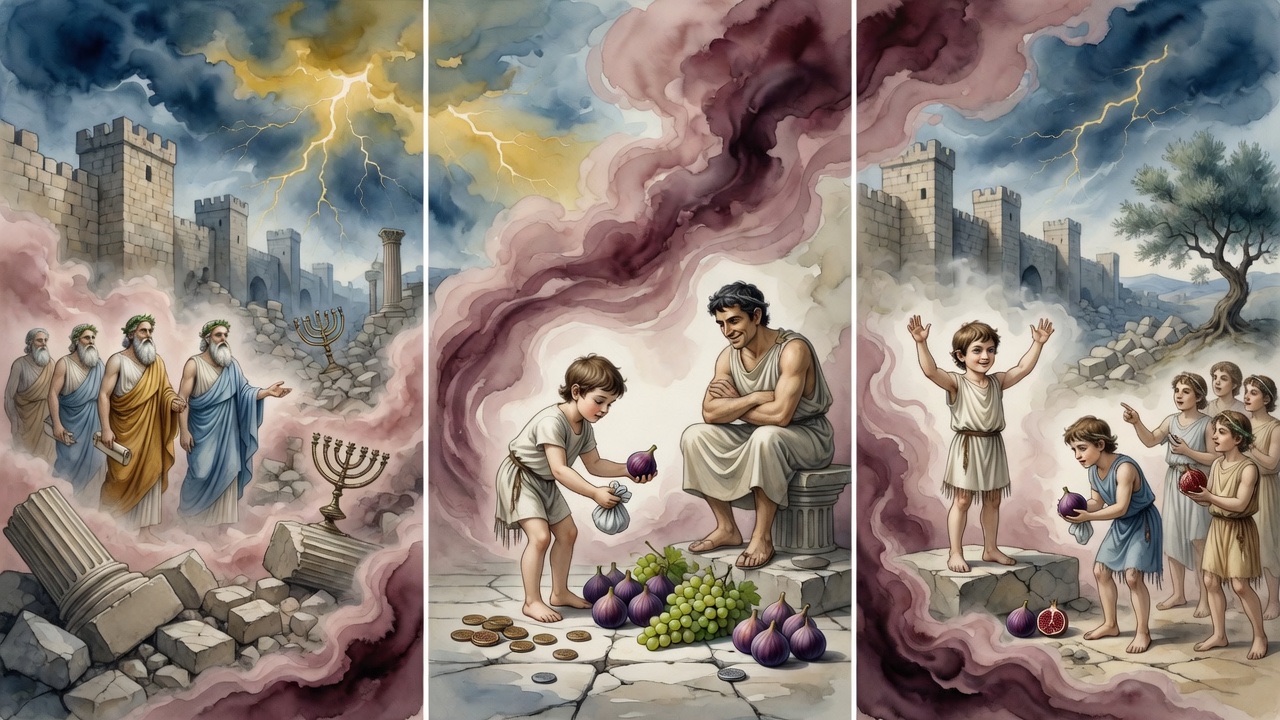
An Athenian gave a child coins and told him to bring figs and grapes. The child went. When he returned, the Athenian ordered him to divide the fruit. The child placed the damaged and poor fruit in front of himself and the good fruit in front of the visitor.
The Athenian saw what he expected to see: a Jerusalemite child who was street-smart about other people's money. He knew I spent the coins, the Athenian said, so he took the bad ones for himself and gave me the good ones. He nodded, impressed with himself for reading the situation. Then he proposed they draw lots to exchange portions.
The child agreed. He drew the lot. He got back the good fruit he had originally placed in front of the Athenian.
Then the child said: "did you not say we were equal partners? And now by your own game I hold what I was going to give you anyway."
The Athenian had tried to turn generosity into foolishness, and the child had let him think he was winning every step of the way.
Salt for the Road
Eikhah Rabbah 1:7 gives another child a more absurd demand. The Athenian sent the child to buy something he could eat until full and have leftovers to take on the road. The child brought back salt.
The Athenian objected. "Salt is not food."
The child answered: "did you not say bring something you can eat, be satisfied, and carry away? Salt is eaten. Salt satisfies in small quantities. And there is always salt left over. My answer is exact."
The absurdity is the trap, and riddle answers work both ways. An Athenian who asked for the impossible got a child who produced the technically correct answer and refused to be embarrassed about it.
Cheese from a Black Goat
Eikhah Rabbah 1:9 sharpens the same edge into something theological. The Athenian gave a child coins and told him to bring eggs and cheese. When the child returned, the Athenian said: "show me which cheese is from a white goat and which is from a black one."
The child looked at him. "You are an elderly man," he said. "Show me which egg is from a white chicken and which is from a black one."
Rabbi David Luria read the exchange as an allegory: the Athenian was claiming that Jews had become indistinguishable from their surrounding peoples, the way cheese from black and white goats looks the same. The child answered that the soul is like an egg. Whatever the outside looks like, the inside is shaped by what was before it. The inner substance does not change with the color of the container.
The Athenian Who Mocked the City
The last episode in the Eikhah Rabbah cycle scales up the stakes. An Athenian came to Jerusalem and mocked its residents openly and publicly. The Jerusalemites said to each other: "who will bring this man down?"
One man said: "I will bring him back with his head shaved."
He traveled to Athens and was received as a guest by the Athenian. They went walking in the marketplace together the next morning. The Jerusalemite's sandal tore. He paid a cobbler a large coin to repair it. The next day the same thing happened with the other sandal. He gave the cobbler another large coin.
The Athenian said: "are sandals so expensive in your land? Is that why you came with torn sandals?"
The Jerusalemite said: "with us, a cobbler who repairs a sandal also shaves the customer's head."
The Athenian walked into a cobbler shop to repair his own sandal. He came out shaved.
Eikhah Rabbah notes that he returned to Jerusalem: the Jerusalemite brought the Athenian home, as promised, with his head shaved, and by the Athenian's own consent.
← All myths