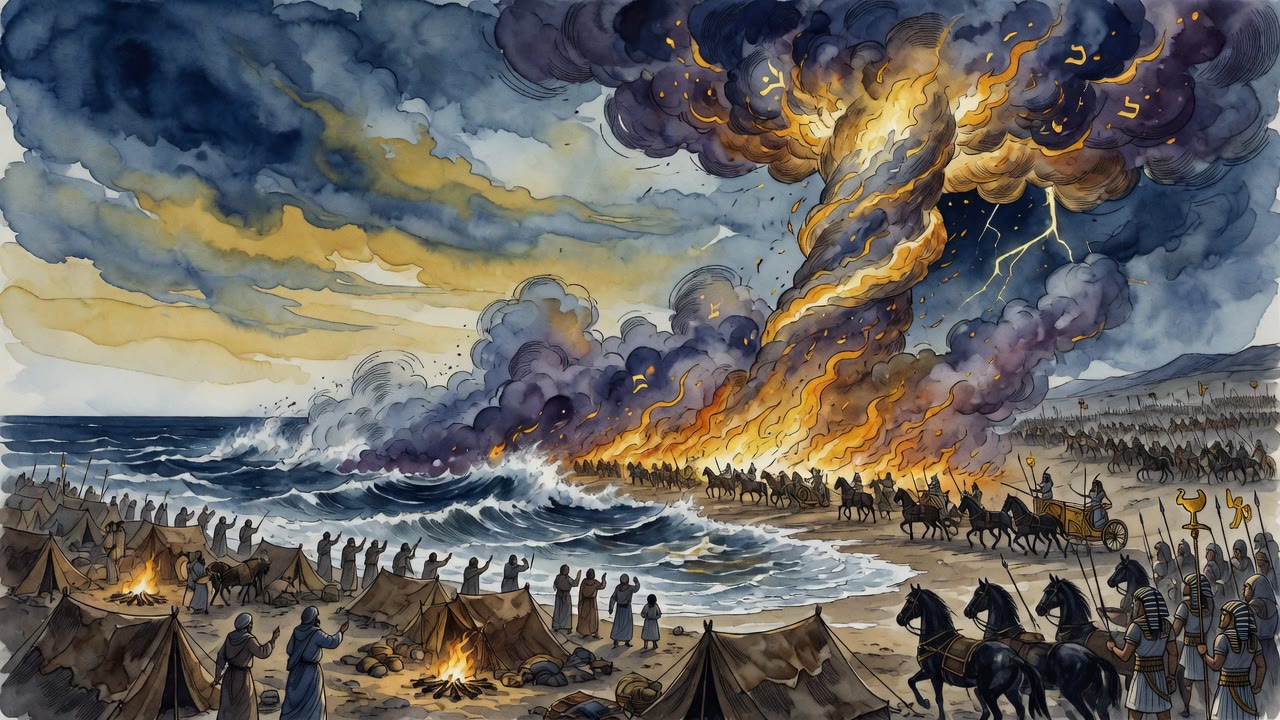
Jethro Heard What Every Priest Heard and Did One Different Thing
Every nation heard about the Exodus and trembled. Jethro heard it and packed up and walked toward it. The Midrash says that difference was everything.
Table of Contents
 Click for full size
The News That Reached Every Kingdom
The sea split. An empire fell. A nation of slaves walked out into the wilderness singing. Word of it reached every king, every court, every priest of every altar in the ancient world. They heard and they trembled, and then they went back to what they were doing.
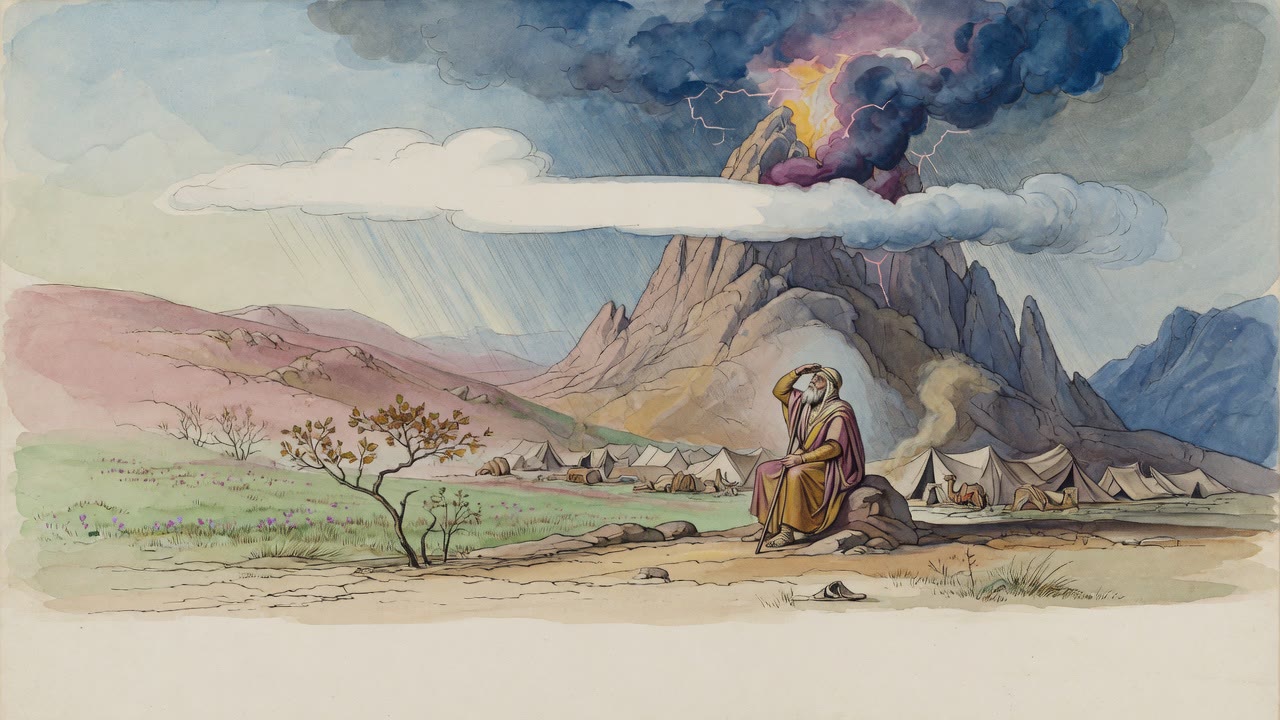
Jethro packed up and walked toward the sound.
He was the chief priest of Midian. He had served every idol in the ancient world, the Midrash tells us plainly, because a man of his standing and genuine curiosity would have left no shrine unexplored. He was not naive. He had seen what the gods of Egypt and Canaan and Midian promised their devotees. He had tested the systems. He had presided over the rites. He knew what every available answer to the divine question offered, and none of it had been enough to make him stop asking.
What It Costs to Truly Hear
The Midrash Tanchuma draws a contrast that cuts to the bone. Joash, king of Judah, once listened to the priest Jehoiada and honored him. The moment Jehoiada died, Joash turned on his benefactors and was himself struck down. He heard wisdom, acted on it briefly, then abandoned it. The hearing did not take. His trembling was temporary.
The nations of the world heard the thunderclap of the Exodus and shook. But shaking is not the same as changing. Their trembling was involuntary, a body's response to something larger than itself. It left no mark. They felt the force of what had happened and then recalibrated themselves back to what they had already decided about the world. The event was too large to ignore but not large enough to move them.
Then there was Jethro. He heard and he came. The tradition insists that this turning, more than anything else he did, is what marks him.
The Man Who Had Tried Everything Else
What made Jethro different was not ignorance. It was the reverse. He had done the research. He had explored every available system of meaning with the thoroughness of a man who genuinely wanted an answer and was willing to be wrong about his current beliefs. He had served the idols not casually but seriously. He had given them his full attention and had found that the full attention of a serious man revealed their emptiness.
When news of the Exodus reached Midian, Jethro heard it against the background of everything he had already tried and found wanting. The sea splitting did not arrive into an empty space. It arrived into a life that had been shaped by a long search. The sea splitting answered a question Jethro had been asking his entire adult life, with every idol he had served and every shrine he had sat before. This was different. He could feel the difference because he had accumulated enough experience to recognize what the difference meant.
He packed up his household and walked toward the wilderness where his son-in-law was camped with a nation that had just been born.
Converts and How Precious They Are
The Midrash makes a sharp observation about the value of Jethro's arrival. God had taken the Israelites out of slavery and brought them to Sinai. They had received the Torah. They were, in every sense, the people of the covenant. But the tradition also says that a person who comes to God from outside, who searches and finds and then abandons everything else to follow what they found, occupies a place that cannot be reached from inside. The one who was born into the covenant has never known what Jethro knew: what it is to have lived without it and then to walk toward it having chosen it freely.
This is why Jethro's advice was taken seriously when he gave it. He earned his place at the table not through birth but through the full circuit of a life spent looking for what is true. His suggestion about delegating judges, about organizing the burden of leadership so that Moses would not be crushed under it, came from a man who had governed and organized and understood how human systems fail. Moses listened. The advice became part of the structure of Israel's judiciary. A convert's practical wisdom was integrated into the law that would define a people.
What Pharaoh Heard
The Midrash places Jethro in a tradition alongside others who heard and chose differently. Pharaoh heard what God had done in Egypt because he was there when it was done. He saw the plagues in sequence, watched each one arrive and watched each one lift, felt the force of the demand and hardened his heart against it until the last plague shattered him temporarily, and then recovered and chased the Israelites to the sea. He heard more than Jethro did. He experienced the power directly rather than learning of it secondhand. And he lost everything.
Jethro heard the report and came. Pharaoh witnessed the event and followed with chariots. Hearing and truly listening are not the same act. Witnessing and being transformed by what you witness are not the same experience. Jethro turned toward the source of the story. Pharaoh turned back toward the water and was swallowed by it.
← All myths