Joseph Ran a Secret Surveillance Operation to Find His Brothers
Genesis says Joseph's brothers did not recognize him in Egypt. The Aramaic tradition says Joseph spent years posting scribes at every gate to find them.
Table of Contents
 Click for full size
The Net Spread Across Egypt
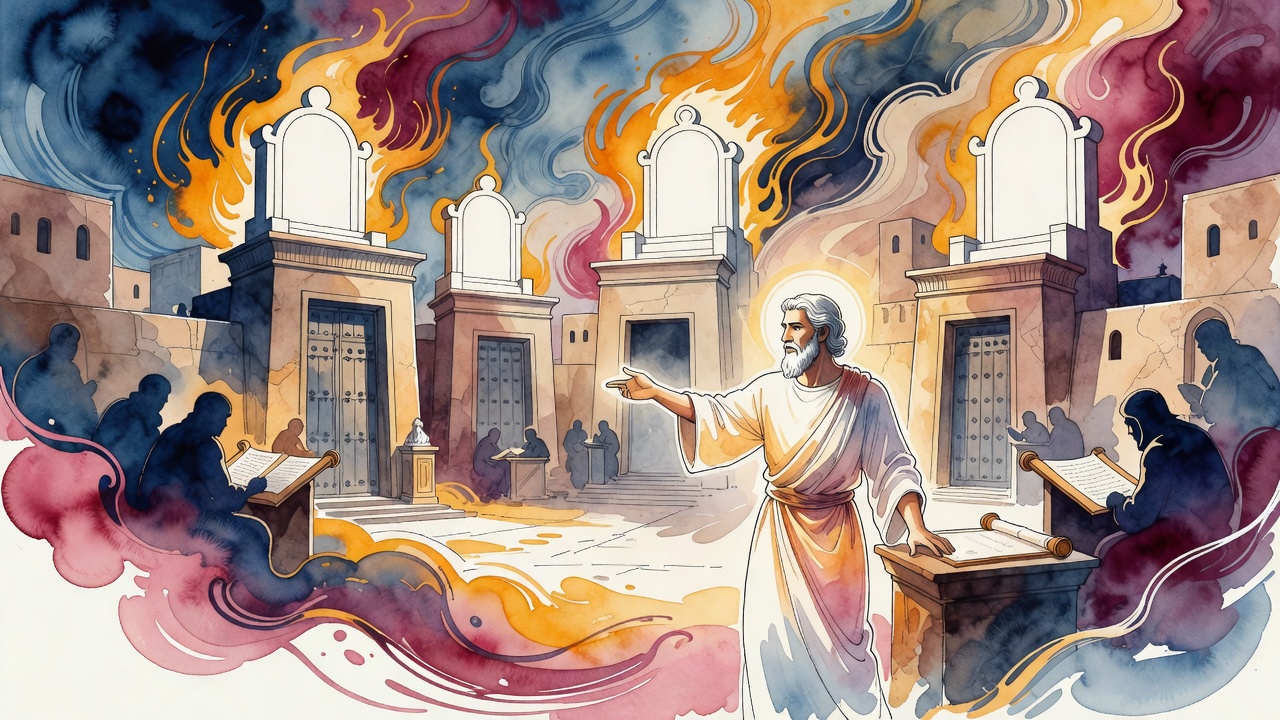
For twenty-two years Joseph had been waiting. He did not wait passively. Targum Jonathan on Genesis 42, the ancient Aramaic translation from first-century Palestine, adds a detail that reframes the entire chapter: Joseph had appointed scribes at every gate of the city of Egypt with standing instructions to register every foreigner who entered, by name and by patronymic. He was running a surveillance operation. He had been running it for years. He was looking for ten specific names.
Ancient Egypt received grain-seeking visitors from across the ancient world during the famine. Without a systematic registration, the chance that Joseph would encounter his brothers among thousands of daily arrivals was negligible. With it, the encounter was inevitable. When his brothers arrived at one of the gates, the scribes recorded their names: Reuben son of Jacob, Simeon son of Jacob, and so on. The list reached Joseph. He knew they were in the city before they knew he was running it.
The Search Through the City
The brothers did not go directly to the grain distribution center. The Targum says they looked through all the streets and public places and hospices, searching for their lost brother. They had come for grain, but they had not given up the older search. They were looking in the pleasure quarters and entertainment districts, the places where a young man sold into slavery might have ended up, might be found degraded and available for rescue. They were still, after all this time, looking for Joseph.
What they did not know was that every street they walked down was already being monitored. Joseph's scribes had their names. Joseph's system had been running long enough that the machinery of the surveillance was invisible to them. They searched for him in the city while the city was designed to surface them to him.
The Recognition That Ran One Direction
When the brothers were finally brought before Joseph, the Hebrew text records that he recognized them but they did not recognize him. The asymmetry is not accidental. Joseph knew exactly who they were from the moment the scribes brought him their names. He had twenty-two years of wondering what had happened to them, of dreaming about the day they would stand before him. They had twenty-two years of not thinking about the slave they had sold, or thinking about him as someone certainly dead and gone.
The response Joseph had prepared for them, according to Bereshit Rabbah, the midrashic compilation on Genesis from fifth-century Roman Palestine, was organized by his son Manasseh. Joseph spoke to them in Egyptian through an interpreter, though he understood every word of Hebrew they said to each other. The interpreter was Manasseh, Joseph's son, born in Egypt, raised in his father's secret. When the brothers spoke among themselves about the brother they had sold, assuming the Egyptian viceroy could not understand, Joseph understood everything and went out to weep.
The Accusation and the Imprisonment
Joseph accused his brothers of being spies. This was not an arbitrary accusation. His surveillance records showed that ten men from the same family had arrived together and then scattered across the city searching in places where intelligence agents might operate, looking in quarters that made no sense for ordinary grain buyers. The accusation was built from the behavior his own surveillance had observed.
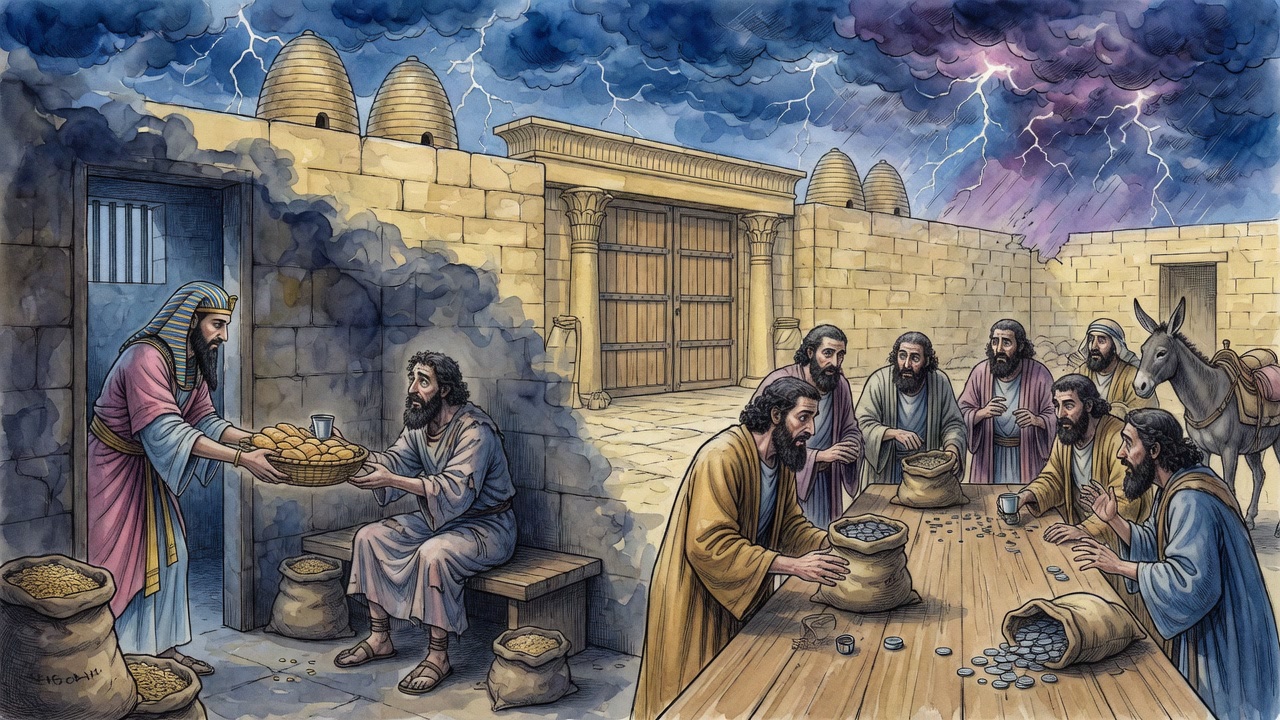
He imprisoned them for three days, then offered terms: one brother would stay in custody while the others returned to Canaan, brought back the youngest, Benjamin, and thus proved they were honest men with a genuine family in Canaan and not a spy ring. Simeon remained. The others went home.
In the entire sequence, Joseph has orchestrated everything: the gate registration, the routing of the brothers to his presence, the accusation, the terms of the release. He is not a victim of circumstances reuniting with his family by divine coincidence. He is a man who built the infrastructure of the reunion years in advance and is now running it.
← All myths