How Joshua Divided a Whole Country With Two Urns
Seven years of war ended with a harder problem than any battle: the lots spoke aloud and each tribe received the land prepared for it.
Table of Contents
 Click for full size
The Problem No General Could Solve
Conquering the land had taken seven years. Dividing it looked like it might take longer.
Twelve tribes stood in the plain east of the Jordan, each with grievances, each with numbers, each with the memory of what their ancestor had been promised. Do you divide by population? By military contribution? By the shape of the terrain? The sons of Joseph had split into two tribes, Ephraim and Manasseh, and each wanted a full share. The fighting had been collective. The reward was going to be personal. Nobody had a formula for that.
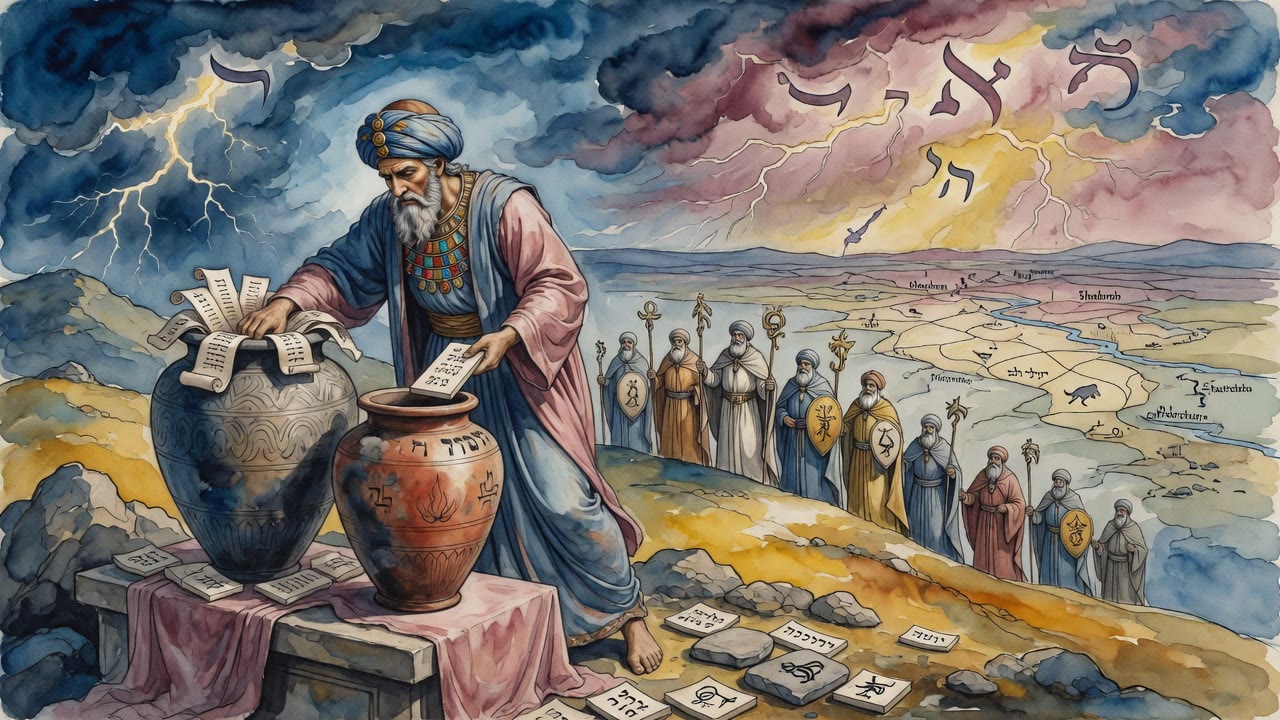
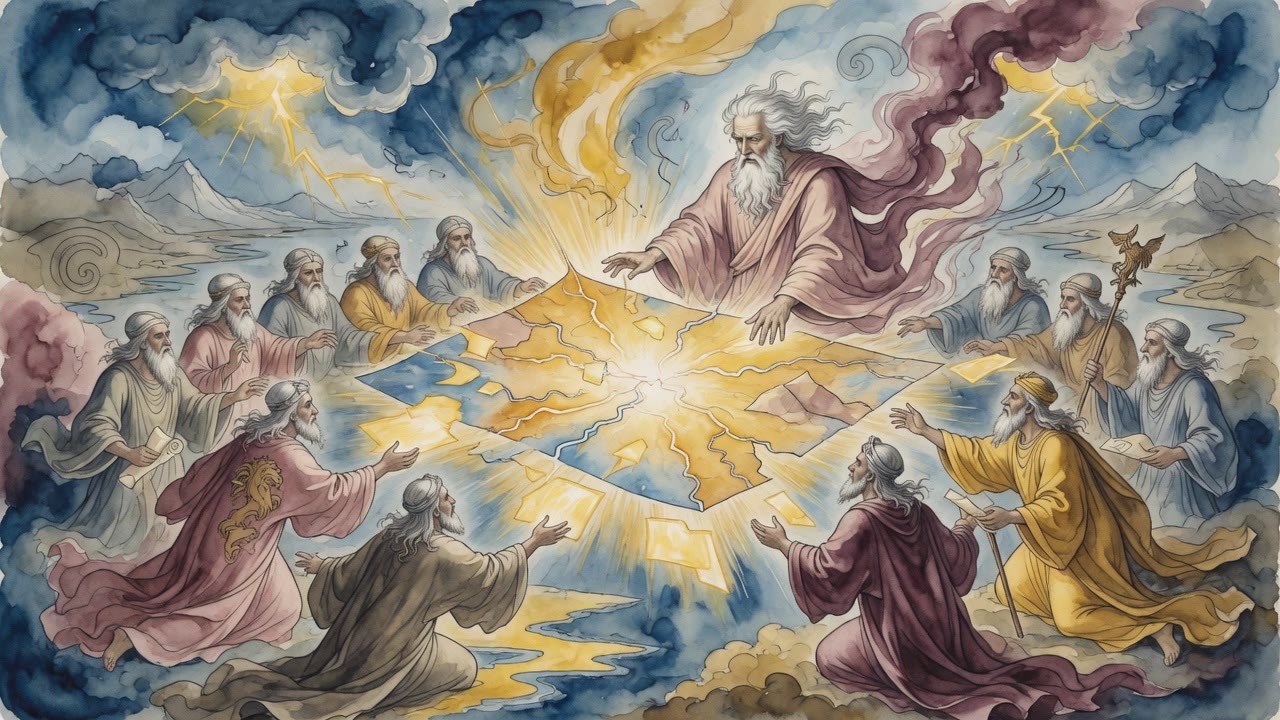
Eleazar the High Priest stepped forward wearing the Urim and Thummim on his breastplate. Beside him stood Joshua. Before them were two urns. In one, the names of the twelve tribes. In the other, the names of the twelve portions.
When the Lots Spoke Aloud
What the rabbinic tradition adds to this procedure is the detail that removes it from the realm of ordinary lottery. When Eleazar drew a slip from the tribe-urn, his breastplate lit up before he could open his hand. At the same moment, a voice came from inside the second urn, announcing which portion had been drawn to match it. The lots confirmed each other. Neither priest nor prince had chosen. The land itself, through the divine mechanism of the breastplate, was assigning its own inheritors.
The tradition preserved in Ginzberg's retelling names Phinehas as the prophet who stood nearby and announced each assignment, his face lit with the same prophetic fire that had once stopped a plague at Shittim. Every tribe received its portion not from Joshua's hands but from the convergence of two independent oracles speaking the same name at the same moment. No tribe counted the odds of that happening twelve times in a row by chance. They counted something else: when two divine confirmations aligned, no one could argue the result came from human preference.
The Invisible Map That Preceded the Drawing
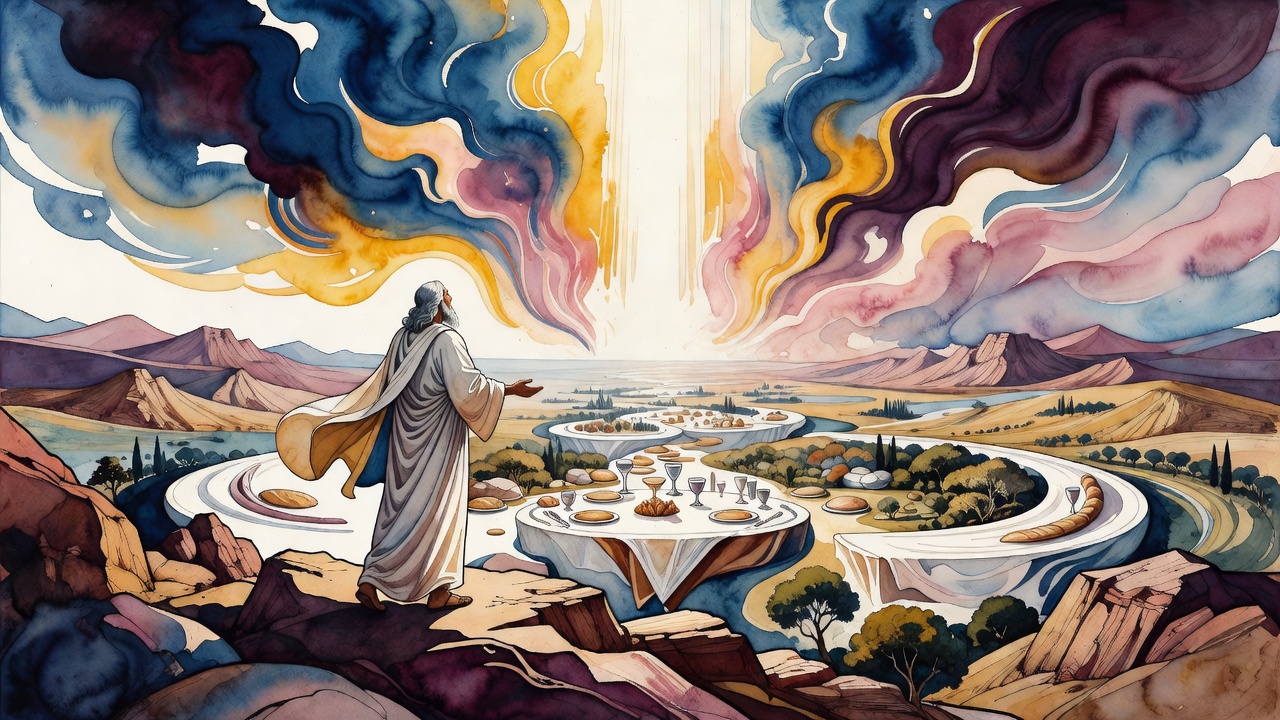
The tradition holds that the boundaries of each portion had been fixed long before any slip was drawn. Caleb had walked the land. Scouts had measured it. The portions were not equal in size because the land was not equal in fertility, and adjustments had been made so that a smaller, richer portion balanced a larger, thinner one. The divine lot was not distributing raw acreage. It was matching each tribe to the territory that had been prepared for them since the promise was made to their ancestors four hundred years earlier.
This is the detail that the rabbinic imagination found most arresting: not that God intervened in the lottery, but that the lottery was the final step in a process that had begun at Sinai, or earlier, at the covenant between God and Abraham under the stars. The tribes thought they were watching a drawing of names. They were actually witnessing the closing of an agreement.
Joshua Waits Before He Acts
A quieter strand ran beneath the drawing: Joshua himself had waited. Before the division, there was a period of delay, associated in some sources with Moses's own extended wait on the mountain, in which the leader held back from distributing what he could have distributed by his own authority. The waiting was not weakness. It was a statement about where authority actually resided. Moses had waited for God to speak before he acted. Joshua, who was explicitly described as Moses's student, kept the same protocol even after his teacher was gone.
The two urns were not a workaround for a problem Joshua could not solve. They were his deliberate choice to solve it by the only means that would leave no tribe with a legitimate grievance. A human decision can be disputed. A divine lot, confirmed twice, announced by a prophet, and confirmed by a breastplate, cannot.
← All myths