Kushta, the Town Where One Lie Brought Death
His wife sat inside combing her hair. A neighbor knocked. He said she was not at home, and both of his sons were dead before the week ended.
Table of Contents
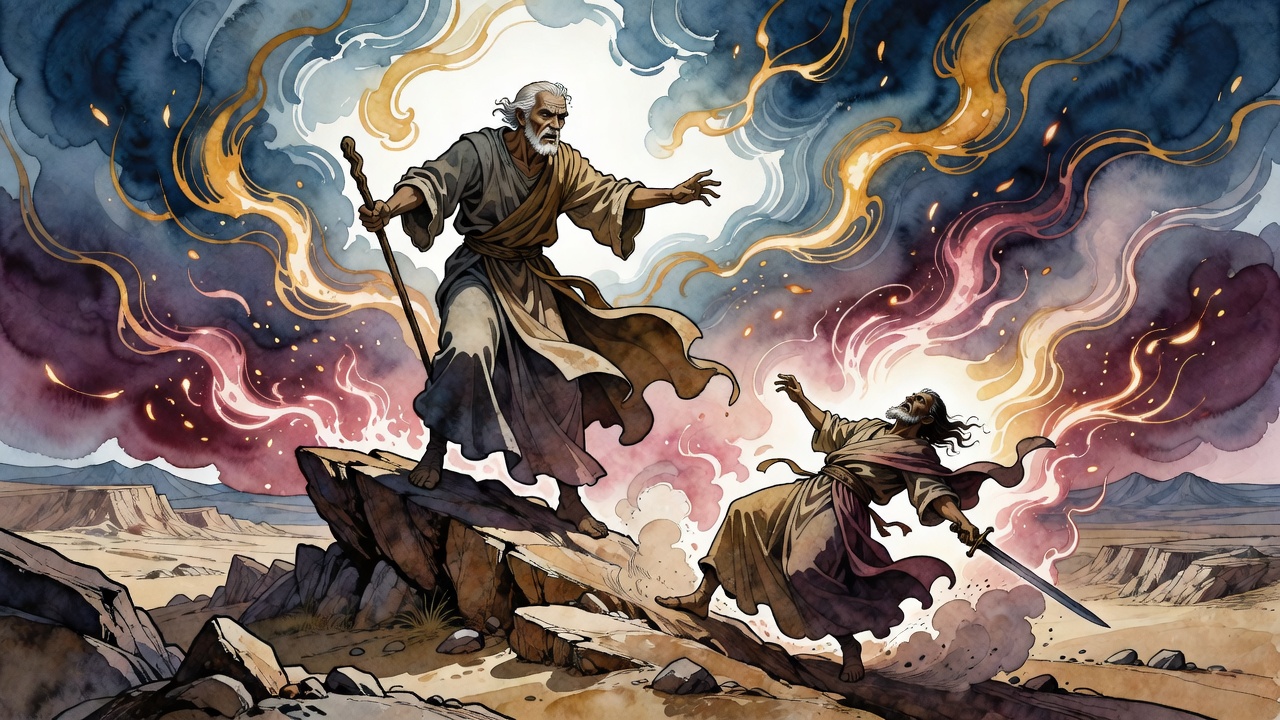
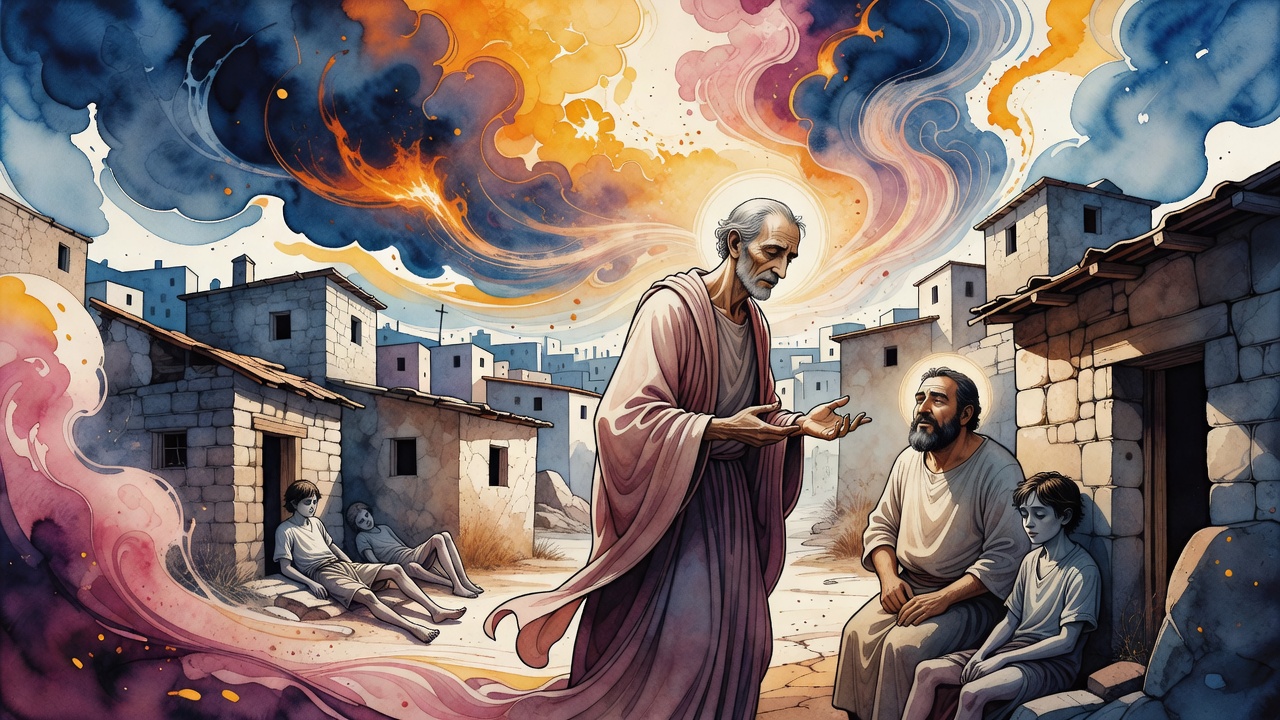
The comb paused in her hair. Someone knocked. Rabbi Toviah did not want a stranger to see his wife combing, so he spoke through the wood.
 Click for full size
"She is not at home."
It was a small lie, the kind every other town tells before breakfast. In Kushta (קושטא), which in Aramaic means truth, it was enough.
The Town That Did Not Die Young
He had come there because no one swerved from what was so. People in Kushta did not die before old age. Death still came, but it came when a life was finished. He married. He settled. He had two sons. For a time he kept every word exact, the way a man keeps his footing on a narrow wall.
Then the neighbor knocked while she sat combing, and courtesy spoke faster than truth. He heard his own sentence in the air and did not call it back.
Both Sons Dead
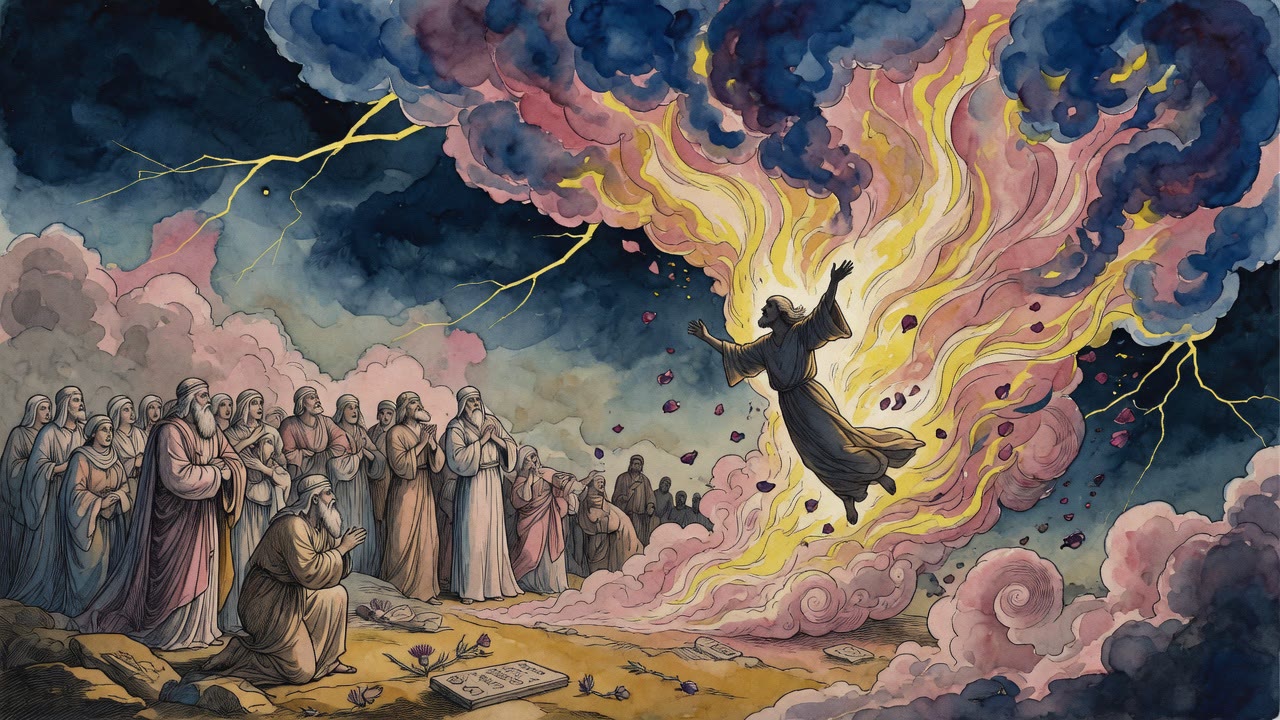
Within days one son died. Then the second. The townspeople came, not with comfort first, but with a question. What had he done?
He told them. The polite sentence at the door. They did not shout. They asked him to leave. One untruth was enough to break the covenant of the place. Honest speech had been the climate. A false breath had entered it. Two children had paid.
He packed. He walked out of Kushta with the names of the boys and the sound of the knock still in the wood. The town closed behind him the way a gate closes after a leak has been found.
The Coin in the Dough
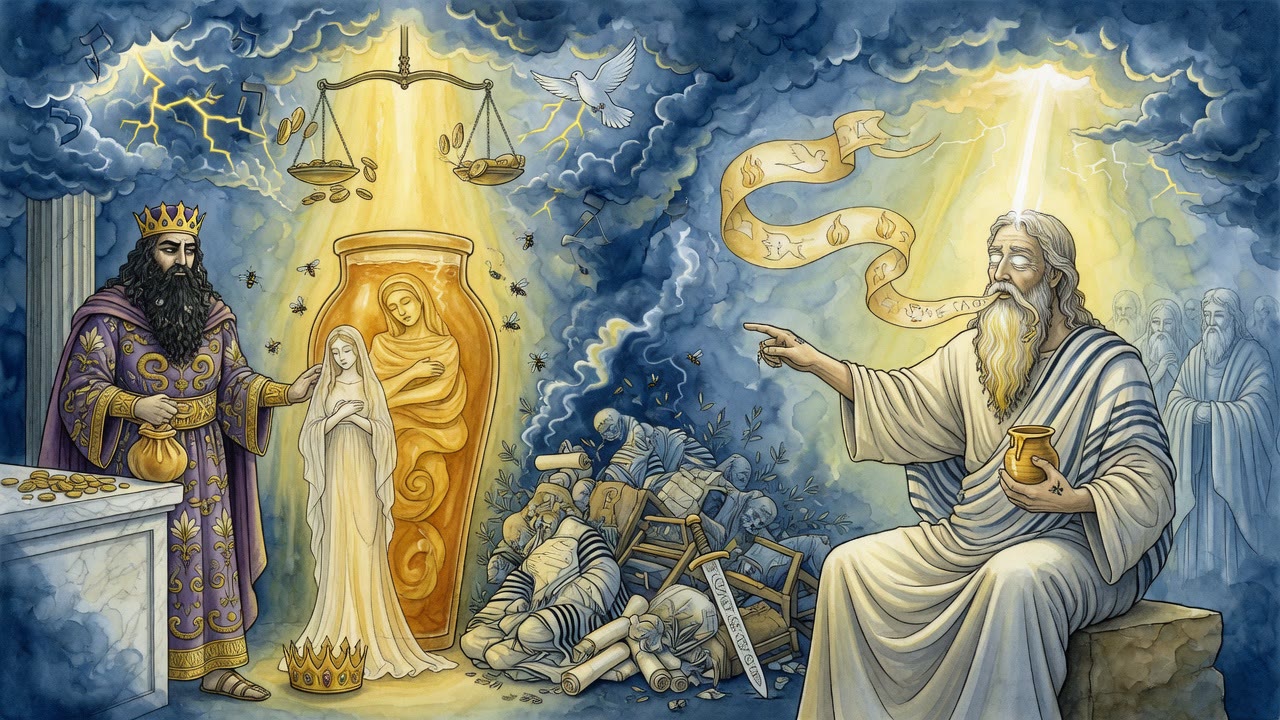
In another town two women lived as close friends. One kneaded dough at the other's house. A gold dinar slipped from her purse into the lump and vanished into the flour. She went home without noticing. Later she came back, hands empty, voice tight.
"Did you find my dinar?"
The neighbor had not seen it and said so. Then she went further than the question. "I swear by the life of my husband and by the lives of my two children that I do not have it."
The coin was in the bread. She had spoken honestly and then sworn to what she could not know. She had hung the lives she loved on a sentence she had not checked.
The Loaf They Broke in Mourning
Her husband died. Both children died. The village sat shiva. At the meal of consolation they broke the loaf she had baked, and the dinar lay in the crumb, bright as a small accusation.
No one had lied in the first answer. The oath had done the killing. Kushta's rule was harder than "do not deceive." Say only what you know. Do not bind a child's life to a guess. "Keep far from a false matter" (Exodus 23:7) was not a line on a wall in that kitchen. It was the ground under the dough.
Ravina Would Not Be Left With the Sigh
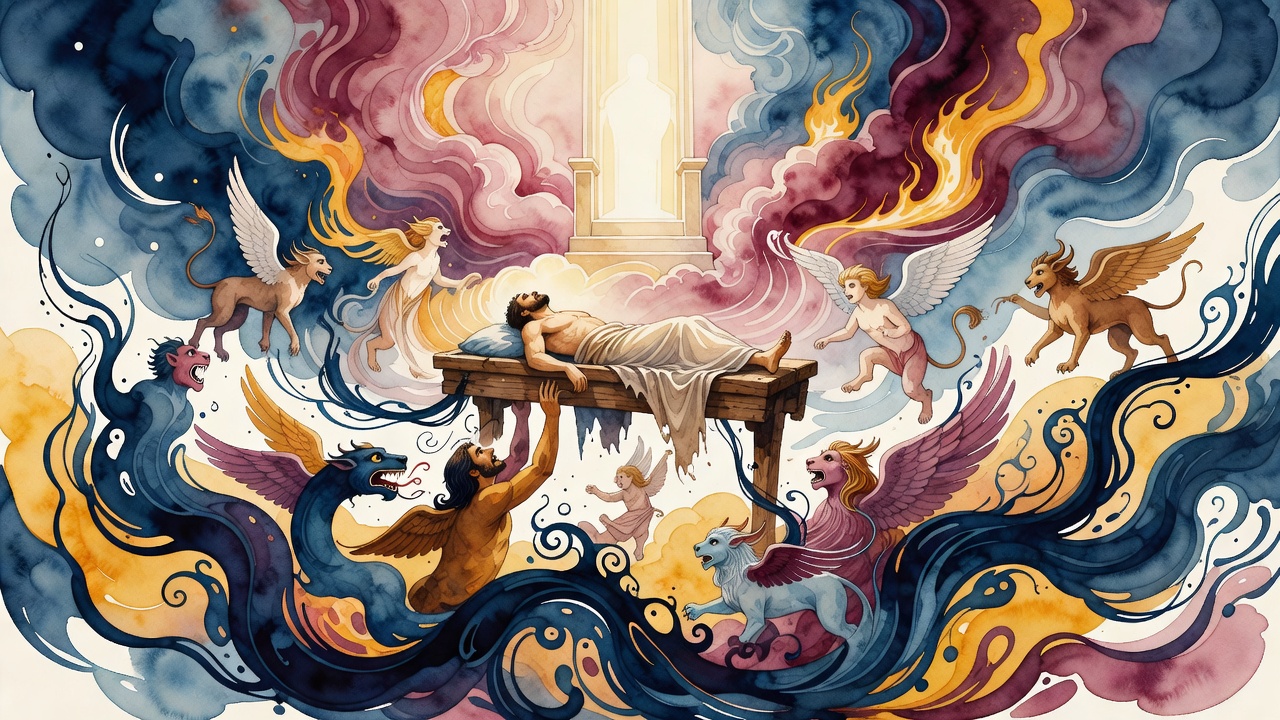
Years later Ravina sighed and said there was no truth left in the world. Toviah would not let the sentence stand. "If all the riches of the world were offered me," he said, "I would not tell a falsehood."
Then he told the knock, the comb, the two graves, the request to leave. Truth had not vanished. He had lived in a town that ran on it. He had also seen what one polite exception cost.
Ravina had wanted a complaint. He got a man who had paid in sons for a sentence spoken through a door. Truth is heavy, Toviah had learned, and the towns that carry it do not make room for manners that bend it.
← All myths