Lot Chose Sodom and God Found David There
Lot looked east, saw grass, and moved his tents toward the city. Two of Israel's royal lines walked out of the cave above it at dawn.
Table of Contents
 Click for full size
He Picked the Green Side of the Valley
The herdsmen had been fighting over water for weeks when Abraham finally gave his nephew the choice.
Take whichever half you want, he said. If you go left I will go right. If you go right I will go left.
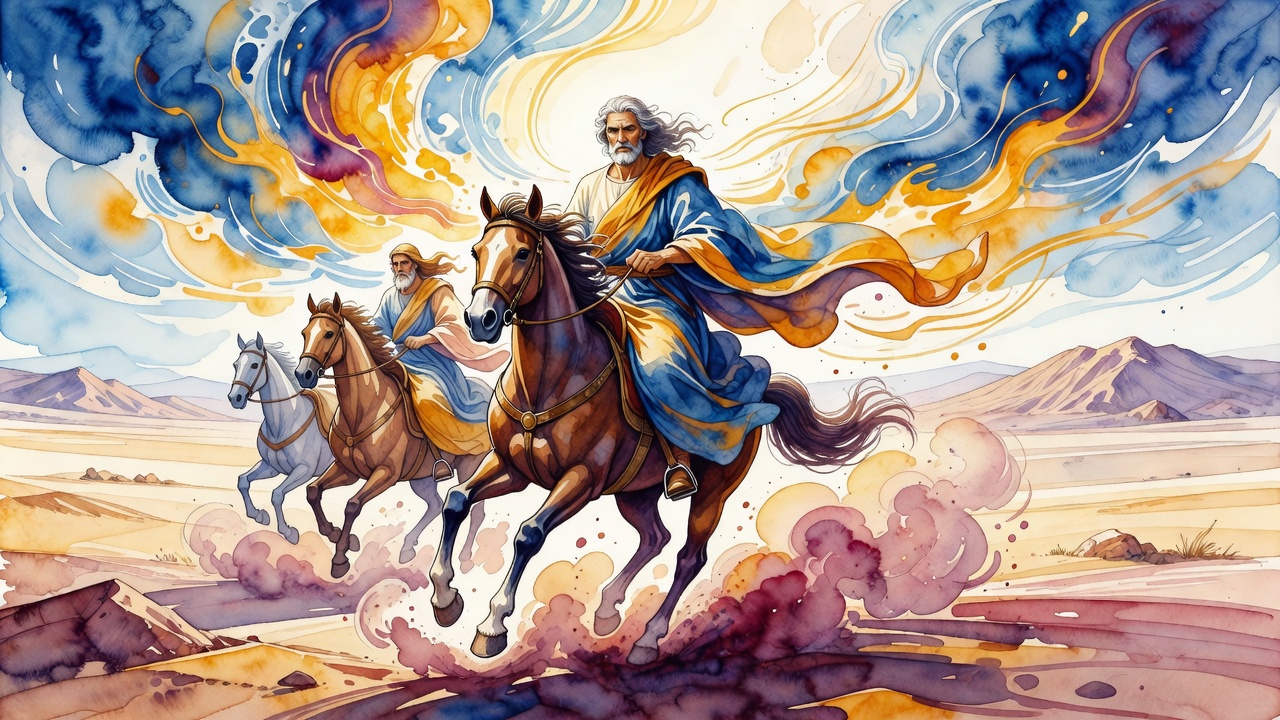
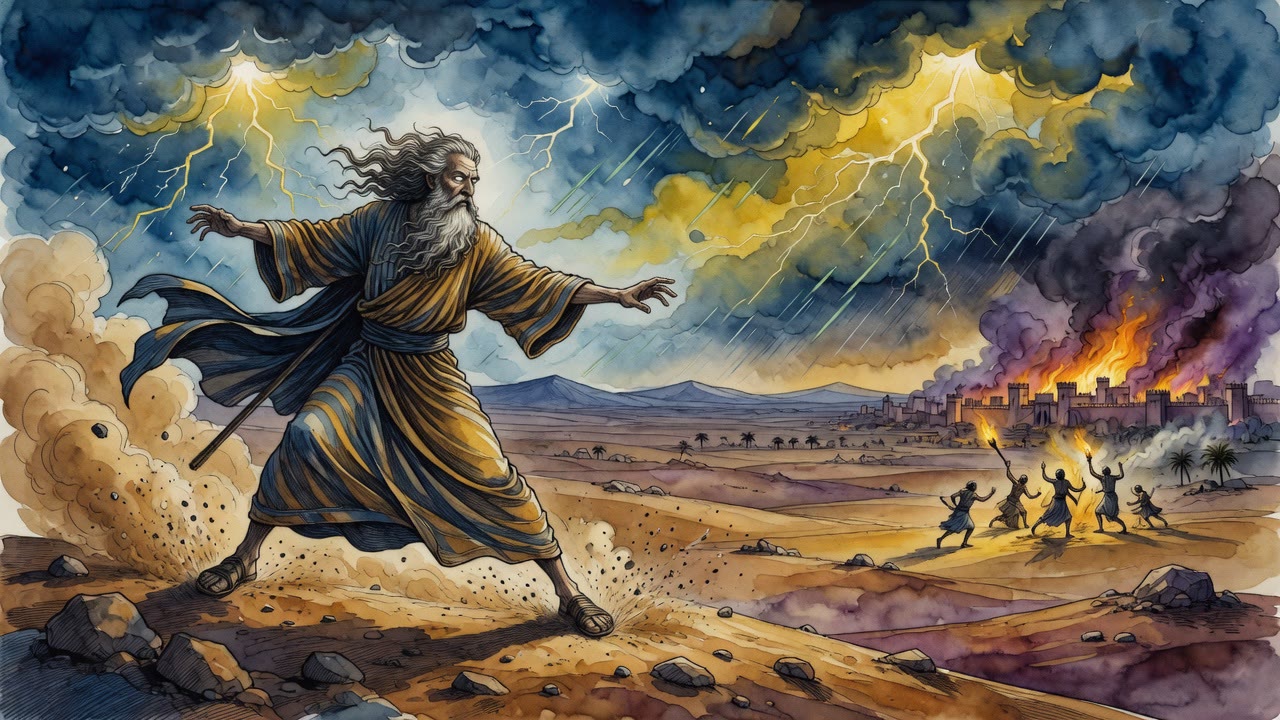
Lot climbed to where he could see and looked east. The whole plain of the Jordan was watered the entire way down, green in a country that was not green, and the phrase that stuck to it afterward was that it looked like the garden of God, and it looked like Egypt. So he took it. He moved his tents down onto the plain and kept moving them east until they were pitched at the edge of Sodom.
He was not choosing a moral climate. He was choosing grass.
The inventory of what he brought with him is short and slightly wrong: flocks, cattle, and tents. Not a tent. Tents. Rabbi Toviya bar Yitzhak counted the plural and said Lot was carrying two dwellings that had not been pitched yet, and would not be pitched for centuries, and were named Ruth and Naama.
Two Angels Pulling on Four Wrists
The night the city came apart, the men who had eaten at Lot's table stopped being guests.
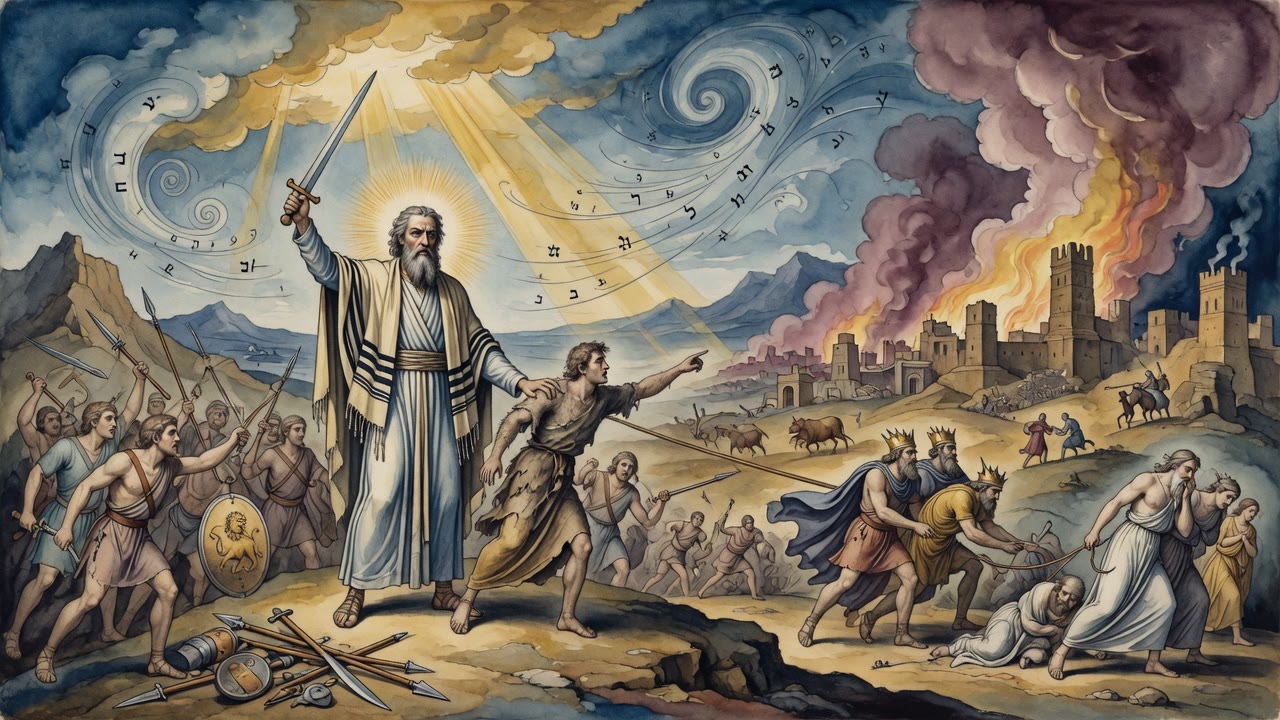
Get up, they told him. Take your wife and your two daughters who are found here, or you will be swept away in the punishment of the city.
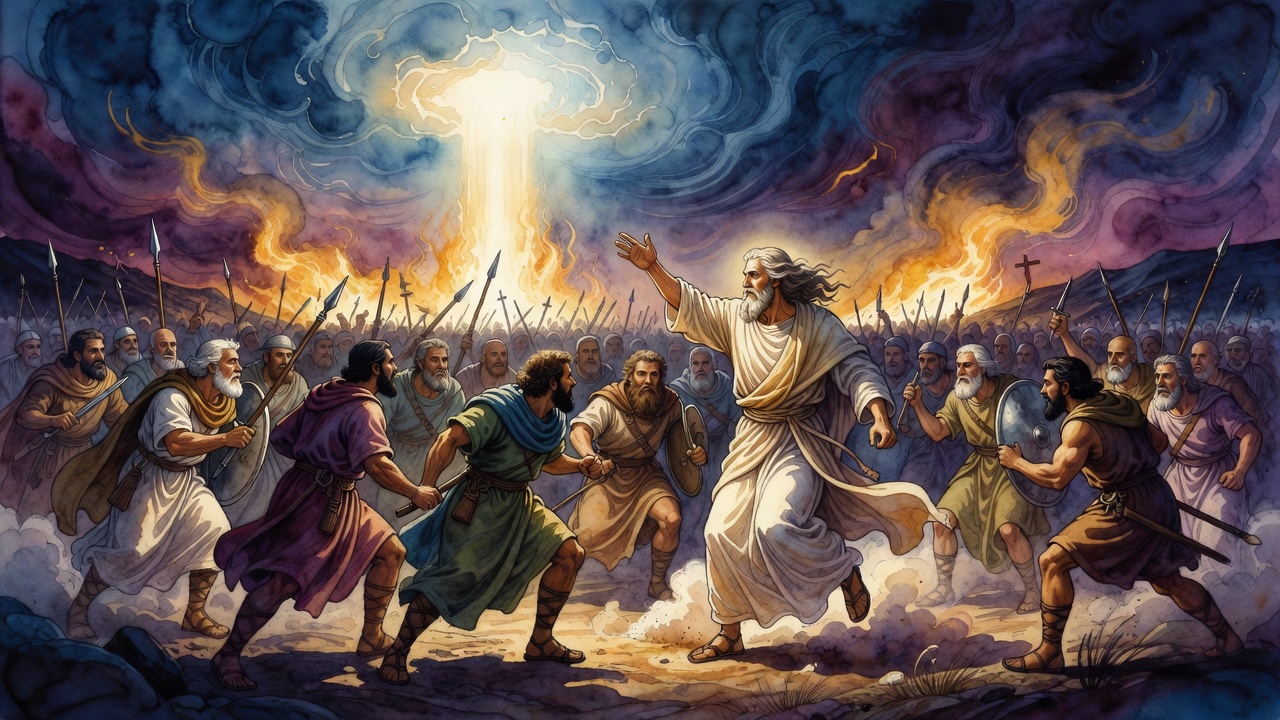
He went out and tried to talk to the men who had married his daughters and they thought he was joking. He came back and stood in the doorway of his own house and could not make his feet move. So the angels took him by the hand, and took his wife by the hand, and took the two girls by the hand, four wrists in two grips, and hauled the family out through the gate and set them down outside the wall and told them not to look behind them.
Lot argued even then. Not the mountains, he said. Let me go to that little town instead. And they let him, and he ran, and the sun came up over the earth as he came into Tzoar.
The City That Never Saw That Sunrise
Behind him it began.
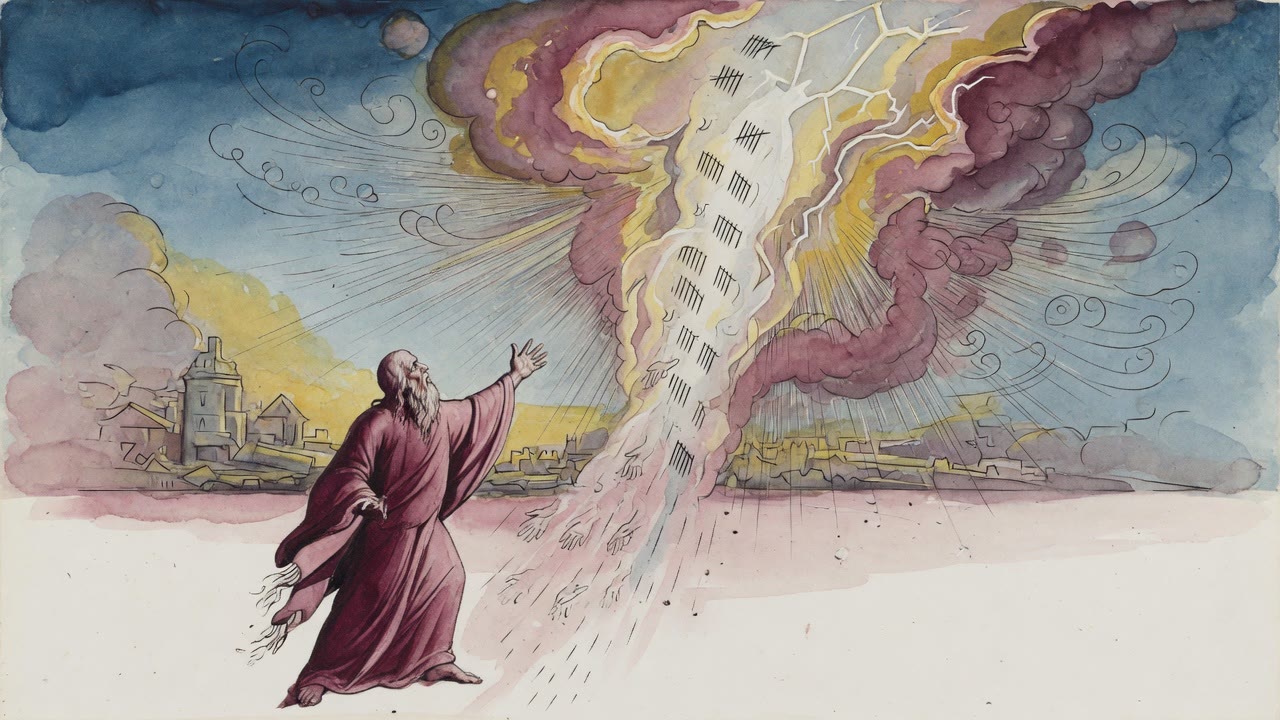
Brimstone and fire came down out of heaven on Sodom and on Gomorrah, and the sages of fifth century Palestine, reaching for something to set beside it, reached for small hidden dyings. A snail dissolving as it drags itself along, leaving nothing but its own slime. A mole that works its whole life underground and goes back into the earth without ever having seen the sun once. A woman who has conceived a child she cannot explain and carries it out at night and puts it down in the dark, before any light can fall on its face.
That was the shape of it. Sodom went into the ground at sunrise on a morning it never got to see.
Lot saw it. That is the entire difference between the two halves of the verse. The sun rose upon the earth, and Lot came to Tzoar, and everything behind him was smoke.
Two Girls in a Cave Above the Smoke
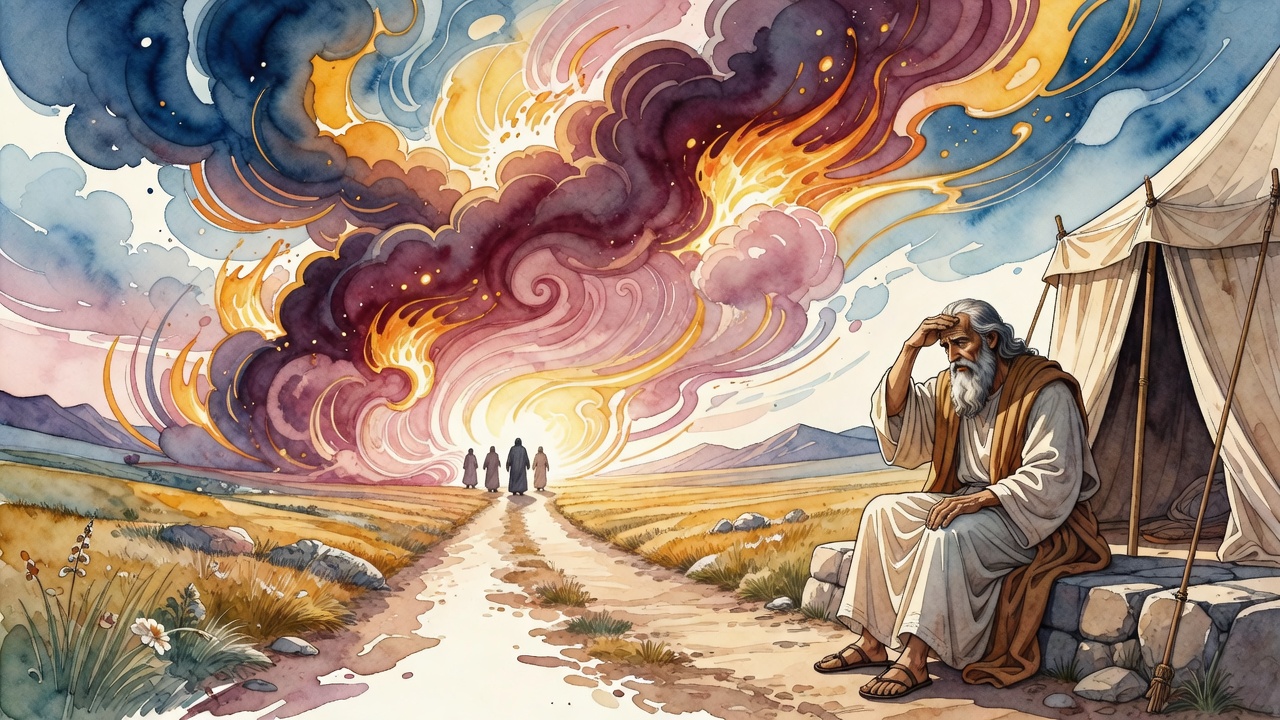
He did not stay in Tzoar. He was afraid of it, so he went up into the hill country and lived in a cave with his two daughters, and his wife was a pillar of salt on the road behind them.
From up there the whole plain was ash. No towns. No roads with people on them. Nothing moving between the ruins for as far as they could see.
The older daughter said to the younger one that their father was old and there was not a man left in the earth to come to them. They gave him wine two nights running. The older bore a son and called him Moab. The younger bore a son and called him Ben-Ammi. Two nations came out of that cave, and both of them spent the next thousand years at war with Israel.
Where Did I Find David
The word the angel used for the daughters was not a neutral word. It is the word for a thing found, the way a coin is found, the way a lost object is found and claimed.
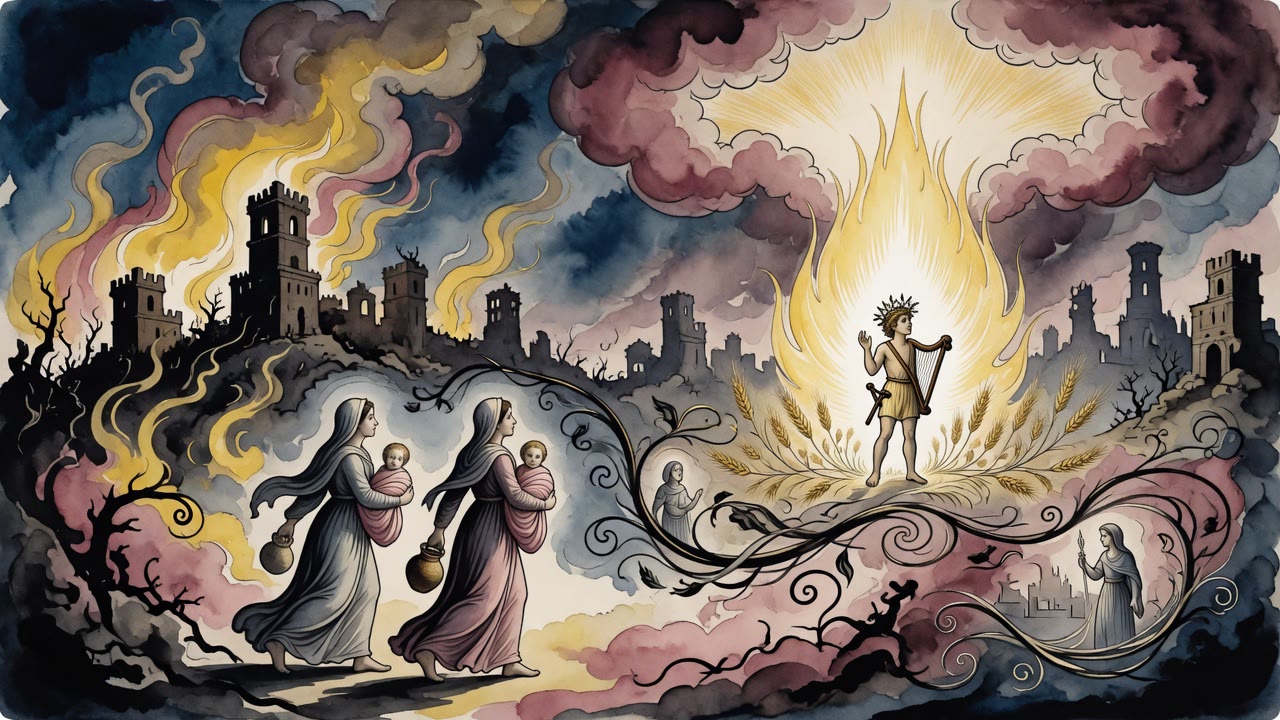
So the sages counted the found things forward. Out of Moab, generations later, came a widow named Ruth who followed her mother in law across the border on foot and gleaned barley behind strangers in Bethlehem and married into the house of Judah. Out of Ammon came Naama, who married Solomon and bore Rehoboam, the next king to sit in Jerusalem. Two women. Two tents. One throne.
And then Rabbi Yitzhak set the psalm down on top of it. I have found David My servant, God says. Where did I find him?
In Sodom.
Not despite Sodom. In it. The line that would carry Israel's kingship was already lying in the worst city on earth on the night the fire came down, close enough to the flame to feel it, and it walked out of the gate at dawn holding an angel's hand.
← All myths