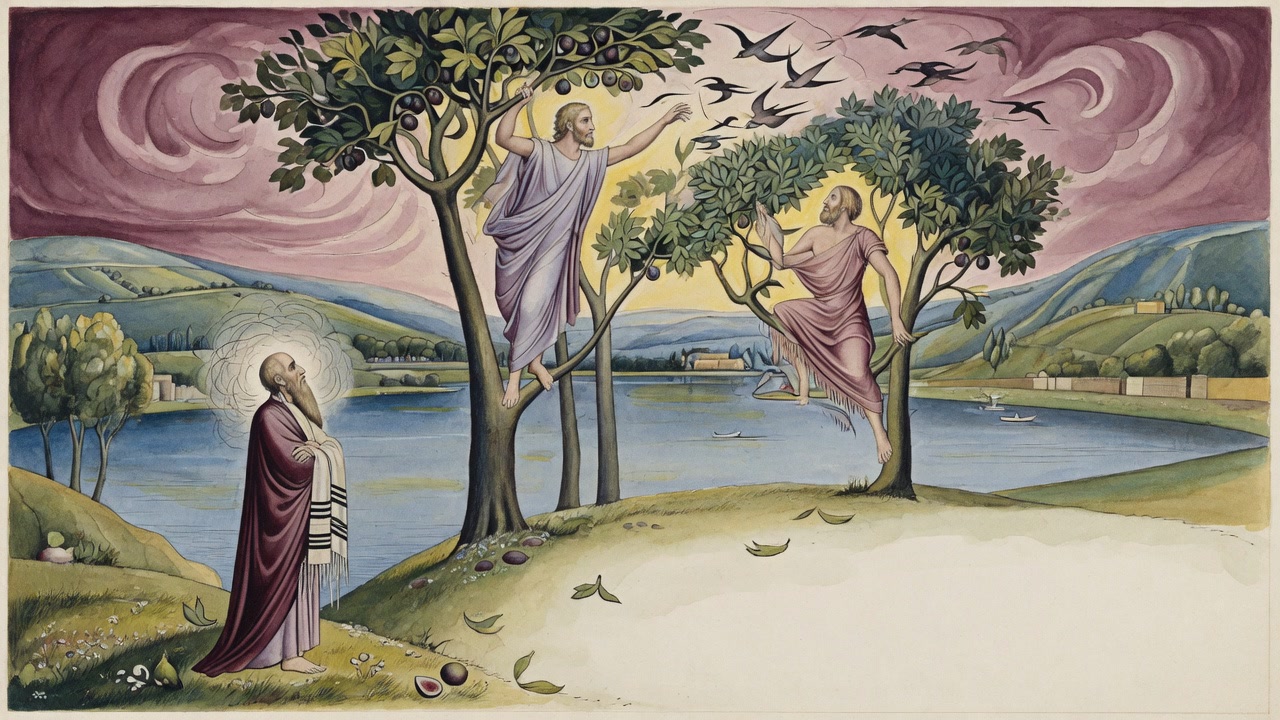
Maimonides Met the Cloud-Riding Mystic of Worms
Passover night was hours off, and the caravan road to Egypt took months. He spoke Names over a cloud and dropped into Fustat before the first cup.
Table of Contents
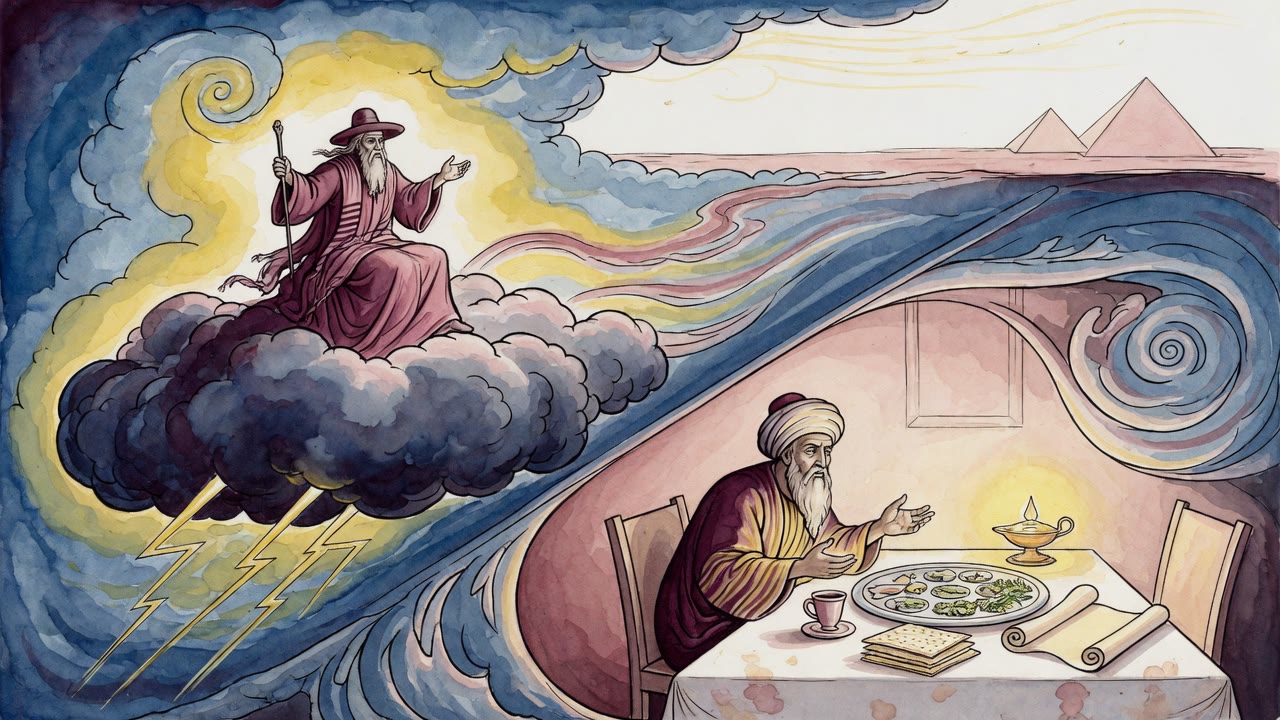
Rabbi Eliezer of Worms looked at the calendar and at the door. Passover night was hours off. Egypt was months of caravan. His students asked where he thought he was going.
 Click for full size
"Egypt," he said. "Tonight."
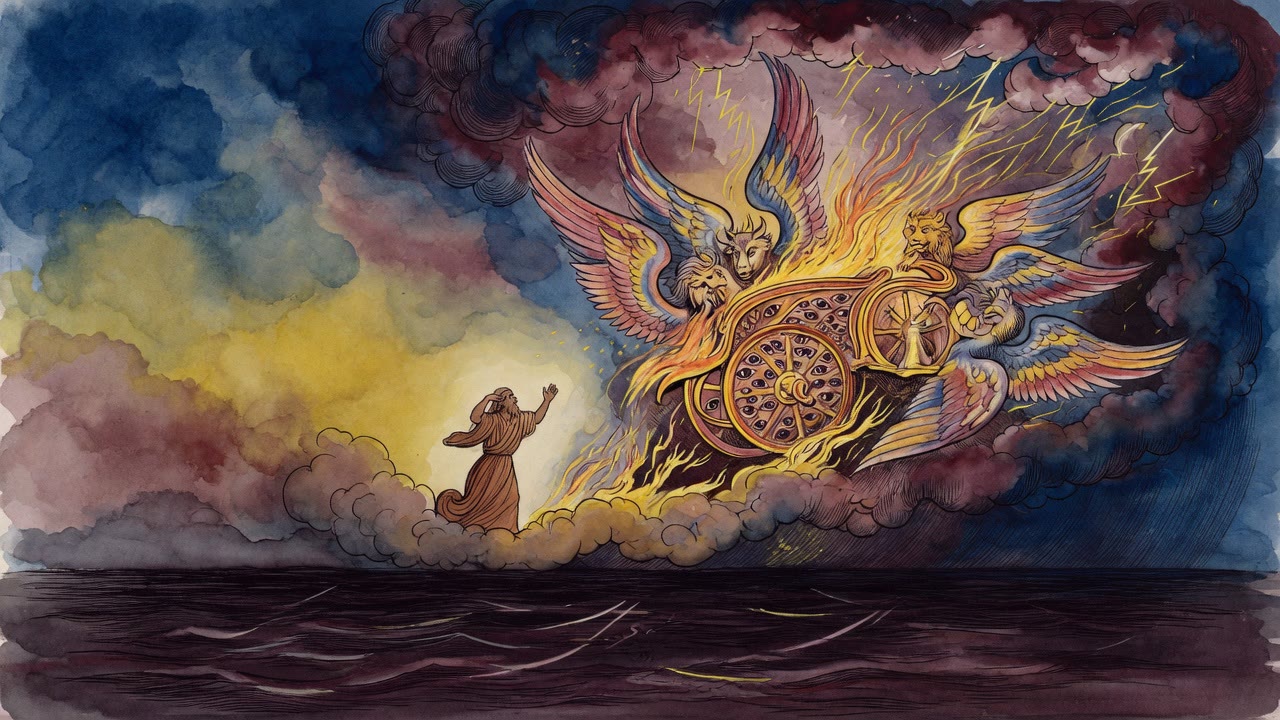
He spoke divine Names over the study, mounted a cloud, and left the Rhine. The river valley fell away. The German cold gave way to the dry air of Fustat before Maimonides knew an uninvited guest was walking toward his door.
The Guest Who Did Not Speak
Maimonides set an extra place. He was the physician and legal codifier who trusted reason, the man of the Mishneh Torah and the Guide for the Perplexed. The stranger from Ashkenaz sat through the Haggadah in travel-worn clothes and never opened his mouth.
Maimonides discoursed on each passage, all measure and rigor. Eliezer ate. He drank. He was silent. By the end of the night Maimonides had decided the guest was a simple unlearned man, maybe a poor refugee, and felt a little sorry for him. He poured wine for a person he had already ranked.
Do Not Walk That Street
In the morning, wanting to protect him, Maimonides warned him. Do not walk through a certain street on the way to the synagogue. The authorities had decreed that any Jew found there would be burned alive.
Eliezer nodded. He walked directly down that street. He was arrested and condemned to burn. On the way to the execution he stopped at Maimonides's door. The household was already turning toward midday. Eliezer asked him to wait before Kiddush. He would return.
Maimonides decided the man was mad. He waited anyway. The cup sat. The hours stretched.
Two Faces at the Market
At the market Eliezer used the Names again. He put his own face on a governor who had hunted Jews, and he took the governor's face for himself. The official, wearing Eliezer's look, was burned. Eliezer, wearing the governor's look, walked away unharmed.
At the appointed time he appeared at the door, resumed his own form, and told the whole affair. He had come to show Maimonides that practical Kabbalah was real, that there were levels of Torah the philosopher had waved off as empty craft. Eliezer was the author of Sefer HaRokeach, letters and angel lore and the ethics of the Rhine pietists. He had not ridden a cloud to be polite.
They Shared the Table Anyway
They sat again with matzah and wine between them. Eliezer spoke of Hebrew letters and the chain of teachers back to Sinai. Maimonides spoke of a God who is not a body and a Torah that refines reason. Neither convinced the other of his method. The burned street had still happened. The cloud had still happened. Maimonides could not call the guest a simpleton anymore.
Eliezer stayed a year in Egypt. The rationalist who had ranked him at the first Seder now had to live with a man who could borrow a face and return in time for Kiddush.
The Boy Who Named the Dream
Long before that table, a king had woken from a dream he could not remember. He knew only the terror. He demanded his wise men tell him the dream itself, not only a meaning hung on a fragment. None could. A vizier rode out to save his own life.
At a town gate he met a teacher walking with a boy about ten. Before the vizier finished the errand, the boy stepped forward. "I know what the king dreamed. I will come and tell him."
The boy was Maimonides. He stood at court and said, "You saw a banquet table. From the corner a wild boar crept out, ate from every dish, and vanished." The king went white. That was the dream.
"The dishes are your wives. The boar is a slave in your women's quarters, dressed as a woman, moving among them." He named the man. The king wanted him killed in public. The boy said to do it at night, without uproar, to protect the dignity of the house. Even then Maimonides could see a hidden body in a room. Years later a hidden master of Names sat at his Seder, and he missed him until fire and a returned guest forced his eyes open.
← All myths