Rabbi Joshua Grabbed the Angel of Death's Sword
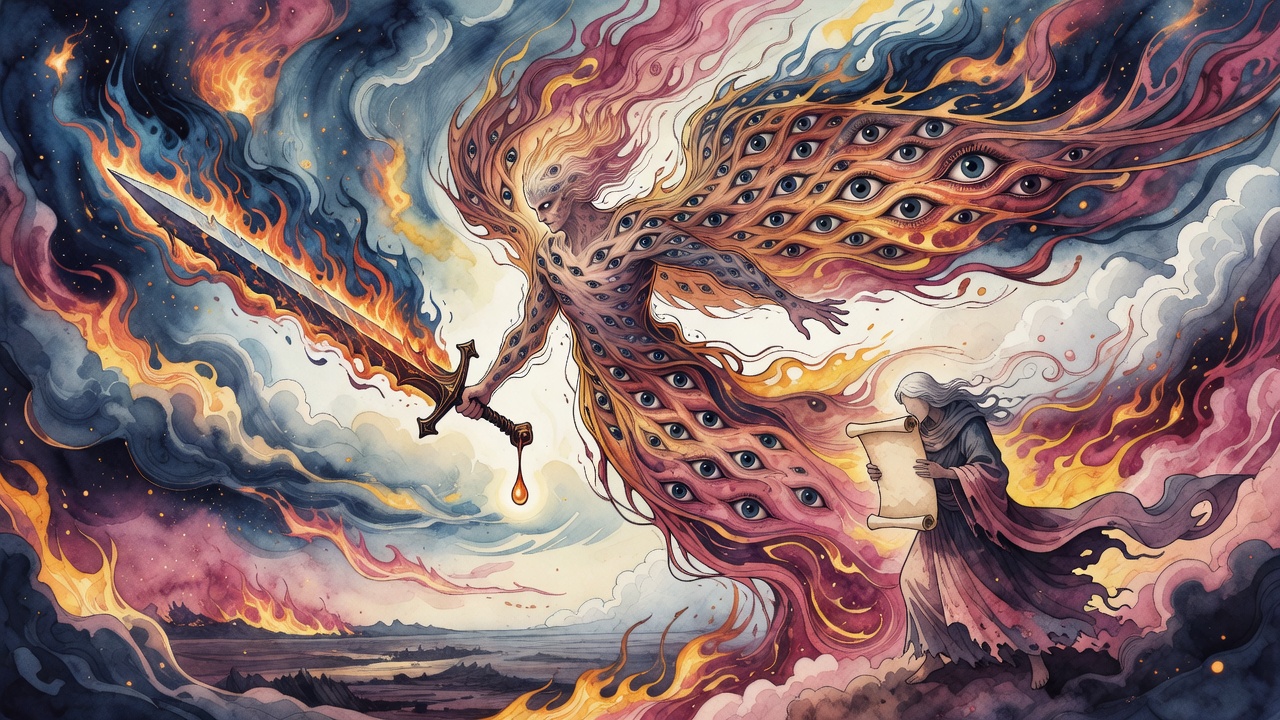
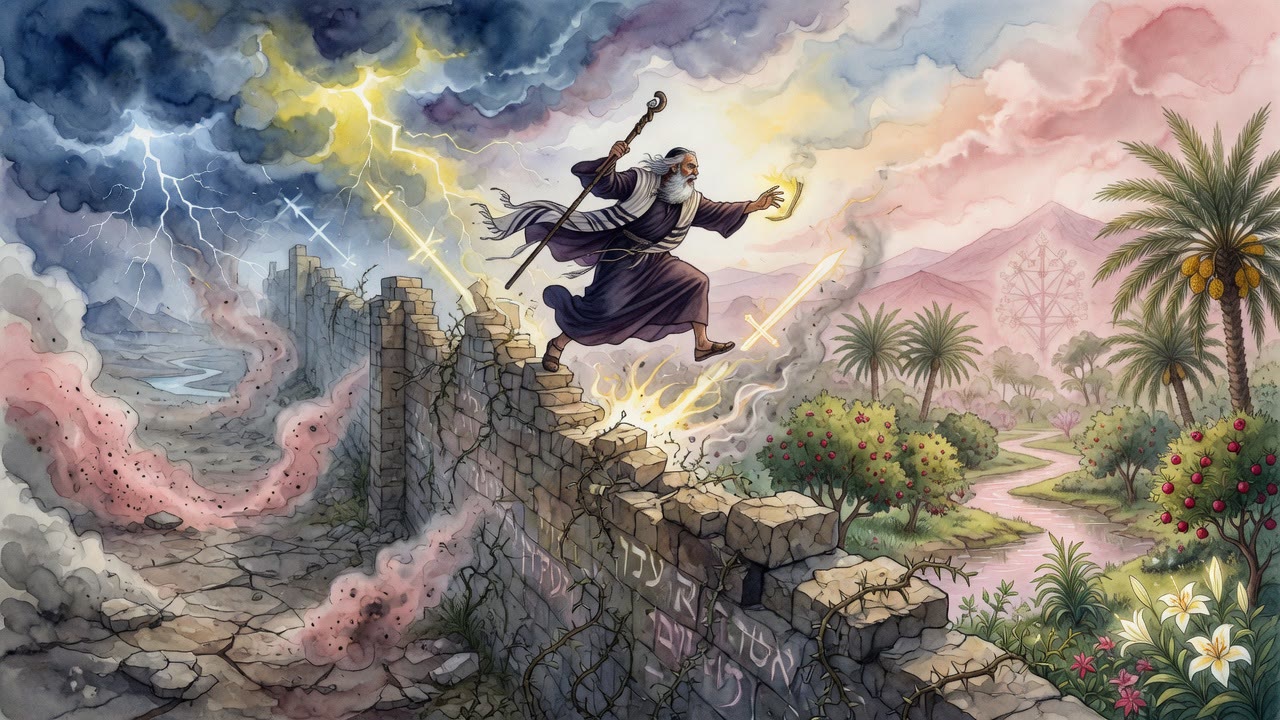
The Angel of Death came with orders to be generous. Rabbi Joshua asked to borrow the sword, then jumped the wall into Paradise while still alive.
Table of Contents
The Angel of Death arrived at Rabbi Joshua ben Levi's house with instructions to be cooperative.
 Click for full size
God Himself had told the Malach HaMavet that this particular sage had earned extraordinary consideration. When the angel appeared, Rabbi Joshua did not argue that death was unjust or beg for more years. He made one request: show me my place in Gan Eden (paradise, the garden of the righteous) before I cross over. Let me see where I am going while I can still see it with living eyes.
The angel agreed. He had been told to grant whatever the rabbi requested. He showed Joshua the place prepared for him in Paradise. Then Joshua, standing at the gate, asked for one more thing: lend me your sword for the walk back, so you do not startle me on the road and take me before I am ready.
The Angel of Death had heard that argument before but never quite that way. He lent the sword.
The Jump That Changed the Rules
Rabbi Joshua took the sword and jumped over the wall into Gan Eden. He was still alive. He was standing inside Paradise with his body, holding the angel's only instrument of jurisdiction, refusing to come back out.
The Malach HaMavet could not enter Gan Eden to retrieve the sword by force. He appealed upward. God ruled that Rabbi Joshua had to return the sword, because if the sword stayed in Paradise, the world's work could not be completed. The angel needed his instrument. But the ruling added something remarkable: Joshua would not be required to die by the sword's blade. His death would come by a different way, in its own time. The rabbi had not abolished death. He had forced a negotiation that changed the terms.
That is why the Talmud at Ketubot 77b records both the incident and the ruling. The story is not a fantasy about escaping death. It is a fantasy about the dignity of Torah scholarship, that a man who has spent his life in God's service is permitted to arrive at death's gate with requests, leverage, and enough nerve to grab the key.
The Sword That Learned Not to Be Lent
A different tradition from the same Talmudic context supplies the reason the Angel of Death changed his policy about lending. After Joshua's incident, the angel became strict about the sword. He would carry it himself, never hand it over, never agree to a loan no matter how politely phrased.
Another rabbi, approaching the end, asked the same favor. The angel refused. He had learned. The sword stays in his hand throughout any journey. The result is that later sages who tried the same approach found the gate closed. Joshua's maneuver worked because it had never been attempted before. The second attempt at the same trick finds a guard who has already read the story.
Ben Sabar Walked Across a Dragon
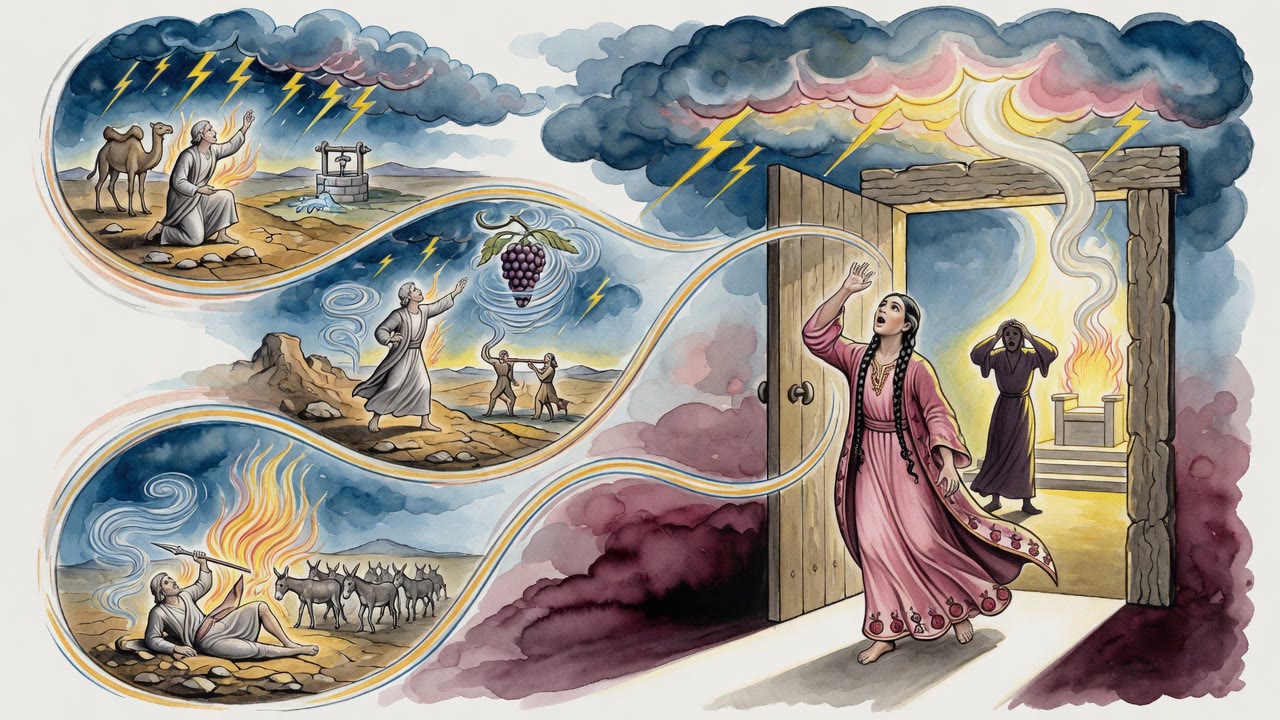
The angel sometimes met resistance from a different kind of righteous man. Ben Sabar heard that a poor couple needed money for their wedding in a distant city. He packed coin and set out. The road crossed a lake where a dragon was known to stretch across the water and kill anyone who tried to pass. Ben Sabar stepped onto the dragon's back as if it were a wooden plank and walked across. The dragon recognized the protection surrounding a man on his way to a mitzvah (a commandment) and held still.
On the road back, the Angel of Death came for him. Ben Sabar refused. He had not yet given the couple the money he had promised. He was still on an errand of righteousness. The angel was forced to wait. When Ben Sabar finally completed the mitzvah, the angel took him. But the sequence mattered to the tradition. Even the angel of death operates within a moral structure, and that structure occasionally has something to say about timing.
Moses Stood in His Circle and Refused
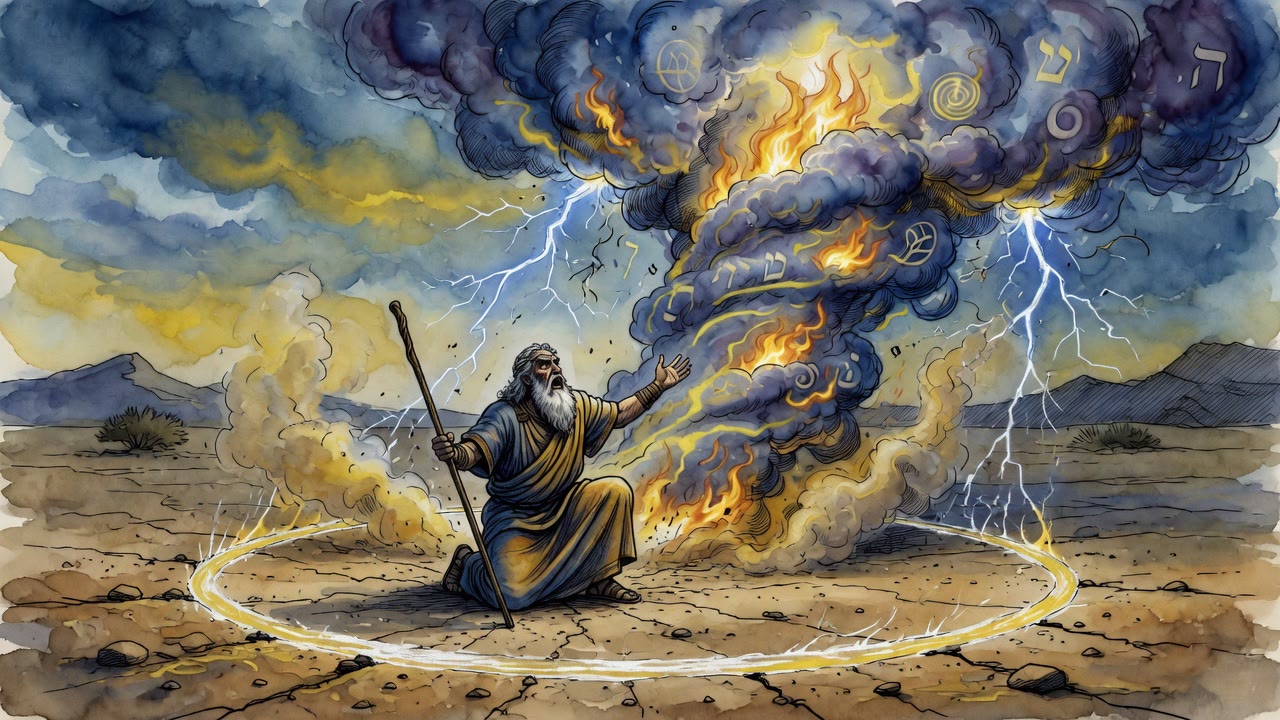
Of all the figures who negotiated with the Malach HaMavet, Moses is the most extreme case. When God told Moses that his time had come, Moses drew a circle on the ground, stood inside it, and declared that he would not move until the decree was canceled. He put on sackcloth, scattered ashes on his head, and prayed until creation trembled. God ordered every gate of heaven sealed against the prayer because the prayer was too forceful to be allowed through ordinary channels.
Even then, Moses did not stop. He prayed through every name he had ever learned for God. He appealed to the merit of the patriarchs, to the crossing of the Red Sea, to the revelation at Sinai. The gates held. God finally spoke directly, not to condemn Moses but to explain that the decree was not punishment. It was completion. Moses had finished his work. The boundary between his life and the land was not a divine failure. It was a divine design. Moses accepted. But the tradition preserves his refusal because the refusal itself honors God. A man who prays until creation shakes before yielding to a decree is a man who understands what life is for.
← All myths