Nicanor Raised His Hand Against the Temple and Lost It
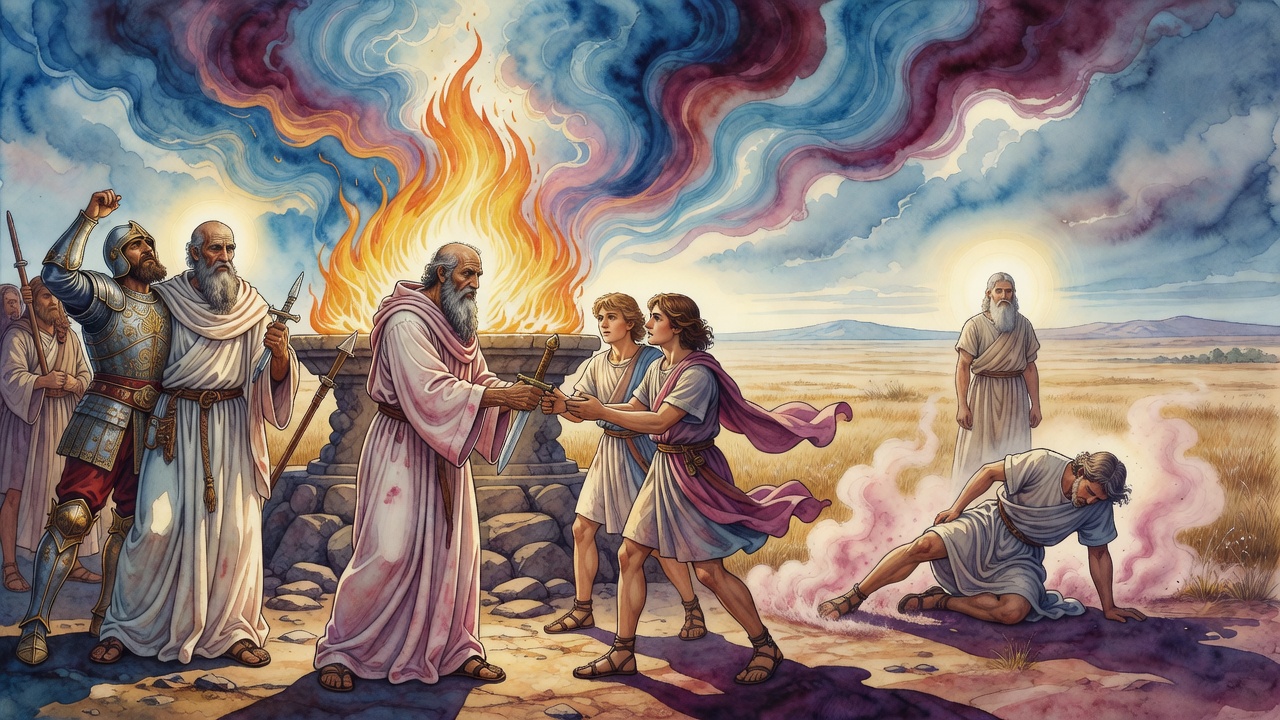
He spat toward the Temple and bared his right arm. The priests cried between the porch and the altar. Judah promised that arm a new place to hang.
Table of Contents
Nicanor came with elephants, cavalry, and soldiers without number. Demetrius had sent him after a priest named Alkimos, a man who had eaten swine's flesh in Antiochus's day, walked into the king's court and said the Hasidim would never let the kingdom rest. Destroy them, Alkimos said. Destroy Judah son of Mattathias first.
 Click for full size
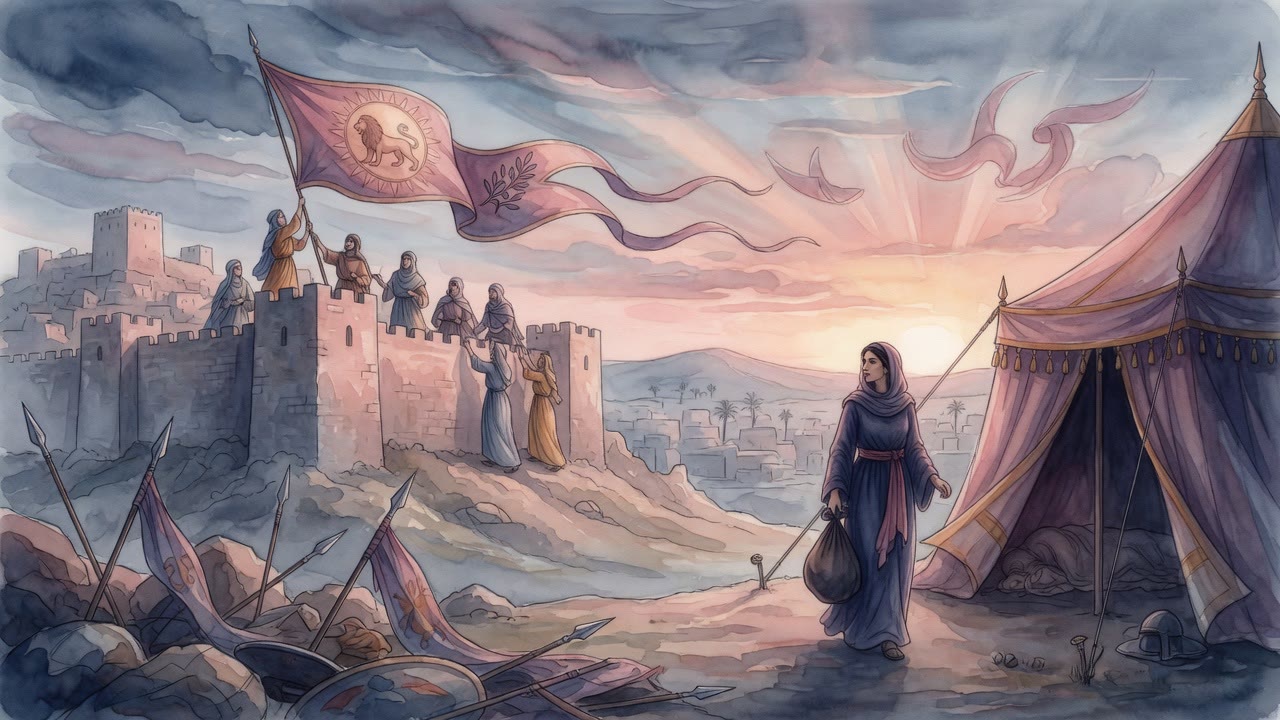
Nicanor arrived at Jerusalem with friendly words. Let there be no battle. I will come with a few men. Let us sit and consult. Judah went out to meet him. They embraced. They sat. Judah had already told his young Hasmoneans to keep their weapons ready. The two men rose, went to their tents, and for a while there was no war. Nicanor even asked Judah why a man like him had not taken a wife.
Alkimos went back to the king. The king wrote to Nicanor: send me Judah bound in chains, or you will die. Judah heard. He left the city by night, sounded the trumpet, and pulled the Hasidim and Hasmoneans to Samaria. The handshake had been a trap. The trap had failed. What came next would not be a meeting.
The High Priest Stood in the Gate
Before the open war, Nicanor tried another purchase. Guards came and said the High Priest of the Jews stood in the gate. Nicanor told them to let him in.
"You are one of the rebels," Nicanor said. "You seek not the peace of the king's kingdom."
"Whatsoever you desire, that will I do," the priest said.
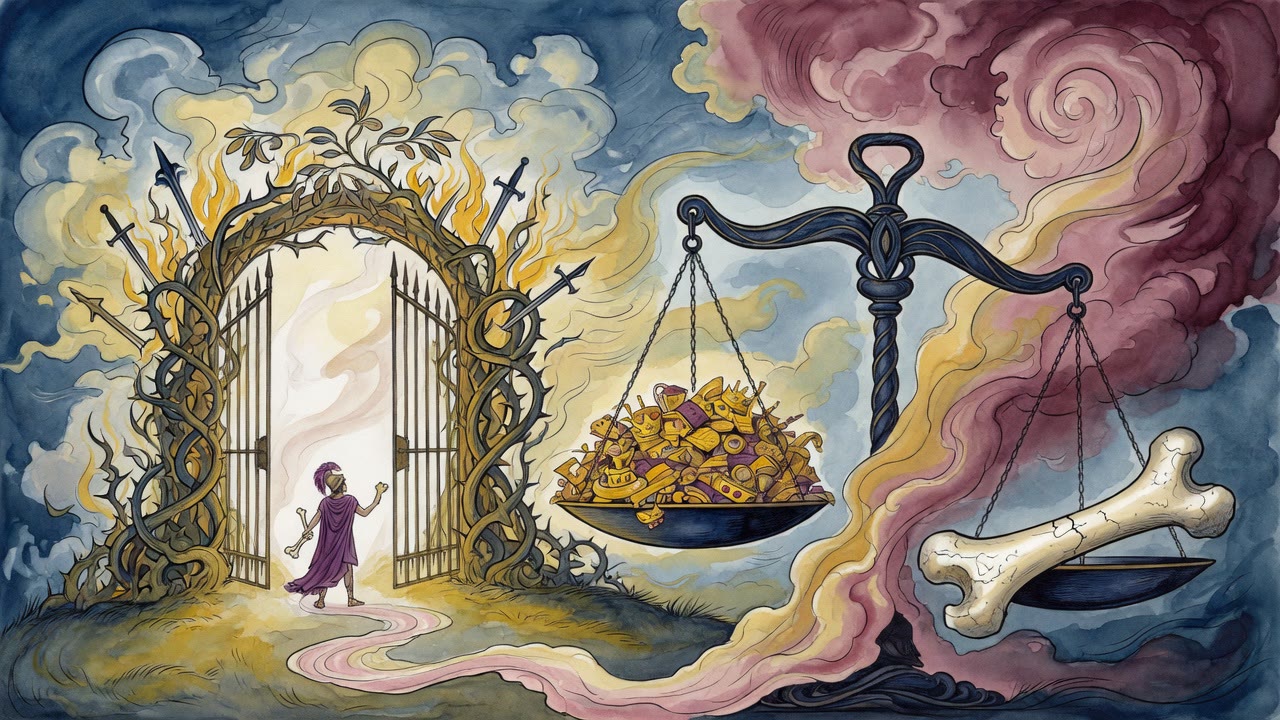
"Take a swine and slaughter it upon the altar," Nicanor said. "You will be given royal dress, and you will ride the king's horse, for you will be as one beloved of the king."
The altar was not for sale. Nicanor left that room angrier than he had entered it, and he took the anger to the House itself.
He Spat and Bared His Arm
Nicanor went to the Temple of the Lord and told the priests to bring out the man who had fled, so he could send Judah to the king in chains. The priests swore they had not seen him since the day before yesterday.
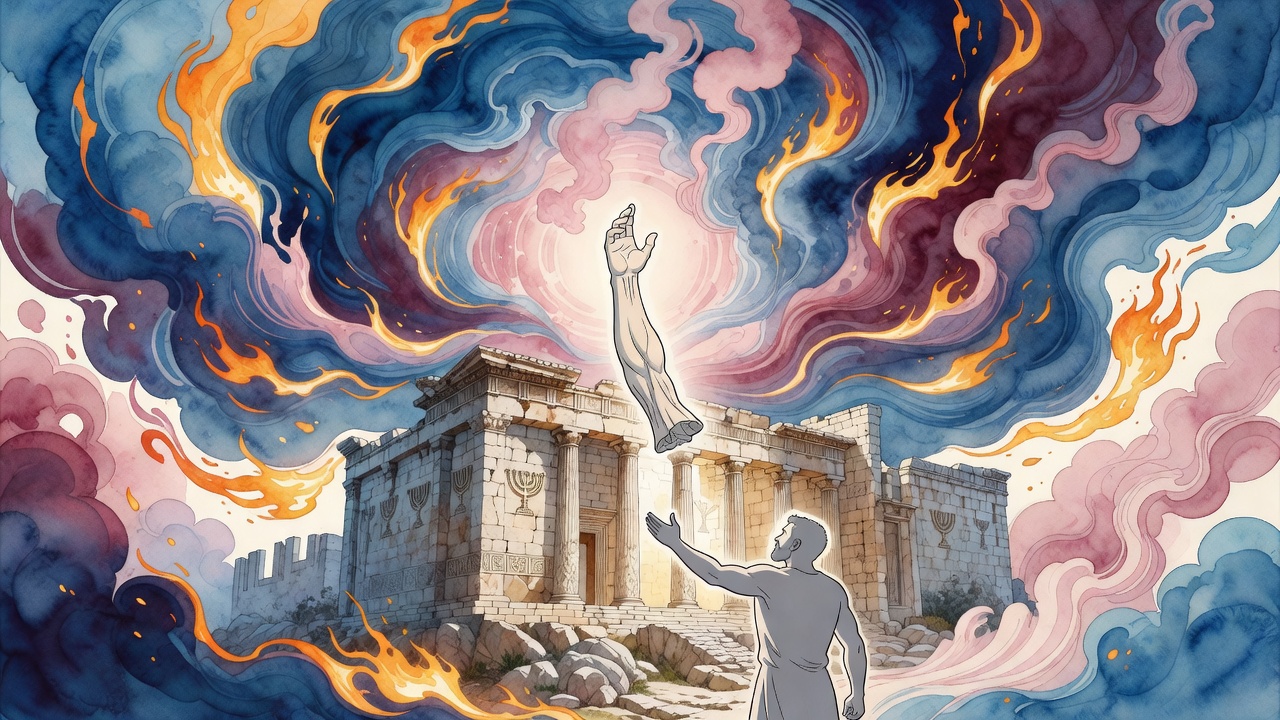
Nicanor spat toward the House. He raised his right hand, stretched it out, and bared the arm for slaughter. "I will overthrow this temple," he said. "I will not leave one stone in its place. I will dig up and overturn all its foundations." He threatened the House in the hearing of the priests, as if a general's arm could unmake a dwelling older than his king.
He departed in anger. The priests went about crying between the porch and the altar. "O God, whose dwelling-place has of old been in this temple, now continue to rest here. Here is Thy throne, and here is Thy footstool. The heart of Nicanor was filled with blasphemy toward Thy house. Therefore let him die as an abomination."
Judah heard what the arm had done. "If God delivers Nicanor into my hands," he said, "I will hang that arm on the Temple gate. He will not raise it again."
The Thirteenth of Adar
Before the battle Judah asked for what David had asked before Goliath: send Your angel ahead of us and fill the enemy with fear. Let one blow bring down many. Let the people who come against Your name be shamed.
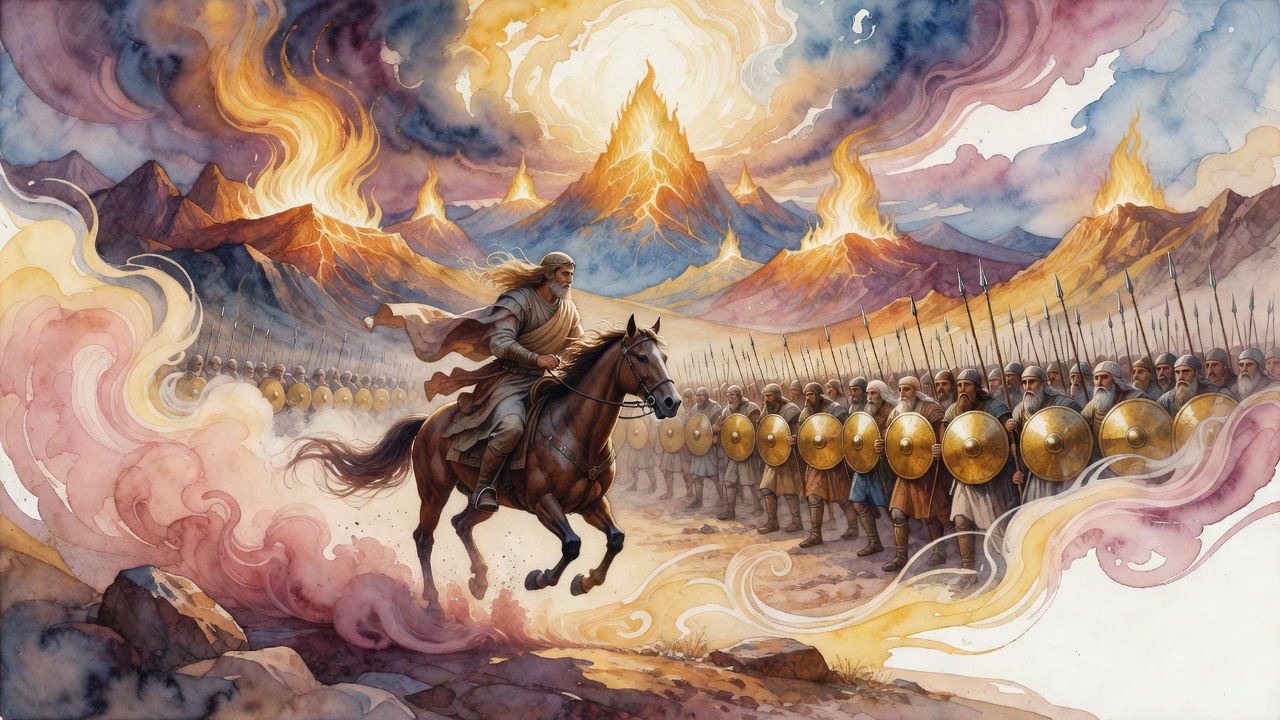
The hosts joined battle on the thirteenth of Adar. Nicanor fell first. When his army saw their general down, they threw away their weapons and ran. Judah's men pursued them a day's journey from Adasa to Gazera, sounding the trumpets, and the towns of Judea closed in. Turning back on their pursuers did not save them. Not one of them was left.
Judah kept the vow. They took the spoils, struck off Nicanor's head, and cut off the right hand he had stretched out so proudly. He had raised it. He lost it. They brought both away and hanged them up toward Jerusalem, the arm at the Temple gate, where the pointing had been done.
They Kept the Day
The people rejoiced with a great gladness. They ordained to keep the thirteenth of Adar yearly, a day on which fasting would be forbidden. It sat one day before the fourteenth, which a later generation would know as Purim. For a long time the calendar held both, two survivals stacked on consecutive dates, Nicanor's Day and then the feast of Esther.
The hand that had pointed at the House hung where the priests had cried. Travelers coming up to Jerusalem saw it before they saw the gates properly. The blasphemy had been public. The answer was public too.
Alkimos had wanted a quiet kingdom. He got an arm on a gate instead.
← All myths