Noah Waited Until the Flood Reached His Ankles
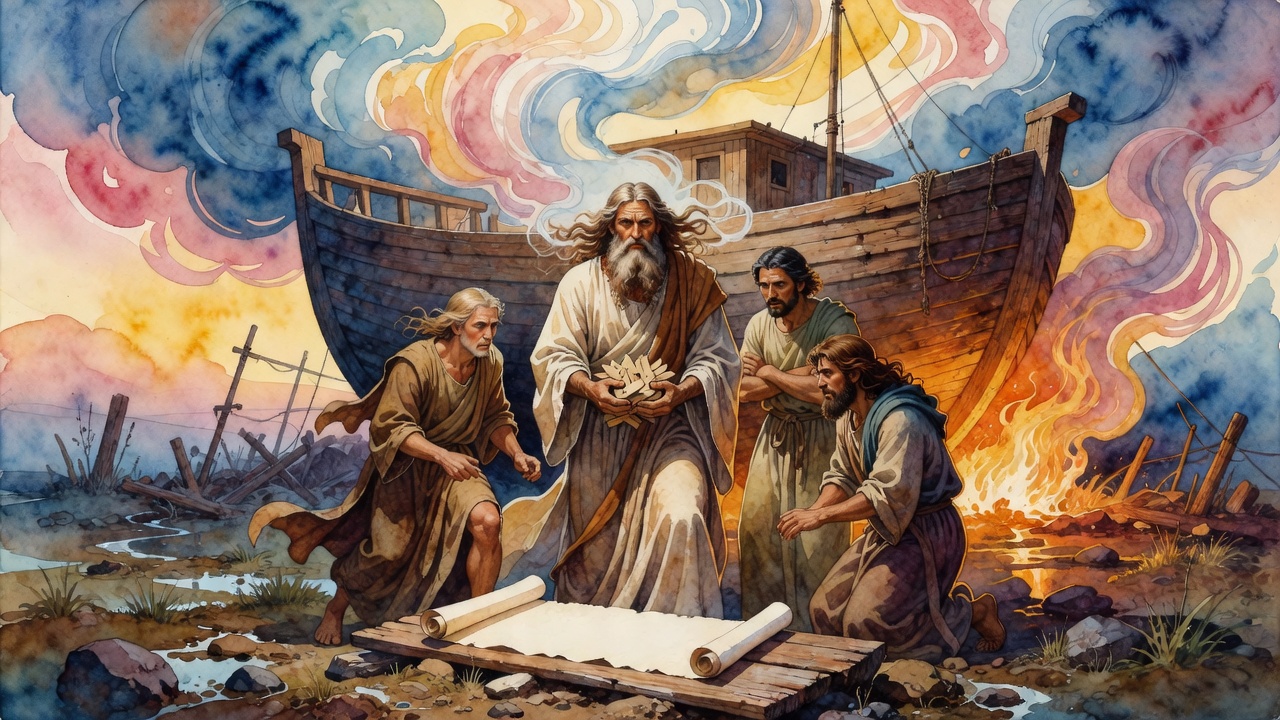
Rabbi Yohanan said Noah lacked faith and would not board until the flood reached his ankles, even as Falsehood waited at the door with a plan.
Table of Contents
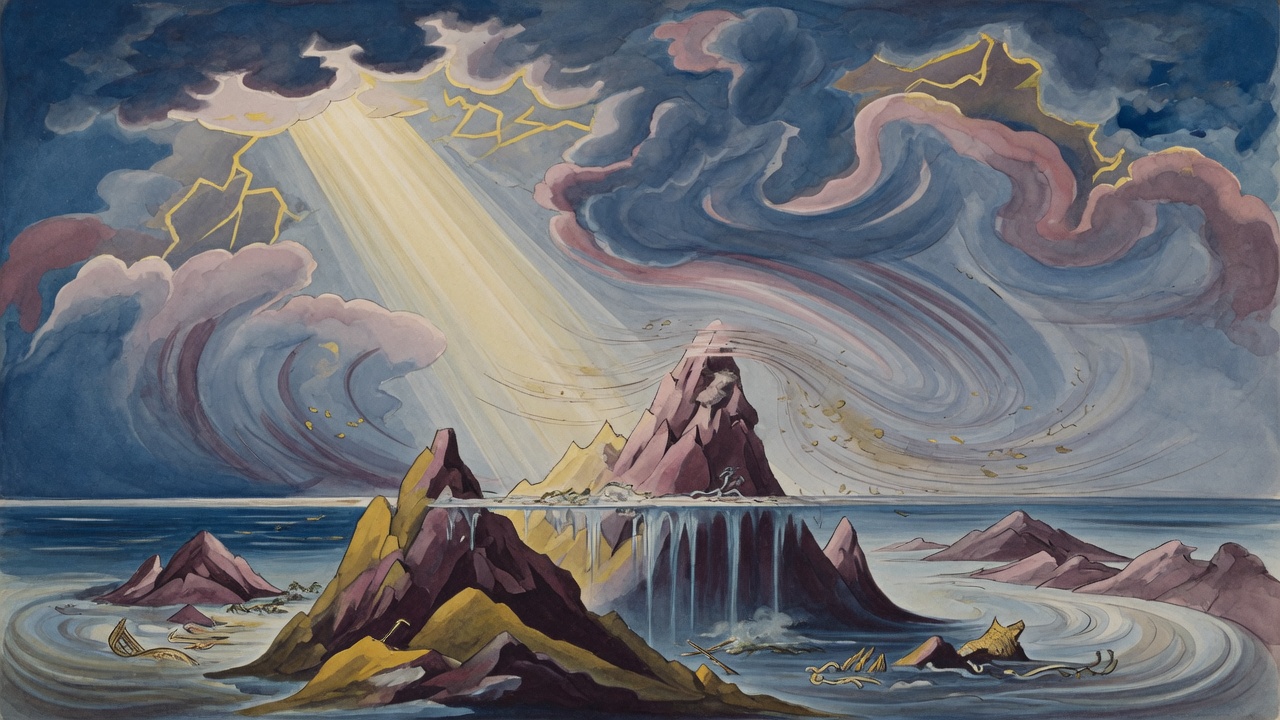
Noah would not board until the water reached his ankles.
 Click for full size
Rabbi Yohanan said it plainly, without cushioning. The verse says Noah came into the ark because of the waters of the flood, and Rabbi Yohanan read that because as an admission. Noah was lacking in faith and would not have entered unless the water forced him to. The man Scripture calls righteous, the sole survivor of his generation, the father of the world that came after, hesitated at the edge of belief and needed the flood to make the first step for him.
The Forty Days Were a Measured Reply
Why forty days of rain? Rabbi Shimon bar Yohai connected the number to the Torah, given over forty days at Sinai, which that generation had trampled. Rabbi Yohanan ben Zakkai pointed instead to the human embryo, which takes form across forty days in the womb, the very form that generation had corrupted with its violence and its crossing of every boundary. The punishment matched the shape of the sin. Rain for as long as the Torah, ruin lasting as long as it takes to form a human being from nothing.
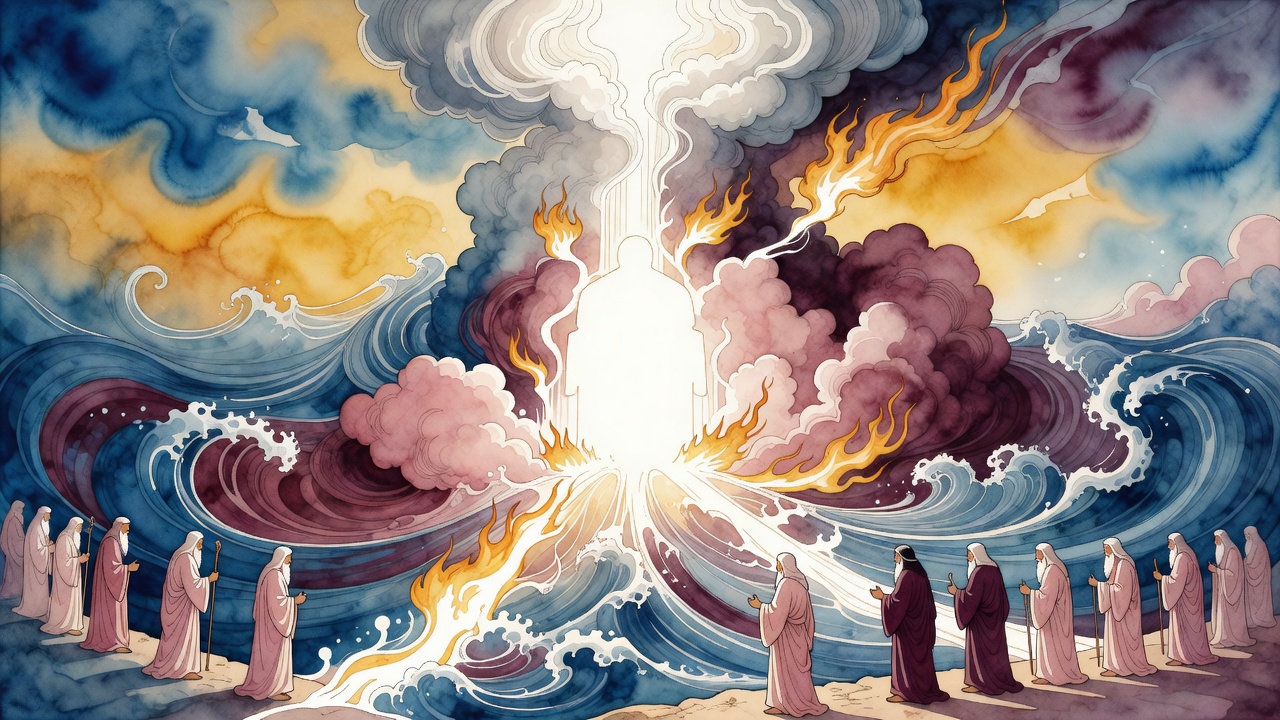
The waters themselves came from two directions. The rabbis called the rainfall above the male water, and the waters of the deep bursting from below the female water, and the two locked together with a force meant to unmake the world that humanity had unmade through its conduct. The flood was not random weather. It was a sentence delivered in the language of the crime.
Falsehood Found a Mate at the Door
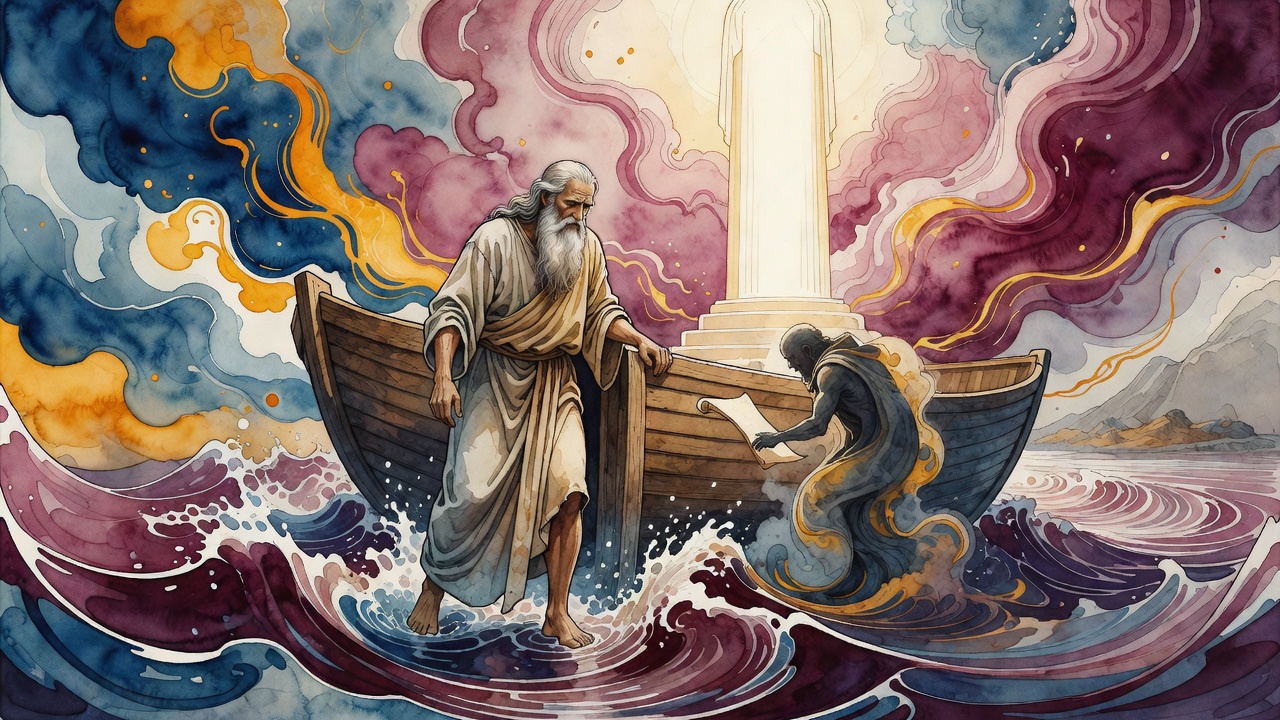
When the animals filed aboard two by two, Falsehood arrived alone, without a pair. Noah turned it away. The command was clear: two by two. A single traveler, however clever, had no place in an ark organized around partnership.
Falsehood walked out and found Corruption and proposed a deal. "We travel together, and whatever you gain you will share with me." Corruption agreed. They entered together. That is why, the sages said, Falsehood and Corruption have traveled as companions ever since: they made their arrangement at the door of the ark before the waters came, when partnership was the only currency that bought passage.
God Mourned Before the Sentence
Before a single drop of rain fell, the Holy One was in mourning. The verse says God was grieved at His heart, and grief, the rabbis insisted, is the language of bereavement, the word used for a king who has lost his son. For seven days God mourned the world before destroying it. The Judge wept before passing sentence, and the seven days of divine mourning became the seven days of sitting shiva that Israel has observed for the dead ever since.
Rabbi Tzadok mapped the catastrophe onto the calendar. On the tenth of Marcheshvan Noah entered the ark. On the seventeenth the waters came. The world had one week of preparation, one week of mourning, and then the flood began.
Og Clung to the Outside
Three exceptions survived the flood. Noah, named in the verse. The Land of Israel, which the prophet calls a land not rained upon with ordinary rain. And Og, the giant king who would later be Israel's enemy at Bashan, who clung to the outside of the ark and rode the floodwaters on its hull. Noah fed him through a window every day for the year of the flood.
Why was the giant spared? Because even a figure who would become Israel's enemy could be preserved when the world needed repopulation, and because the flood was about total judgment of a wicked generation, not about every creature that had ever drawn breath being unmade. Og survived by proximity to righteousness, riding the ark without being in it, sustained by Noah's daily provisioning through the same plank that separated salvation from the flood.
The Calendar of Water and Return
The sages read the flood like a ledger, both in its justice and in its dates. Rabbi Eliezer and Rabbi Yehoshua argued about whether the flood began on the seventeenth of Marcheshvan or the seventeenth of Iyyar, each tying the date to when the Pleiades rises and the springs swell. They tracked the hundred and fifty days the waters prevailed, the slow ebb of a cubit every four days, the ark settling on the mountains, the window opened, the dove sent and returned, sent and not returned. Every detail was counted because the flood was a sentence with a structure, and a sentence has a beginning and an end, and knowing the structure is part of understanding the justice.
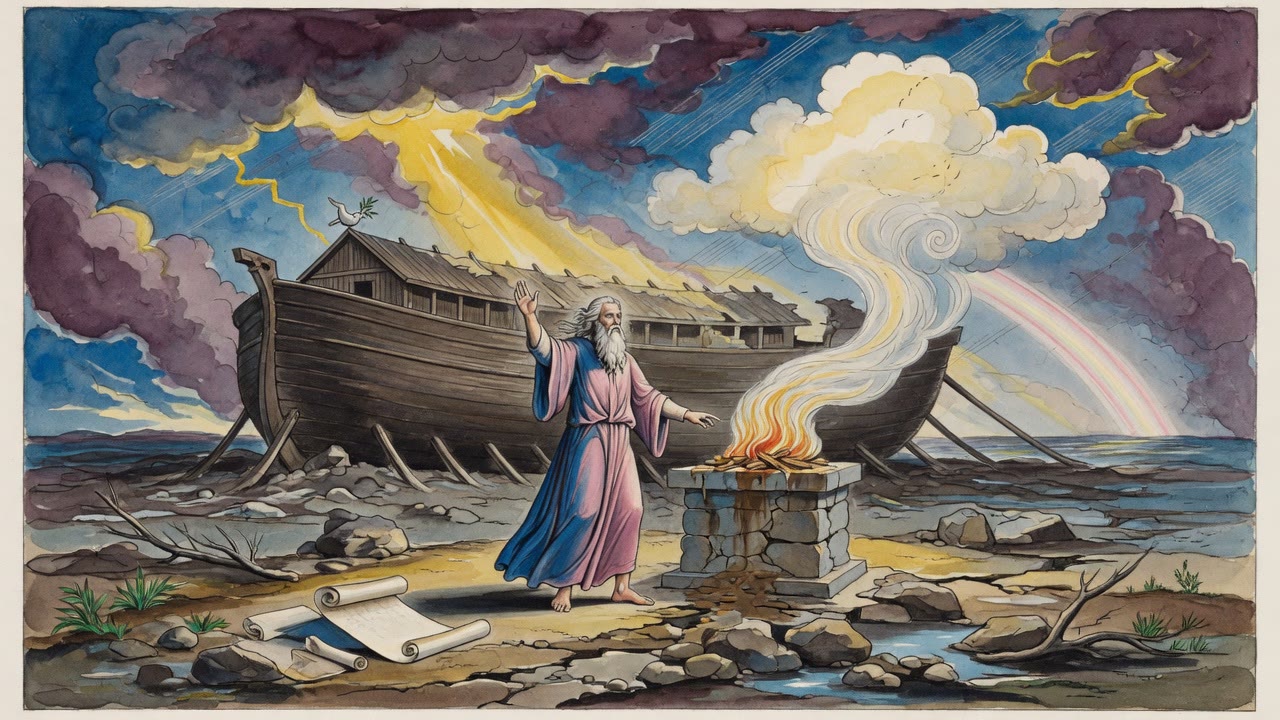
Noah waited for the command to leave with the same faith he had needed to board. The door could have been forced. It was not. He sat in the ark like a servant waiting for the owner to return, and when the owner returned and swore never to flood the world again, Noah stepped out into a world that was wet and empty and ready for a second beginning.
← All myths