Noah Built the Ark With 150 Cells and a Glowing Stone
God named the boards before the rain. One hundred fifty cells. A glowing stone from Eden would hold the light for a year.
Table of Contents
 Click for full size
The Numbers Before the Rain
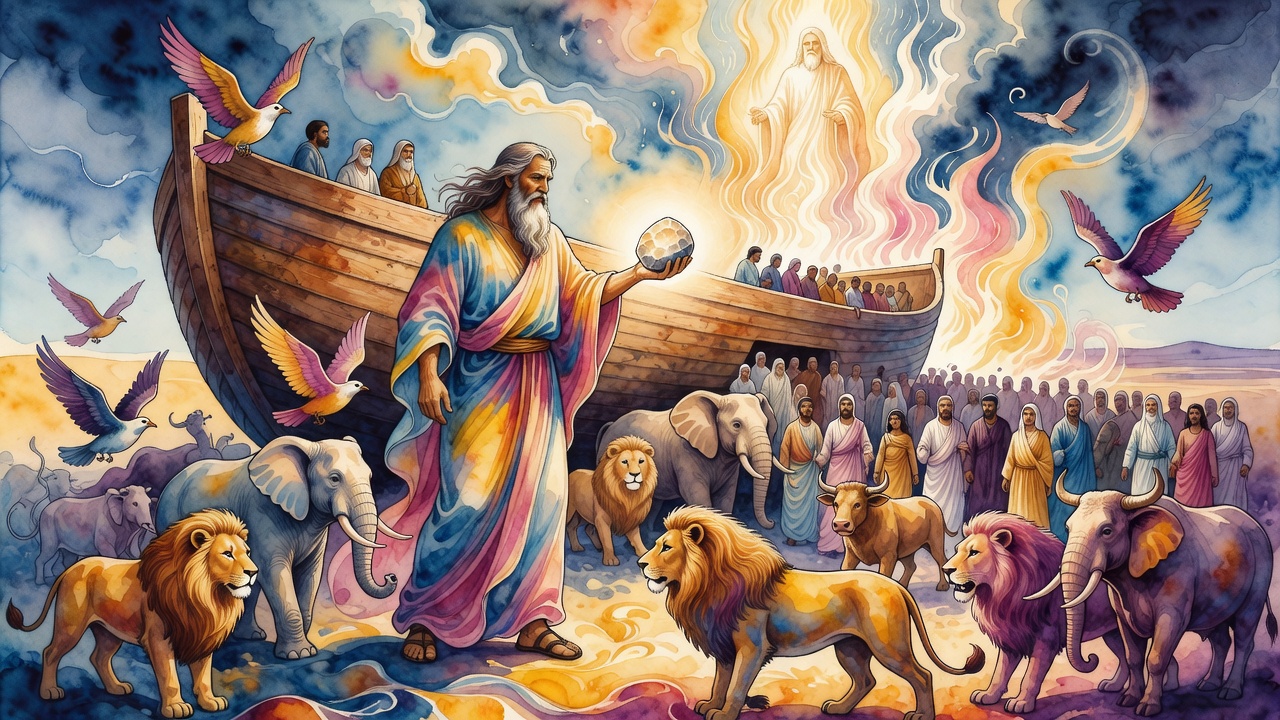
God did not hand Noah a vague command to survive. He gave him numbers. One hundred and fifty cells along the left side. Thirty-six units across the breadth. Ten cabins in the middle for provision. Five repositories on the right and five on the left. Cedar. Pitch within and without. The world outside still looked like a world that would continue. Noah cut and fitted anyway.
He did not guess at a cell. He did not shorten a cabin to save timber. The ark rose from the ground as a box that argued with the sky. Neighbors watched the ribs go up and went home to supper. Noah kept counting.
A Stone That Held Light
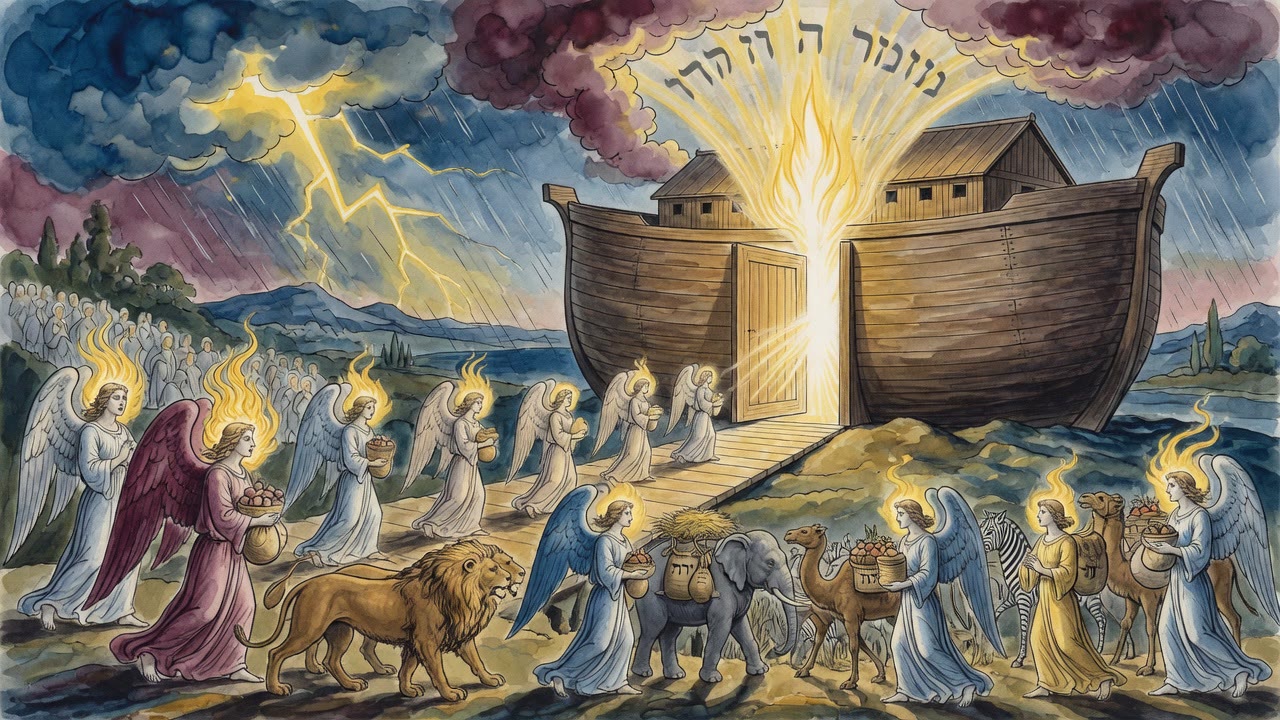
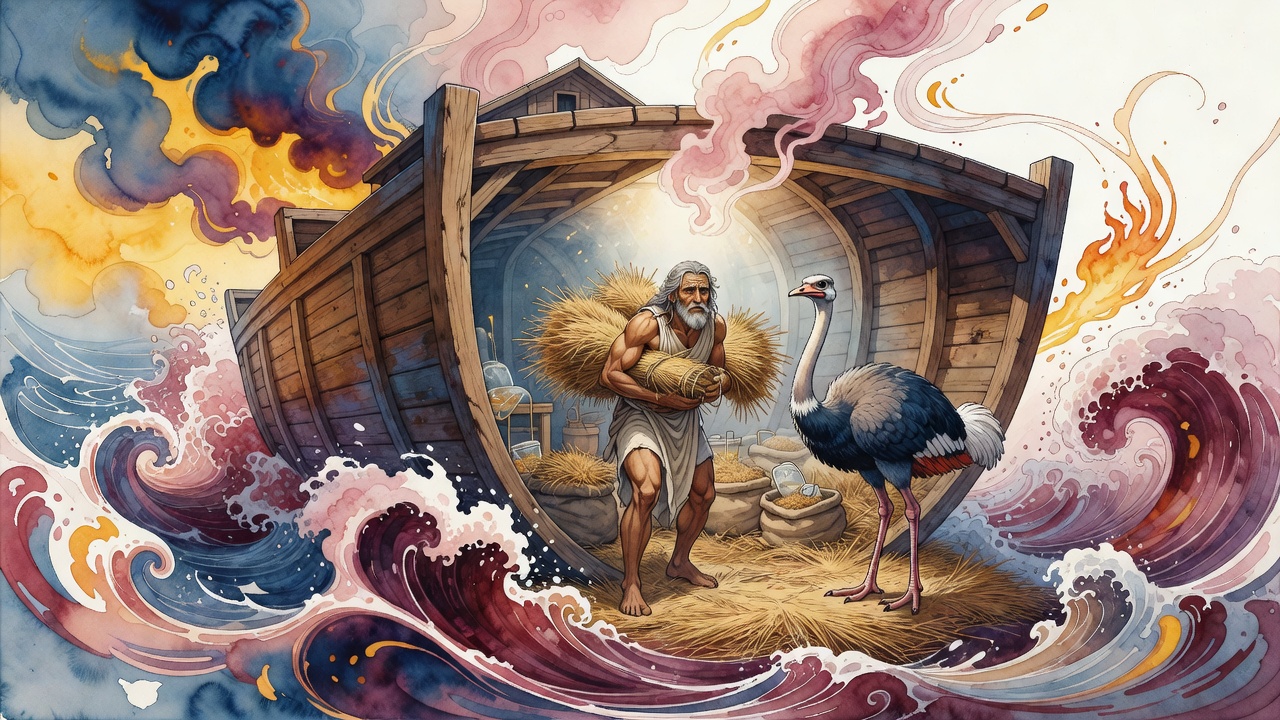
A year inside boards would be a year of dark if the light depended on weather. God told him to make a tzohar (צהר) for the ark, a glowing stone, a piece of Eden-light set where a window might have been (Genesis 6:16). Noah seated it in the ceiling. By day it looked like a pale gem. He did not yet know how black the sky would go.
The compartments were nests as much as rooms. Each cell a place for a kind. Each cabin a store against a calendar no one on the ground believed in. Pitch on the inner face. Pitch on the outer face. The stone waited above the work like a held lamp.
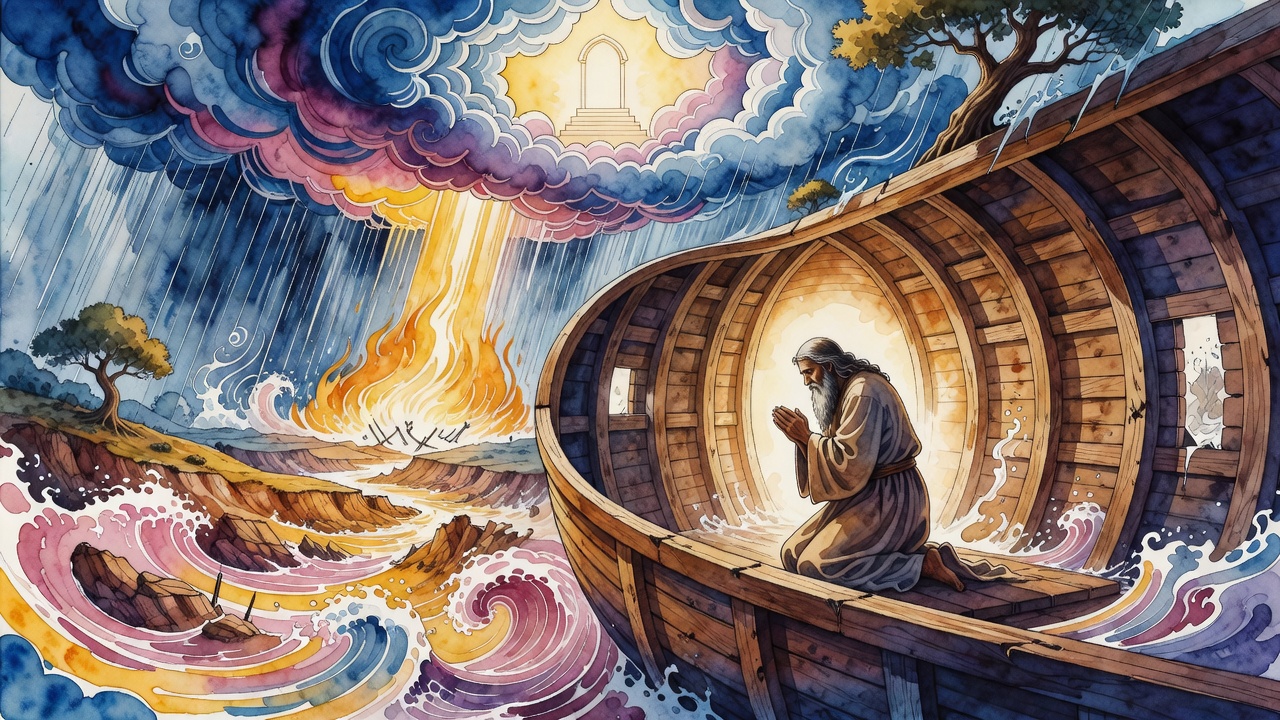
When the sun later darkened and the foundations of the earth trembled, the stone did not go out. That was the point of packing light that did not come from the weather.
Who Lay Down at the Door
The animals did not need to be herded. God ordered them and they came, more than the ark could take. Noah was told to sit at the door and watch. The ones that lay down as they neared were meant to enter. The ones that stood were not.
A lioness arrived with two cubs. All three crouched. Then the young ones struggled with the mother, and she rose and stood beside them. Noah led the two cubs in and left her outside. Thirty-two species of birds went to their cells. Three hundred and sixty-five species of reptiles. Cattle. Wild beasts. The refused animals remained standing about the ark for seven days, while lightning walked a sky that had never looked like that, and the people of the generation did not change their work.
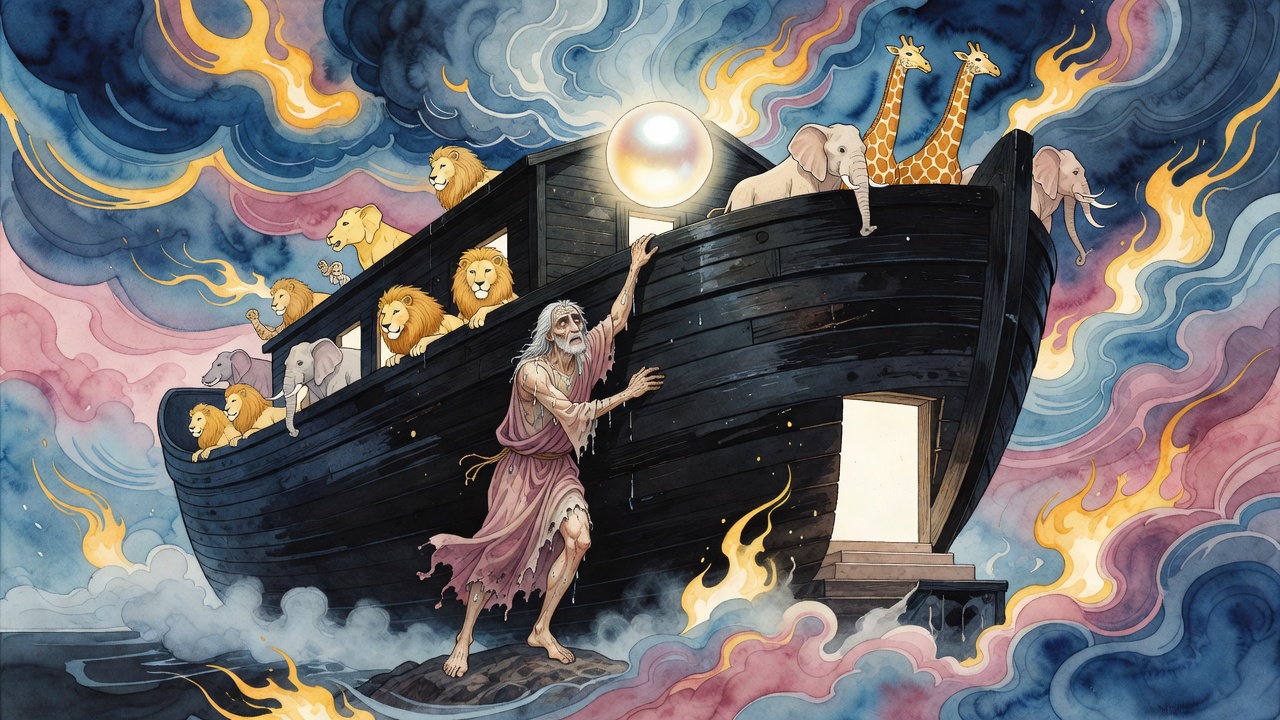
Noah sat the door as he had been commanded. He still did not walk in himself. He had so little faith that he waited until the water reached his knees.
Lions Closed the Gate
When the rains broke, seven hundred thousand gathered around the ark and called for the door. They were not asking to repent as a life. They were asking not to die. Noah answered from inside that he had been warning them one hundred and twenty years, and they had said there was no God. Now they wanted the plank opened.
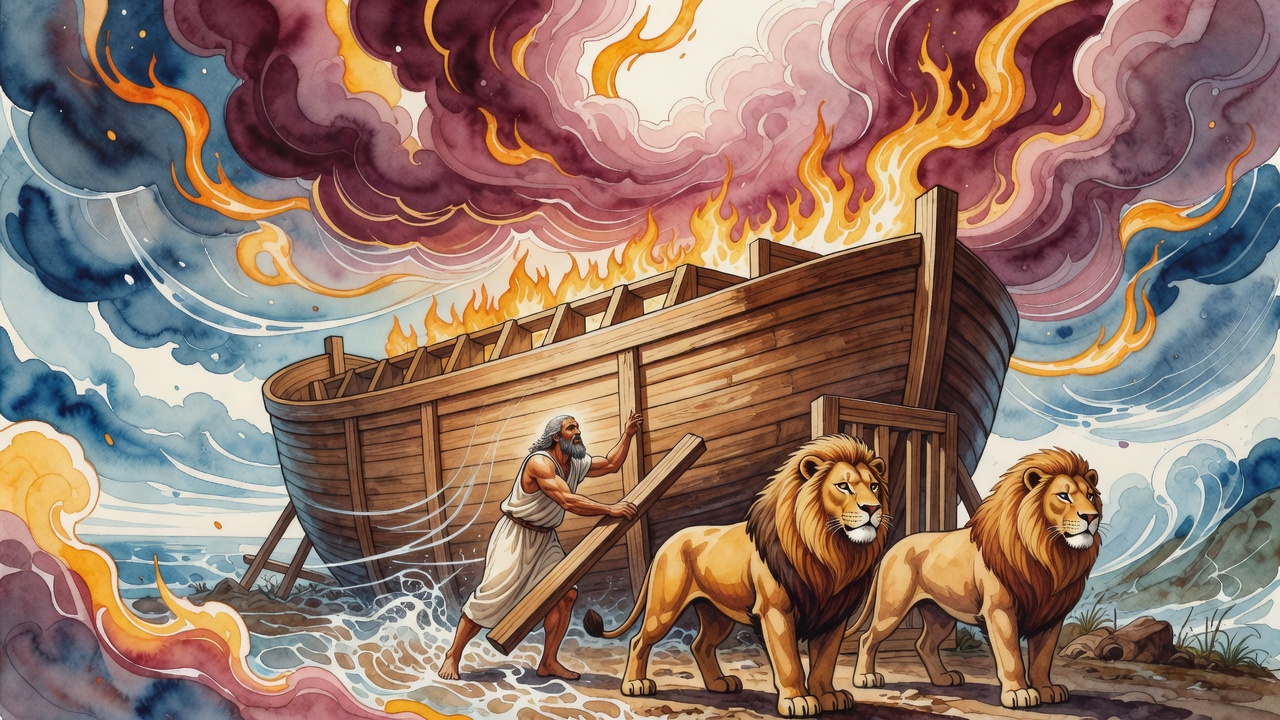
They tried to take the entrance by storm. God had already set a lock that used teeth. Lions and bears and every predator that tears its prey stood in a living wall around the timber. Whoever raised a hand against the boards was struck down where he stood. The Lord shut him in (Genesis 7:16), and the shutting was mouths of lions, the way a later pit would be shut on a different righteous man.
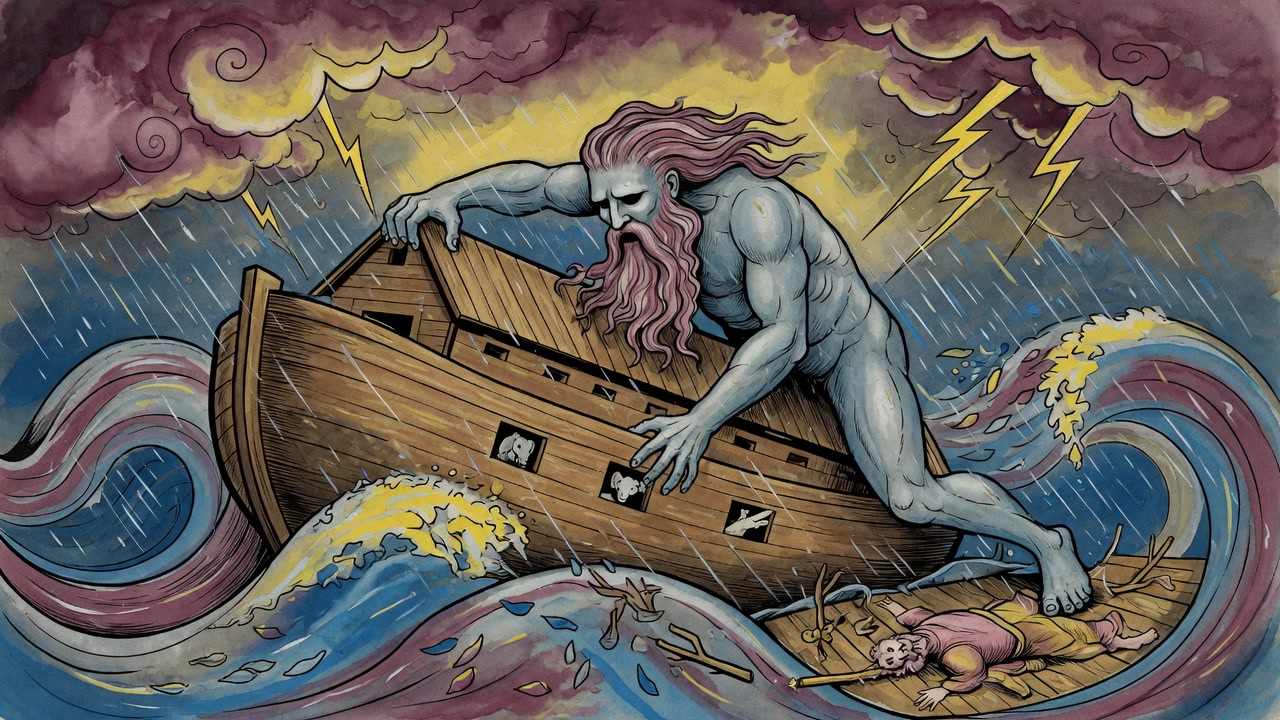
Giants in the crowd still boasted. If the water came from above, it would not reach their necks. If it came from below, the soles of their feet would dam the springs. Each drop passed through fire before it fell. The hot rain scalded them. Some threw their little children into the springs to choke the flood. The ark's walls never shuddered from a human blow. The glowing stone held. The cells were already full.
One Year Behind Pitch
Inside, the year was feeding and hauling and sleeping in turns, one hundred and fifty cells of breath against boards that groaned when the river tested them. Noah pressed his palm flat to the wood. Cold at the seam. Hold. The cabins paid their rent every morning. The stone in the ceiling kept a pale day going when there was no sun to argue with.
His wife Naamah was there, and the three sons, and the three wives. A small household on purpose. He had married late so he would not have to build for a clan that would not be allowed to live. The refused world hammered once, then thinned, then was only water.
When the dove came back with the olive and the ark settled, Noah opened the door into a silence that had been bought by numbers, by pitch, by beasts at the threshold, and by a glowing stone that had not needed the sky. The cubs walked out without their mother. The people who had stood for seven days were gone.
← All myths