Translation of the source text.William Davidson Edition - Vocalized Aramaic + William Davidson Edition - English · CC-BY-NC
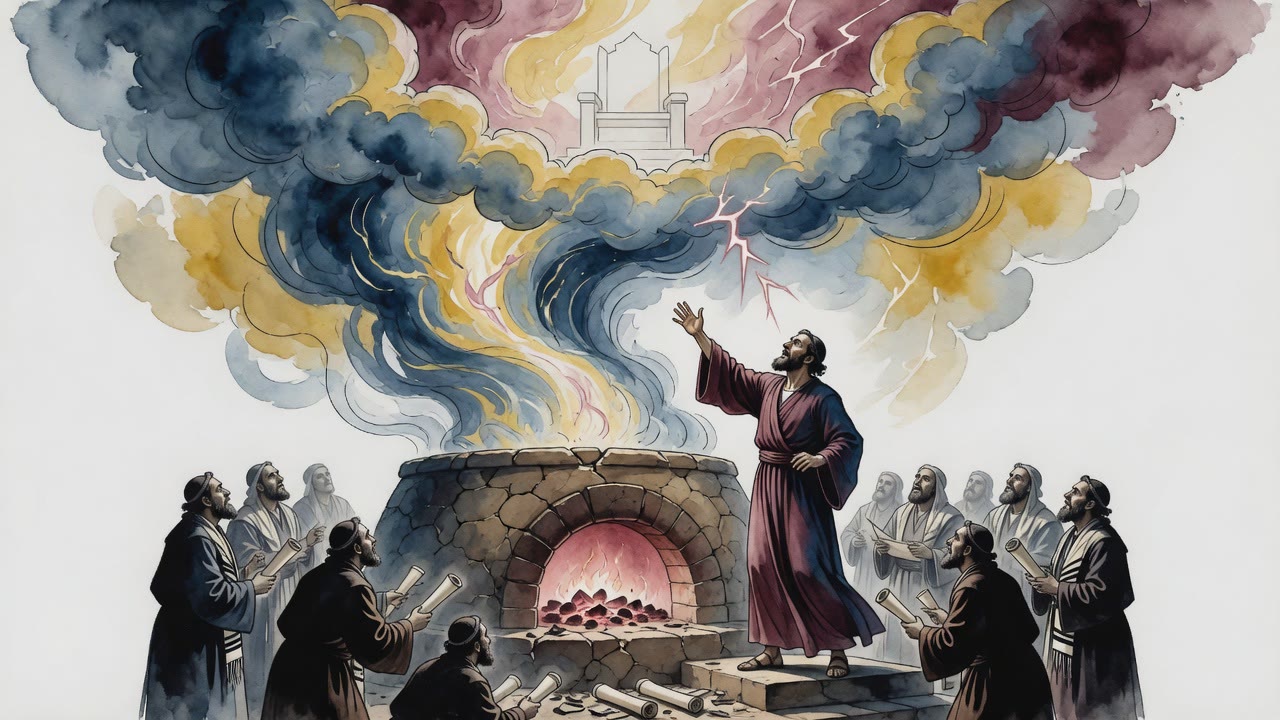
And this is known as the oven of akhnai. The Gemara asks: What is the relevance of akhnai, a snake, in this context? Rav Yehuda said that Shmuel said: It is characterized in that manner due to the fact that the Rabbis surrounded it with their statements like this snake, which often forms a coil when at rest, and deemed it impure. The Sages taught: On that day, when they discussed this matter, Rabbi Eliezer answered all possible answers in the world to support his opinion, but the Rabbis did not accept his explanations from him.
After failing to convince the Rabbis logically, Rabbi Eliezer said to them: If the halakha is in accordance with my opinion, this carob tree will prove it. The carob tree was uprooted from its place one hundred cubits, and some say four hundred cubits. The Rabbis said to him: One does not cite halakhic proof from the carob tree. Rabbi Eliezer then said to them: If the halakha is in accordance with my opinion, the stream will prove it.
The water in the stream turned backward and began flowing in the opposite direction. They said to him: One does not cite halakhic proof from a stream. Rabbi Eliezer then said to them: If the halakha is in accordance with my opinion, the walls of the study hall will prove it. The walls of the study hall leaned inward and began to fall.
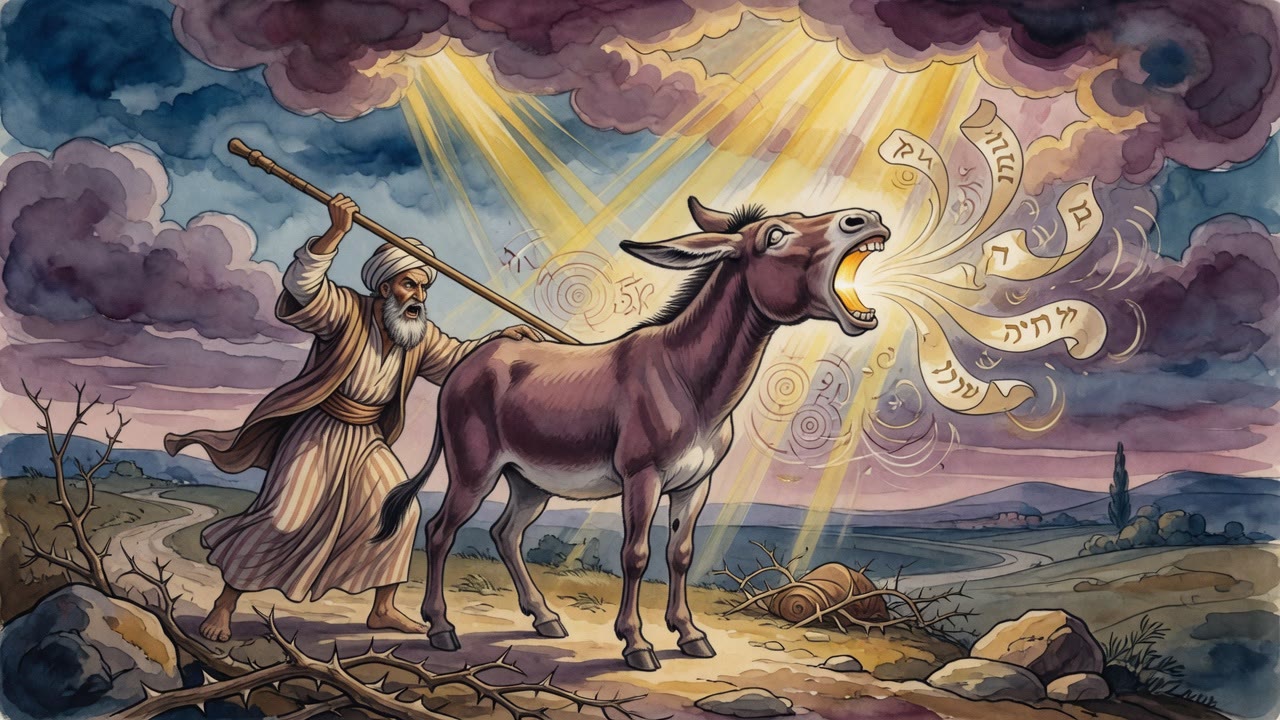
Rabbi Yehoshua scolded the walls and said to them: If Torah scholars are contending with each other in matters of halakha, what is the nature of your involvement in this dispute? The Gemara relates: The walls did not fall because of the deference due Rabbi Yehoshua, but they did not straighten because of the deference due Rabbi Eliezer, and they still remain leaning. Rabbi Eliezer then said to them: If the halakha is in accordance with my opinion, Heaven will prove it.
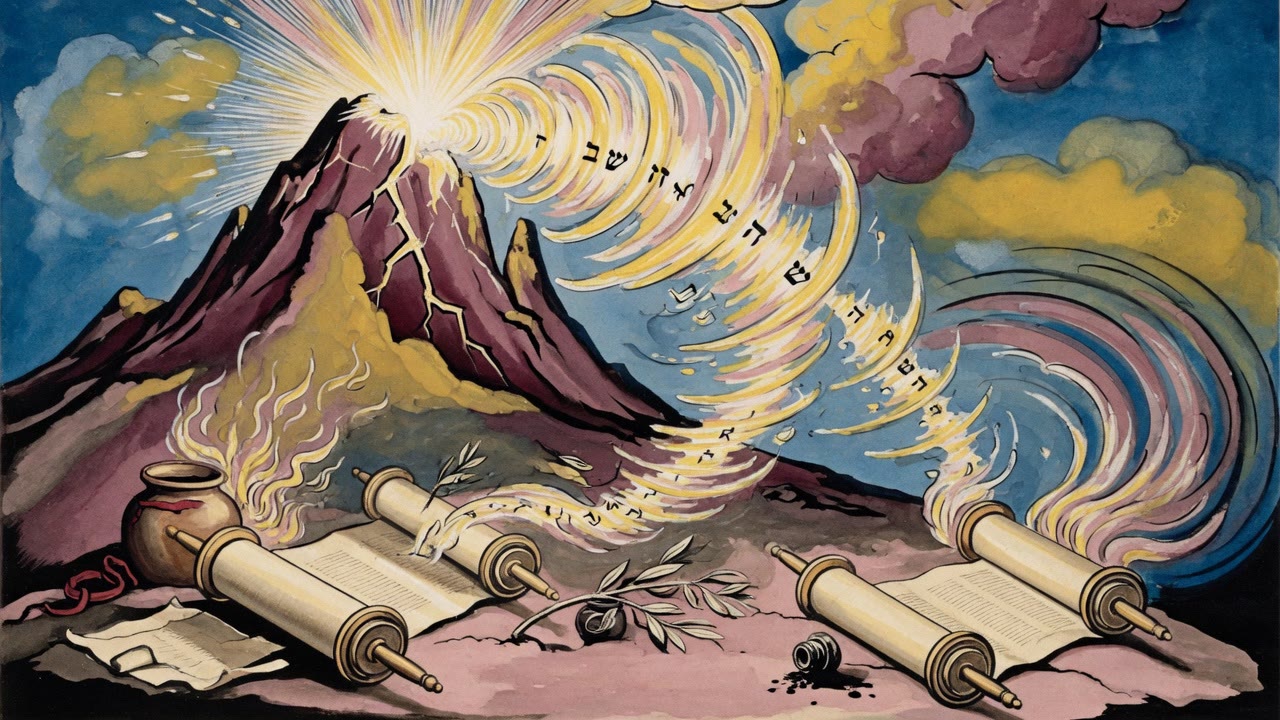
A Divine Voice emerged from Heaven and said: Why are you differing with Rabbi Eliezer, as the halakha is in accordance with his opinion in every place that he expresses an opinion? Rabbi Yehoshua stood on his feet and said: It is written: “It is not in heaven” (Deuteronomy 30:12). The Gemara asks: What is the relevance of the phrase “It is not in heaven” in this context? Rabbi Yirmeya says: Since the Torah was already given at Mount Sinai, we do not regard a Divine Voice, as You already wrote at Mount Sinai, in the Torah: “After a majority to incline” (Exodus 23:2).
Since the majority of Rabbis disagreed with Rabbi Eliezer’s opinion, the halakha is not ruled in accordance with his opinion. The Gemara relates: Years after, Rabbi Natan encountered Elijah the prophet and said to him: What did the Holy One, Blessed be He, do at that time, when Rabbi Yehoshua issued his declaration? Elijah said to him: The Holy One, Blessed be He, smiled and said: My children have triumphed over Me; My children have triumphed over Me.
The Sages said: On that day, the Sages brought all the ritually pure items deemed pure by the ruling of Rabbi Eliezer with regard to the oven and burned them in fire, and the Sages reached a consensus in his regard and ostracized him. And the Sages said: Who will go and inform him of his ostracism? Rabbi Akiva, his beloved disciple, said to them: I will go, lest an unseemly person go and inform him in a callous and offensive manner, and he would thereby destroy the entire world.
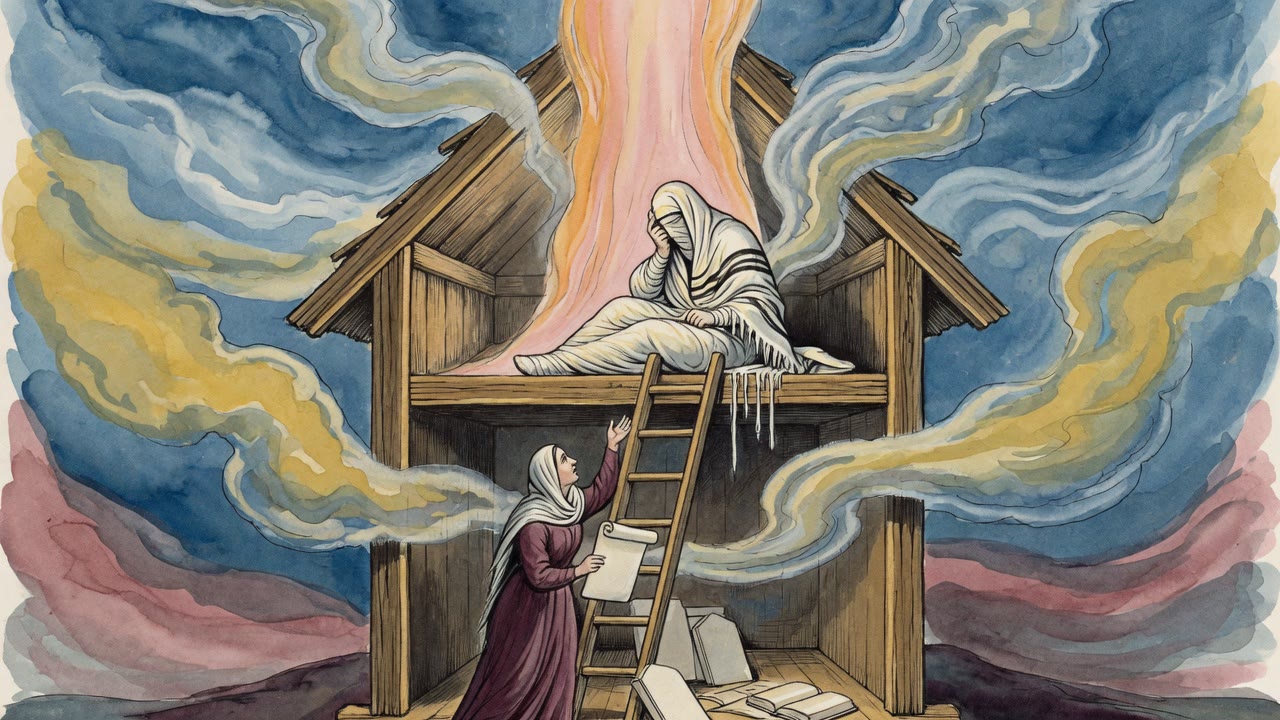
What did Rabbi Akiva do? He wore black and wrapped himself in black, as an expression of mourning and pain, and sat before Rabbi Eliezer at a distance of four cubits, which is the distance that one must maintain from an ostracized individual. Rabbi Eliezer said to him: Akiva, what is different about today from other days, that you comport yourself in this manner? Rabbi Akiva said to him: My teacher, it appears to me that your colleagues are distancing themselves from you.
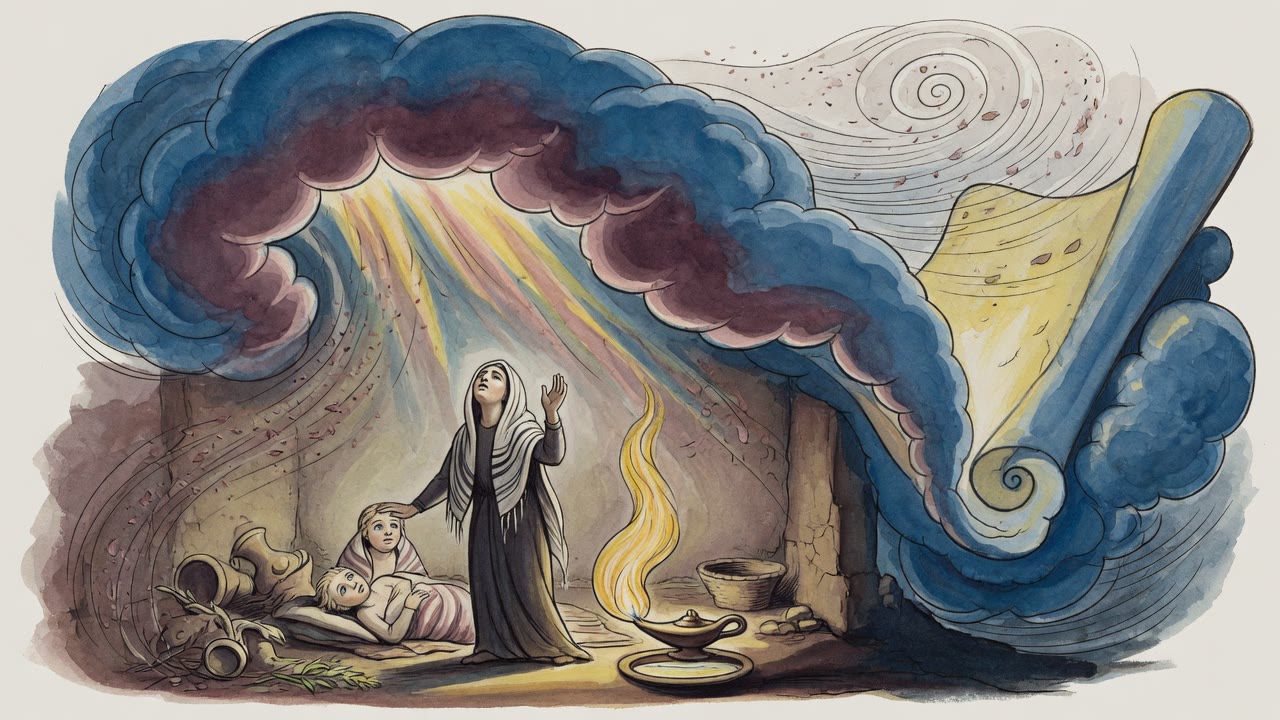
He employed euphemism, as actually they distanced Rabbi Eliezer from them. Rabbi Eliezer too, rent his garments and removed his shoes, as is the custom of an ostracized person, and he dropped from his seat and sat upon the ground. The Gemara relates: His eyes shed tears, and as a result the entire world was afflicted: One-third of its olives were afflicted, and one-third of its wheat, and one-third of its barley.
And some say that even dough kneaded in a woman’s hands spoiled. The Sages taught: There was great anger on that day, as any place that Rabbi Eliezer fixed his gaze was burned. And even Rabban Gamliel, the Nasi of the Sanhedrin at Yavne, the head of the Sages who were responsible for the decision to ostracize Rabbi Eliezer, was coming on a boat at the time, and a large wave swelled over him and threatened to drown him.
Rabban Gamliel said: It seems to me that this is only for the sake of Rabbi Eliezer ben Hyrcanus, as God punishes those who mistreat others. Rabban Gamliel stood on his feet and said: Master of the Universe, it is revealed and known before You that neither was it for my honor that I acted when ostracizing him, nor was it for the honor of the house of my father that I acted; rather, it was for Your honor, so that disputes will not proliferate in Israel.
In response, the sea calmed from its raging. The Gemara further relates: Imma Shalom, the wife of Rabbi Eliezer, was the sister of Rabban Gamliel. From that incident forward, she would not allow Rabbi Eliezer to lower his head and recite the taḥanun prayer, which includes supplication and entreaties. She feared that were her husband to bemoan his fate and pray at that moment, her brother would be punished.
A certain day was around the day of the New Moon, and she inadvertently substituted a full thirty-day month for a deficient twenty-nine-day month, i.e., she thought that it was the New Moon, when one does not lower his head in supplication, but it was not. Some say that a pauper came and stood at the door, and she took bread out to him. The result was that she left her husband momentarily unsupervised.
When she returned, she found him and saw that he had lowered his head in prayer. She said to him: Arise, you already killed my brother. Meanwhile, the sound of a shofar emerged from the house of Rabban Gamliel to announce that the Nasi had died. Rabbi Eliezer said to her: From where did you know that your brother would die?
She said to him: This is the tradition that I received from the house of the father of my father: All the gates of Heaven are apt to be locked, except for the gates of prayer for victims of verbal mistreatment. § The Sages taught: One who verbally mistreats the convert violates three prohibitions, and one who oppresses him in other ways violates two. The Gemara asks: What is different with regard to verbal mistreatment, that three prohibitions are written concerning it: “And you shall neither mistreat a convert” (Exodus 22:20); “And when a convert lives in your land, you shall not mistreat him” (Leviticus 19:33); “And you shall not mistreat, each man his colleague” (Leviticus 25:17), and a convert is included in the category of colleague?
With regard to one who also oppresses a convert as well, three prohibitions are written: “And you shall neither mistreat a convert, nor oppress him” (Exodus 22:20); “And you shall not oppress a convert (Exodus 23:9); “And you shall not be to him like a creditor” (Exodus 22:24). This last prohibition is a general prohibition, in which converts are included. Consequently, it is not correct that one who oppresses a convert violates only two prohibitions.
Rather, both this one, who verbally mistreats a convert, and that one, who oppresses him, violate three prohibitions. It is taught in a baraita that Rabbi Eliezer the Great says: For what reason did the Torah issue warnings in thirty-six places, and some say in forty-six places, with regard to causing any distress to a convert? It is due to the fact that a convert’s inclination is evil, i.e., he is prone to return to his previous way of living.
What is the meaning of that which is written: “And you shall not mistreat a convert nor oppress him, because you were strangers in the land of Egypt” (Exodus 22:20)? We learned in a baraita that Rabbi Natan says: A defect that is in you, do not mention it in another. Since the Jewish people were themselves strangers, they are not in a position to demean a convert because he is a stranger in their midst.
And this explains the adage that people say: One who has a person hanged in his family [bidyotkei], does not say to another member of his household: Hang a fish for me, as the mention of hanging is demeaning for that family. MISHNA: One may not intermingle produce bought from one supplier with other produce, even if he intermingles new produce with other new produce and ostensibly the buyer suffers no loss from his doing so.

 Click for full size