Rabbi Akiva Lost His Lamp His Rooster and His Donkey in One Night
Three losses in a single night left Rabbi Akiva in darkness outside a hostile town, and the next morning he understood why each one had saved him.
Table of Contents
 Click for full size
The Night Nothing Worked
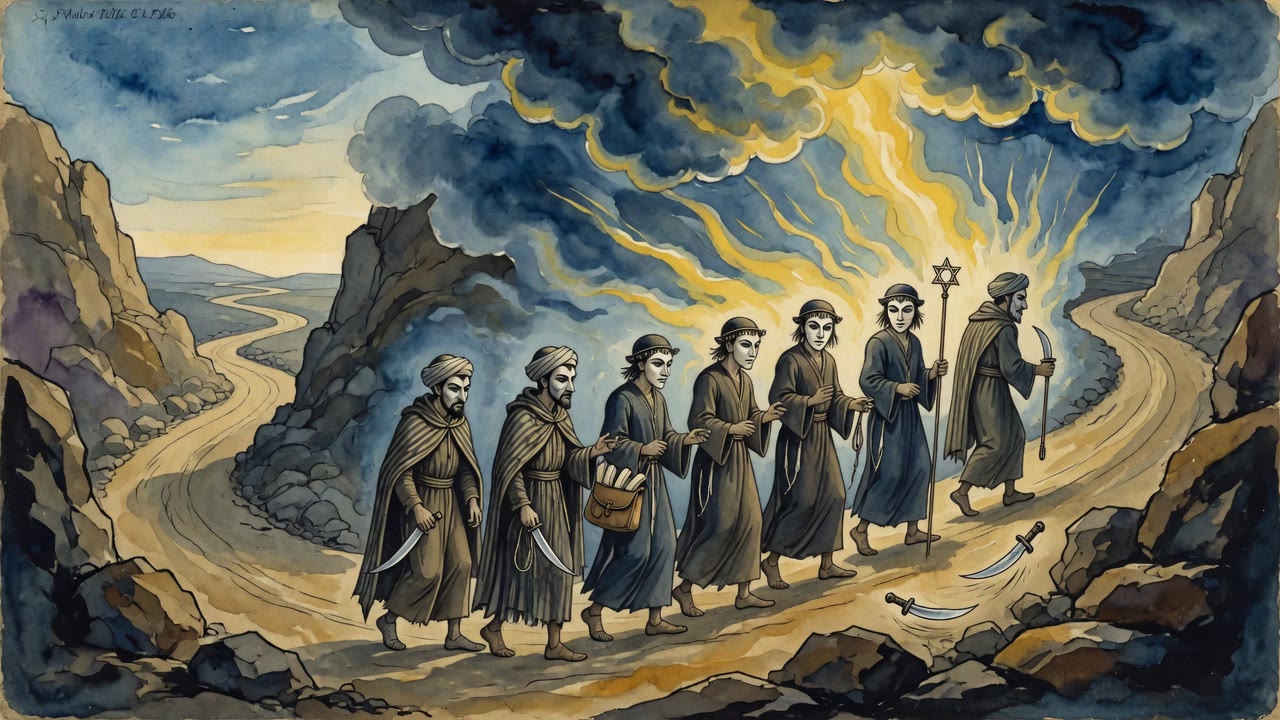
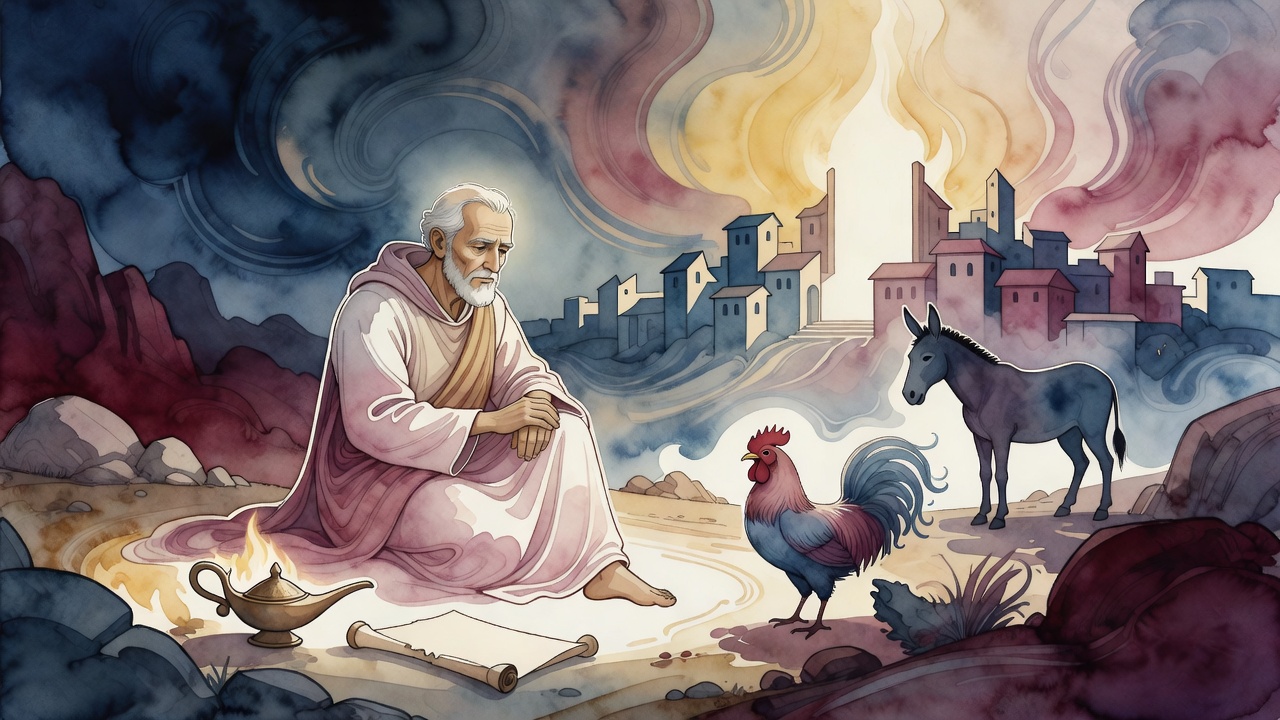
Rabbi Akiva was traveling and he carried three things with him. A lamp, to study by at night. A donkey, to ride during the day. A rooster, to wake him at dawn. He came to a town and knocked at every door asking for shelter. No one would take him in. He went outside the town walls, made camp in a field, and lit his lamp.
A wind came and blew it out. He said: "Kol de'avid Rachmana letav avid." Whatever the Merciful One does is done for the good. He had said this sentence so many times his students could finish it for him. He sat in the dark.
Then a cat came and ate the rooster. Whatever the Merciful One does is done for the good. Then a lion came and killed the donkey. Whatever the Merciful One does is done for the good. Akiva sat alone in the field in the dark with nothing. He slept.
What the Town Looked Like in the Morning
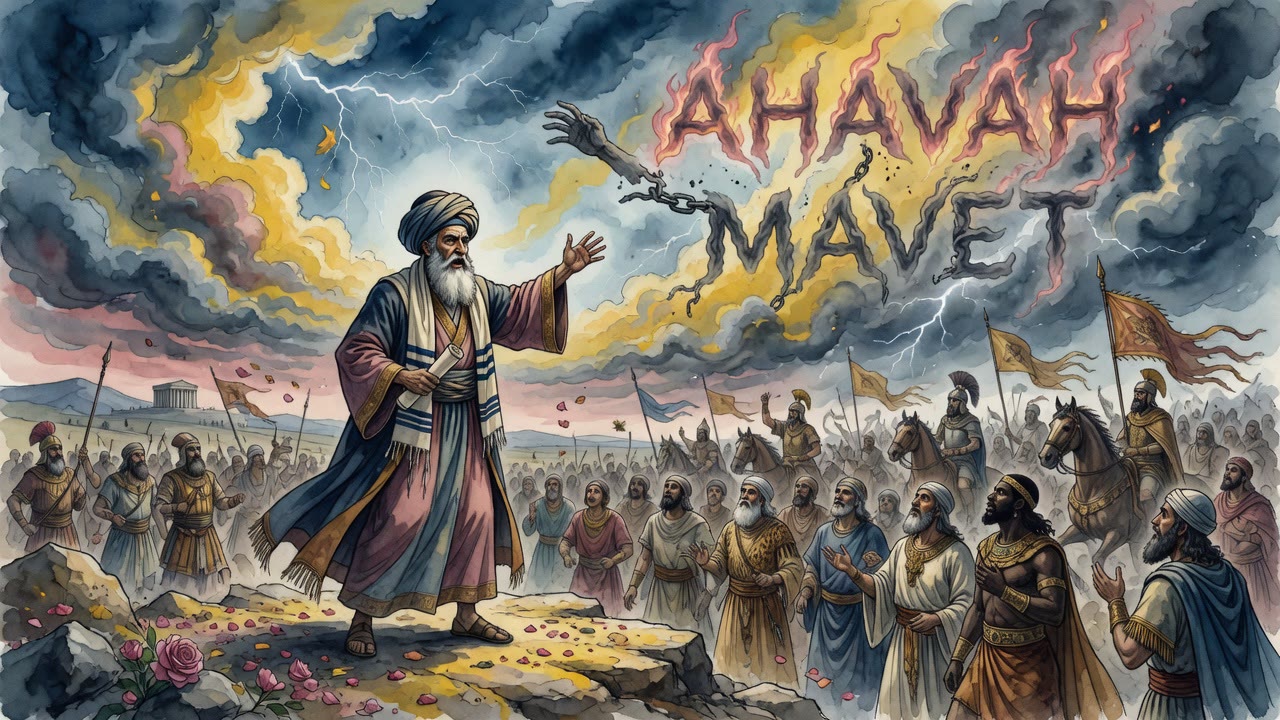
When he woke, he found out what had happened in the night. A Roman military cohort had swept through the town. They killed everyone inside the walls. Rabbi Akiva walked through what was left and understood. The lamp, if it had stayed lit, would have given away his position in the field. The rooster, if it had called, would have drawn attention to where he was sleeping. The donkey, if it had brayed, would have done the same. Each loss had kept him invisible. The wind and the cat and the lion had been the exact instruments of his survival.
He repeated the sentence he had said three times in the dark, and this time it was not an act of faith but a statement of completed fact. Whatever the Merciful One does is done for the good. He had been saying it without knowing. Now he knew.
The Fish and the Fox at the River's Edge
This was the form of Akiva's thinking, applied across every situation. When Rome forbade the teaching of Torah on pain of death, Akiva kept teaching in public. His friend Pappus ben Yehudah stopped him in the street and asked if he was afraid. Akiva told him a parable. A fox walked along the riverbank and saw fish darting frantically from pool to pool. The fox called down: "Come up on dry land and escape from the nets." The fish answered: "You are supposed to be the wisest of animals, but this is a foolish suggestion. The water is our element. Yes, we are in danger here. But out there we would die at once." Torah is to Israel what water is to fish, Akiva said. Dangerous to study now, in these conditions. But to leave it would be death of a different kind, immediate and complete.
Prison Water and the Cost of Precision
When the Romans finally arrested Akiva and threw him into prison, his disciple Yehoshua Hagarsi was permitted to bring him water each day, a small measured ration. One morning the prison guard noticed the water jug and said, sneering, that the quantity was excessive. He seized the vessel and poured half of it into the dust before Yehoshua could respond. What was left would barely keep a man alive.
Yehoshua carried the diminished ration to his master. Akiva was faint and parched. When he saw how little water there was, he did not ask what had happened to the rest. He asked Yehoshua to pour it out. He used the water to wash his hands before eating, according to the ritual requirement, and only then drank what was left. Yehoshua protested: "you will die of thirst if you wash with this." Akiva answered: "what will I do? The sages have decreed it, and I will die rather than transgress the words of my colleagues." He ate with clean hands and he waited.
The Last Word
Akiva died at the hands of the Romans. The hour of his execution fell precisely at the time of the morning Shema (Hear O Israel) recitation. He recited it as they were tearing his flesh with iron combs. His students watched and begged him to stop. He told them that all his life he had understood the verse "with all your soul" to mean even when God takes your soul. Now, at last, the moment had come when he could fulfill it. He drew out the word Echad, one, the last word of the Shema, until his soul departed on that word. A heavenly voice spoke: "happy is Akiva, whose soul departed on the word Echad."
← All myths