Rabbi Shimon Bar Yohai Left the Cave and Burned the World
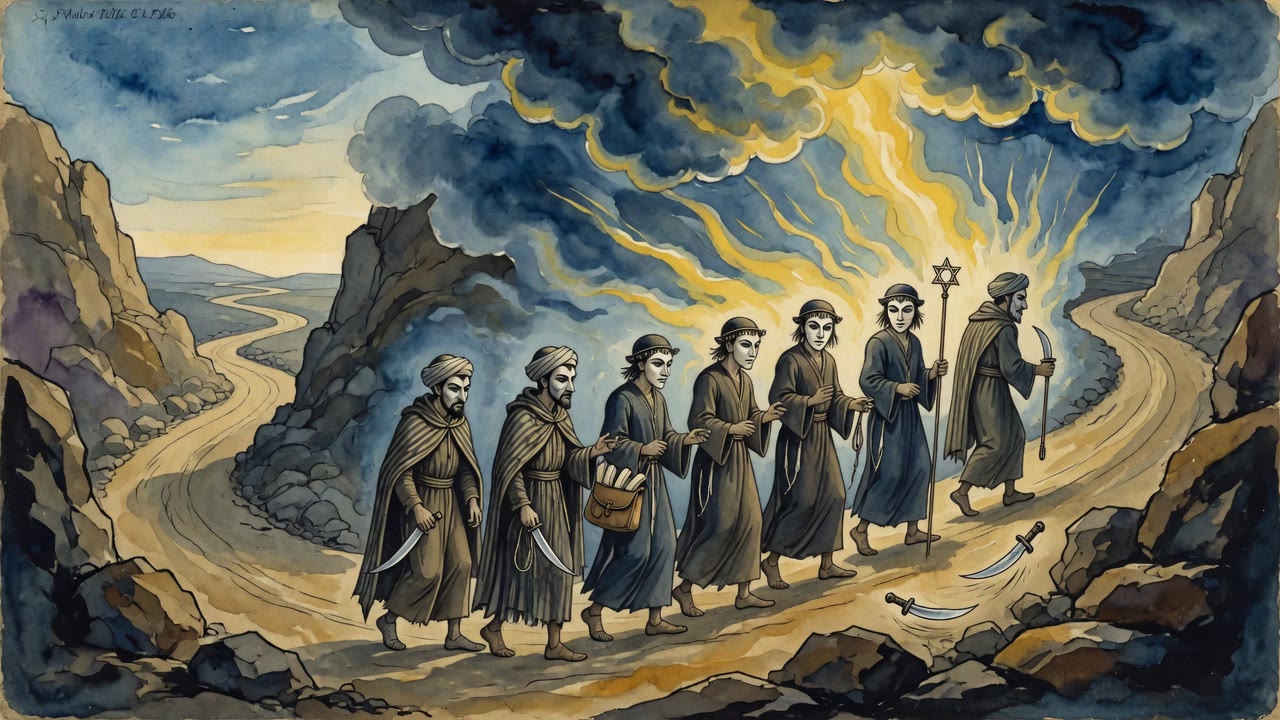
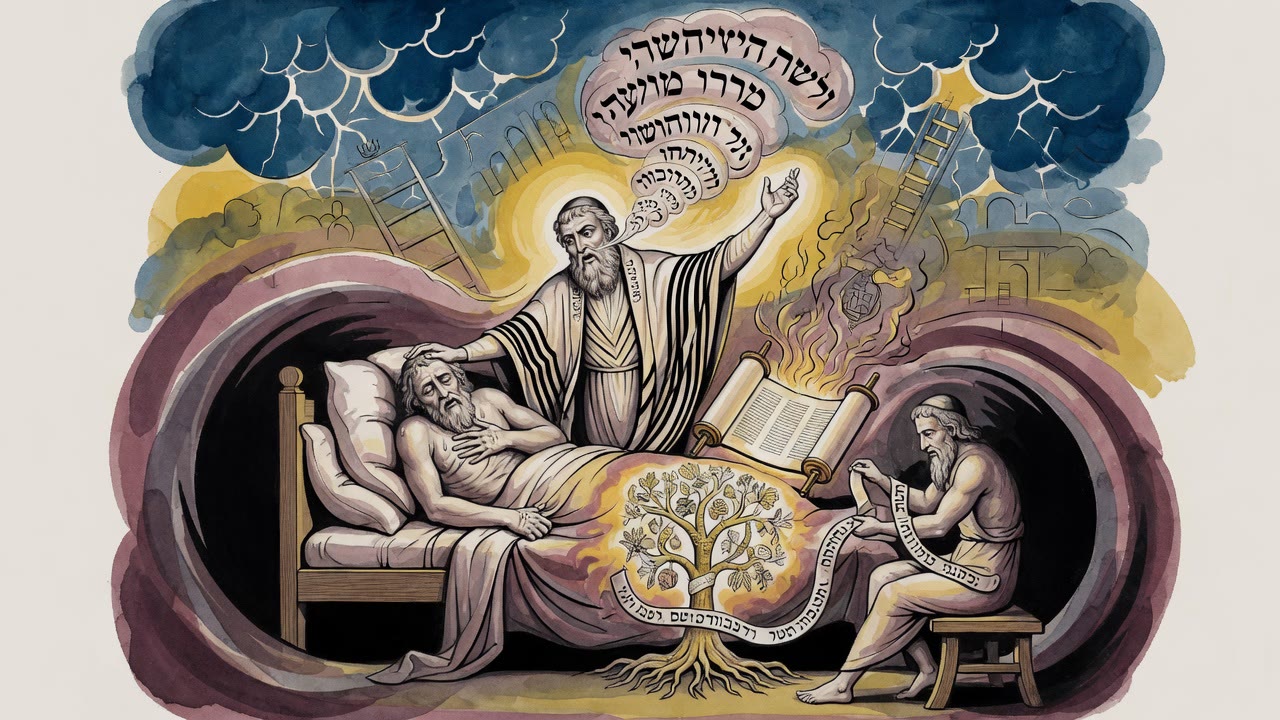
They buried themselves in sand up to the neck so the cloaks would last. When they walked out, a plowed field caught fire under one look.
Table of Contents
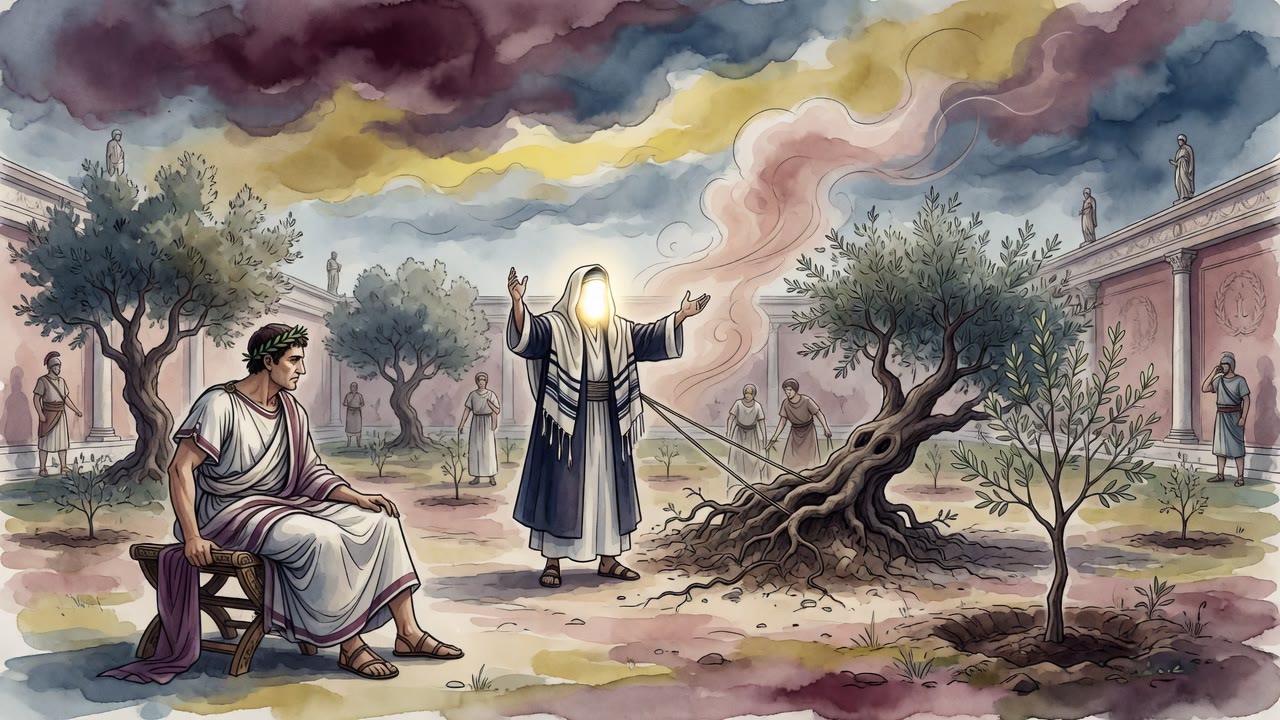
Three sages sat in one room. Rabbi Yehudah praised Rome: markets, bathhouses, bridges. Rabbi Yossi said nothing. Rabbi Shimon bar Yohai spat the praise back. "Everything they built, they built for themselves. Markets for licentiousness. Baths for their own pleasure. Bridges to collect tolls."
 Click for full size
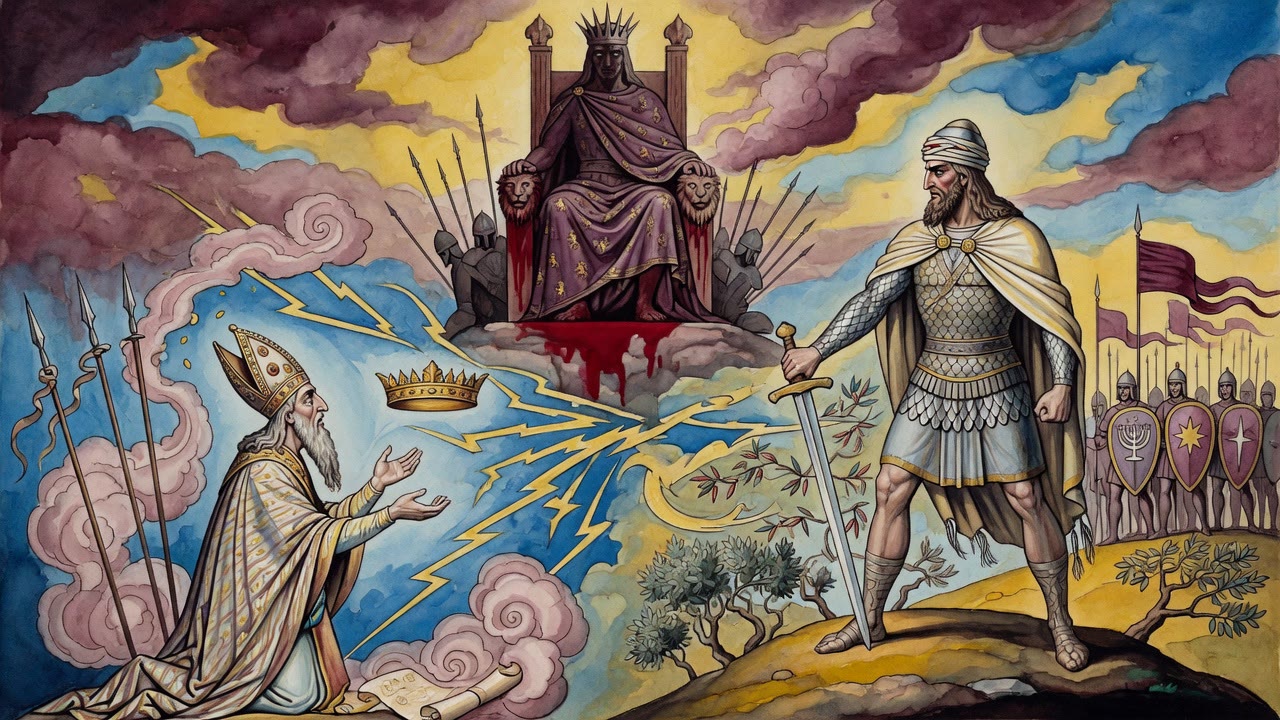
A student named Yehudah ben Gerim overheard and carried the words to Roman ears. The edict came fast. Yehudah, who had praised, was promoted. Yossi, who had been silent, was exiled to Sepphoris. Shimon, who had told the truth about the tolls, was condemned to death.
Bread in the Study Hall
He fled with his son Eleazar. They hid first in the study hall. Shimon's wife brought bread and water. He watched her hands on the jug and feared the Romans would break her in questioning. He took his son and left her. They went into a cave near Peki'in.
A carob tree grew at the mouth overnight, fruit on it year-round. A spring opened in the stone. They ate carobs. They drank. They stripped their cloaks so the cloth would last, buried themselves in sand up to the neck, and studied. They dressed only to pray. Twelve years went by that way. Sand in the teeth. Torah in the dark.
A Bird Fell Only When Heaven Said So
Outside, a fowler set snares. A bird flew free until a voice from above marked it. Then it dropped into the net. Shimon turned to Eleazar. "If a bird is not taken without a decree, a man is not taken without one."
Elijah appeared at the mouth with news. The emperor who had wanted Shimon dead was dead. The decree was void. Father and son climbed out into sun they had not seen in years. Sand still clung to their necks. Their eyes had to learn daylight again.
The Field Caught Fire
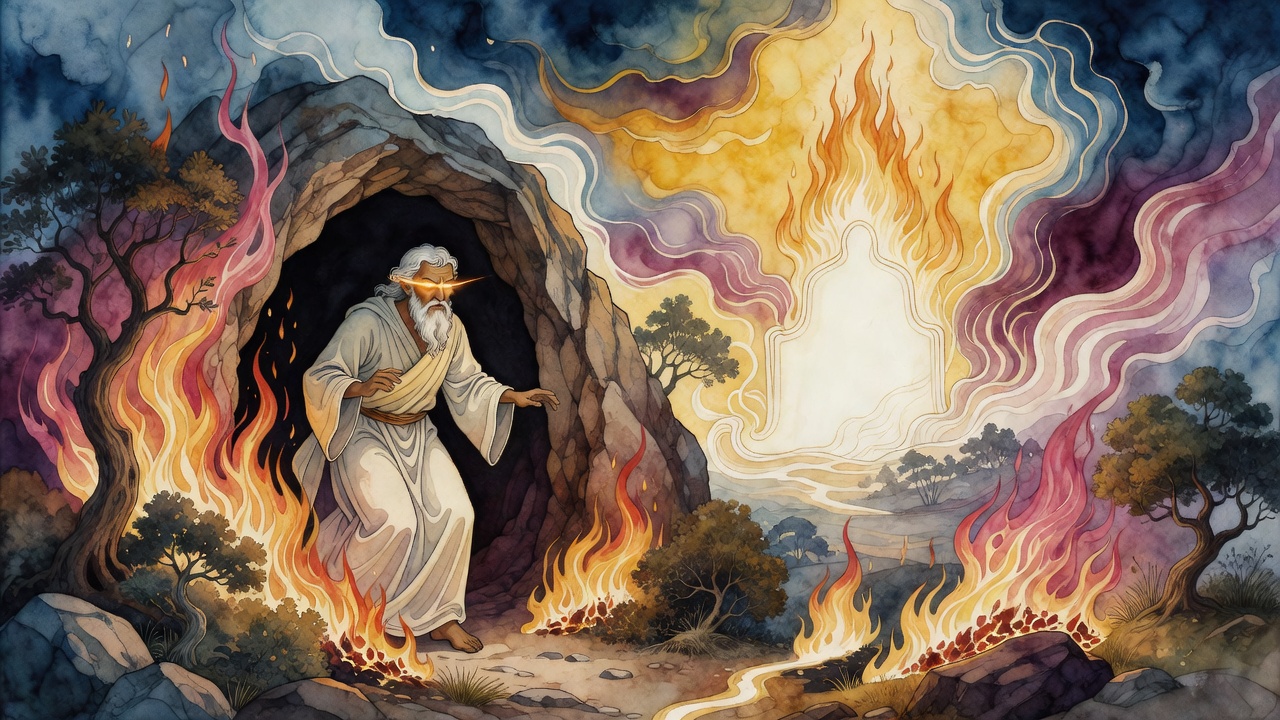
They came on a farmer plowing. The ox leaned. The furrow opened. Shimon looked at the work and the field began to burn. "They abandon eternal life and busy themselves with the hour!"
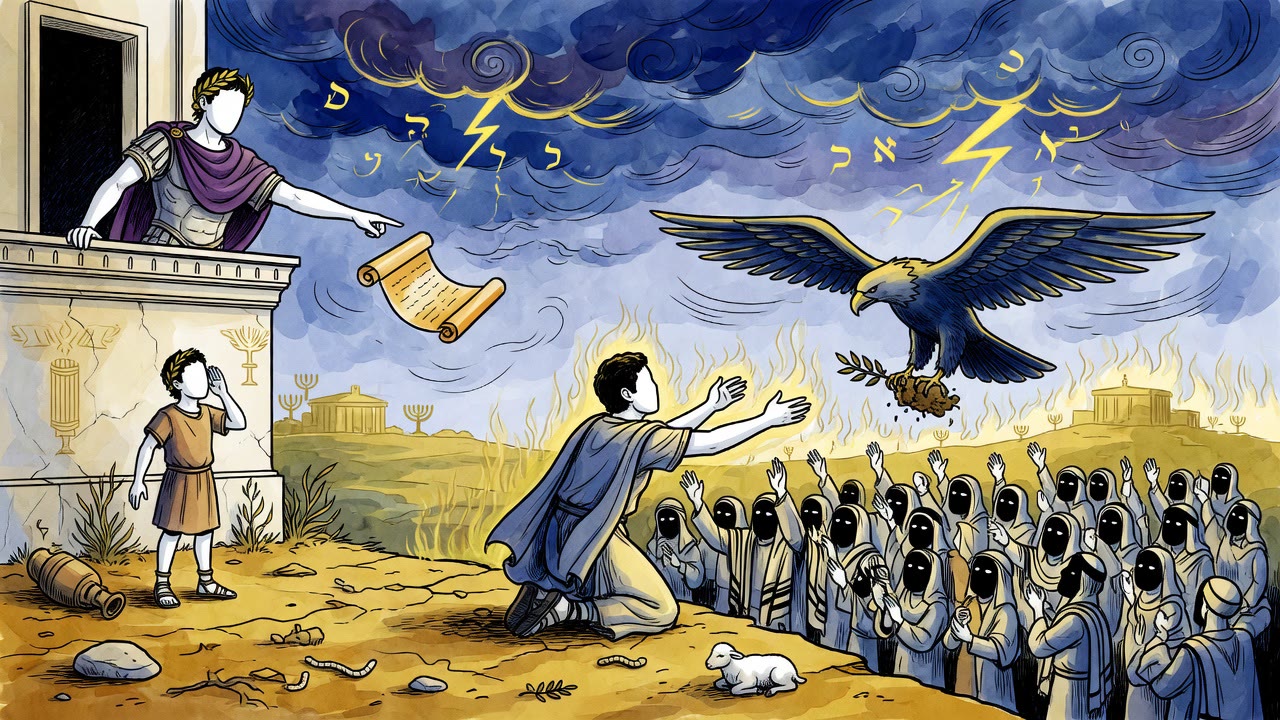
Wherever he looked, ordinary labor ignited. Grain blackened. A vine went to ash. A Bat Kol (בת קול), a heavenly voice, struck the air. "Have you come out to destroy My world? Return to your cave."
They went back. They stayed twelve more months. Even the wicked in Gehinnom, they told each other, serve only twelve months. When they pleaded, the voice let them out again. Twelve years in sand, then a year more. Thirteen seasons if you count the punishment after the fire.
The Son Still Burned
Eleazar's eyes had not cooled. Where he looked, things tore. Shimon came behind him and healed what the look had ruined, a hand on scorched grain, a touch on a blackened vine. The voice said, "Go out now." They went.
The father's fire had changed its work. It no longer wanted to eat the world that had kept breathing without them. It wanted to mend what a year of pure study could still scorch.
Two Bunches of Myrtle
On a Friday near sunset an old man ran through the market with two bunches of myrtle. They stopped him. What did he need myrtle for, this late, this fast?
"To honor Shabbat," he said.
Two bunches?
"One for zakhor (זכור), remember, and one for shamor (שמור), observe. The two words the Torah uses for the same day."
Shimon turned to his son. "See how precious the commandments are to Israel." The burn in his gaze quieted. Twelve years of Torah in sand had not taught him that. An old man running with branches did.
They had come out ready to judge a world of plows. They stayed because a man was hurrying to make the day smell like myrtle before the sun dropped.
← All myths