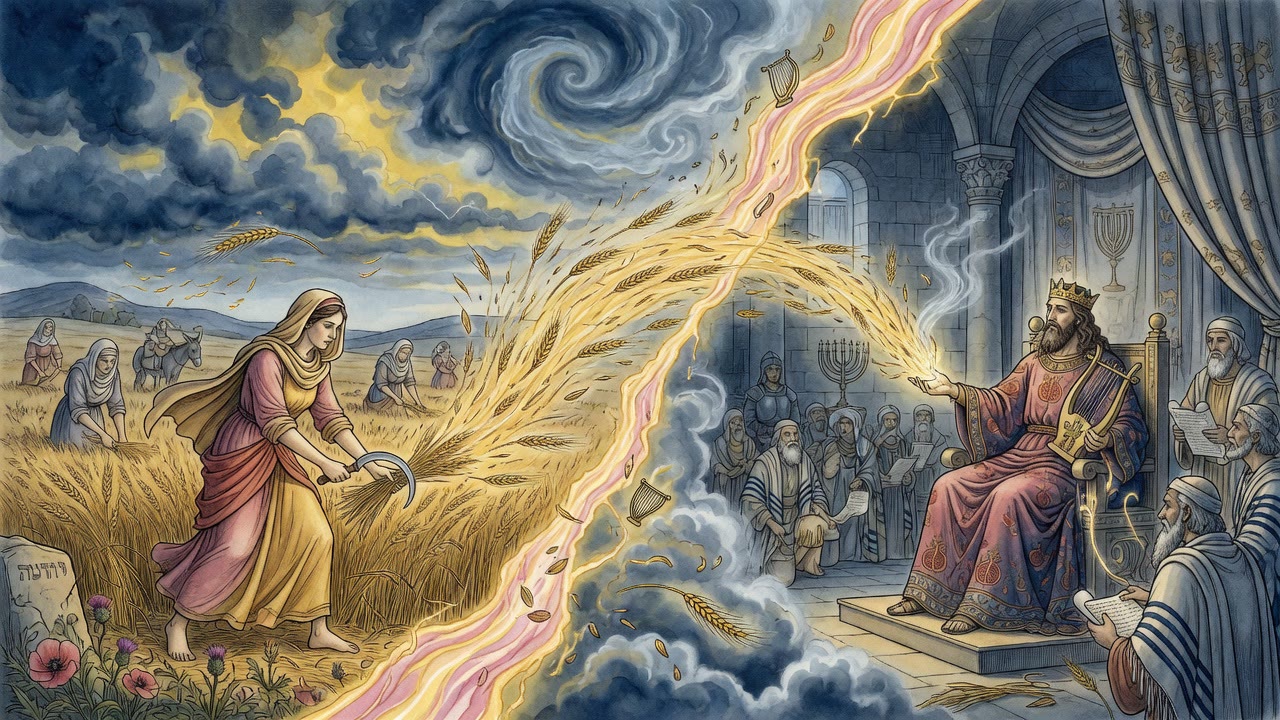
Rachav Asked to Be Forgiven by the Rope, the Window and the Wall
She was ten years old when the sea split and fifty when she asked to be let in. In between she ran a house on the wall of Jericho.
Table of Contents
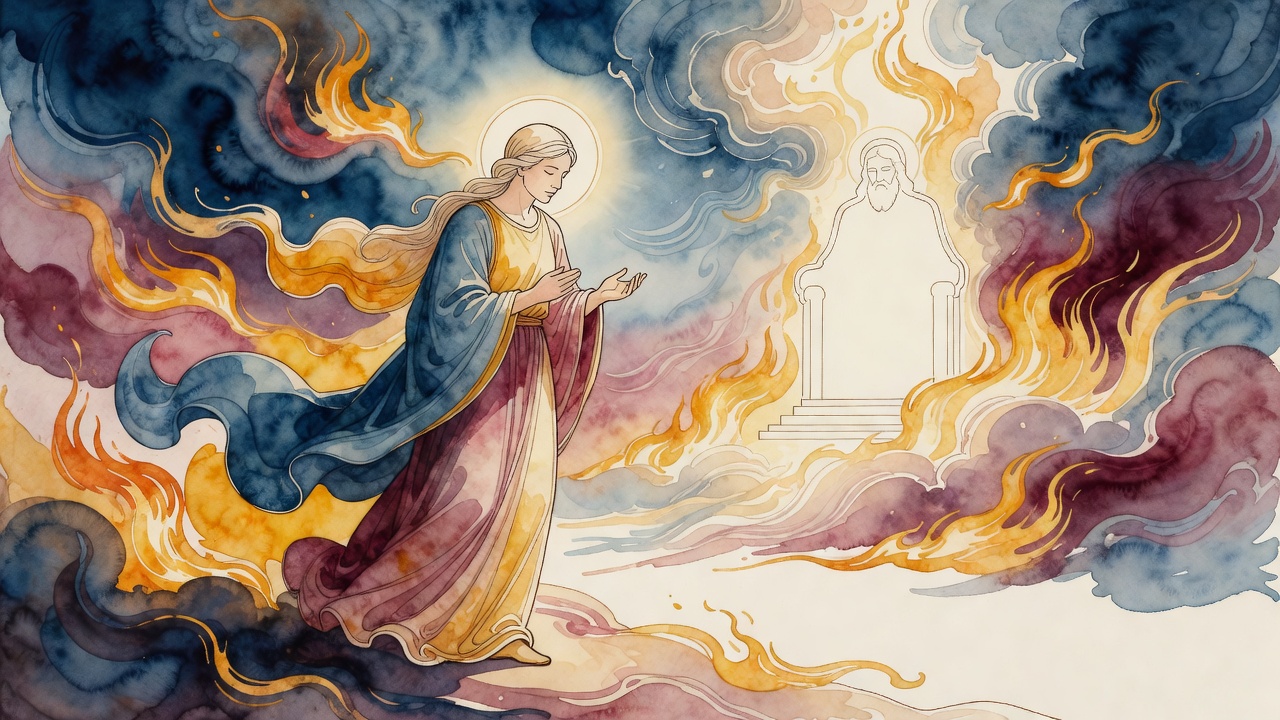 Click for full size
Ten Years Old When the Sea Split
She was ten when it happened, and she was in Jericho, which is a long way from the Red Sea. The news still got there. A body of water had stood up and let a nation of slaves walk out of Egypt on the floor of it, and then come down on the army that chased them.
Rachav spent the next forty years listening to that story get closer.
She ran a house built into the city wall and she sold herself in it, and the men who came through her door were traders and soldiers and messengers, which meant she heard everything before the elders did. Sihon fell. Og fell. The nation that had walked out of the sea was camped in Moab now, across the river.
Jericho was not a soft town. Of every walled city in that country its men were reckoned the hardest, which is why, when two spies were sent to look at the land, they were sent to look at Jericho. And Jericho was terrified. Rachav heard it in her own rooms. Their hearts had melted and there was no breath left in any of them.
Two Men at Her Door
They came at dusk, and she knew what they were before they finished talking.
The king of Jericho knew too, because somebody had watched them come in, and his men were at her door within the hour asking for the strangers. She had already taken the two up to the roof and pushed them under the stalks of flax laid out there to dry. Then she told the king's men the truth in the wrong order. Yes, she said, there were men here. "I did not know where they were from. They went out at dark when the gate was closing. Go now and you will catch them at the fords."
The soldiers rode out toward the Jordan. The gate shut behind them.
The Rope Through the Window
She went up and pulled the flax off the two of them and made her terms while they were still lying there. Her house, her father, her mother, her brothers, all of it spared.
Then she got them out. Her house was set into the wall of the city and she lived inside the wall itself, so her window opened on the outside, above the drop. She tied a rope to it and let them down the face of the stone in the dark, two men on a cord she had knotted herself, and told them to lie up in the hills for three days until the search gave out. They told her to leave the cord hanging in the window where it was, scarlet against the wall, and to keep every relative she had under that roof when the army came.
A rope, a window and a wall.
Three Sins She Had Never Been Given
She was fifty when she came in.
She did not arrive with a general confession. She named three things, and every one of them was a commandment that had not applied to her for a single day of her life. Niddah, the law that governs a wife and her husband through the month. Challah, the piece of dough set aside from the loaf and given to the priests. The lamp lit before the Sabbath comes in.
She had never kept any of them, because nobody had ever asked her to. She confessed them anyway. "Lord of the universe," she said, "I have sinned in three things," and she counted them off.
Then she asked to be forgiven by three things, and they were not prayers, or offerings, or years of penance. "Forgive me," she said, "by the rope, and the window, and the wall."
She had brought her own evidence with her. The three objects she had used to get two strangers over the edge of a doomed city went onto the scale against the three obligations she had never been handed, and the exchange was accepted, and the woman who had worked the wall of Jericho for forty years was let in at fifty.
Above the street, in a window in a wall that was about to come down, the scarlet cord hung where she had left it.
← All myths