Solomon Sent His Scribes to Luz to Escape Death
Elihoreph and Ahijah reached the gate of Luz still breathing. The Angel of Death had needed them exactly there.
Table of Contents
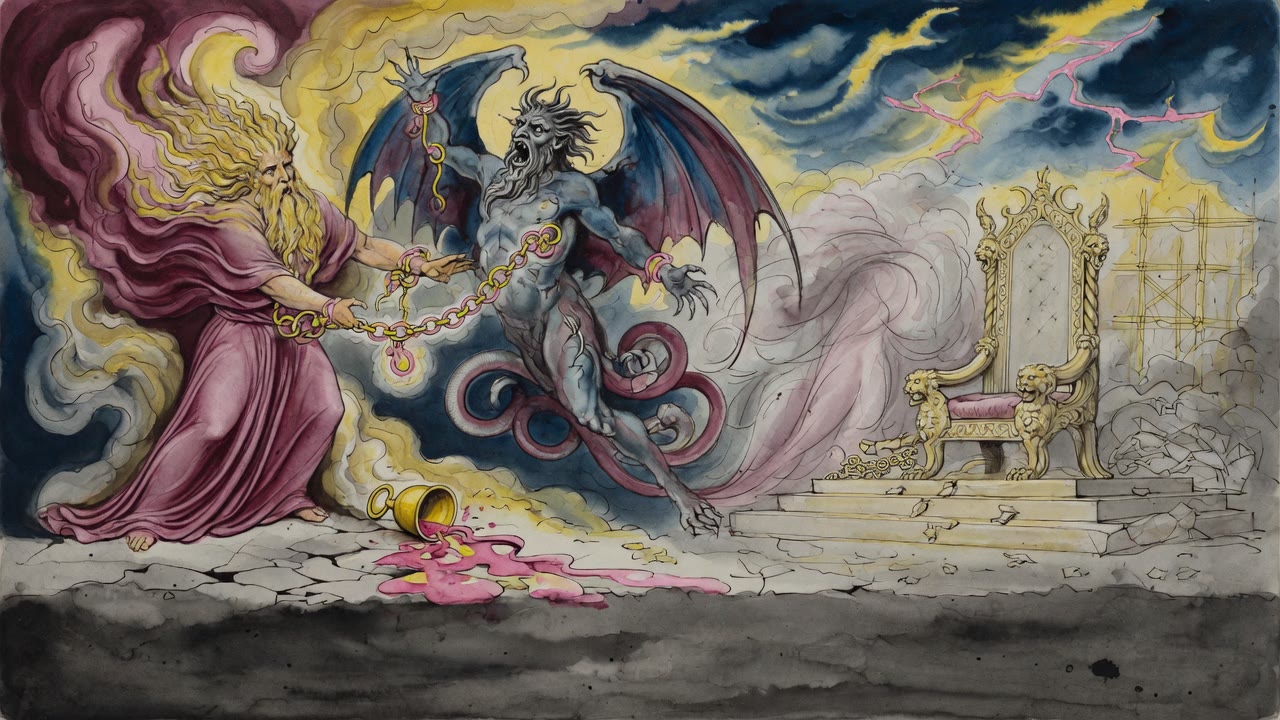
The Angel of Death stood in Solomon's hall with a face that had gone tight. He was not wandering. He had names. He had instructions. Two men would die, and the two men were standing in the king's own court.
 Click for full size
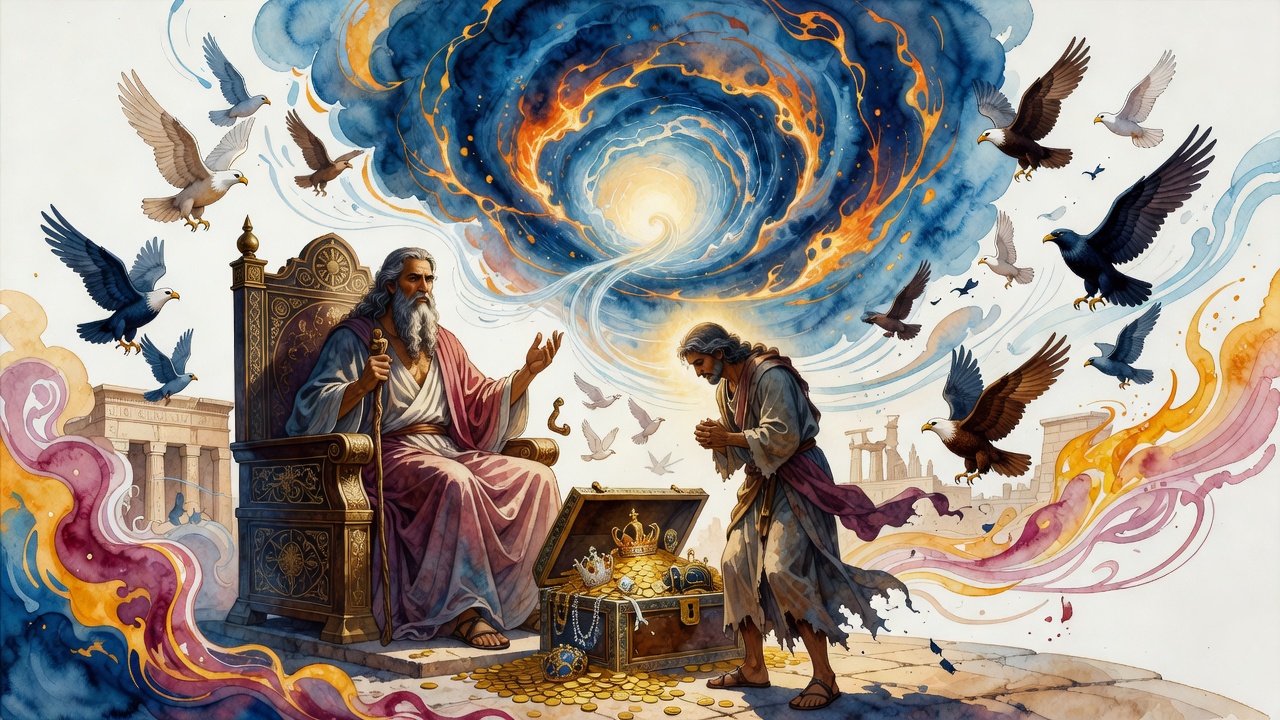
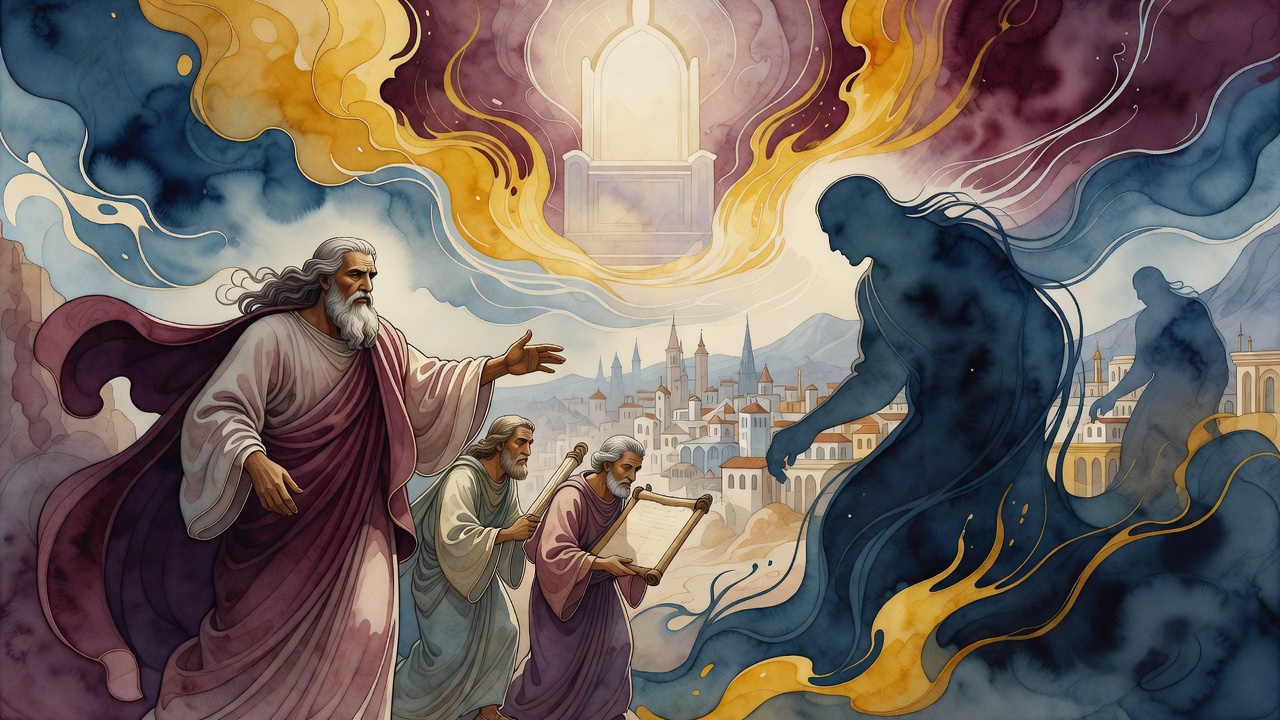
Solomon asked why the Angel looked so worn. The Angel named Elihoreph and Ahijah, sons of Shisha, keepers of the kingdom's records. The charge was to bring those two scribes into the next world.
Solomon did what he always did when a problem looked impossible. He found the gap in the rule.
The City Death Could Not Enter
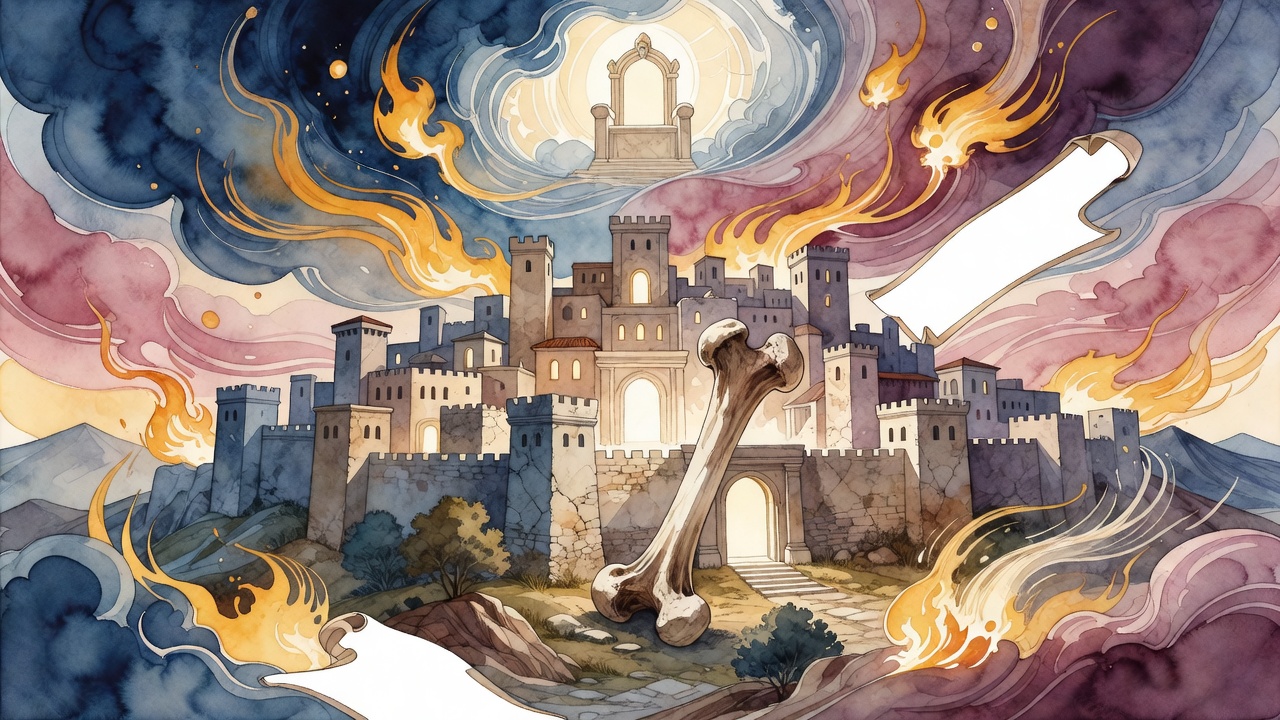
He knew of Luz. Inside those walls the Angel of Death had no direct authority. As long as a person remained within Luz, death could not enter to claim him. The old men of that city walked out beyond the gates when they were ready to die, because inside, mortality had no purchase. Luz was not a hiding place. It was a legal exception built into creation.
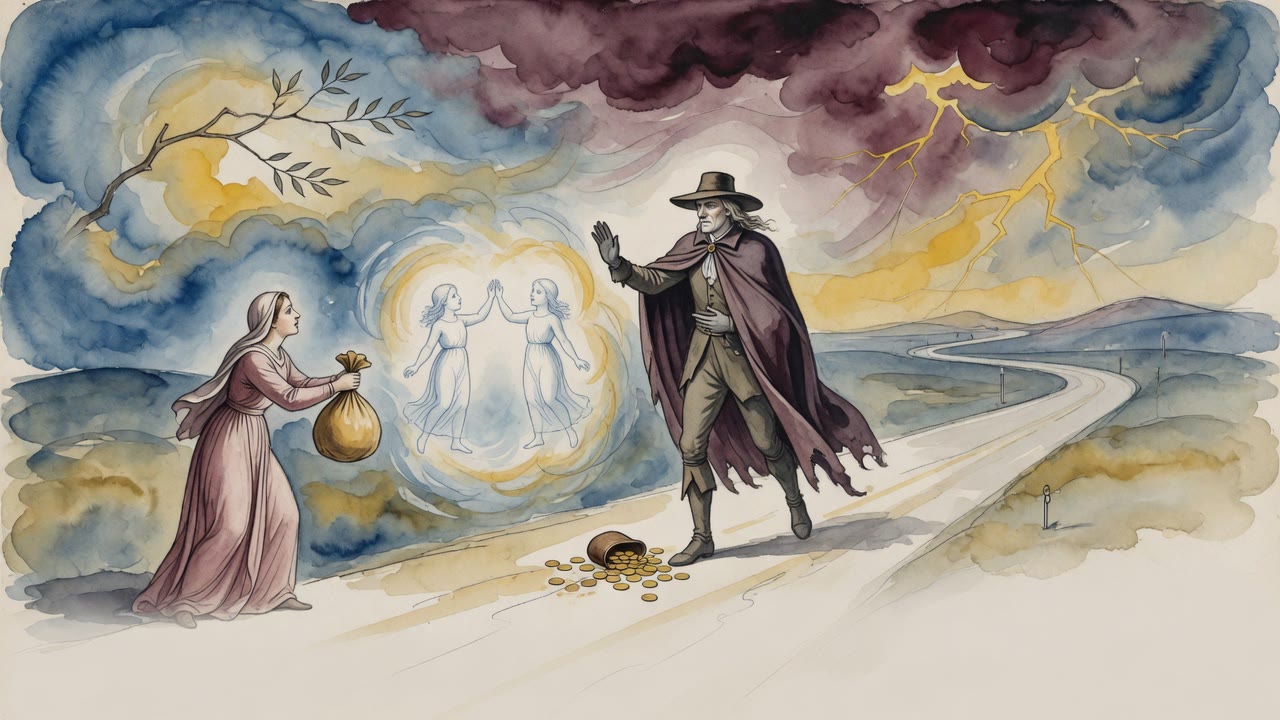
Solomon summoned the two scribes. He ordered the demons to carry them to Luz before the day was out. Horses would have been slow. The demons were not. In a breath Elihoreph and Ahijah left the hall and were set down at the edge of the one city on earth where that Angel had no power.
They Met Death at the Gate
They reached the gate of Luz still breathing. They died there, at the exact edge of safety, before the exemption could close over them.
The ride toward shelter was the ride toward the end. The Angel had not been assigned to take them in Solomon's hall. He had been assigned to take them in Luz. He had been at a loss for how to get them there. The king had looked at a tight face, panicked at the location, and delivered his scribes to the place written in the order.
A man's feet are surety for him. They walk him to the place where he is wanted.
The Angel Came Back Laughing
The next morning the Angel of Death stood in the palace looking satisfied. Solomon demanded to know what had happened. The Angel was no longer troubled. He was finished.
"Thou didst transport those two men to the very spot in which I wanted them."
Solomon had not failed at speed. He had succeeded completely at his own plan. He moved the men fast and cleanly to exactly where death needed them to be. He could command spirits, understand languages, build the Temple, and see through human pretense. None of that let him read what the Angel had already written. The name of a city sat in the order before the scribes ever entered his hall.
He sat with it afterward. He had thought clearly, acted fast, and been precisely wrong. The smarter the move, the more efficiently it had carried his scribes toward the wrong intention.
A Statue Cried Solomon's Name
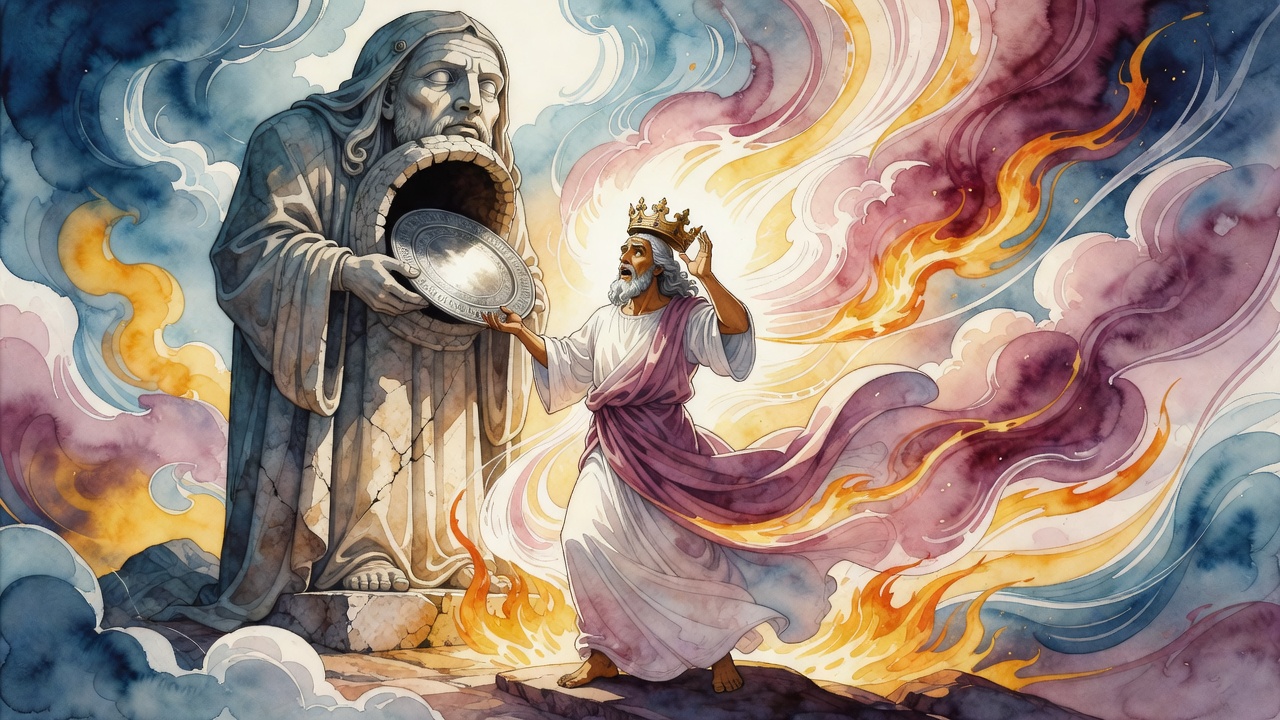
Later, in a chamber of statues, one figure looked as though it were alive. When Solomon came near, it called out in a loud voice, "Hither, ye spirits, Solomon has come to undo you." Noise rose among the statues. Solomon pronounced the Name, and the room went quiet. The figures were overthrown. The sons of those spirits ran into the sea and drowned.
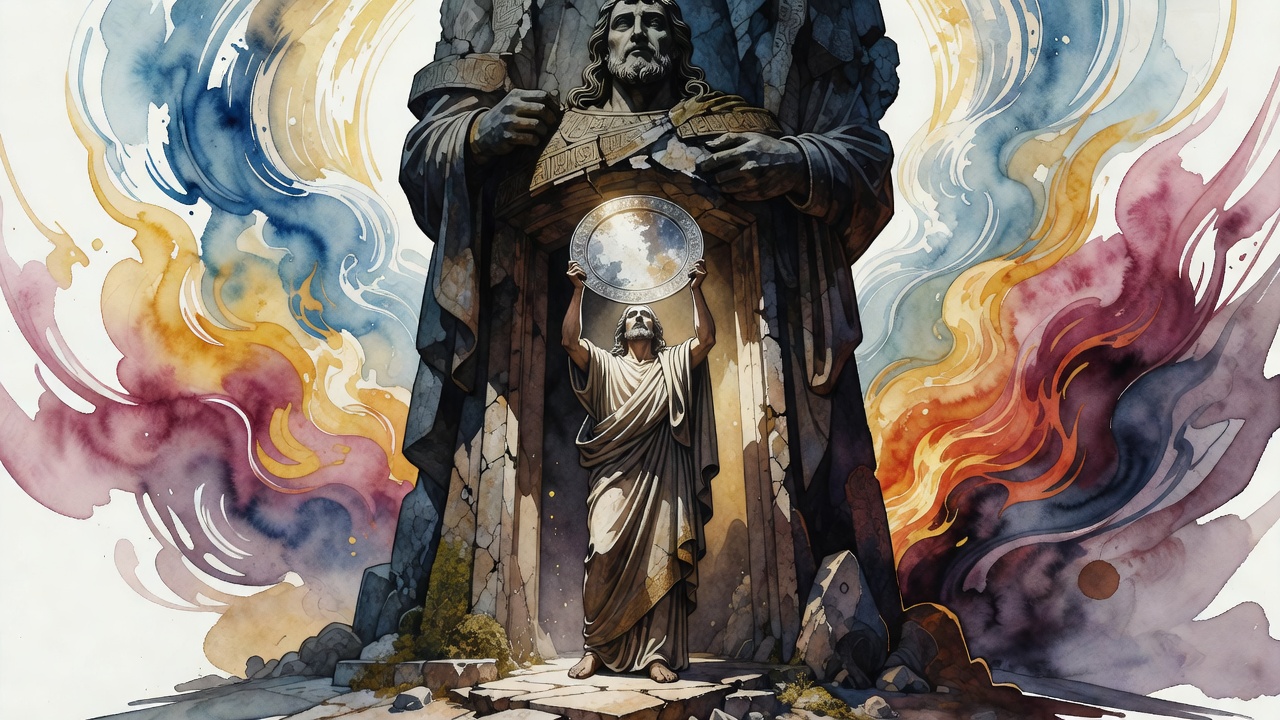
From the throat of the lifelike statue he drew a silver plate inscribed with characters he could not read. A youth from the desert told him the letters were Greek, and the words meant: "I, Shadad ben Ad, ruled over a thousand thousand provinces, rode on a thousand thousand horses, had a thousand thousand kings under me, and slew a thousand thousand heroes, and when the Angel of Death approached me, I was powerless."
Shadad had owned more ground than Solomon's maps could hold. It had not bought him one extra hour. The plate came out of a throat that had learned the same lesson the scribes learned at Luz. A king can move men across the earth. He cannot move the appointment.
Solomon left the chamber with the plate in his hand and the Angel's joke still in his ears. Elihoreph and Ahijah had met death at the gate he chose for their safety. Shadad had met it after a thousand thousand victories. The wisest mouth in Jerusalem had only one sentence left that would sit still: a man's feet are surety for him. They take him where he is wanted.
← All myths