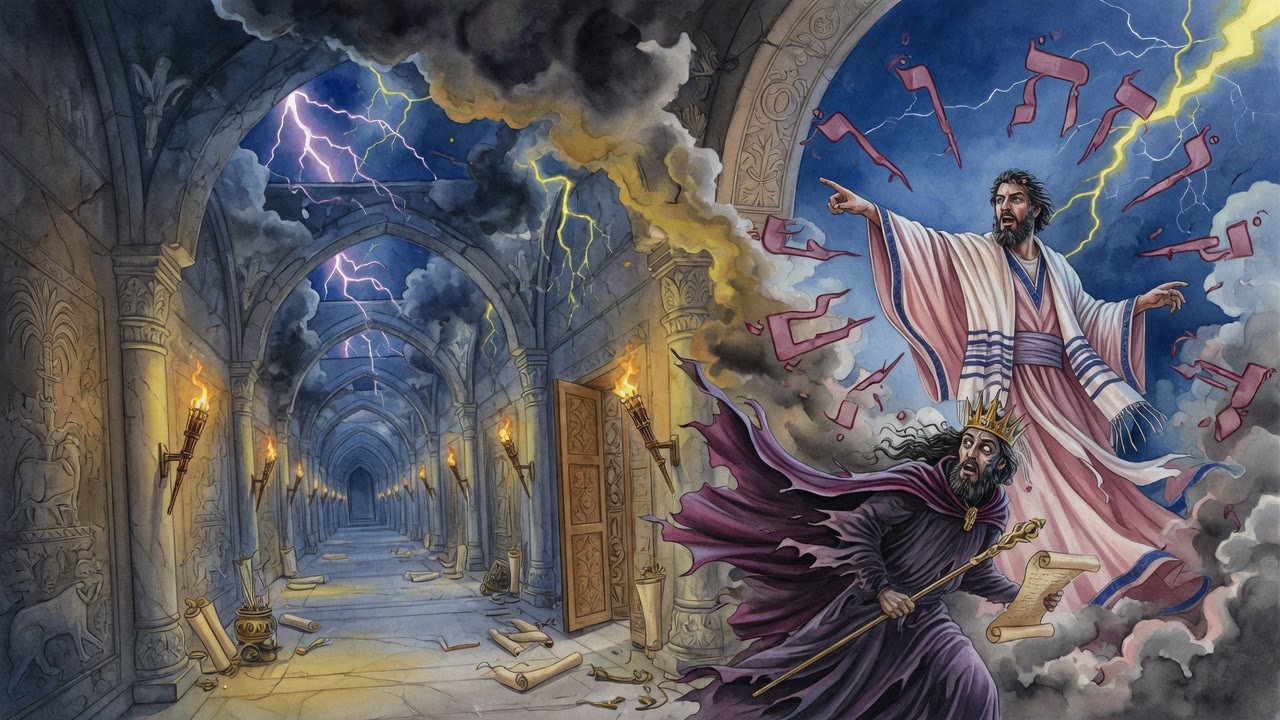
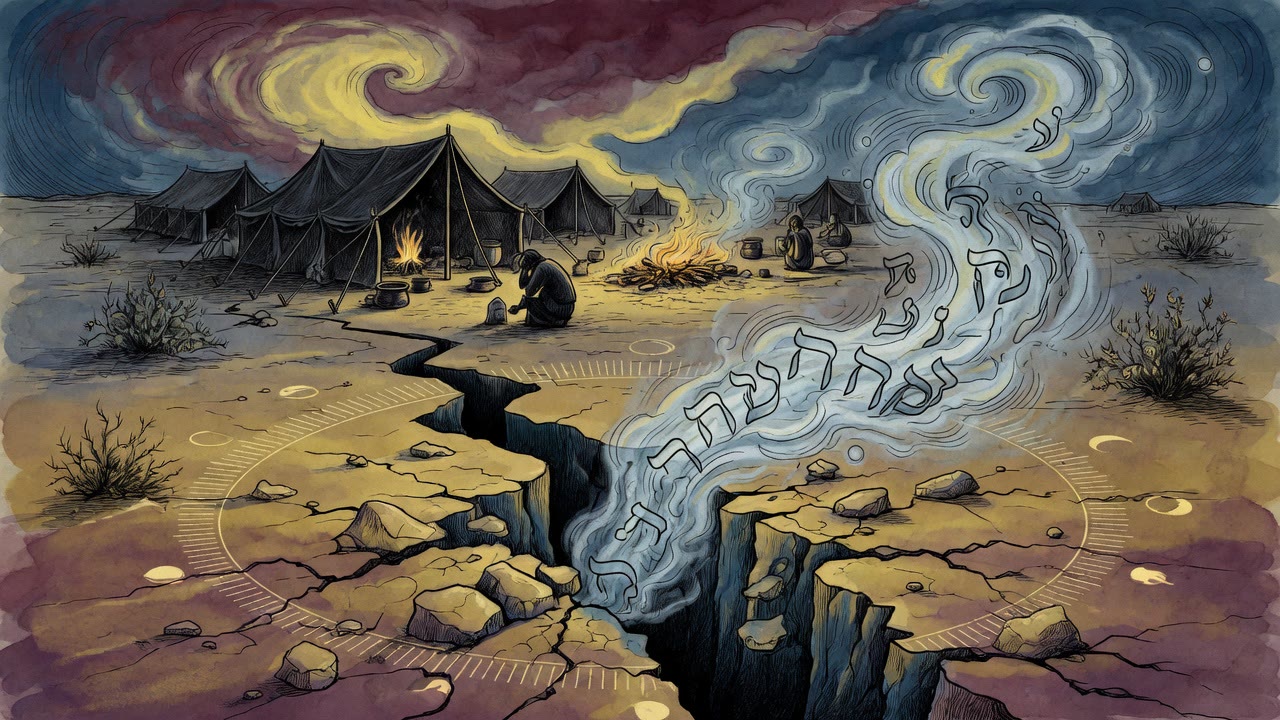
The Angel Wept Over Every Limb Before It Was Buried
The angel did not comfort the dying man. It named his legs and his hands and wept. Each limb had already chosen its own road.
Table of Contents
 Click for full size
The Angel Named Each Limb
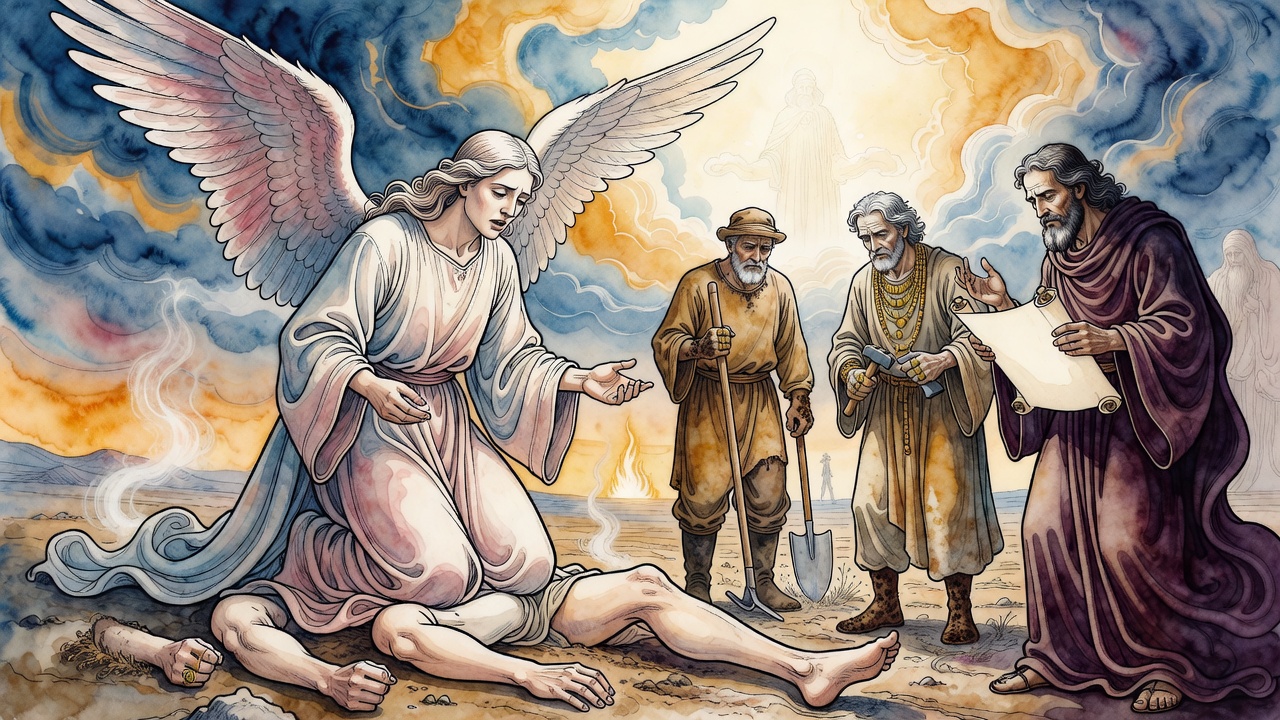
The man was still in the bed when the angel began to name him. Not his name. His parts.
Woe to these legs that never walked in God's ways. Woe to these hands that occupied themselves with sin. Woe to these eyes that coveted what belonged to others. Woe to these ears that refused to hear reproof. Woe to this mouth that consumed what was not its own. Woe to this body that never bent in repentance.
The angel did not stand at a distance and read a list. It stood over the bed and pointed. The legs had chosen their roads. The hands had reached. The eyes had rested where they wanted to rest. Each sinful limb had already done its work, and the angel wept over the work before the body was cold.
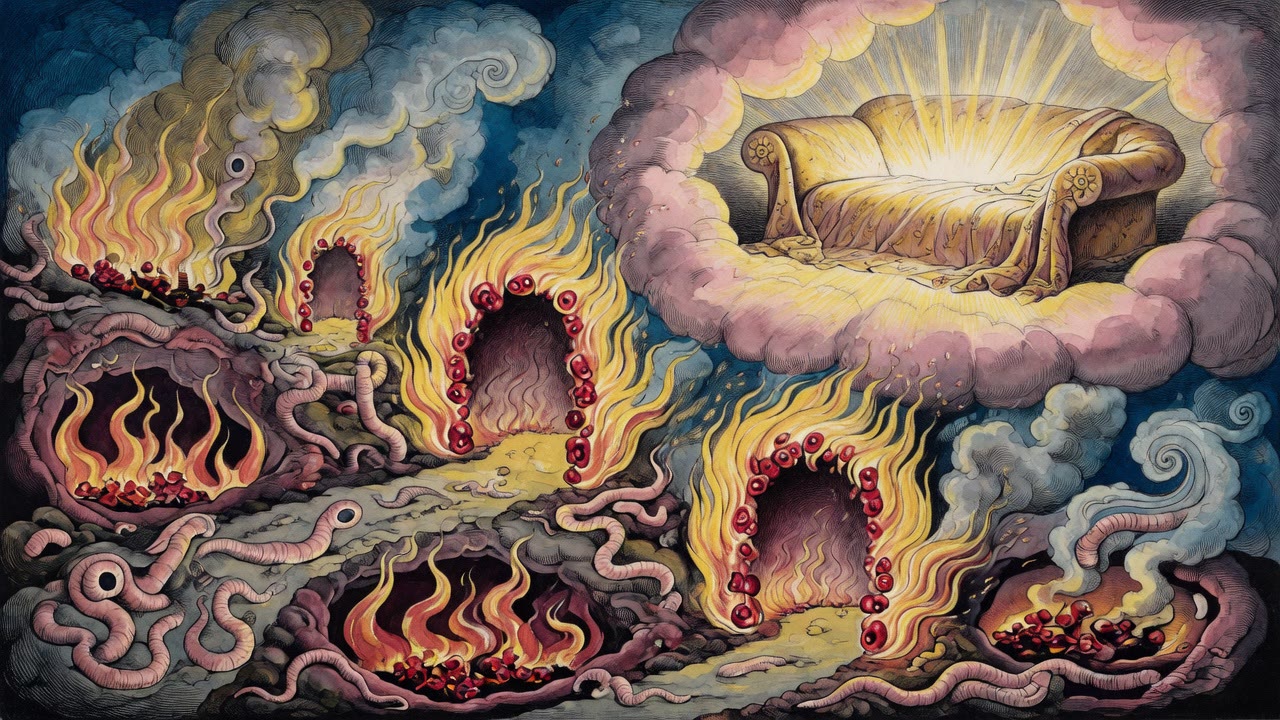
Then it commanded the soul to stand. Know where you came from and where you are going. To a place of dust and worms. No one will protect you from what you have done except the good deeds you carry.
The soul wanted to know what it could take. The angel turned it to watch three other beds.
What the Gifts Became
Before the three beds, the angel named the famous ruins. Samson had been given extraordinary eyes. Those eyes led him into destruction. Absalom had been given hair so beautiful that its weight when cut could fill a scale. That hair caught in a tree and killed him. Beauty, speech, strength, appetite. Each one a gift. Each one unguarded, and each one the tool that brought its owner down.
The angel was not weeping over weakness. It was weeping over strength that had never been aimed. The soul in the first bed heard its own limbs named in those other names, and it asked again what it owned that could cross with it.
Three Men Asked for Their Labor
The farmer was dying. He called his family and asked them to bring him some of his labor, something he had earned, to carry with him. They looked at each other and told him the truth. You worked the earth, but the earth and its fullness belong to God. You own nothing of it to take.
The goldsmith made the same request. His family gave the same answer. The silver belonged to God. The gold belonged to God. You shaped things you never owned.
Then the Torah scholar asked his family for the fruits of his labor. They said something different. How can we give you what you carry inside you? You spent your life learning God's law. God Himself preserved the fruits of that work. You take them whether you ask or not.
The farmer had labored. The goldsmith had labored. What they built stayed in the field and on the bench. The scholar had built something that entered his walk, his judgment, the way he stood in a room. Death strips a house. It does not strip what a person has become. The soul watching from the first bed understood the question it had asked. The angel had already named the limbs. The only thing that would follow those limbs was what they had practiced until it was no longer outside them.
Seven Chambers and a Shabbat Field
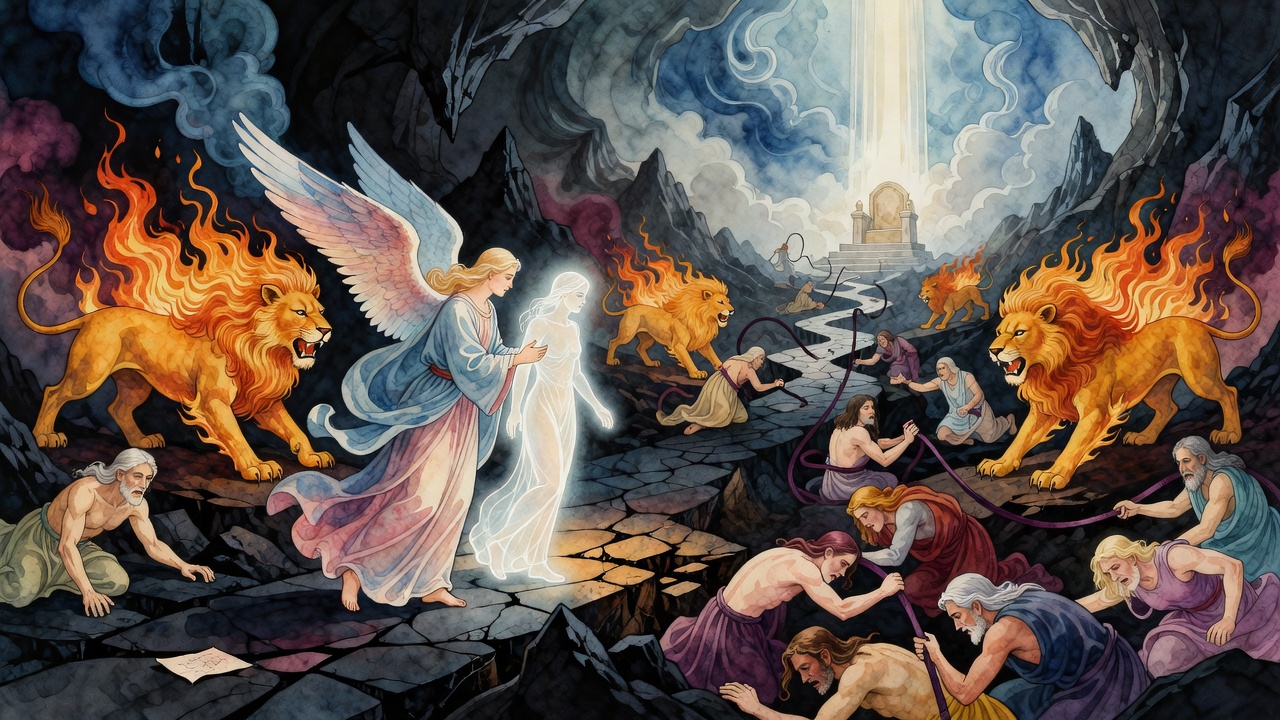
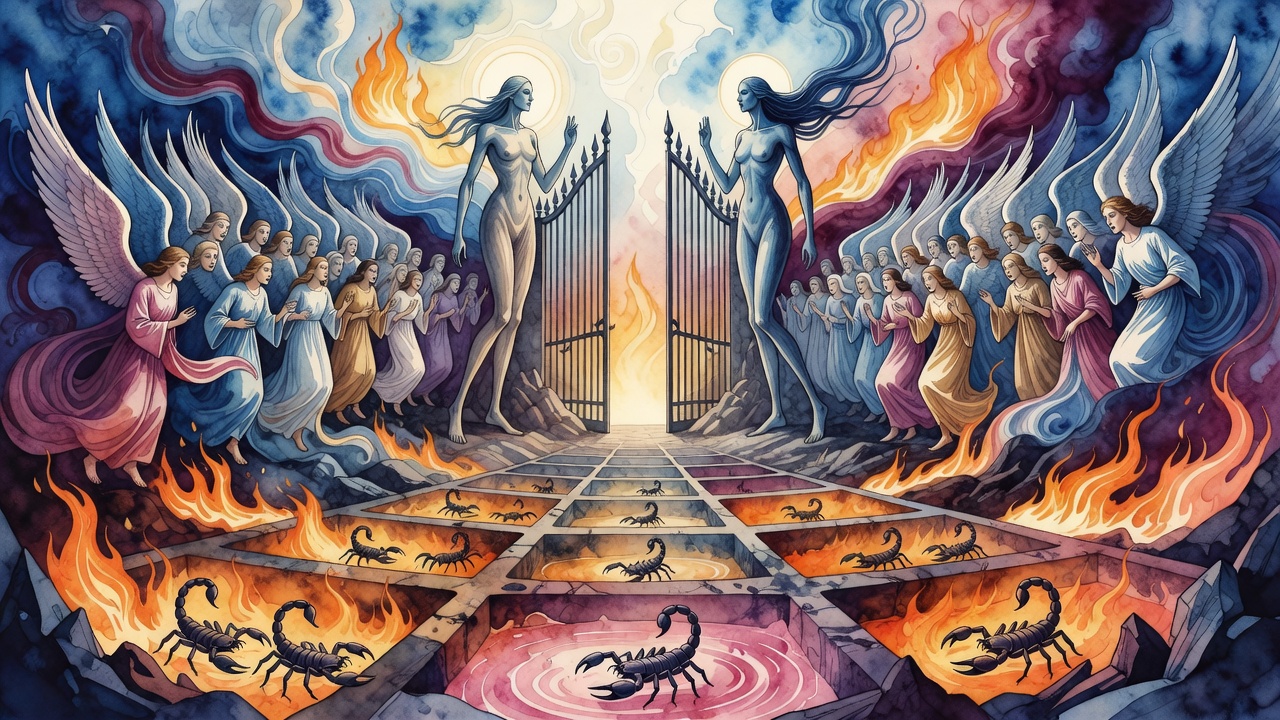
Rabbi Joshua ben Levi asked the Messiah to show him Gehinnom, the place of punishment after death, and was refused. It is not fitting for the righteous to go there. He pressed anyway. The angel Qipod led him to the gates.
Seven compartments opened. In the first, pits held lions made of fire. In the next the heat worsened, and in the next again, each chamber matched to a kind of sin, not to a kind of person. Joshua walked as far as he was allowed. He saw where the unnamed legs and the unguarded eyes go when the weeping is done and the body is in the ground.
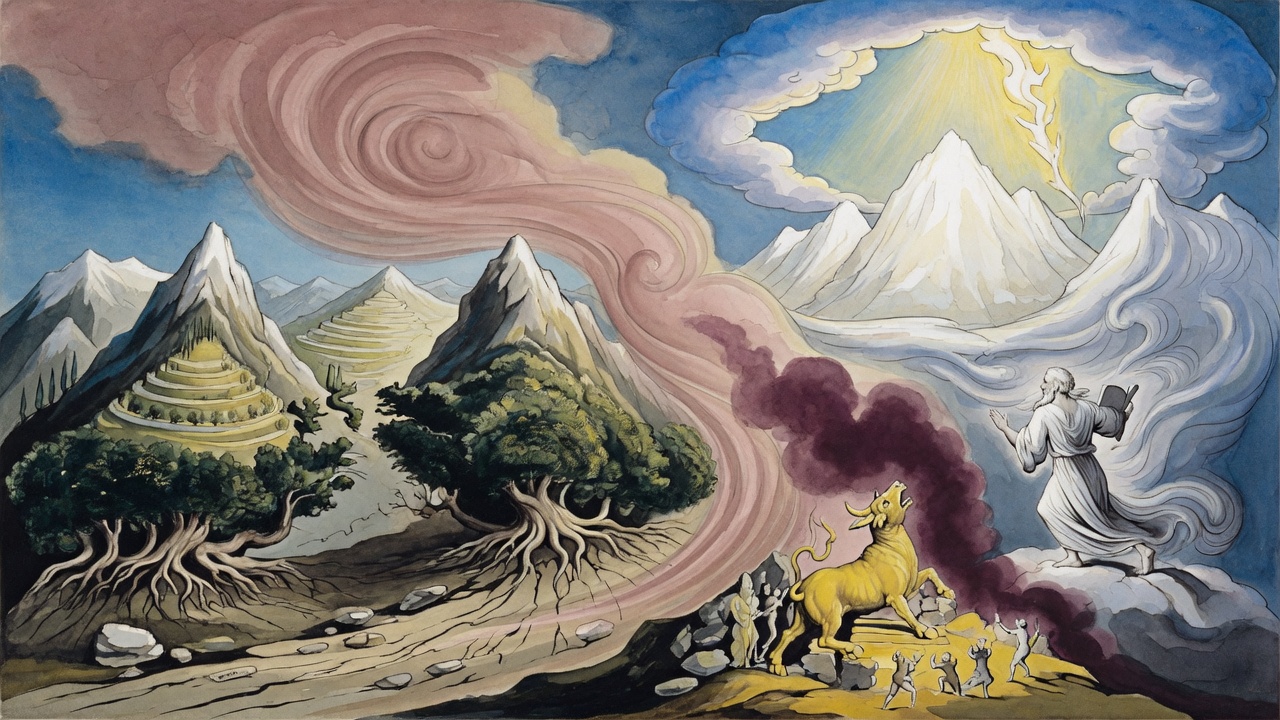
And beside the Garden of Eden, on the eve of every Shabbat, the righteous dead come out for a little while to eat and drink from the brook that flows out of the garden. Anyone still alive who drinks water in that window between the afternoon and evening prayers is stealing from the dead. The dead go back to their places when the congregation calls out for the evening blessing. God does not leave them entirely in silence.
The man in the first bed was buried with his limbs named. The farmer went with empty hands. The goldsmith went with empty hands. The scholar went carrying what he had learned. Joshua came back from the seven chambers and did not pretend he had not seen the fire. On Friday toward dark, a brook still runs out of the garden, and the dead who kept something inside them bend to drink.
← All myths