The Courts of Sodom Where the Law Was a Trap
Sodom handed its beggars silver and forbade anyone to sell them bread. Lot's daughter hid a loaf in her water jar, and the city burned her in the street.
Table of Contents
A man from Elam came through the street of Sodom at sunset with a fine coloured mantle roped to his saddle. He had his own bread and water and straw for the animal and wanted nothing but a roof, and nobody would open a door to him.
 Click for full size
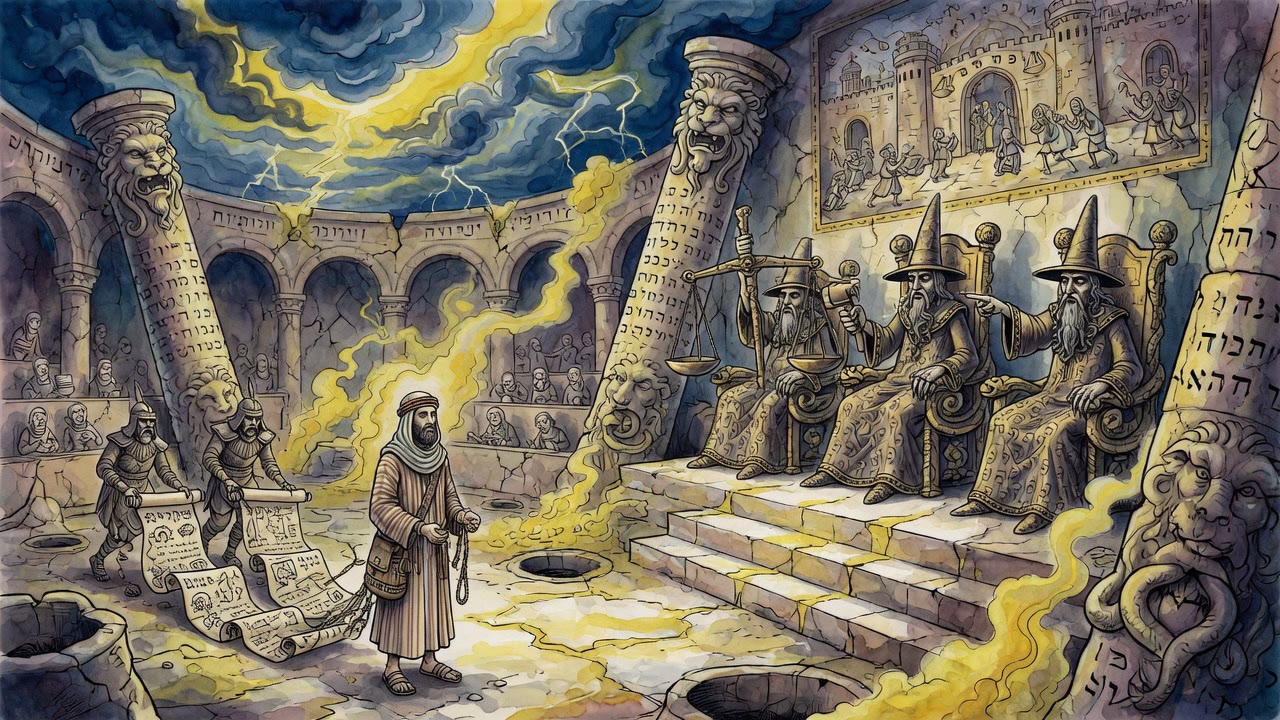
Then Hedad came over, said he could not spend the night in the street, and took him home, and took the mantle and the cord off the ass and carried them inside for safekeeping. Twice the traveller got up to leave and twice Hedad pressed him to eat first. On the third morning he saddled the animal and asked for his cord and his mantle back.
"That is the meaning of your dream," Hedad said. "The cord means your life will be drawn out long like a cord. The coloured mantle means you will own a vineyard and plant every kind of fruit tree in it. My usual charge for interpreting a dream is four pieces of silver. From you I will only take three."
The traveller cried and dragged him in front of Serak, the judge of Sodom, who ruled that Hedad was famous in these cities for interpreting dreams accurately and had told him the truth, then had his servants drive them both out of the house. The people in the street heard the shouting, gathered, and chased the stranger out of the city with no mantle.
The Beds Set Up in the Street
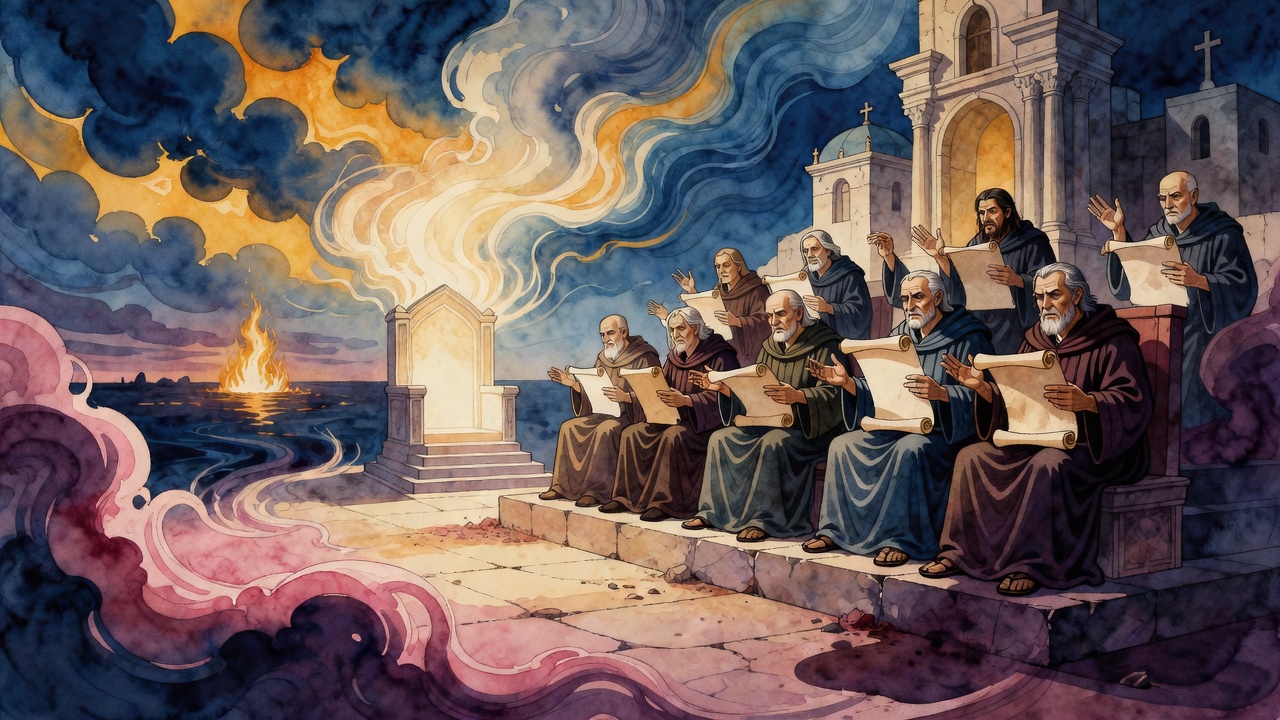
Four judges held courts over the four cities, Serak in Sodom, Sharkad in Gomorrah, Zabnac in Admah, and Menon in Zeboyim, and at their instruction beds were set out in the public streets.
When a man arrived they laid him on one. Three stood at his head and three at his feet and measured him against the frame. If he came up short they pulled him at both ends until he matched it. If he ran long they hauled the two ends of the bed together until he reached the gates of death. He screamed the whole time and they said nothing back, then answered him once: this is what is done to a man who comes into our land.
Word got out. Travellers stopped coming.
They Gave the Poor Man Silver
The other custom worked slower. When a poor man turned up, every citizen pressed silver and gold into his hands, and a crier went through the city announcing that nobody was to sell him a crumb of bread.
He walked around rich for a few days. Then he starved to death in the street.
When he was down they came out and took their coins back, each man picking out the ones he recognised as his own, then stripped the body and fought over the clothes, and whoever won the fight kept them. They buried him under a bush in the desert. They did it to everyone who came and died there, for as long as the cities stood.
Eliezer Paid a Judge in the City's Own Coin
Sarah sent Eliezer down to Sodom to see how Lot was getting on. They tried to put him on one of the beds and he told them he had sworn never to lie down on a bed until he had seen his master's face again.
In the street he found a man of Sodom pulling the clothes off a stranger, and told him to stop.
"Is this man your brother? Have the people of Sodom made you a judge today?"
Eliezer went to take the clothes back and the man hit him in the forehead with a stone. Blood came down his face. The man saw the blood and grabbed him by the arm. "Pay me my fee. I have let the bad blood out of your head for you. That is the custom and the law in this land."
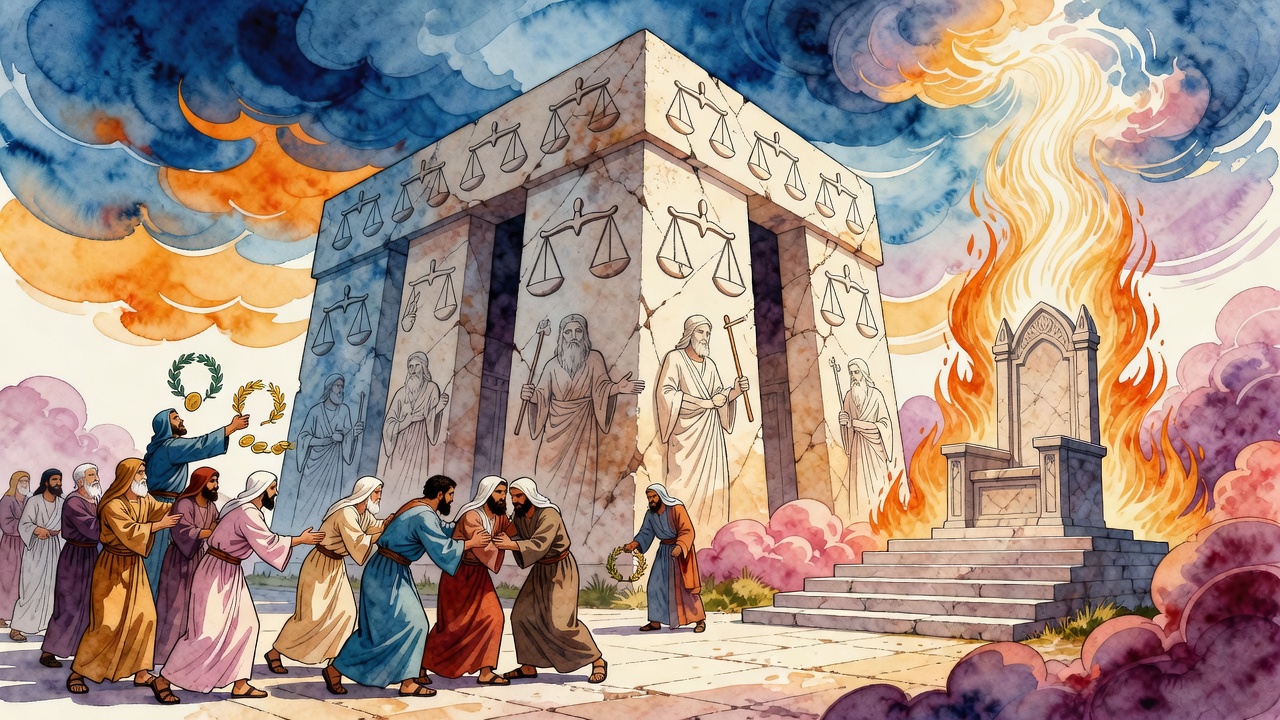
He hauled Eliezer in front of Shakra the judge, who heard the case and told Eliezer the man was telling the truth and he should pay, because this is how justice is done here.
Eliezer picked up a stone and opened the judge's forehead with it.
"If that is the custom in your land, then you pay this man what I owe him. You set the rate."
He left them standing there and walked out of the city.
The Bread in the Water Pitcher
Paltith, Lot's daughter, had married a man of Sodom. A poor man came into the city looking for work, the crier went round with the usual proclamation, and she watched him lying in the street getting closer to dying.
So she started hiding bread inside her water pitcher. Every day she went out to draw water, and every day the route took her past him, and she lifted the loaf out of the jar and put it in his hand.
He did not die. The city began to talk about it, because no man goes that long without food and keeps the colour in his face. Three of them hid near his spot and waited, and saw her lift the bread out of the pitcher.
They seized her and brought her before the judges with the loaf still in the man's fist, and asked what the penalty was for a woman who had broken the law of the city. The people built a fire in the open street, threw her into it, and burned her to ashes.
The Girl in Admah and the Bees
In Admah a traveller reached the town at sunset and sat down opposite a door to wait for morning. A young woman saw him there and he asked her for water. She went inside and came out with bread and water and gave him both.
The city found out. They brought her to the judge and he ruled that she had transgressed and must die for it. They took her outside, covered her from her head to her feet in honey, and stood her in front of the hives. The bees came off the combs onto her and stung her until her whole body was swollen. She screamed and nobody in Admah turned round.
Her voice went up out of the town and did not stop at the roofs.
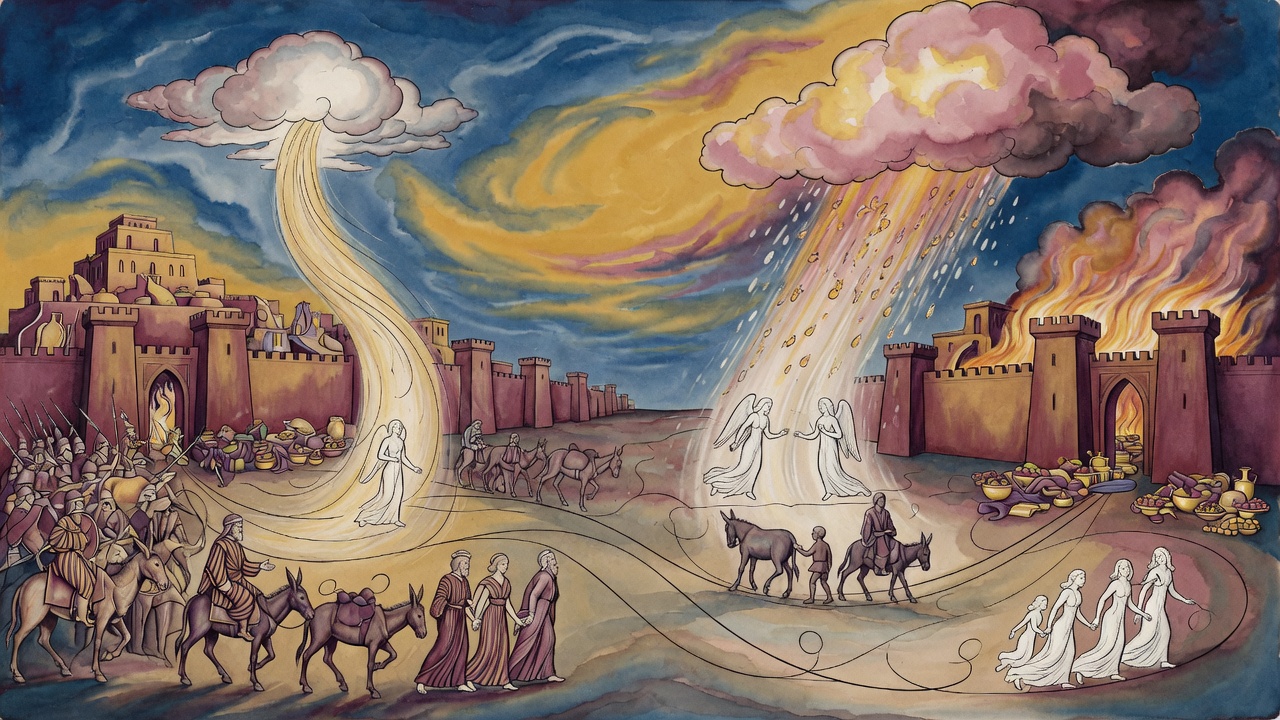
God had watched those cities eat well and sleep safely and refuse to keep one hungry man alive, and He sent two of the angels who had eaten under Abraham's tree down the road to Sodom. They came in at evening. Lot was sitting in the gate, and he got up and bowed to the ground and pressed them until they came into his house, and he set food in front of them and they ate it. It was the last meal anyone in that city gave a stranger.
In the morning fire and brimstone came down. Lot's wife looked back toward the daughters who had stayed, and she stopped where she stood and turned to salt. The oxen came and licked at her every day, down to the level of their feet, and every morning the pillar had grown back.
← All myths