The Levites Bit Off Their Fingers Rather Than Sing in Babylon
Six hundred thousand singers never finished the verse. The line broke at "and shall cut them off," and the soldiers were already in the court.
Table of Contents
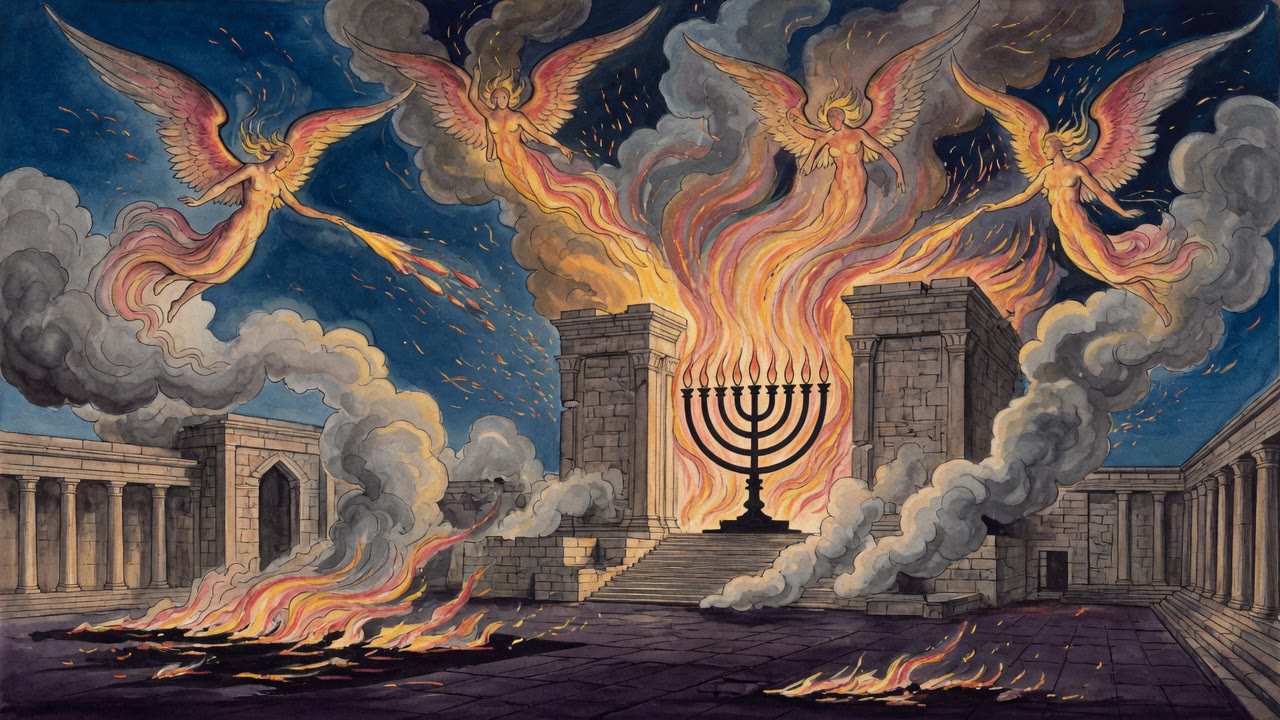
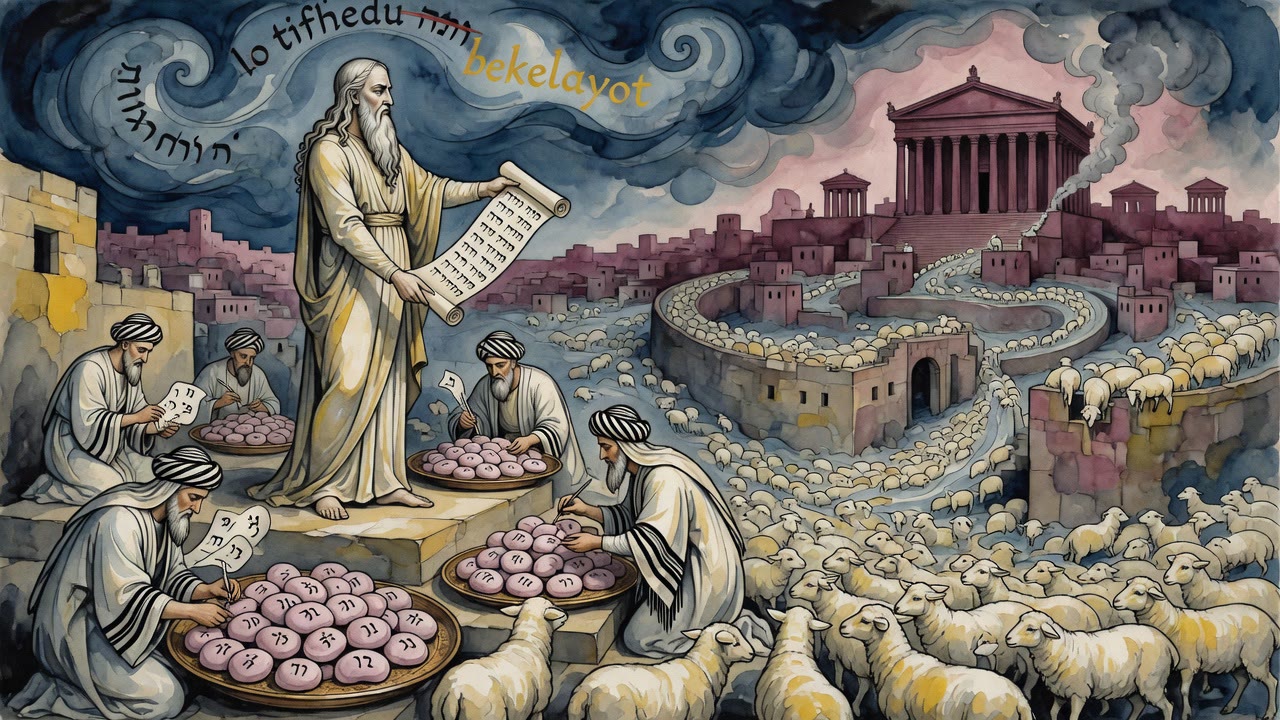
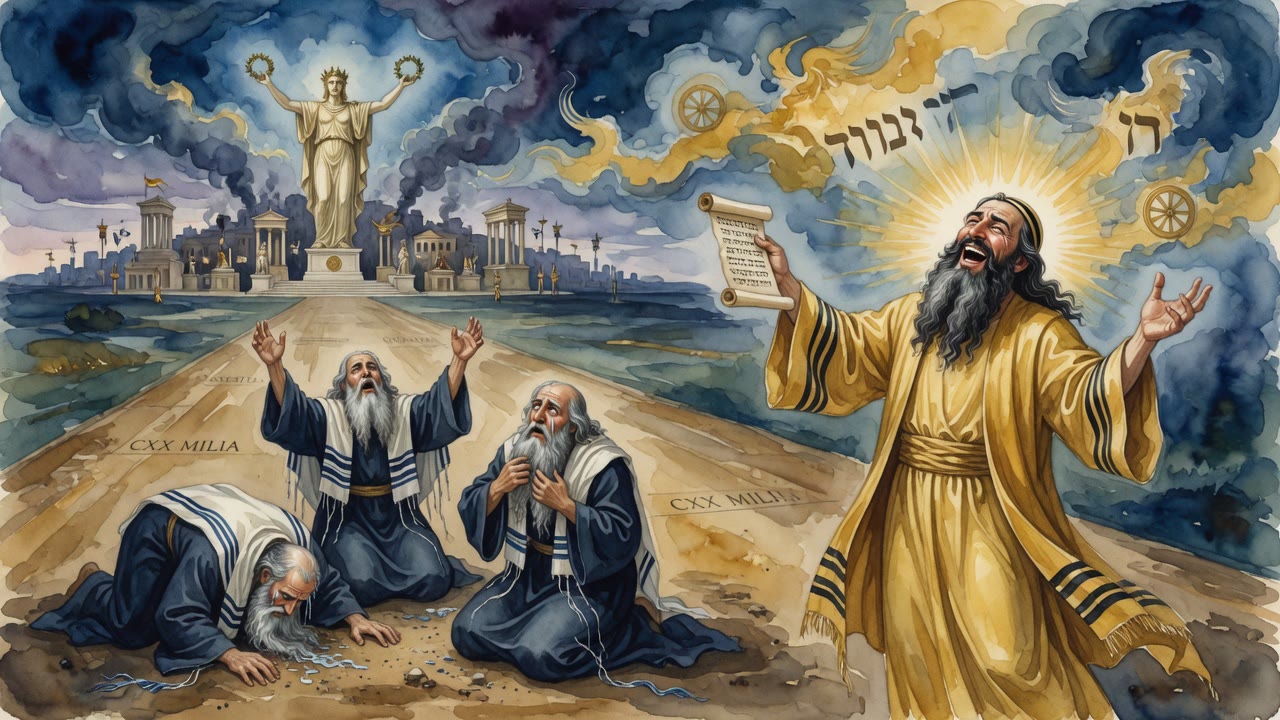
They had the harps in their hands and the verse half out of their mouths when the soldiers came through the gate. It was the eve of the ninth of Av, at the going out of Shabbat, in a Sabbatical year. Six hundred thousand Levites stood on the platform, every one of them of the seed of Moses, and the line they had reached was about a God who brings a man's own guilt down on his head.
 Click for full size
They got as far as "and shall cut them off."
Then Nebuchadnezzar's men were inside the courts, and the rest of the sentence stayed in their mouths.
They Never Finished the Verse
Some of the singers were killed on the platform. The others were marched east with the harps still in their hands. The same date, the same hour of the week, the same Sabbatical year, would come again centuries later, and Levites would stand on that same platform and break off at the same words when Rome came through the gate. The first time it was Babylon. The song did not get a second chance to finish itself.
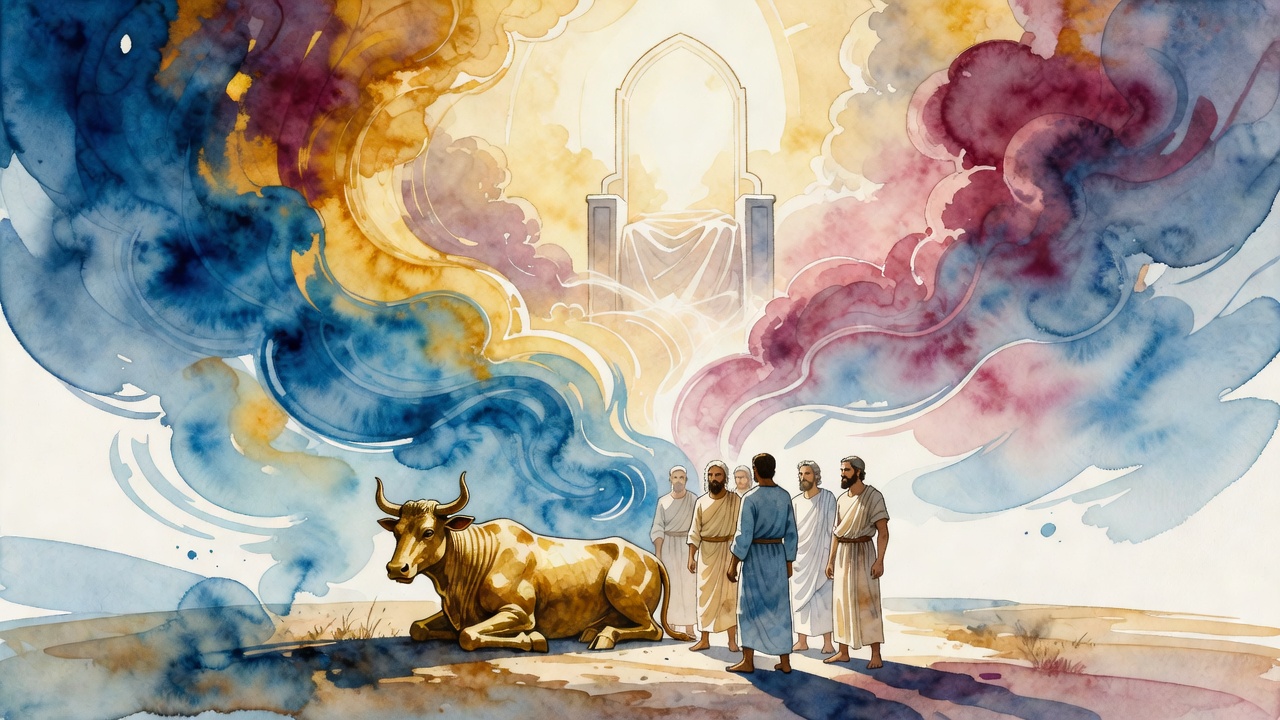
The land had been emptying for generations before that night. Four times Sennacherib of Assyria carried people out. Four times Nebuchadnezzar did. Reuben, Gad, and half of Manasseh went first, and the golden calf Jeroboam had planted in Dan went with them. Then Asher, Zebulun, Naphtali, and Issachar. Then Samaria. Then Judah and Simeon were taken behind the mountains of darkness on the far side of the rivers of Ethiopia, and nobody has produced them since.
Nebuchadnezzar finished the work. His captain Nebuzaradan broke Jerusalem after eighteen months of siege, blinded Zedekiah at Riblah, stripped the pillars and the sea of brass out of the House, and then went and besieged sixty cities that belonged to the Levites, the sons of Moses. He left the poorest in the country. He drove the rest to Babylon.
Sing Us a Song of Zion
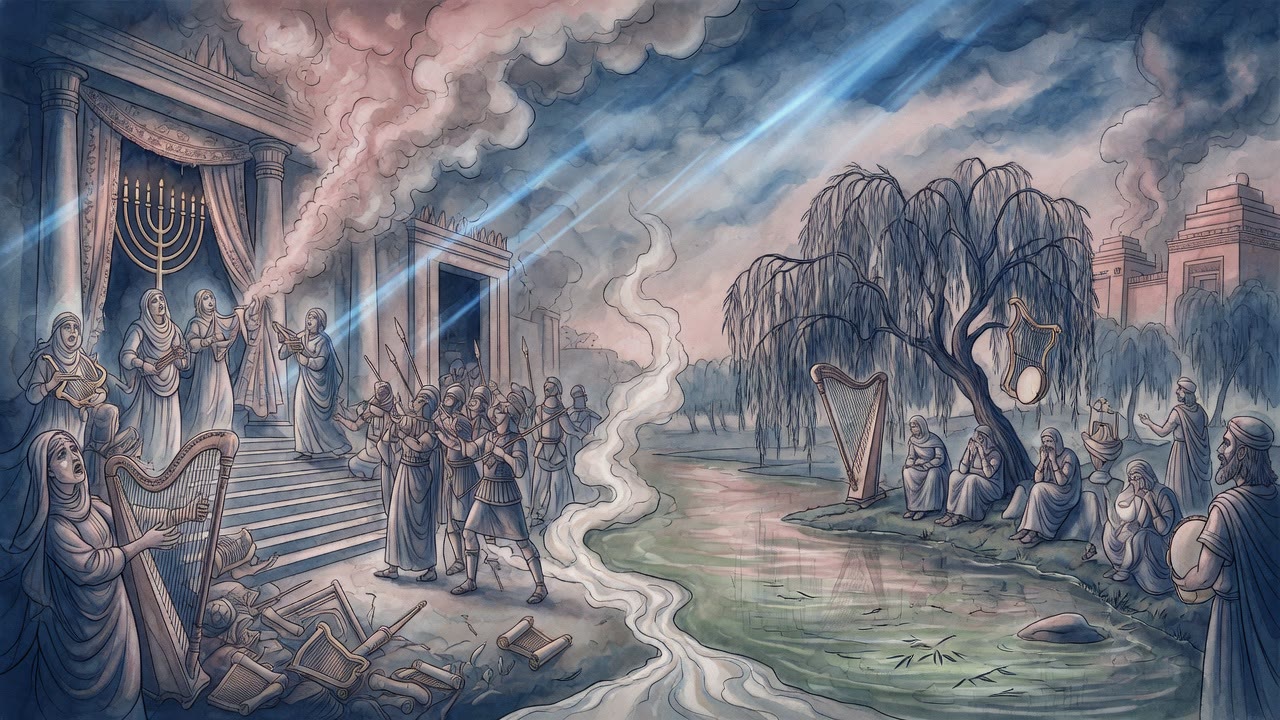
The captors wanted entertainment. They had heard what the Temple choir sounded like. Now the choir was standing in their city with its instruments.
"Sing us a song of Zion," they said.
"How can we sing a song of Zion on foreign ground?"
"Then you will sing by force."
The Levites looked at the men who had burned the House and asked for a concert. The harps were still in their hands. The verse they had not finished in Jerusalem was still in their mouths. Babylon wanted the rest of it as a show.
They Bit the Hands That Played
They refused, and then they made the refusal permanent. Each man put his fingers between his teeth, bit them off, and threw them on the ground in front of the men giving the order.
"How can these fingers, which struck the strings of the harps in the Temple, strike them here in a strange land?"
The fingers lay in the dust. The harps had no hands left that would obey. God said, "If I forget Jerusalem, let My right hand be forgotten." He matched them. They had ruined the hand that played. He named the right hand that would have to forget the city before He would.
Jeremiah had walked part of that road and asked to be taken out of the work. "Take my soul from me," he prayed, "for it is better for me to die than to live." A voice told him to wait and see Babylon fall. Then God hid him. The singers were not hidden. They stood in the foreign city with blood in their mouths and no way left to give Babylon the hymn it wanted.
A Cloud Set Them East of Havila
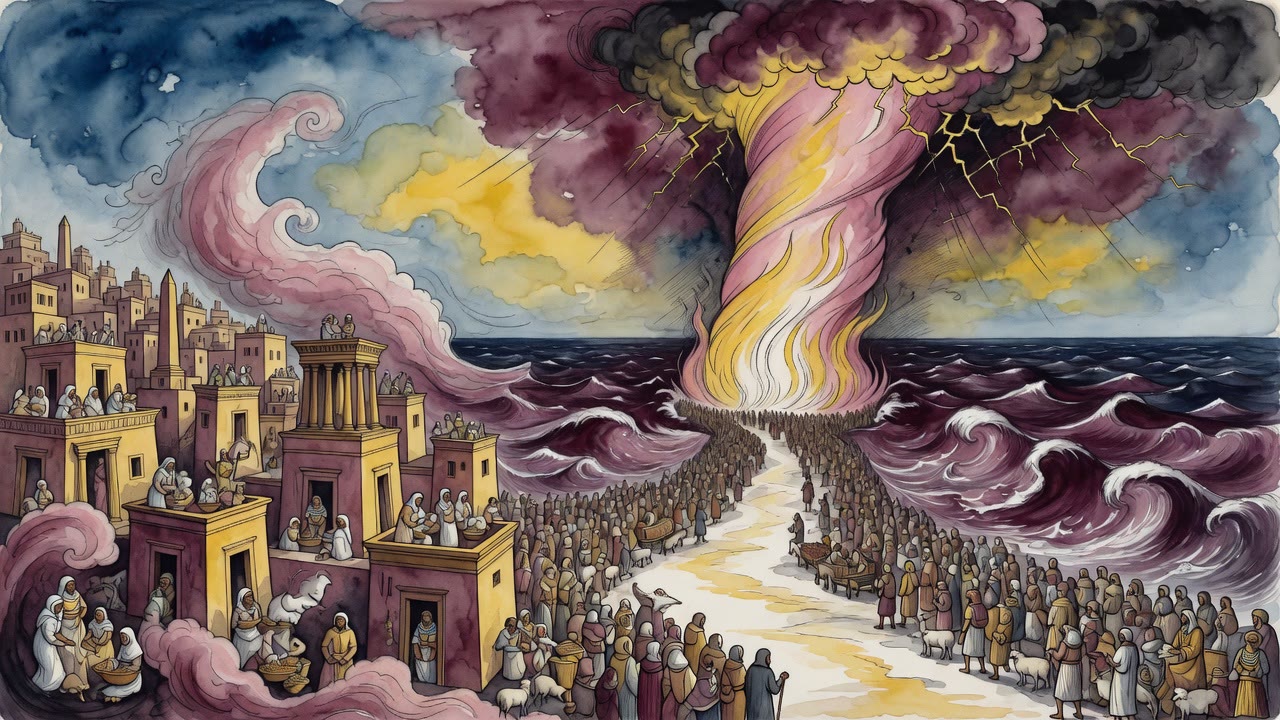
That night a cloud settled over the whole company, over the sons of Moses and their wives and their children and their sheep and their cattle, and lifted them. It set them down in the dark somewhere east of Havila.
They heard water before they saw anything. It ran all night, a noise like a river in flood, and when the light came there was not a drop anywhere. The bed was full of stones and sand rolling over each other with the sound of an earthquake, and it moved fast enough that a man who walked up to the bank was torn to pieces on the spot. It ran that way six days. On Shabbat it stopped. On the eve of Shabbat a cloud came down over it thick with smoke, and nobody crossed in either direction. They called it Sabbatyon.
There were no wild beasts on their side, no unclean animals, nothing that creeps. Only the flocks and the herds they had come with. The land beyond the rolling stone was quiet in a way Jerusalem had not been quiet since the verse broke.
The River of Rolling Stone
In one place the channel narrows to less than sixty cubits. People stand on their own bank there and shout, and people on the far bank shout back, and that is the whole traffic between the sons of Moses and the world.
They plowed. They sowed. They asked their questions over the stones. One of the answers that came back across the water was that the second Temple had been burned too. Then they went back to the field.
What lies farther east, nobody on either bank knows. Naphtali and Gad and Asher moved toward Dan after a quarrel with Issachar, who lived in the mountains of the deep and called them the sons of the handmaids. They were afraid it would come to war. The sons of Moses stayed where the cloud had put them, behind a river that keeps Shabbat, with no fingers left for a harp and no road back to the platform where the verse had stopped.
← All myths