The Mother Who Left Abraham in a Cave in Jewish Legend
Seventy thousand newborn boys were dead by Nimrod's order. Emtelai bore her son alone in a cave. She kissed him and walked back to the city without him.
Table of Contents
 Click for full size
Emtelai Walks Alone
She left the city in the middle of the night, alone, walking toward the desert with nothing but terror and the weight of the child she was carrying. She did not take anyone with her. Anyone who knew would be a witness, and witnesses in Nimrod's kingdom had a way of becoming informants.
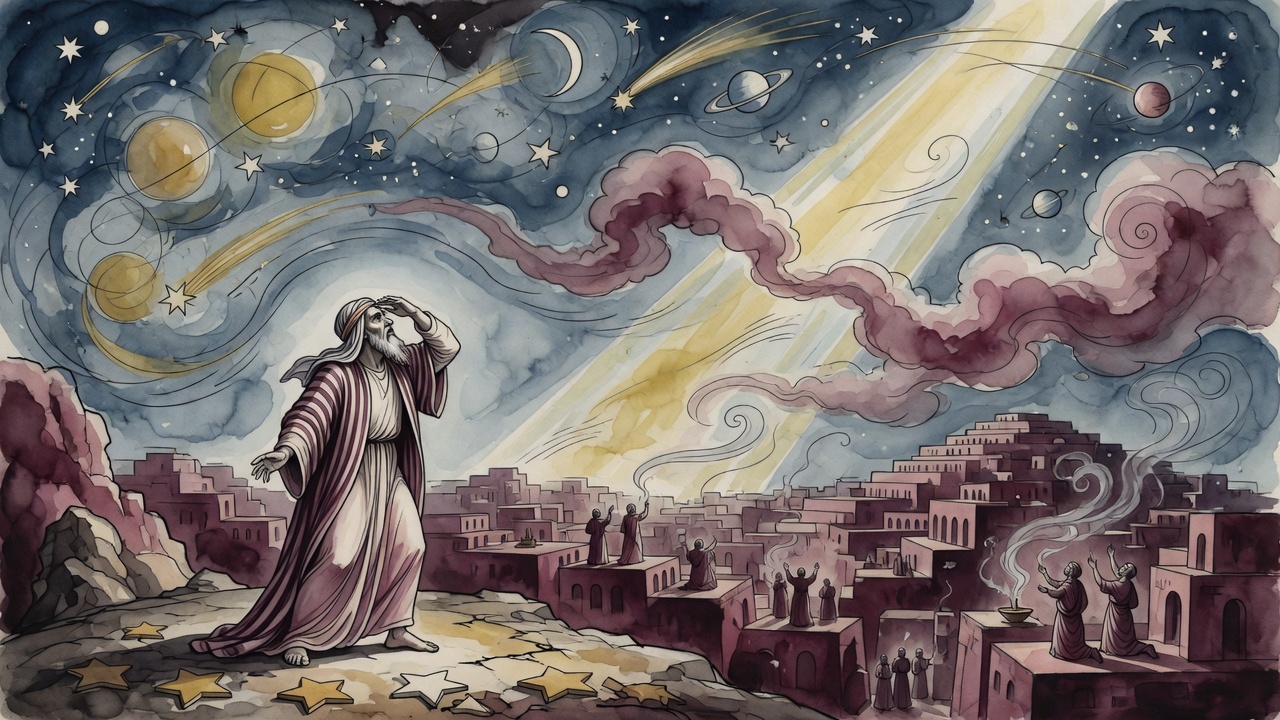
Her name was Emtelai, daughter of Karnabo, and she had married Terah knowing what it meant to be the wife of a man who served in Nimrod's court. When her pregnancy became visible, she understood the arithmetic. Nimrod's administration had standing orders: all pregnant women were to register and deliver under royal supervision. All boys were to be killed at birth. The star-reading fifty years earlier had been clear, and the king had responded with a policy that converted the prophecy into a problem he intended to solve by attrition.
Seventy thousand boys had already died. She would not register.
The Cave at the Edge of the Valley
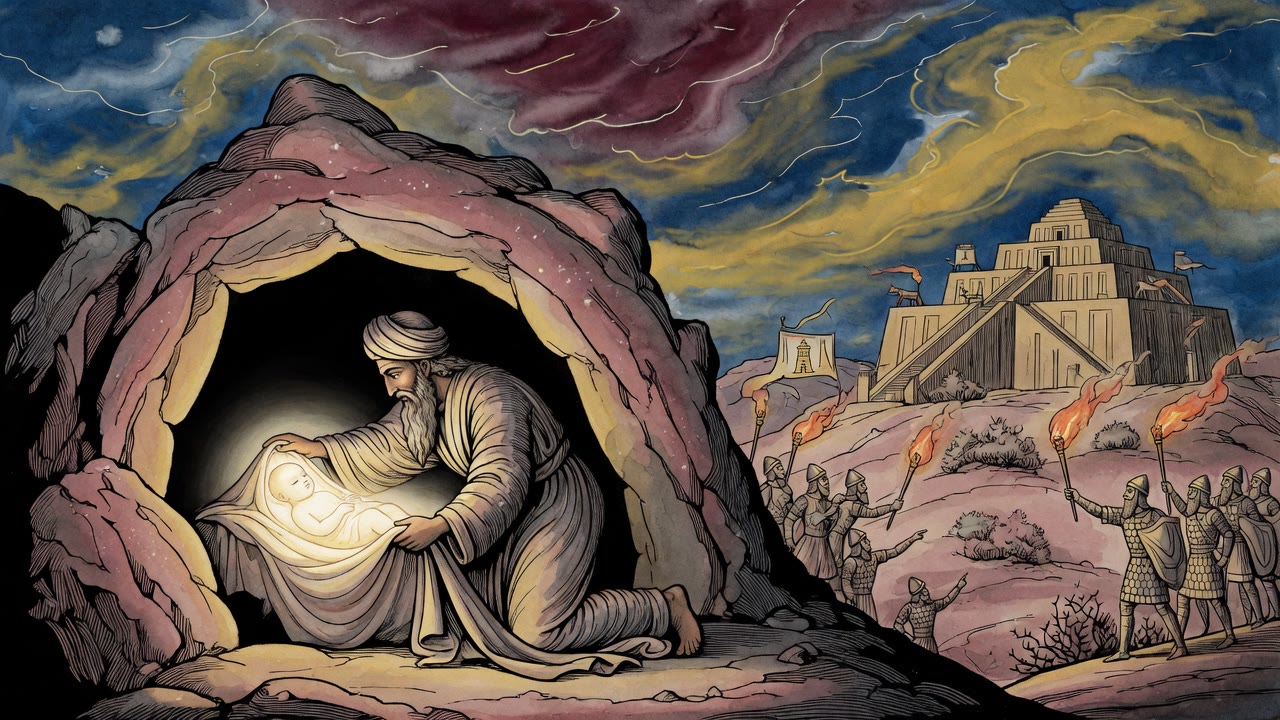
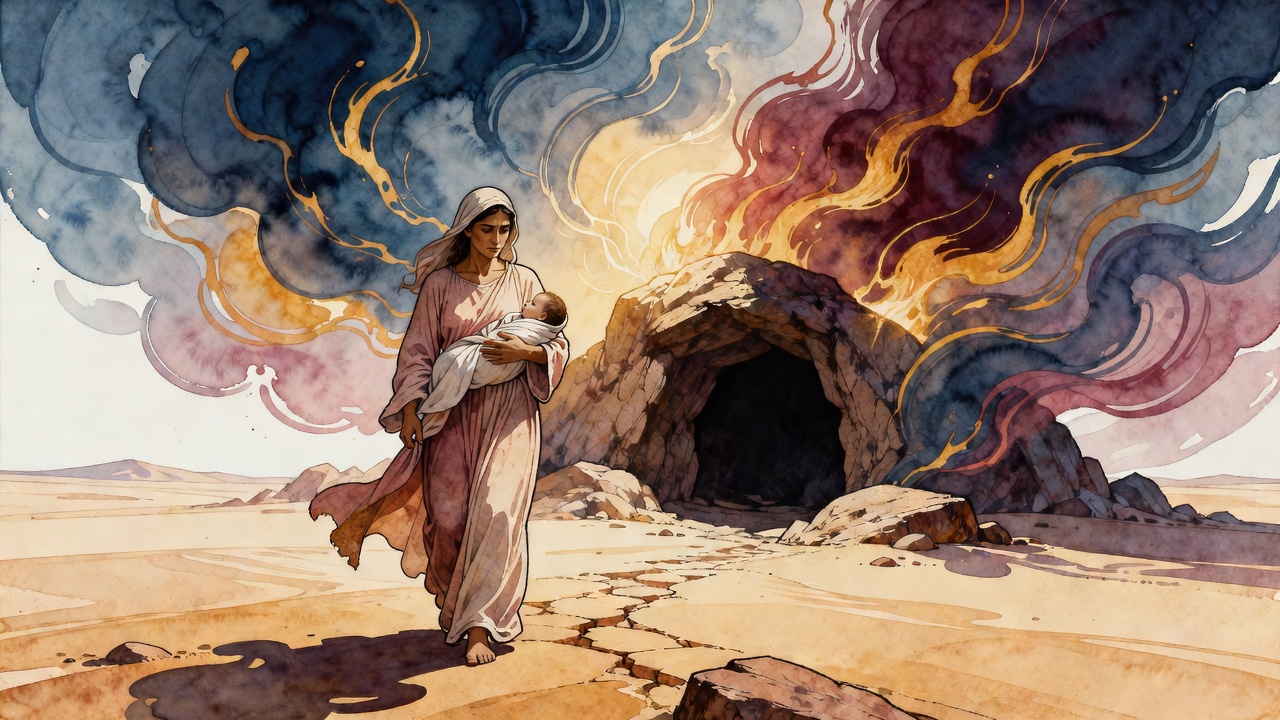
She walked along the edge of a valley until she found a cave and entered it. The next day the birth pains came, and she gave birth to a son alone in the dark. The tradition records what she saw in that moment: the cave filled with light. The light came from the child. It was so strong that it was like the sun rising inside the cave, filling every corner of the space she had hidden in.
She looked at the light and she understood what it meant and what it cost. A child who shone like this was exactly the child the king was hunting. Keeping him alive meant keeping the light hidden. She could not raise a child who filled caves with light in a city where Nimrod's informants moved through every street.
The Decision at the Threshold
She wrapped him in her garment. She spoke to him, though he had been alive for only minutes, because the tradition preserves her words and they deserve to be preserved: she said that it would have been better for her not to have given birth, because the king hunts his life. She told him she could not keep him alive. She kissed him and left him in the cave and went back to the city alone.
This is a woman making a decision that has no good version. She could take him home and watch him be killed. She could leave him in the cave and let the desert decide. She chose the desert. She gave him the only chance available, which was that God might see what she had left.
What the Cave Provided
God saw. On the third day after Emtelai left, an angel came to the cave and provided for the child. The tradition describes the angel making the boy's right thumb flow with milk, and Abraham drawing nourishment from it. He grew with extraordinary speed, the growth that prophetic children in this literature often display, so that within weeks he appeared to be years older than he was.
The light continued in the cave. The child who would later proclaim the living God in the court of the king who had ordered him killed grew up in darkness that he himself illuminated, fed by an angel, unknown to the empire that was looking for him, cared for by the same power his mother had hoped would notice what she had left behind.
← All myths