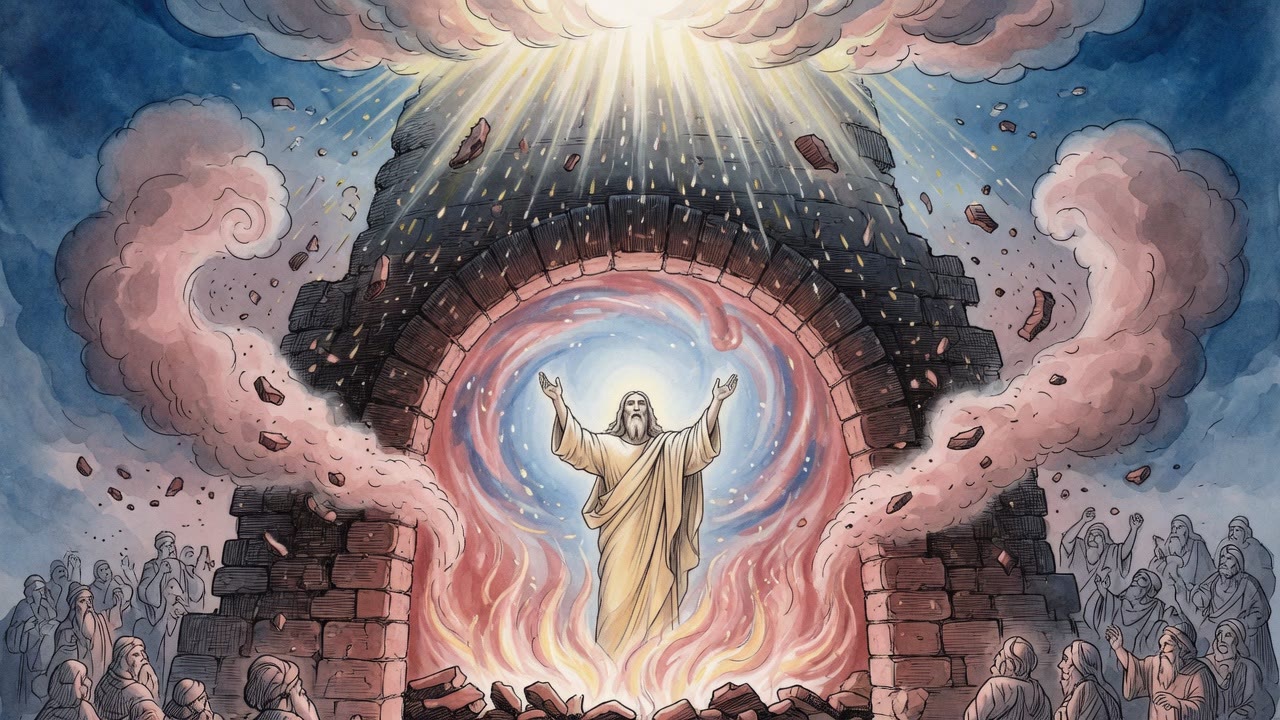
Abram Burned His Father's Idols and a Brother Died in the Fire
At sixty years old, Abram rose in the night and burned the house of idols. His brother ran in to save the gods and never came out.
Table of Contents
 Click for full size
The Star That Swallowed Four Stars
The night Abram was born, Terah filled his house with the servants and wise men of Nimrod, and they ate and drank there until late.
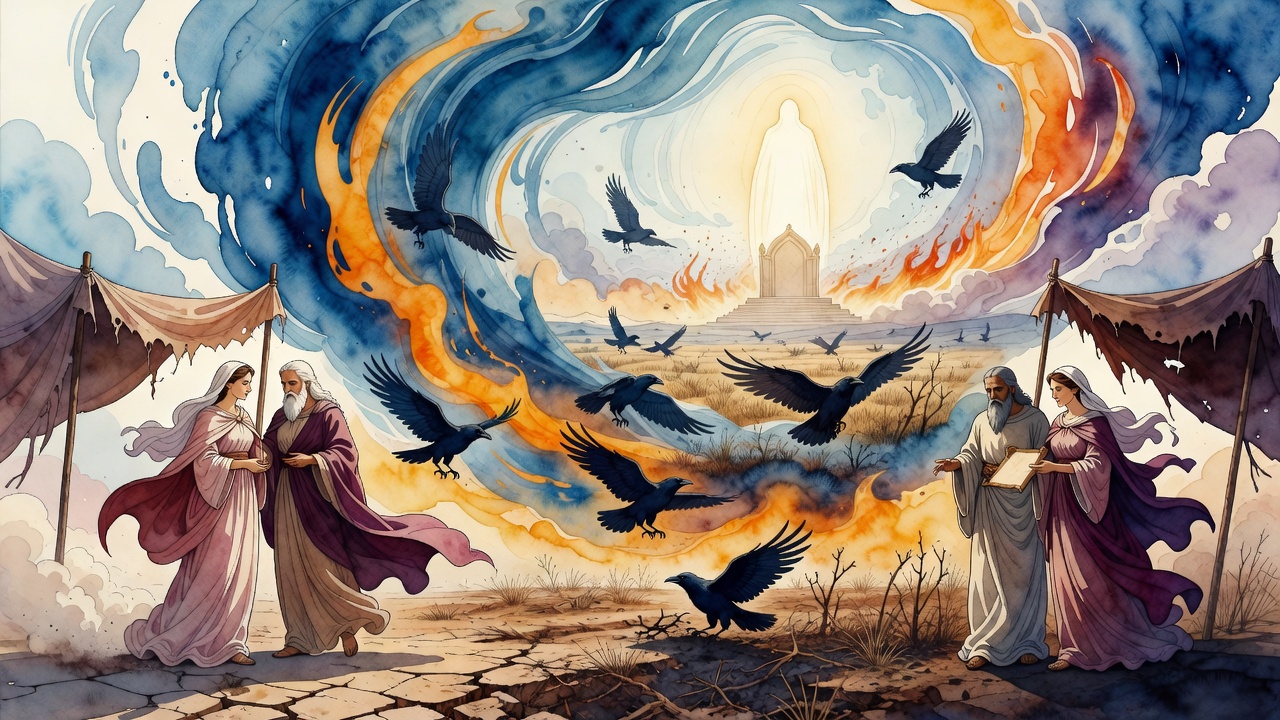
Walking home under an open sky, the king's astrologers saw one big star come up out of the east, run across the heavens, and swallow four stars, one from each corner. They stood in the road working out what it meant. By morning they had agreed among themselves that the child born in that house would grow up to kill great kings and take their land, and they went to Nimrod with it, because a thing like that is more dangerous to hide than to tell.
Nimrod sent for Terah and offered to buy the baby. A house full of silver and gold, he said, for one infant, before the trouble in him had a chance to sprout.
Terah did not refuse. He told the king a story instead, about a man who had come to him the night before wanting to trade silver and gold and straw and fodder for the fine horse the king had given him, and he asked the king's advice about the offer. Nimrod called him a fool for even considering it. What is silver to a man who has that horse, the king said. So Terah bowed and answered that the king had just spoken his own case for him: what would he do with silver and gold after the death of his son, and who would inherit him then.
Nimrod's face changed, so Terah asked for three days, and got them. On the third day he took a boy born that same day to one of his servants and carried that child to the palace and collected the price. He was standing there when the king took the baby by the heels and broke its head on the ground.
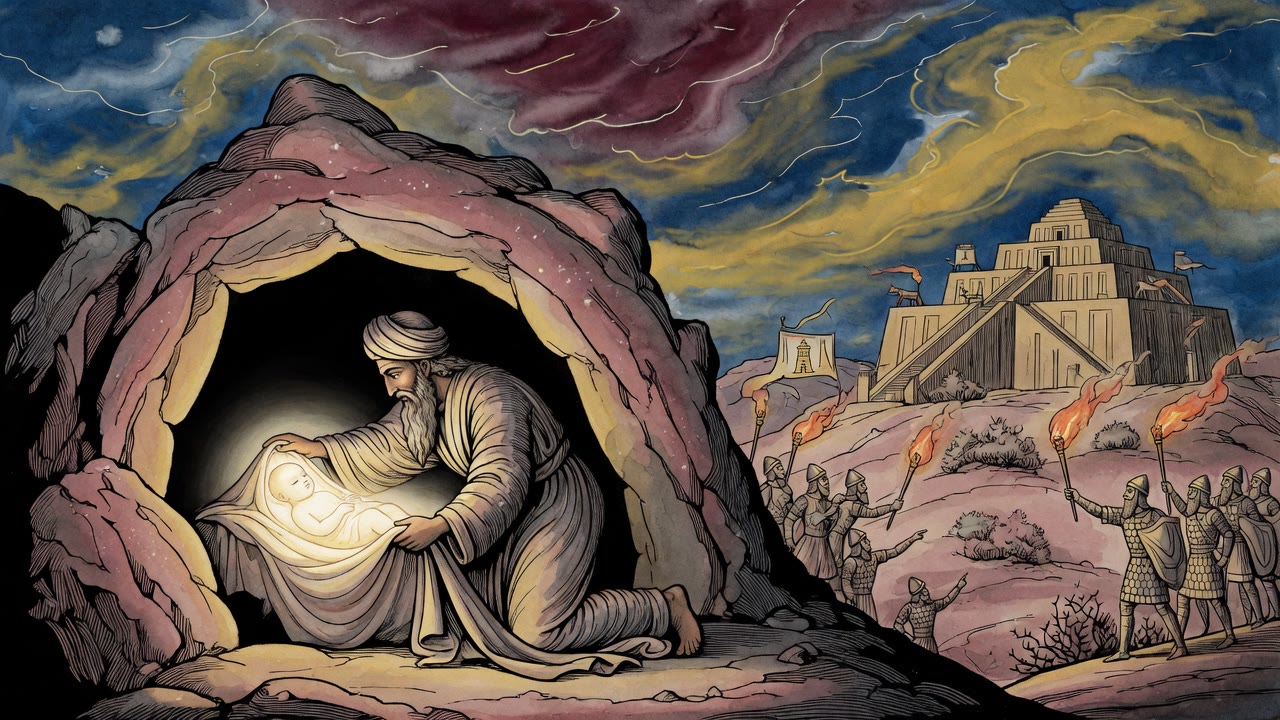
Then he hid Abram in a cave with his mother and his nurse, and carried food out to them once a month for ten years.
Sixty Years of Saying Nothing
Abram came out of the cave into his father's business, which was gods.
Terah made them and sold them. His sons married and had children in that house: Abram took Sarai, the daughter of his father, and his brother Haran took a wife and had a son and called him Lot. The idols stood in their own building on the property, and people came to it with whatever they were frightened of and left again having paid for it.
Abram said nothing about this for a very long time. He had been bought out of one death already, and the man who had bought him was the same man carving the merchandise.
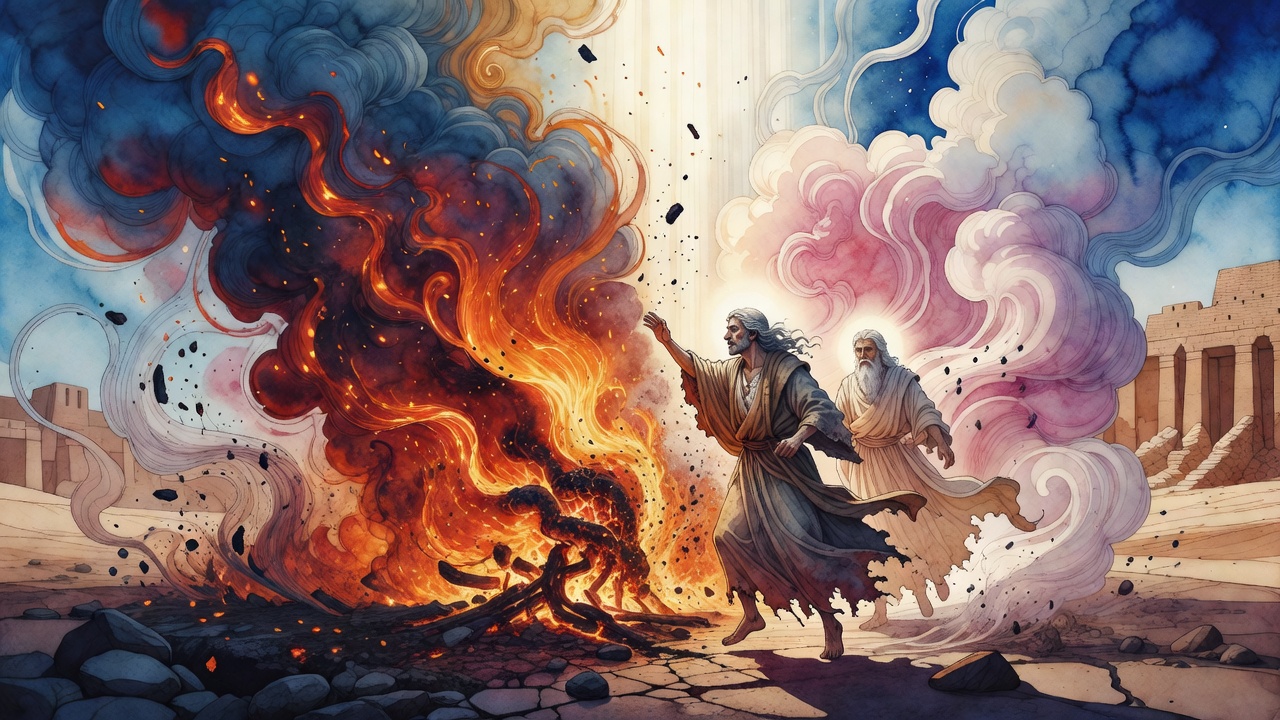
In his sixtieth year he got up in the middle of the night, went to the house where the idols were kept, and set it on fire. He burned every one of them and everything else in the building. No man knew he had done it, which means he watched everything that came next from inside the family, with his hands still smelling of smoke.
Haran Ran Toward the Gods
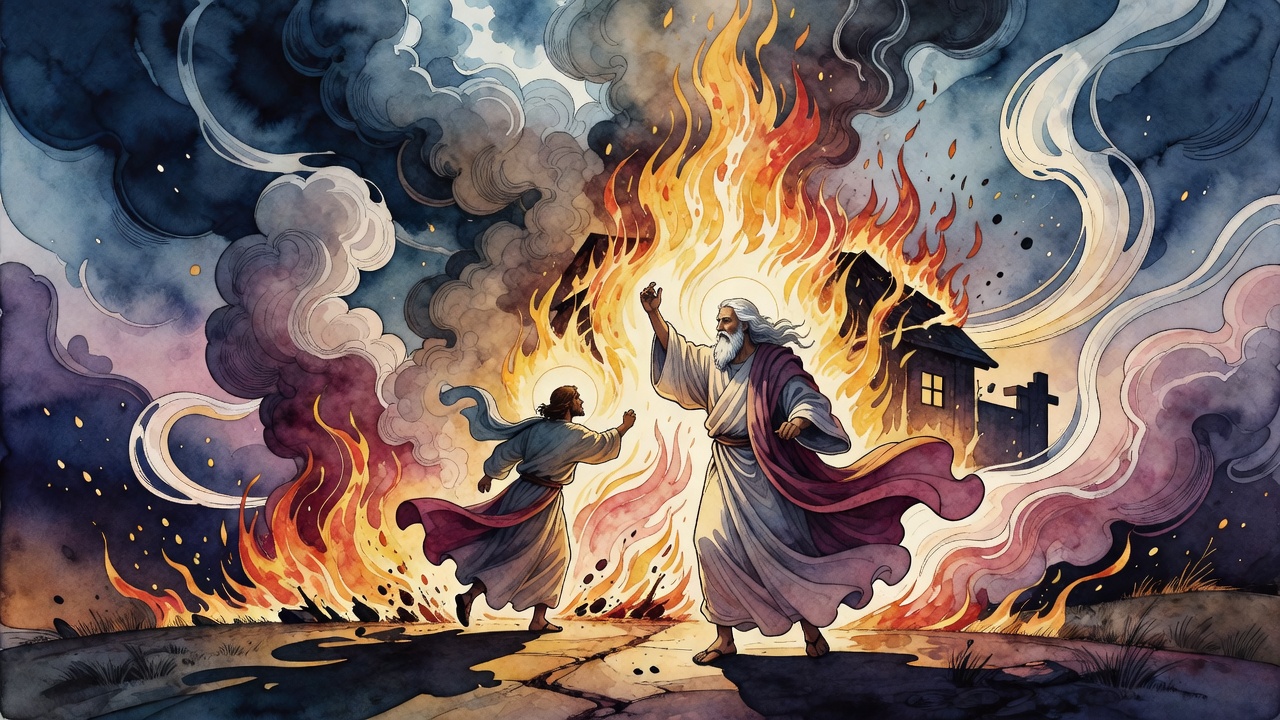
The household woke to the light and came out into the yard, and they ran toward the fire rather than away from it, because their gods were inside.
Haran was quickest, so he was already inside while Terah was still crossing the yard, and the fire came over the top of him. He died in that building in Ur of the Chaldees, in front of his father, trying to carry out figures that could not lift themselves off a shelf. They buried him in Ur.
Abram stood at that burial as the brother of the dead man, but he was also the only person at the graveside who knew why there had been a fire.
The Family That Left Ur
Terah did not stay in that city after he buried his son.
He gathered what was left of the household, Abram and Sarai and Nahor and the boy Lot, and went out of Ur of the Chaldees toward the land of Lebanon and the land of Canaan. He got about halfway, to a place called Haran, and stopped.
He lived there and never moved again, so every direction given in that country, every deed, every question about where the old man had settled, came back with his dead son's name in it. Abram lived beside him in that town for fourteen years without ever telling him.
The Son Handed Across
The old man was the one who finally opened the door.
He blessed Abram and told him to go on ahead. "If thou seest a land pleasant to thy eyes to dwell in," Terah said, "then arise and take me to thee." Nahor would stay behind with him until Abram came back in peace, and then they would all go together, which was how a man in his condition talked about a thing he knew he would not live to do.
Then Terah gave him the boy. "Take Lot with thee, the son of Haran thy brother, as thine own son."
Not as a nephew and not as a servant. As his own son, handed over on the road by the father of the man who had died in Abram's fire, to be raised by the man who set it. Terah had bought Abram's life once with a servant's baby and had lost a son of his own to Abram's night work, and this was the last transaction left to him.
Abram took the boy. He went out of Haran with Sarai his wife and Lot his brother's son walking beside him, down toward Canaan, and behind them the old man stayed where he was, in the town that carried the name of the son he had put in the ground.
← All myths