Joseph Cleared the Room Before He Could Say His Name
Joseph sent every Egyptian out before he wept. Twenty years of silence broke the moment only his brothers were left to hear it.
Table of Contents
 Click for full size
The Interpreter Leaves the Room
He had been speaking to them through an interpreter for months. That was the first layer of the disguise: not just the Egyptian clothes and the shaved face and the throne room, but the fact that his own language reached them only through another man's mouth. His brothers stood before him and spoke Hebrew to each other about what they had done in the pit, and he turned away to weep and then came back and gave them grain, and they never knew.
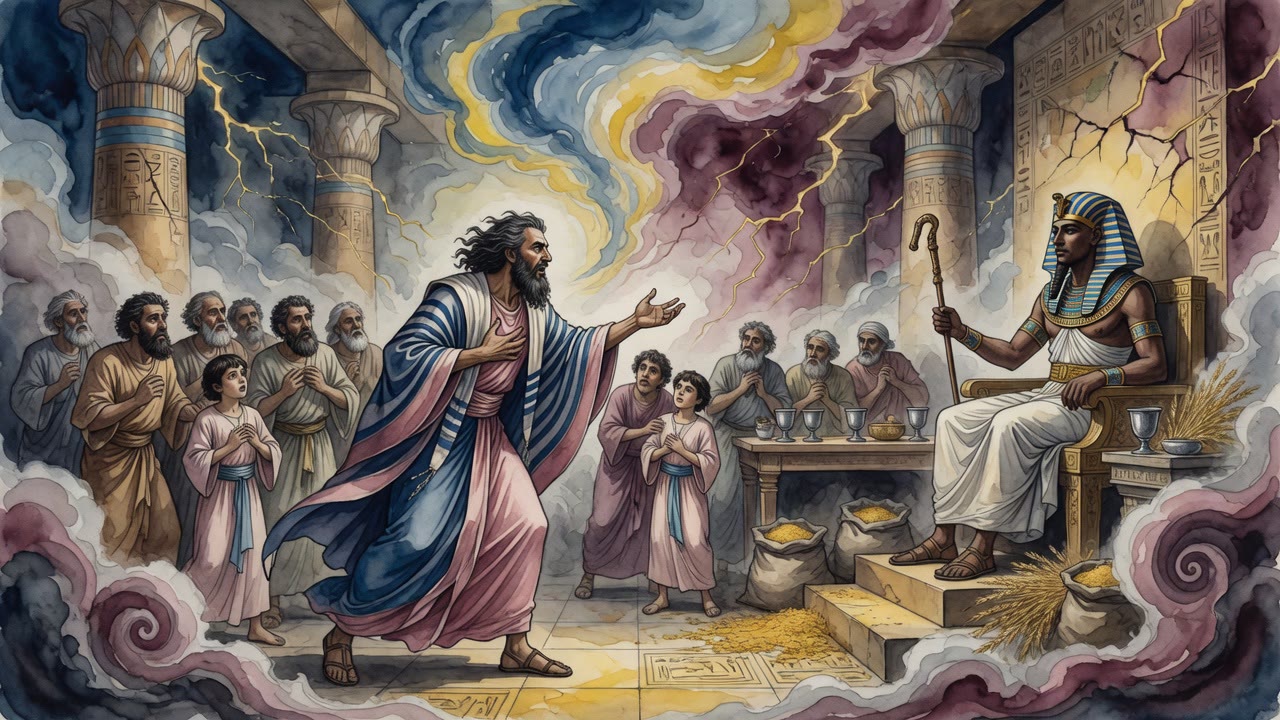
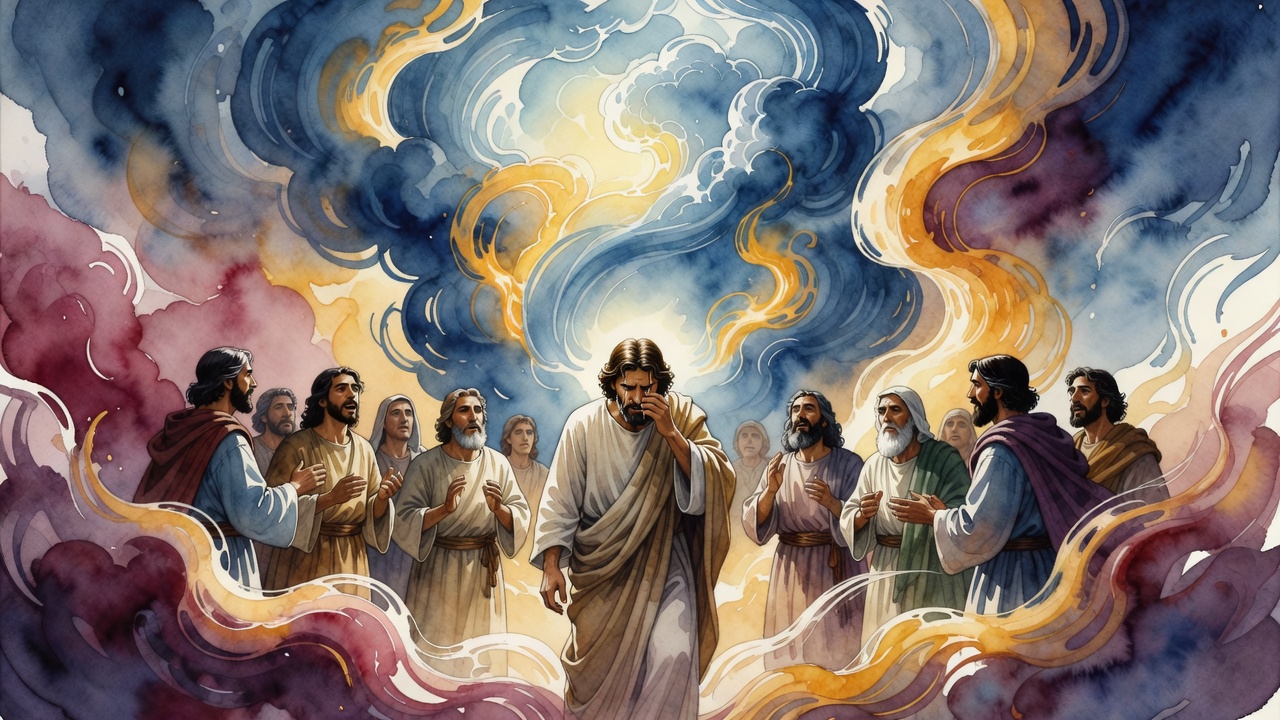
But Judah's speech broke him. Judah had stepped forward and offered himself as a slave in Benjamin's place, and Joseph could not hold the shape he had been wearing. He sent the room out. Every Egyptian, every attendant, every interpreter. The doors closed, and for the first time in perhaps twenty years, he was alone with his brothers and no one in between.
Joseph Cleared the Room
He wept so loudly that the Egyptians heard it in the hall outside. The sound of a grown man weeping without restraint, a man who had not permitted himself this for two decades, a man who had administered famine relief for the known world and held his composure at every dinner and every judgment and every morning when he woke up knowing who he was and where he had come from.
Then he said: "I am Joseph. Is my father still alive?"
The brothers could not answer. They were terrified. This was not the reaction of men hearing unexpected good news. This was the reaction of men who had just understood, all at once, what they had done and to whom they had done it and who had been watching them from the throne of Egypt for months, learning them again.
What He Said When They Could Not Speak
He said it again. "Come near to me." And they came near. And he said: "I am Joseph your brother, whom you sold into Egypt." And then he did something unexpected. He told them not to grieve. He told them not to be angry with themselves for selling him, because God had sent him ahead of them to preserve life. It was not them. It was God. They had meant harm and God had arranged survival.
The Book of Jubilees, which retells these events in its characteristic voice of cosmic precision, gives us his words in full. "Weep not over me," he said. "Hasten and bring my father to me. This is the second year of the famine and there are still five years without harvest or fruit of trees or ploughing. Come down now so that you will not perish, you and your households and everything that belongs to you."
The Number That Held the World Together
What Jubilees cares about in this scene is not only the reunion but what comes next: Jacob descending to Egypt, the count of souls who go down with him, the specific number that will become the foundation of everything. Seventy. The roster Jubilees provides tribe by tribe matches the Genesis 46 count, and Jubilees frames that number against the seventy nations of the world descended from Noah. Israel in Egypt at that moment was not a refugee people hiding in a foreign land. It was a mirror of the whole human world, carrying within itself a count that matched the full scope of creation.
Joseph wept again when he saw Benjamin. He wept when he saw his father. The Jubilees account records Jacob's joy as exceeding great, as a man who had spent years in grief discovering that the grief had been unnecessary, that the boy he had mourned was not dead but enthroned, that the wound he had carried had been, from another angle, a plan.
← All myths