The Sea Put Egypt's Gods and Army on Trial
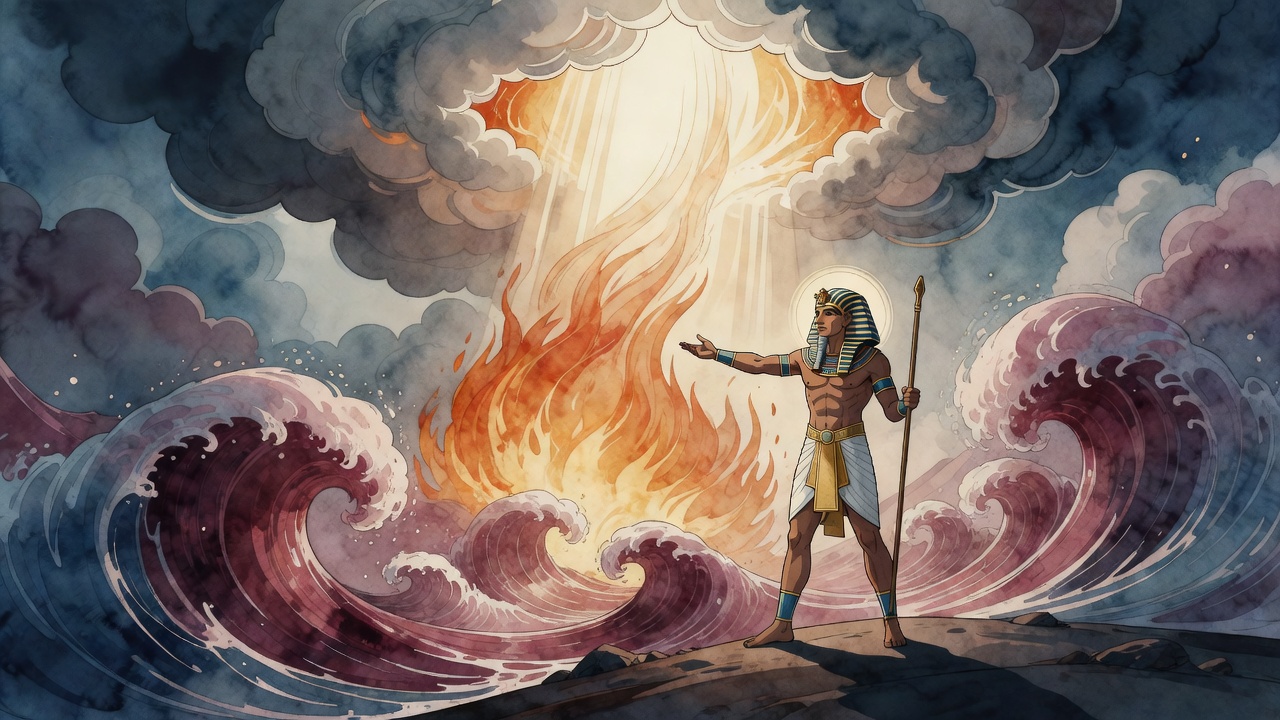
At the Sea of Reeds, Pharaoh's mouth was forced to confess, his army lost its banners, and the nations heard that Egypt's gods had been judged.
Table of Contents
The mouth that had said I do not know the Lord now said the Lord is righteous.
 Click for full size
That reversal is where Yalkut Shimoni begins its trial. Egypt's case against Israel had been built on a foundation of divine ignorance: Pharaoh refused to acknowledge any authority above his own, and the entire structure of slavery rested on that refusal. The Psalm cries: how awesome are Your works. Rabbi Eliezer the son of Rabbi Yose the Galilean rephrased the praise as a craftsman's verdict. Well done, good workman, the witnesses say, and what they are praising is not only the rescue. They are praising the reversal. The slain rise and slay their slayers. The drowned drown the ones who drowned them. The instrument of cruelty becomes the instrument of justice.
The Tyrant's Mouth Confessed First
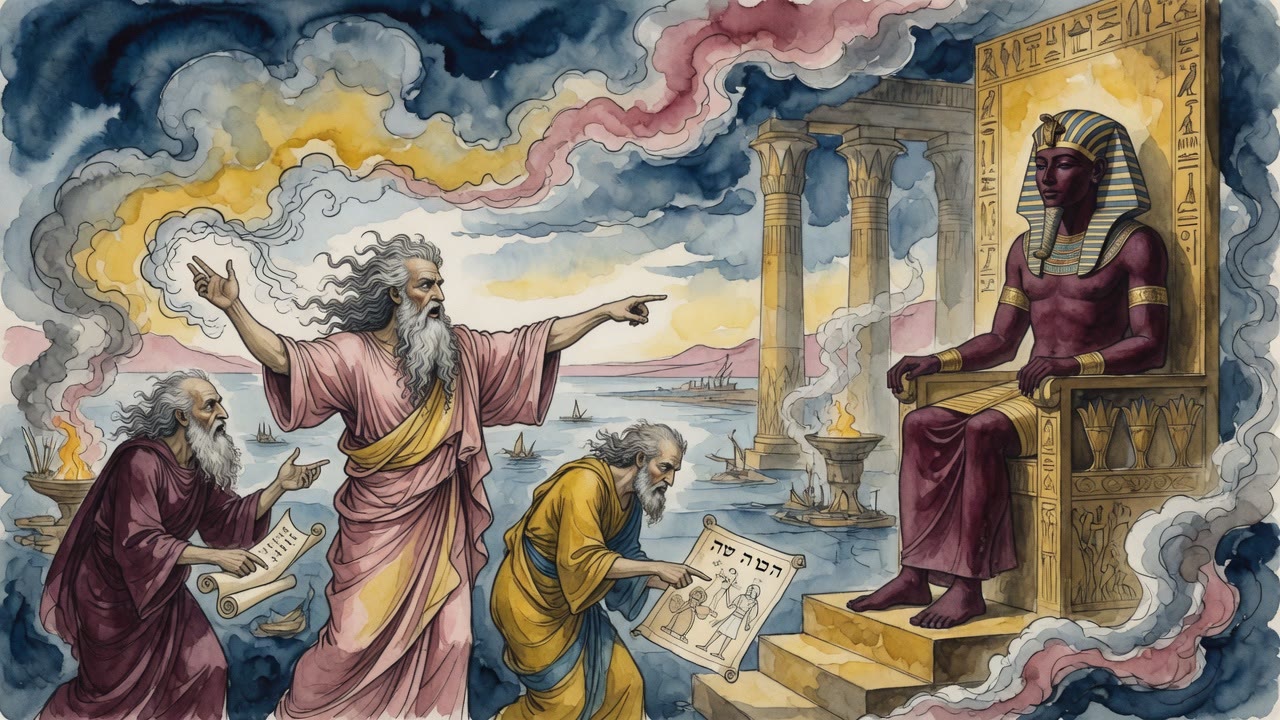
Two tyrants appear side by side in the teaching. Nebuchadnezzar, after the furnace, blessed the God of the three men he had thrown into the flame. Pharaoh, who began by boasting that he did not know the Lord, was forced by the plagues to confess: the Lord is righteous. The same mouth that refused to release Israel now certified the verdict against himself.
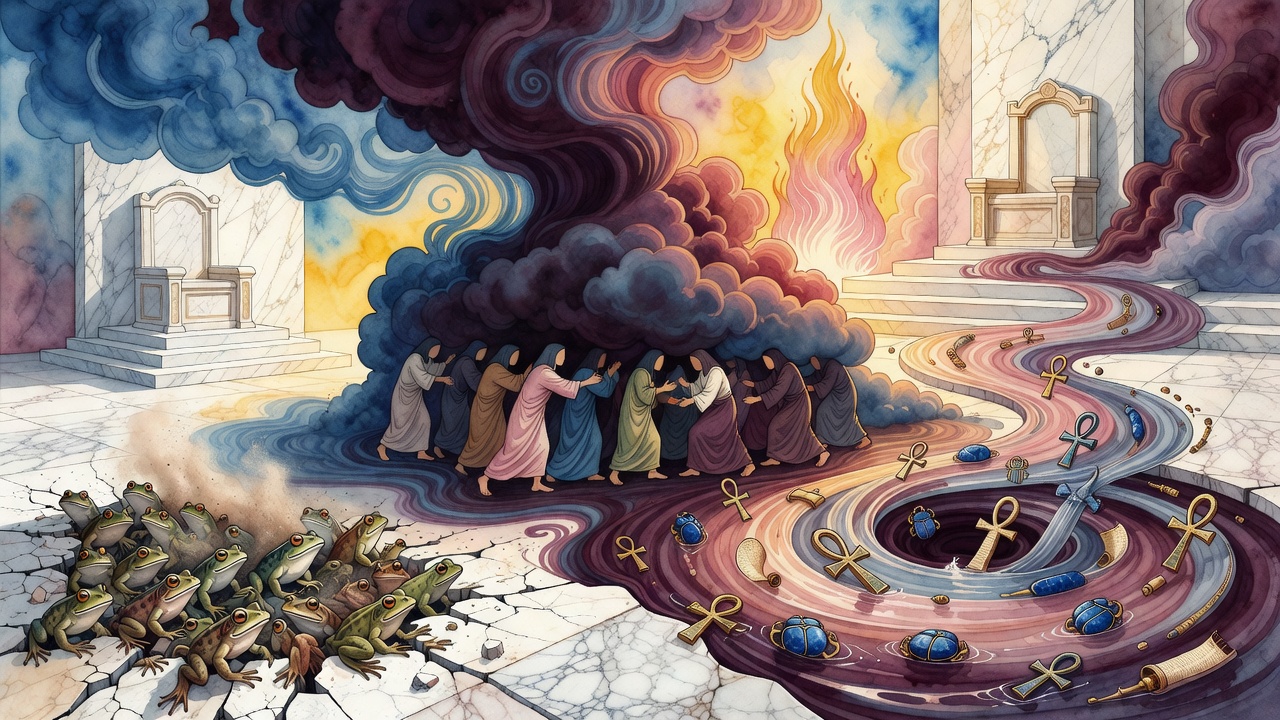
The rabbis press the comparison to every cruelty inflicted. Pharaoh had decreed that Hebrew boys be cast into the river. His army was cast into the sea. He had set officers over the people to drive them. His chosen officers drowned in the depths. Egypt had embittered Israel's lives with mortar and bricks, so the waters that killed the Egyptians were described as mortar. The ledger was kept perfectly, and the sea carried out the sentence already written in the scrolls of Egypt's own conduct.
Arrows Drove the Army Apart, Then Lightning Herded It Together
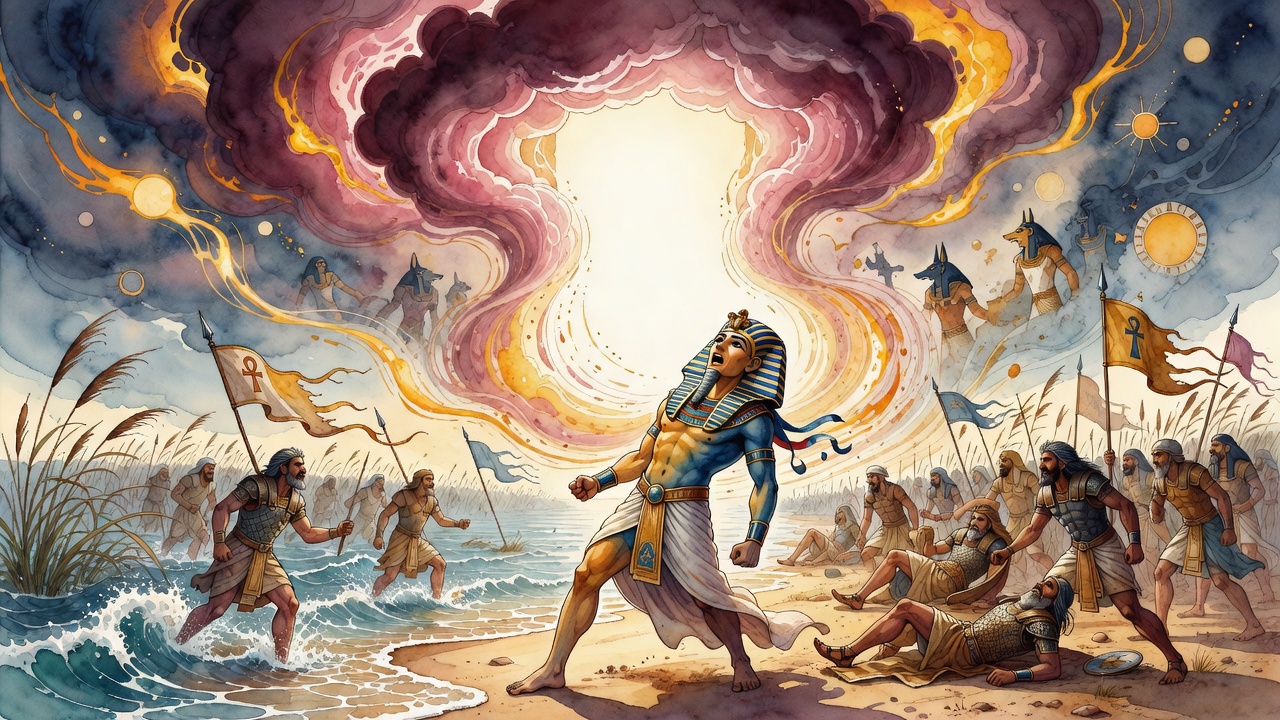
The Psalm says He sent out His arrows and scattered them, and the sages read the whole verse as a double weapon working in opposite directions at once. Arrows drove the Egyptian soldiers apart, flinging them in every direction so no defensive line could hold. Then lightning swept back through the scattered men, herding the panicked soldiers into a single confused mass, pressing them together until the formation became a mob trampling itself.
Then God stripped away their battle-standards. The Hebrew word for what happened next, vayehummem, carries the sense of confusion, of purposeless movement. An army moves by its banners. Remove the signals and the most disciplined force on earth dissolves. The most powerful military of the age was undone not by a superior force but by the removal of the only thing that made them a force at all: the knowledge of what they were supposed to do.
The Heartless Sea Received a Heart to Judge Egypt
A strange phrase in the Song stops the sages: the depths congealed in the heart of the sea. The sea has no heart. So why does Scripture give it one?
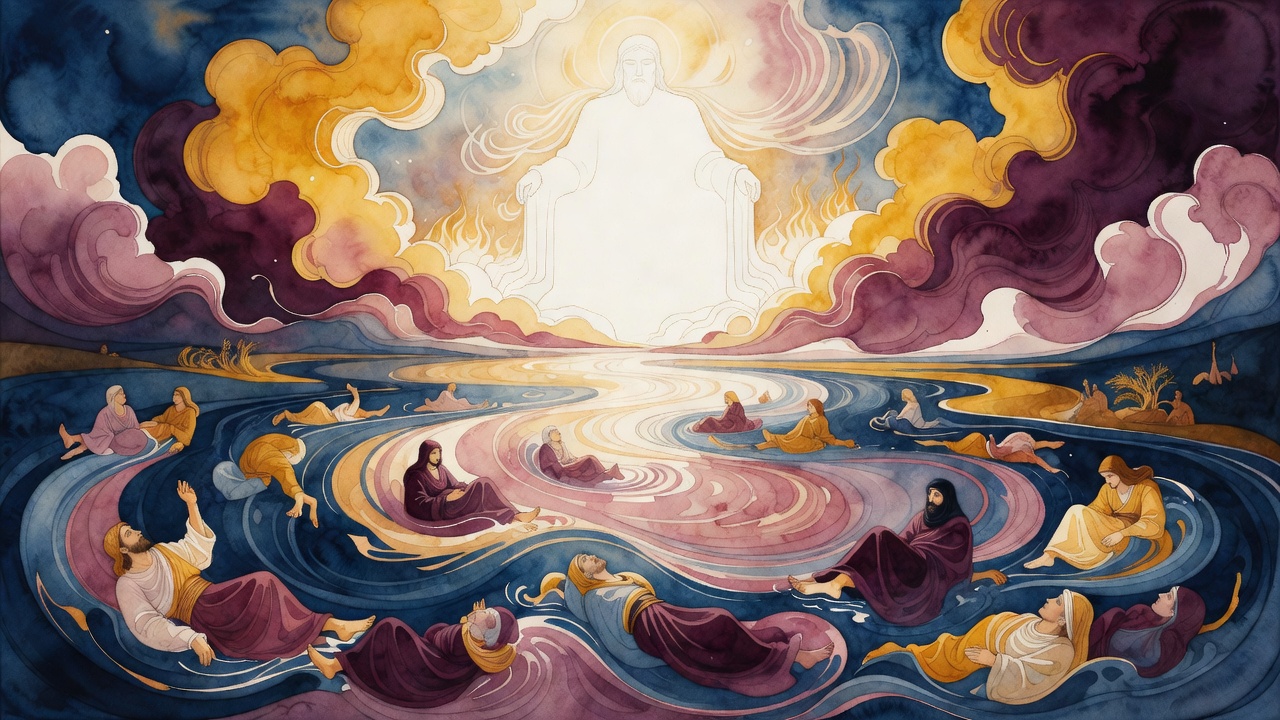
Because God lent a heart to things that had none, so that the heartless could judge the hearted. The oak is said elsewhere to have a heart. The heavens are said to have a heart. Neither has one by nature. But God gave the gift of judgment to what had no capacity for judgment, so that the gifted could hold accountable those who had hearts and misused them.
The chain of justice that follows is perfectly proportional. Let the sea, which had no heart, punish the Egyptians, who had hearts and used them to enslave Israel with deliberate cruelty. Let the oak, given a heart, hang Absalom, who had a heart and used it to steal three others: his father's loyalty, the court's justice, and the people's trust. Let the heavens, given a heart, rain manna for Israel, who had hearts and loved God with all of them. Each heartless thing becomes a judge over the corrupted heart that stood before it.
The Nations Heard Three Things and Could Not Stand
The verse says the peoples heard and trembled, and the sages asked what exactly the nations had heard to shake them so badly. It was not one piece of news but three, each striking deeper than the last.
First they heard that Pharaoh and his entire army had drowned in the sea. Then they understood that the kingdom of Egypt had ended, the superpower of the age erased in a single night at the water. And then they grasped the most unsettling thing: that judgment had fallen on the gods of Egypt themselves. Idolatry had been put on trial and found without power.
For nations that built their security on Egypt's strength and on the same crowded pantheon, this was no distant rumor. It was the ground shifting. If the strongest throne in the known world could vanish in one night, and if the gods that underwritten its authority had been publicly judged, then nothing built on similar foundations could count itself stable. The trembling of the nations was the sound of every false floor cracking at once.
← All myths